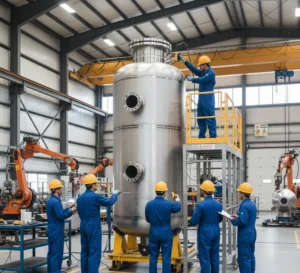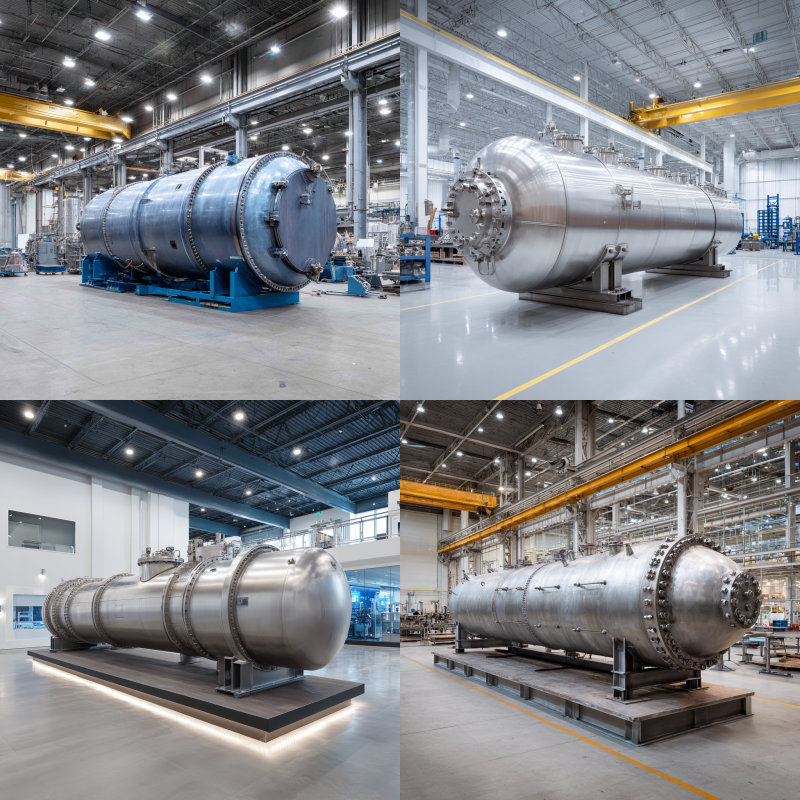
Pressure vessels are essential to industrial operations that require safe and efficient containment of pressurized substances. This guide breaks down types, materials, design standards, and real-world applications.
What is a Pressure Vessel?
A pressure vessel is a specially engineered container designed to hold gases or liquids at pressures significantly different from the surrounding environment. These vessels play a pivotal role in numerous industries, from oil and gas to pharmaceuticals, chemical processing, and power generation. Whether designed for high-pressure storage of gases or for processes requiring low-pressure conditions, these vessels must adhere to strict safety and engineering standards.
Pressure vessels may appear simple externally, but their engineering involves complex calculations, material selection, and stringent testing. Without properly designed systems, industrial operations risk explosions, leaks, and mechanical failures. At Red River, we specialize in delivering high-performance solutions, customizing each unit for its intended application—from design to final fabrication. Every vessel we produce reflects our dedication to safety, code compliance, and performance excellence.
What are the Types of Pressure Vessels?
Understanding vessel types is essential for optimizing performance and ensuring operational safety. Common categories include:
Storage Vessels
These systems store fluids (liquid or gas) under pressure. They can be vertical or horizontal, varying in size and design. At Red River, we specialize in custom storage vessels built to meet client specifications and industry standards.
Heat Exchanger Vessels
These units transfer heat between fluids to regulate temperatures and are essential in refineries, power stations, and chemical plants. These vessels must withstand both thermal and pressure fluctuations.
Process Vessels
Used in chemical or physical transformations under pressure, process vessels often include complex internals like baffles or jackets. Red River engineers these units to maximize process efficiency.
Reactor Vessels
These specialized vessels manage chemical reactions under high pressure and temperature. We also design modular skids with custom reactor vessels for turnkey systems.
Each vessel type requires precise design parameters, including pressure ratings, material selection, and temperature ranges. Whether you’re operating a gas storage unit or a vessel for food-grade applications, Red River delivers precision-engineered solutions.
Inputs for Pressure Vessel Design
Designing these vessels requires analyzing several factors:
Operating Pressure and Temperature: These parameters dictate the wall thickness and materials used.
Contents: Vessels handling corrosive or reactive substances require materials that can withstand such conditions.
Cyclic Loading: Pressure vessels must be fatigue-resistant to prevent failure over time.
Environmental Factors: Wind and seismic loads affect the support structure of the vessel.
Corrosion Allowance and Safety Factors: Extra material thickness helps protect the vessel over its lifetime.
Red River’s engineering team incorporates advanced simulations and real-world data to ensure each system meets safety standards and operational requirements.
Pressure Vessel Design Formula
One fundamental equation used in designing these systems is:
t = (P * D) / (2 * S * E)
Where:
P = Internal Pressure
D = Internal Diameter
S = Material Strength
E = Weld Efficiency
This formula calculates the required wall thickness for cylindrical vessels. Red River complements this with FEA simulations to verify stress distributions and ensure safety.
Material Selection for Pressure Vessels
Material choice impacts durability, safety, and cost:
Carbon Steel: Cost-effective for standard needs.
Stainless Steel: Ideal for hygienic or corrosive environments.
Nickel Alloys: Designed for high temperatures and aggressive chemicals.
Titanium & Aluminum: Used in lightweight or specialty applications.
Duplex Steels: Perfect for marine applications due to their corrosion resistance.
Red River evaluates each system’s media, temperature, and pressure conditions to select the best materials for the job.
Types of Pressure Vessel Supports
The support structure is critical for ensuring safety and performance:
Saddle Supports: Used for horizontal vessels.
Leg Supports: Designed for smaller vertical vessels.
Skirt Supports: Provide stability for tall vertical units.
Red River integrates these support systems into prefabricated packages for enhanced transportability and stability.
Applications of Pressure Vessels
Pressure vessels are crucial in various industries:
Oil & Gas: Storage and separation processes.
Power Generation: Steam drums and heat recovery systems.
Pharmaceuticals: Sterile vessels for sensitive compounds.
Food & Beverage: Fermentation and carbonation vessels.
Chemical Processing: Reactors, separators, and blenders.
Each vessel must comply with industry-specific safety and hygiene standards. Red River designs purpose-built solutions for every sector.
ASME Codes for Pressure Vessels
Red River constructs all vessels according to ASME BPVC standards:
Division 1: General rules for pressure systems.
Division 2: For more complex and efficient designs.
Division 3: For high-pressure vessels requiring rigorous standards.
Compliance ensures safety, durability, and regulatory approval for each unit we manufacture.
Thin Shell vs. Thick Shell Vessels
Thin Shell: Easier to fabricate and used in low to moderate-pressure applications.
Thick Shell: Needed for high-pressure systems.
Choosing the correct type ensures safety and eliminates unnecessary over-engineering.
Pressure Vessel Internals
Key internal components include:
Baffles: Direct flow for improved mixing.
Agitators: Enhance internal mixing.
Trays/Packing: Used in distillation or absorption vessels.
Red River customizes these components to match the intended process.
Construction Methods for Pressure Vessels
Riveted: Used for low-pressure systems.
Seamless: Ideal for smaller high-pressure applications.
Welded: The most common method for industrial vessels.
All welds meet or exceed safety and inspection codes.
Examples of Pressure Vessels
Compressed Air Receivers
Gas Cylinders
Boilers
Reactor Units
Cryogenic Tanks
Red River provides custom-built vessels tailored to each application.
Why Pressure Vessels Are Foundational to Industry
Pressure vessels are essential in many industries that involve fluid or gas containment. Every detail, from design to material selection, is critical for their safe operation.
At Red River, we specialize in designing and manufacturing high-quality systems, built to meet performance and safety standards.
Why Quality Pressure Vessels Matter
Pressure vessels are more than hardware; they are essential for safe and efficient operations. The right vessel ensures long-term reliability, safety, and compliance. At Red River, we partner with clients to deliver customized solutions that meet unique process needs while maintaining the highest standards of performance. Looking for a long-term partner? Red River is ready to support your needs with quality craftsmanship and engineering expertise. Reach out to us today.
Frequently Asked Questions
1. What is a pressure vessel?
A pressure vessel is a container that holds pressurized fluids or gases. It’s used in various industries like oil & gas, chemical, and manufacturing.
2. How to design a pressure vessel?
Design involves analyzing pressure, temperature, material compatibility, and following ASME codes to ensure safety.
3. What is ASME pressure vessel code?
The ASME BPVC outlines rules for safe design and construction, ensuring compliance across industrial applications.
4. What is the best material for pressure vessels?
This depends on the application: carbon steel for cost-efficiency, stainless steel for corrosion resistance, and nickel alloys for harsh environments.
5. How to maintain a pressure vessel?
Regular inspections, pressure relief testing, monitoring for corrosion, and following manufacturer guidelines are key to maintaining a vessel’s integrity.
Key Takeaways
Pressure vessels are critical in industries handling fluids or gases under pressure.
Understanding vessel types helps in choosing the right solution for each application.
Material, support, design, and internals are essential for function and safety.
ASME codes ensure safe, efficient design and operation.
Red River offers expert solutions tailored to each client’s unique needs.
Regular inspections and adherence to safety standards ensure long-term operational reliability.
Related Blog Post
Pressure Vessel Design & Engineering: Concept to Launch
What is Pressure Vessel Design and Engineering: Code-Ready Guide
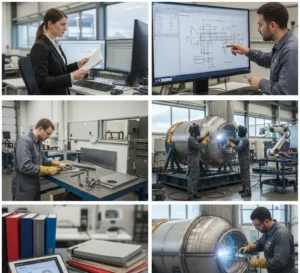
What are the Key Factors in Pressure Vessel Engineering
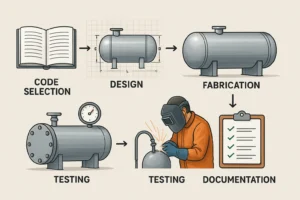
How Do You Design a Pressure Vessel: A Step-By-Step Guide