
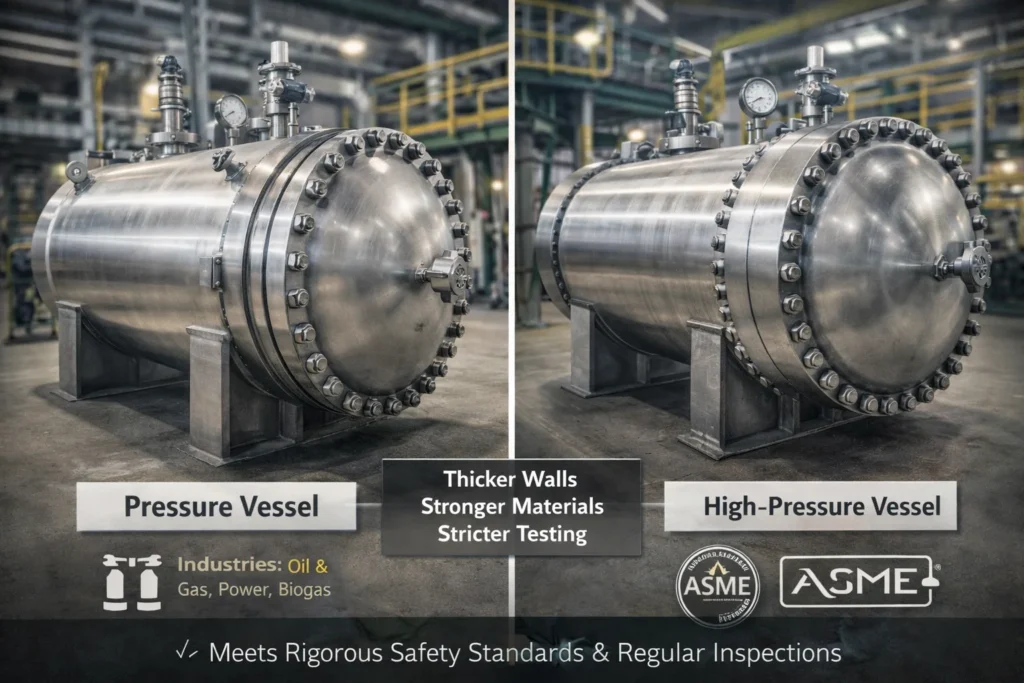
Pressure Vessel vs. High-Pressure Vessel Guide
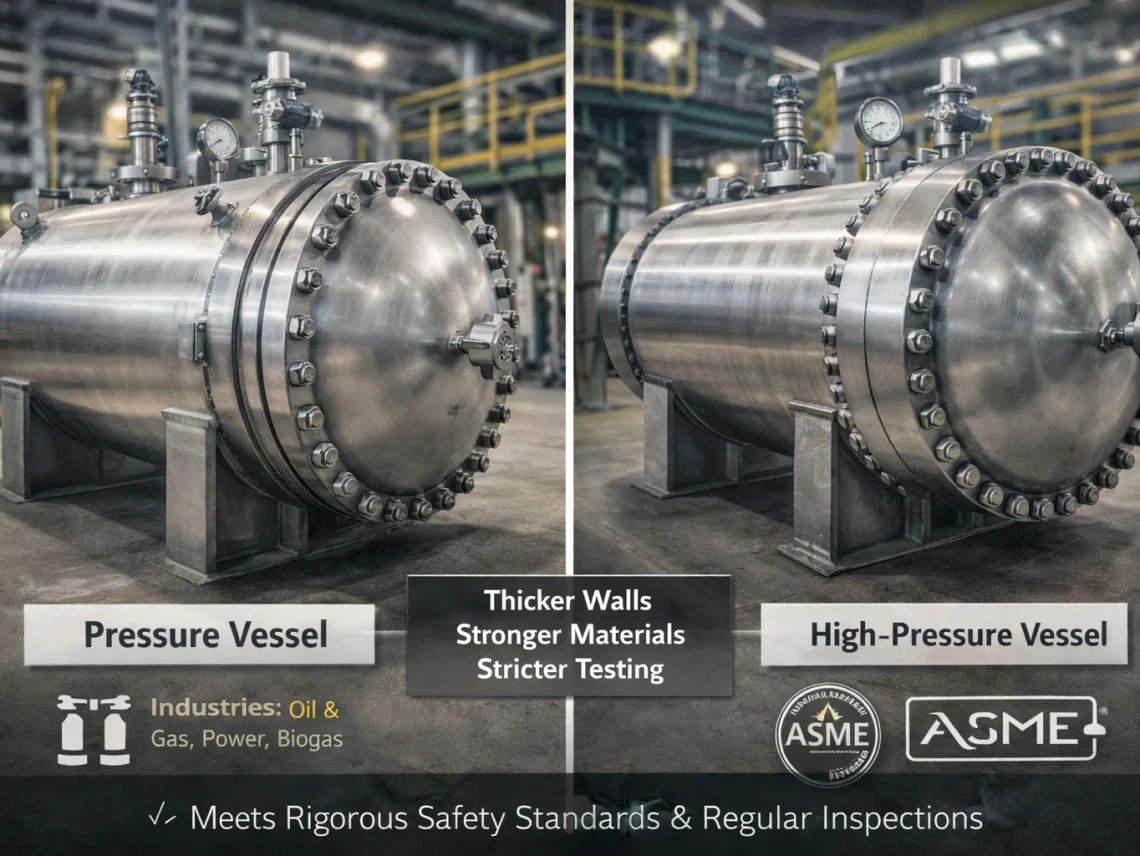
Introduction to Pressure Vessel vs. High-Pressure Vessel
Pressure vessels are enclosed containers designed to hold gases or liquids at a pressure substantially different from the ambient pressure. They are a fundamental component in a variety of industries, ranging from oil and gas to power generation. At Red River, we deeply understand the intricacies of pressure vessel manufacturing. Furthermore, we prioritize adherence to industry standards. Our commitment to American values, such as work ethic and reputation, ensures that every pressure vessel we produce is of the highest quality.
Common Uses of Pressure Vessel vs. High-Pressure Vessel
Pressure vessels are incredibly versatile and play a crucial role in numerous sectors. Specifically, they are prominently used in industries such as:
- Oil and Gas: For storage, separation, and processing.
- Commercial/Public Works: In heating and cooling systems.
- Power Generation: As boilers and steam generators.
- Minerals/Elements: In the extraction and refining processes.
- Bio Gas: For storage and transportation.
Our clients, ranging from international giants to innovative startups, trust Red River for their pressure vessel needs. Moreover, we pride ourselves on building lasting relationships and delivering solutions that drive America’s future.
Materials Used in Pressure Vessel Construction
The choice of material is pivotal in pressure vessel manufacturing. At Red River, we specialize in using a variety of carbon and stainless materials tailored to the specific requirements of each project. For instance, our advanced welding processes ensure that each vessel is robust, durable, and meets or exceeds industry standards. Whether you’re in the minerals/elements sector or biogas, we have the expertise and technology to cater to your unique material requirements.
Safety Regulations Surrounding Pressure Vessels
Safety is at the heart of everything we do at Red River. Given their critical nature, pressure vessels are governed by stringent safety regulations. Not only do we comply with these regulations, but we also often exceed them, embedding safety deeply into our company culture. Additionally, our dynamic safety culture ensures that every pressure vessel we manufacture is safe for its intended use. From the initial design phase to the final inspection, our team ensures that each vessel adheres to all safety standards. This reflects our unwavering commitment to our clients and the communities we serve.
At Red River, we believe in looking our clients in the eye and doing what we say. Our dedication to safety, combined with our American values and expertise, makes us the go-to partner for all your pressure vessel needs. Furthermore, when you choose Red River, you’re not just selecting a manufacturer—you’re choosing a partner who understands your industry, shares your values, and prioritizes your safety. So, if you’re seeking a partner who not only gets the job done but does it with integrity, dedication, and an unwavering commitment to safety, Red River is the one for you.
Delving into High-Pressure Vessels
Defining High-Pressure Vessels
High-pressure vessels are specialized containers designed to hold gases or liquids at significantly elevated pressures. These vessels are specifically built to withstand extreme conditions, ensuring safety and efficiency in their applications.
Applications of High-Pressure Vessels
These vessels are pivotal in sectors like oil and gas exploration. For example, they’re used for deep-sea drilling and in power generation plants, where they manage superheated steam.
High-Pressure Vessel Materials and Design
Constructed using robust materials like stainless steel and reinforced with advanced welding techniques, these vessels prioritize safety and durability. As a result, they can handle the intense pressures they’re subjected to.
Safety Protocols for High-Pressure Vessels
Safety is paramount. These vessels undergo rigorous testing and inspections to ensure they meet all industry safety standards. Consequently, this reflects Red River’s unwavering commitment to excellence.
Key Differences Between the Two
Pressure Ratings and Tolerance
Both high-pressure and standard-pressure vessels are designed to contain gases or liquids under pressure. However, high-pressure vessels are built to handle pressures significantly higher than those managed by standard vessels. Moreover, these vessels are constructed to withstand forces several times greater, often reaching pressures that demand reinforced materials and specialized engineering. In contrast, standard-pressure vessels, while robust, operate within more moderate pressure limits. As a result, they are suitable for applications that do not involve extreme containment demands.
Design and Structural Variations
High-pressure vessels typically feature thicker walls and more robust seals to endure the intense forces exerted by high-pressure fluids or gases. The structural integrity of these vessels is paramount because even a minor flaw could lead to catastrophic failure. Furthermore, design considerations often include the use of dome-shaped ends to evenly distribute pressure and reduce stress on joints. By contrast, standard-pressure vessels may use a wider variety of shapes and construction materials, as they are not subjected to the same intense internal forces. This flexibility, therefore, allows standard vessels to be more adaptable to different applications and shapes, such as rectangular forms for specific industrial needs.
Cost Implications
The specialized materials, thicker walls, and advanced engineering required to manufacture high-pressure vessels result in higher production costs. These vessels often use premium materials such as high-strength alloys or corrosion-resistant metals to ensure safety and durability under extreme conditions, driving up the price. Standard-pressure vessels, while still requiring quality materials, are generally less costly due to their simpler structural requirements and the availability of a broader range of material options that meet safety standards at lower pressures.
Maintenance and Inspection Requirements
Due to their critical role in handling extreme pressures, high-pressure vessels require more rigorous and frequent inspections compared to standard vessels. Inspection routines for high-pressure vessels often involve non-destructive testing methods like ultrasonic testing, radiography, or magnetic particle inspection to detect any micro-cracks or signs of fatigue that could lead to failure. Standard-pressure vessels, while still requiring regular maintenance, typically have less stringent inspection protocols, allowing for more basic inspection methods in many cases. Nonetheless, both vessel types demand adherence to inspection schedules to ensure operational safety.
Historical Evolution of Pressure Vessels
Early Uses and Designs
Pressure vessels have a rich history, with their earliest forms emerging to serve relatively simple applications, such as steam generation in early industrial processes. The rudimentary designs from centuries ago were mostly for tasks like boiling water to produce steam, which powered the first industrial machinery. These vessels were often bulky and made from wrought iron or cast iron, with limited attention to pressure regulation and safety standards by today’s norms. As the Industrial Revolution progressed, pressure vessels became more refined to support the growing demand for pressurized systems in various industries.
Technological Advancements Over Time
The development of modern metallurgy and engineering practices drastically improved the safety, efficiency, and reliability of pressure vessels. Advances in materials science introduced high-strength steel alloys and corrosion-resistant metals that allowed for more compact, durable designs capable of withstanding higher pressures. Additionally, the introduction of computer-aided design (CAD) and finite element analysis (FEA) has enabled engineers to create optimized structures that balance strength with material efficiency. These technologies, along with improved welding and fabrication techniques, have allowed pressure vessels to evolve into essential components for critical applications in industries like oil and gas, chemical processing, and energy.
Milestones in Pressure Vessel Safety
Over time, a series of safety protocols and regulatory standards have been established, driven by lessons learned from past incidents and advances in engineering. Organizations like the American Society of Mechanical Engineers (ASME) set forth codes that outline the essential requirements for the design, fabrication, inspection, and testing of pressure vessels. These milestones in safety have included the implementation of mandatory inspection routines, the development of pressure-relief mechanisms, and rigorous testing methods. Together, these standards have significantly enhanced the reliability of pressure vessels, making them safer and more dependable across various industrial applications.
Modern Innovations in High-Pressure Vessel Technology
Cutting-Edge Materials
Today’s high-pressure vessels utilize advanced materials, offering enhanced durability and resistance to wear.
Advanced Manufacturing Techniques
Modern manufacturing methods, combined with state-of-the-art technology, ensure these vessels meet the highest standards of quality and safety.
Sustainability and Eco-Friendly Designs
With a growing emphasis on sustainability, modern high-pressure vessels are designed to be more eco-friendly, minimizing their environmental impact.
Real-World Case Studies
Success Stories Using Pressure Vessels
In the biogas sector, a startup utilized our pressure vessels to store and transport gas efficiently, leading to a 30% increase in their operational efficiency. Their success story is a testament to the reliability and quality of Red River’s products.
Challenges Overcome with High-Pressure Vessels
An oil and gas client faced challenges with deep-sea drilling. Our high-pressure vessels, tailored to their needs, ensured safe and efficient operations, overcoming the intense pressures of the deep sea.
Lessons Learned from Past Incidents
Past incidents, like minor leaks in a mineral extraction facility, have taught us the importance of regular maintenance and timely inspections. These lessons shape our commitment to safety and continuous improvement.
Choosing Between a Pressure Vessel and a High-Pressure Vessel
Factors to Consider
When selecting a vessel, consider the intended application, the pressures involved, and the operational environment to ensure optimal performance.
Industry-Specific Recommendations
For industries like power generation, standard pressure vessels suffice, while oil and gas explorations often demand high-pressure variants.
Expert Opinions and Consultations
Red River offers consultations with industry veterans like Reilly Sasse, ensuring clients make informed decisions tailored to their needs.
Safety and Compliance in the Industry
Regulatory Bodies and Standards
Adherence to standards set by bodies like ASME ensures the safety and reliability of our pressure vessels.
Best Practices for Safe Operations
Regular inspections, maintenance, and adherence to operational guidelines are pivotal for the safe operation of pressure vessels.
Training and Certification for Personnel
At Red River, our personnel undergo rigorous training and certification, ensuring they’re equipped with the knowledge and skills to uphold our commitment to safety.
Future Trends and Predictions
The Role of AI and Automation
The integration of AI and automation in pressure vessel manufacturing promises enhanced precision and efficiency. Predictive maintenance, powered by AI, can foresee potential issues, ensuring longevity and safety.
Pressure Vessels in Space Exploration
As space exploration advances, the demand for specialized pressure vessels capable of withstanding extraterrestrial conditions will rise. These vessels will play a pivotal role in fuel storage and life support systems in spacecraft.
Environmental and Energy Efficiency Trends
The push for greener solutions will drive innovations in pressure vessel design, focusing on materials and processes that reduce carbon footprints and enhance energy efficiency.
Red River LLC's Expertise and Offerings
Our Experience with Pressure Vessels
With years of industry experience, Red River has mastered the art of crafting reliable and efficient pressure vessels, catering to diverse sectors and unique requirements.
Why Choose Red River for High-Pressure Vessels?
Our commitment to quality, safety, and continuous improvement makes us the preferred choice for high-pressure vessel needs. Our vessels are not just products; they’re a testament to our values and dedication.
Client Testimonials and Success Stories
Our clients, from startups to international giants, vouch for our expertise and the unparalleled quality of our pressure vessels. Their success stories underscore our role as a trusted partner.
Ready to Elevate Your Project with Red River?
Contact Us Today:
Don’t just take our word for it. Reach out and experience our commitment to excellence firsthand.
Discover the Red River Difference:
Join the ranks of satisfied clients who have experienced the Red River advantage in pressure vessel manufacturing.
Let’s Build the Future Together!
Red River– Where Quality Meets Innovation in Pressure Vessel Manufacturing.
FAQ: Pressure Vessels and Their Intricacies
What exactly is the primary function of a pressure vessel?
A pressure vessel is a container specifically designed to hold gases or liquids at a pressure substantially different from the ambient pressure. Their primary function is to safely contain these substances, preventing leaks or explosions, which could be harmful to the environment or people.
How do pressure vessels differ from boilers?
While both pressure vessels and boilers are containers designed to hold fluids under pressure, their primary functions differ. Boilers are specifically designed to produce steam from water, while pressure vessels are used to store and transport gases and liquids under pressure. Boilers usually have a heat source, while pressure vessels might not.
Are there specific materials recommended for the construction of high-pressure vessels?
Yes, high-pressure vessels typically require stronger and more durable materials due to the extreme pressures they handle. Common materials include carbon steel, stainless steel, and other alloy materials. The choice of material often depends on the specific application, the substance being contained, and the environmental conditions the vessel will be exposed to.
How often should pressure vessels be inspected for safety?
The frequency of inspections depends on local regulations and the specific application of the vessel. However, regular inspections are crucial for ensuring the safety and functionality of the vessel. Typically, pressure vessels undergo routine inspections annually, but high-pressure vessels or those in critical applications might require more frequent checks.
What are the potential risks if a pressure vessel fails?
A failure in a pressure vessel can lead to catastrophic events. Depending on the contents, a rupture can result in explosions, toxic substance leaks, or fires. Such incidents can cause significant property damage, environmental harm, and even loss of life. This underscores the importance of proper design, construction, and maintenance of pressure vessels.
Related Blog Post
- Are boilers fired pressure vessels?
- Is a steam turbine a pressure vessel?
- What is one advantage of a pressurized water reactor?
- What is the difference between piping and pressure vessel?
- What is the difference between a surge vessel and a pressure vessel?
- What is the difference between a pressure vessel and a column?
Solutions
In the realm of industrial solutions, Red River emerges as a pioneer, offering a diverse range of custom-engineered products and facilities. Among our specialties is the design and production of Custom/OEM Pressure Vessels, meticulously crafted to meet individual client requirements, ensuring performance under various pressure conditions. Our expertise extends to the domain of prefabrication, where Red River leads with distinction.
The company excels in creating prefabricated facilities, modules, and packages, reinforcing its stance as a forerunner in innovation and quality. This proficiency is further mirrored in their Modular Skids offering, where they provide an array of Modular Fabricated Skid Packages and Packaged equipment. Each piece is tailored to client specifications, underlining their commitment to delivering precision and excellence in every project they undertake.


Related Blog Post
What Are Pressurized Storage Vessels?
Where to Locate Air Separator Tanks?
How Do Air Separator Tanks Work?
Hydronic Tanks?
What Is a Hydronic Tank?
About Author
