
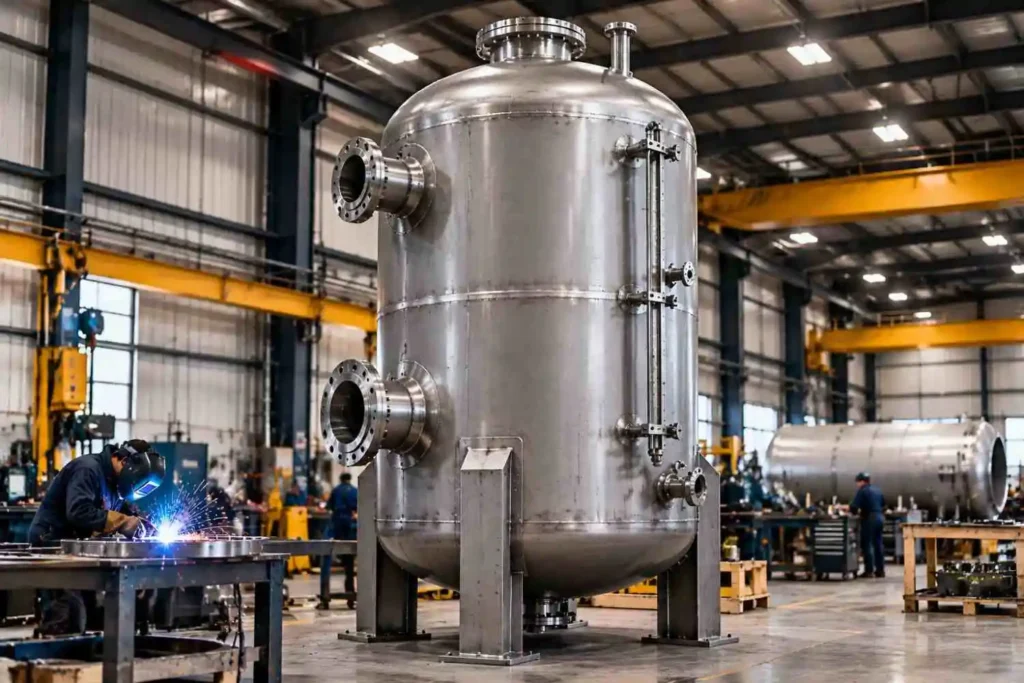
An equalization tank is a holding vessel placed between a variable upstream process stream and a downstream system that requires consistent inlet conditions, buffering fluctuations in flow rate, concentration, pH, or temperature so the downstream equipment receives a steady, controllable feed. Without an equalization tank, surge flows and concentration spikes pass directly into treatment or processing equipment, overloading it and causing operational failures.
Key Takeaways
- An equalization tank definition: a vessel that holds incoming process fluid long enough for flow, concentration, pH, or temperature variations to average out before the fluid moves to downstream treatment or processing.
- Flow equalization vessels are the most common type, used to smooth peak-to-average flow variations so downstream equipment operates at a consistent hydraulic load.
- Equalization tank wastewater applications include industrial pretreatment, biological treatment systems, and municipal influent equalization, where they protect treatment processes from hydraulic and concentration surge loads.
- An equalization tank industrial process application typically involves buffering batch discharge events between reaction stages and continuous downstream operations.
- Equalization tanks operating above 15 psig must carry the ASME U Stamp under Section VIII, Division 1.
- Red River fabricates ASME-certified equalization tanks in carbon steel and stainless steel for oil and gas, biogas, food and beverage, and industrial process applications.
What Does an Equalization Tank Do?
A flow equalization vessel does one thing: it holds the upstream process stream long enough for its characteristics to stabilize before that stream moves forward. Industrial and wastewater processes are inherently variable. Batch operations discharge large volumes intermittently. Production shift changes create flow pulses. Cleaning-in-place cycles generate high-strength, low-volume discharges. Seasonal variation changes raw material composition.
Why Variability Is a Problem for Downstream Systems
Downstream treatment and processing systems, whether biological reactors, membrane filtration units, or heat exchangers, are designed around specific inlet conditions. They have maximum hydraulic capacities, concentration tolerances, and in the case of biological systems, fragile microbial populations that cannot survive sudden composition or temperature shocks.
How the Tank Resolves It
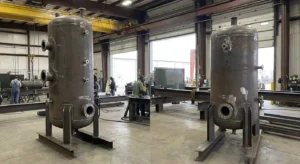
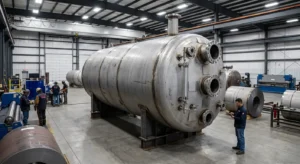
The equalization tank sits between the variable source and the sensitive downstream system, absorbing peaks and filling troughs. Fluid enters at variable flow and composition, accumulates in the vessel, and exits at the steady, controlled rate the downstream system was designed to receive. Red River’s process tank and pressure vessel fabrication scope covers equalization vessels from atmospheric receivers to ASME-coded pressurized designs.
What Are the Types of Equalization Tanks?
Equalization tanks are classified by the type of variability they are designed to buffer. Most industrial applications require one or a combination of the four primary types.
Flow Equalization Tanks
Flow equalization tanks buffer hydraulic variability, holding excess flow during peak periods and releasing it during low-flow periods to maintain a consistent volumetric feed rate to downstream equipment. This is the most common equalization tank industrial process function and is critical wherever downstream capacity is limited by maximum hydraulic load.
A common example is an industrial wastewater pretreatment system that receives batch discharges from manufacturing operations at irregular intervals. Without a flow equalization vessel upstream, each batch discharge creates a surge that exceeds the treatment system’s design capacity. With equalization, the batch volume is held and metered forward at the design flow rate.
Concentration Equalization Tanks
Concentration equalization tanks blend variable-strength streams into a consistent average concentration at the outlet. A high-concentration slug from a batch process mixed with a lower-concentration continuous stream produces a manageable average at the downstream treatment system inlet rather than a concentration shock.
pH Equalization Tanks
pH equalization combines vessel volume with active mixing to moderate pH swings in variable industrial streams. A discharge ranging from pH 4 to pH 10 across a production day can be damped to a manageable range inside the vessel, reducing chemical consumption at the downstream neutralization stage. Volume does most of the work.
Temperature Equalization Tanks
Temperature equalization protects downstream processes from thermal shocks. Hot process discharges and cooling rinse waters can create temperature excursions in a combined stream. The equalization vessel absorbs the hot slug and blends it with ambient-temperature base flow before it reaches a biological system or heat-sensitive membrane process.
Where Is an Equalization Tank Used?
Equalization tanks appear across nearly every industrial sector where upstream processes produce variable streams.
Oil and Gas
Oil and gas production and processing facilities use equalization tanks ahead of produced water treatment systems, where variable well production rates and operational upsets create flow variability that produced water treatment equipment cannot track in real time. Red River’s pressure vessel fabrication covers equalization vessels for upstream and midstream oil and gas service.
Biogas and Wastewater
Equalization tank wastewater applications in biogas facilities include feedstock equalization ahead of anaerobic digesters, where composition variability directly affects biogas yield and digester stability. Municipal wastewater plants use influent equalization to protect biological treatment from hydraulic and concentration surges. See Red River’s biogas and biomethane capabilities for how equalization vessels are applied here.
Food and Beverage
Food and beverage plants use equalization tank wastewater systems ahead of biological pretreatment, holding high-strength cleaning-in-place discharges and product changeover events before treatment. The equalization vessel prevents biological systems from being overwhelmed by high-BOD slugs that would otherwise upset the active biomass.
When Does an Equalization Tank Need to Be ASME-Coded?
The ASME code threshold for equalization tanks is 15 psig operating pressure. A closed, pressurized equalization vessel operating above that threshold must be fabricated to ASME BPVC Section VIII, Division 1, by a U Stamp-certified fabricator and registered with the National Board of Boiler and Pressure Vessel Inspectors.
Atmospheric Equalization Tanks
Most wastewater equalization tanks are atmospheric and fall below the ASME pressure threshold. Atmospheric tanks may be fabricated to API 650, AWWA D100, or other applicable standards. Tanks handling hazardous fluids, including many industrial process streams, carry additional secondary containment, venting, and material requirements under EPA, OSHA, or local environmental regulations regardless of operating pressure.
Red River’s Scope for Coded Equalization Vessels
Red River holds active ASME U Stamp and NBBI R Stamp certifications. Every coded equalization tank leaves the Gillette, Wyoming facility with the ASME Form U-1, certified MTRs, weld qualification records, NDE examination reports coordinated through qualified inspection personnel, and the hydrostatic test record. See Red River’s capabilities for how equalization vessel scopes are managed.
What This Means When Specifying an Equalization Tank
What is an equalization tank in practice is answered by the upstream variability it must absorb and the downstream sensitivity it must protect. A vessel sized too small passes surge loads through. A vessel without mixing accumulates settled solids that reduce effective volume. A vessel fabricated from an incompatible material corrodes prematurely or contaminates the process fluid.
Getting the specification right means confirming the sizing basis, mixing configuration, vent design, and material selection against the actual upstream flow profile before fabrication begins. Red River has built coded equalization vessels from Gillette, Wyoming, since 2003.
Discuss Your Equalization Tank With Red River
Red River fabricates ASME-certified equalization tanks in carbon steel and stainless steel for oil and gas, biogas, food and beverage, pharmaceutical, and chemical process applications. Red River holds active ASME U Stamp and NBBI R Stamp certifications and is an American Welding Society (AWS) member.
Ready to Size Your Equalization Vessel?
Request a quote or call 1-307-257-5332 to discuss your equalization tank type, sizing, and fabrication scope with Red River’s team.
Frequently Asked Questions
1. What Is an Equalization Tank?
An equalization tank is a holding vessel placed between a variable upstream process stream and downstream treatment or processing equipment. It buffers fluctuations in flow rate, concentration, pH, or temperature, delivering a steady, consistent feed to downstream systems that cannot tolerate the variability of the raw upstream stream.
2. What Is the Difference Between Flow Equalization and Concentration Equalization?
Flow equalization tanks buffer hydraulic variability, maintaining a steady volumetric flow rate to downstream equipment regardless of upstream peaks and troughs. Concentration equalization tanks blend variable-strength streams into a consistent average concentration at the outlet. Many equalization tanks serve both functions simultaneously, holding the upstream surge volume while also blending its composition with the continuous base flow.
3. Does an Equalization Tank Need a Mixer?
Most equalization tanks include some form of mixing to prevent solids settling and accelerate blending of variable streams. Mixing options include mechanical agitators, coarse-bubble aeration, and recirculation pumps. The required mixing intensity depends on the suspended solids content, the viscosity of the process stream, and whether clarification follows the equalization stage.
4. When Is an Equalization Tank Required to Be ASME-Coded?
Any equalization tank operating above 15 psig must be fabricated to ASME BPVC Section VIII by a U Stamp certified fabricator. Most wastewater equalization tanks are atmospheric and fall below this threshold. Industrial process equalization vessels in closed-loop or pressurized service may exceed the threshold and require ASME certification.
5. What Material Is Best for an Equalization Tank?
Carbon steel with protective lining suits most near-neutral pH wastewater and process streams. Stainless steel is specified for acidic, corrosive, or high-purity streams where carbon steel would corrode or contaminate the fluid. Material selection must be confirmed against the specific fluid chemistry, pH range, temperature, and any regulated chemical species present.
Related Blog Post
Which Materials Suit Make-Up Water Service?
How Big Should Make-Up Water Tanks Be?
Make-Up Water Tanks: Design, Sizing, and Fabrication
When to Spec Equalization Tanks for Industrial Systems
How Do Equalization Tanks Balance Flow?
About Author



