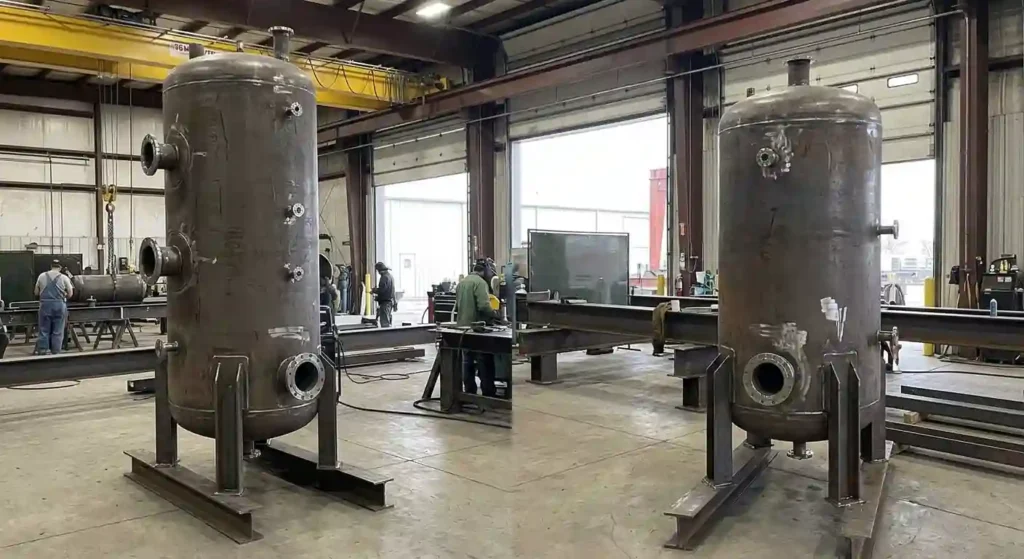
Equalization tanks are required when upstream flow variability exceeds the tolerance of downstream equipment and when concentration, pH, or temperature surges would overload or upset treatment and processing systems. The equalization tank specification trigger is always the gap between what the upstream process produces and what the downstream system was designed to receive.
Key Takeaways
- Equalization tank specification triggers include a peak-to-average flow ratio above 2:1, batch discharge events that exceed downstream hydraulic capacity, and concentration or pH swings that overload downstream treatment systems.
- Flow equalization design criteria include the peak-to-average flow ratio, the duration of peak events, the downstream system’s hydraulic capacity, and the acceptable operating range for concentration and pH.
- When is an equalization tank required: whenever a variable upstream process feeds a fixed-capacity downstream system and the variability cannot be managed by the downstream system alone.
- Industrial equalization tank selection should confirm vessel volume, material compatibility, mixing requirements, vent design, and ASME code requirements before the fabrication scope is defined.
- Every pressurized equalization vessel operating above 15 psig must carry the ASME U Stamp under Section VIII, Division 1.
- Red River fabricates ASME-certified equalization tanks in carbon steel and stainless steel sized to the specific upstream flow profile and downstream system constraints.
What Conditions Trigger the Need for an Equalization Tank?
Three categories of mismatch between upstream production and downstream capacity drive most industrial equalization tank specifications.
Hydraulic Variability Above Downstream Capacity
When upstream peak flow rates exceed the downstream system’s design hydraulic capacity, an equalization tank is required. A peak-to-average flow ratio above 2:1 is a common threshold. Ratios above 3:1 almost always require equalization because sizing the downstream system to the peak becomes economically impractical.
Batch Discharge Events
Batch processing operations produce defined discharge events at the end of each production cycle. A batch reactor that processes for eight hours and discharges in thirty minutes creates a pulse eighteen times the average rate. An equalization tank between the batch operation and the continuous downstream process holds the discharge and meters it forward at the design rate.
Concentration, pH, or Temperature Surges
Even when the flow rate is manageable, concentration spikes, pH excursions, or temperature shocks can upset downstream equipment. Biological treatment systems are sensitive: a high-BOD slug can overwhelm active biomass and cause a treatment failure that takes days to recover. Equalization tanks in these applications are specified for their blending and averaging function rather than hydraulic buffering alone.
When Is an Equalization Tank Required by System Design?
Beyond the general triggers above, several specific system design conditions make equalization a required component rather than an optional one.
Biological Treatment Upstream of Discharge
Industrial facilities that treat wastewater biologically before discharge must meet consistent effluent quality standards. Biological systems cannot tolerate the hydraulic and concentration variability that most industrial processes produce directly. Equalization between the industrial process and the biological treatment system is a standard design requirement, often required by permit or by the equipment supplier.
Downstream Equipment With Fixed Hydraulic Limits
Membrane filtration systems, ion exchange columns, and heat exchangers have defined maximum inlet flow rates. When the upstream process cannot consistently deliver within those limits, an equalization tank enforces the limit at the downstream equipment inlet. Red River’s process tank fabrication scope covers equalization vessels sized for these fixed-limit applications.
Regulatory or OEM Requirements
Some process industries carry regulatory requirements that specify equalization as a design element. Pharmaceutical facilities under FDA oversight, food processors under EPA pretreatment standards, and biogas facilities under state permitting may have equalization requirements embedded in the applicable rules or equipment warranties. Red River’s capabilities cover equalization vessel fabrication across regulated process industries.
What Flow Equalization Design Criteria Determine the Spec?
Five flow equalization design criteria determine the vessel size, configuration, and material once equalization is confirmed as a requirement.
Peak-to-Average Flow Ratio
The peak-to-average flow ratio is the primary sizing driver. A ratio of 2:1 requires roughly one hour of average flow as equalization volume for each hour of peak duration. A ratio of 4:1 requires three hours of average flow storage for the same peak duration.
Downstream System Sensitivity
The tighter the downstream tolerance for flow rate and concentration variation, the larger the equalization vessel must be. A biological treatment system tolerating plus or minus 20 percent flow variation requires less equalization volume than a membrane process requiring plus or minus five percent.
Material Compatibility
The process fluid pH, temperature, suspended solids content, and specific chemical species determine the vessel material. Carbon steel suits most near-neutral wastewater service. Stainless steel is specified for acidic or corrosive streams where carbon steel would corrode or contaminate the fluid. Red River’s pressure vessel fabrication scope includes equalization vessels in both materials across process service conditions.
ASME Code Requirements
Equalization vessels operating above 15 psig require ASME BPVC Section VIII certification. Red River holds active ASME U Stamp and NBBI R Stamp certifications, verifiable with the National Board. Every coded equalization vessel ships with the ASME Form U-1, certified MTRs, weld records, and NDE examination reports coordinated through qualified inspection personnel.
Mixing and Vent Design
Equalization tanks handling streams with suspended solids require a mixing system sized to maintain suspension across the full operating level range. Tanks handling streams that generate volatile or odorous gases require a designed vent system to capture and control off-gases from the headspace. Both requirements belong in the specification before the fabrication scope is defined, not after the vessel arrives on site.
What Industrial Equalization Tank Selection Mistakes Should Be Avoided?
Three errors account for most equalization tank failures in industrial service.
Undersizing Against the Peak Flow Profile
Using average flow as the sizing basis produces a vessel that cannot hold peak excess volume. The sizing must reflect the real upstream flow time series, including worst-case peak duration and frequency, not an estimated average.
Omitting Mixing
A tank without mixing accumulates settled solids that reduce effective volume and release concentrated slugs when the level drops. Any equalization tank handling streams with suspended solids requires a mixing system sized to maintain suspension. Red River’s modular skid packages can integrate the equalization vessel with its mixing system, level controls, and instrumentation into a single factory-tested assembly.
Specifying Incompatible Materials
A vessel fabricated from material incompatible with the process fluid’s pH range, cleaning concentrations, or chemical species fails prematurely and contaminates the stream it buffers. Material selection must cover the full range of conditions the vessel will encounter, not just nominal process values.
When to Spec Equalization Tanks: The Decision
When to spec equalization tanks is answered by the gap between upstream variability and downstream tolerance. When that gap exists and the downstream system cannot close it on its own, an equalization tank is the correct engineering solution. Getting the specification right means confirming the sizing basis against the real upstream flow profile, selecting the material against the full range of fluid conditions, and setting the ASME code requirements before the fabrication scope is defined. Red River has fabricated coded equalization vessels for oil and gas, biogas, and industrial process applications from Gillette, Wyoming, since 2003.
Ready to Define Your Equalization Tank Specification?
Request a quote or call 1-307-257-5332 to discuss your equalization tank specification triggers, sizing basis, and fabrication scope with Red River’s team. The specification review starts before fabrication scope is defined.
Frequently Asked Questions
1. When Should You Spec an Equalization Tank?
Specify an equalization tank when upstream flow variability exceeds the downstream system’s design tolerance, when batch discharge events create pulse flows that exceed downstream hydraulic capacity, or when concentration, pH, or temperature surges would overload or damage downstream treatment and processing equipment. The trigger is always the mismatch between what the upstream process produces and what the downstream system accepts.
2. What Peak-to-Average Flow Ratio Requires Equalization?
A peak-to-average flow ratio above 2:1 is a common threshold where equalization becomes necessary. Ratios above 3:1 almost always require equalization because sizing the downstream system to the peak rather than the average becomes economically impractical. The specific ratio that triggers equalization depends on the downstream system’s hydraulic tolerance and the cost of oversizing it.
3. Do Biological Treatment Systems Always Require Equalization?
In industrial applications, biological treatment systems almost always require equalization upstream. Biological systems are sensitive to both hydraulic and concentration variability. Surge flows exceed aeration and clarifier capacity. High-BOD slugs overwhelm the active biomass. Temperature shocks inhibit microbial populations. Equalization upstream of biological treatment is standard engineering practice and is often required by permit or OEM specification.
4. What Is the Biggest Sizing Mistake for Equalization Tanks?
The most common sizing mistake is using the average flow rate as the design basis instead of the actual peak flow profile. A vessel sized to the average cannot absorb the excess volume during peak events and passes surge loads downstream, defeating its purpose. The sizing basis must reflect the real upstream flow time series, including the worst-case peak duration and frequency.
5. Does Red River Fabricate Equalization Tanks to ASME Code?
Yes. Red River fabricates pressurized equalization vessels to ASME BPVC Section VIII under active U Stamp certification. Every coded vessel ships with the ASME Form U-1, certified MTRs, weld qualification records, NDE examination reports, and the hydrostatic test record.
Contact Red River at 1-307-257-5332 or request a quote to discuss your equalization tank scope.
Related Blog Post
Which Materials Suit Make-Up Water Service?
How Big Should Make-Up Water Tanks Be?
Make-Up Water Tanks: Design, Sizing, and Fabrication
How Do Equalization Tanks Balance Flow?
What Is an Equalization Tank?
About Author