
Desiccant vs. Refrigerant Dryers: How to Choose the Right One
Introduction to Desiccant vs Refrigerant Dryers
When it comes to drying technologies, the choice between desiccant and refrigerant dryers is critical, especially in applications like vapor recovery tower vessels where moisture control is paramount. Understanding these systems is key to optimizing operations in industries such as oil and gas, power generation, and biogas, where we at Red River LLC have honed our expertise.
Understanding Air Dryer Technology
Air dryers are essential for removing unwanted moisture from compressed air, and crucial for preventing corrosion and other moisture-related problems in pressure vessels and systems. At Red River, we focus on delivering solutions that not only meet but exceed the rigorous demands of industrial applications, ensuring reliability and efficiency.
The Role of Air Dryers in Industry
In industries where precision and safety are non-negotiable, the role of air dryers becomes even more significant. From preventing operational failures in power plants to ensuring the integrity of biogas production, the right air dryer can make a profound difference. Our solutions are designed with these high stakes in mind, safeguarding your critical operations against moisture damage.
Key Components of Air Dryers
The effectiveness of air dryers lies in their components. Whether it’s the sorbent material in a desiccant dryer or the refrigerant in a cooling system, each element is selected to enhance performance and durability. At Red River, we utilize only the highest quality components, reflecting our commitment to excellence and your industry’s standards.
What Are Desiccant Dryers?
Desiccant dryers, using materials like silica gel or activated alumina, absorb moisture from the air without cooling it. This method is especially beneficial in environments requiring extremely dry air or operations at sub-freezing temperatures.
Working Principle of Desiccant Dryers
Desiccant dryers work by passing compressed air through a chamber filled with desiccant material which adsorbs moisture. This process is vital in settings where even minor moisture presence can lead to equipment degradation or process failure, such as in vapor recovery tower vessels used in the oil and gas sector.
Need a reliable partner?
FAQ: Desiccant vs Refrigerant Dryers
What factors should I consider when choosing between a desiccant and a refrigerant dryer for my pressure vessel application?
Choosing the right type of dryer depends on several factors, including the specific moisture removal needs of your application, the operational temperature range, and energy efficiency considerations. Desiccant dryers are better suited for extremely low dew points and colder environments, whereas refrigerant dryers are ideal for general industrial environments where slightly higher dew points are acceptable.
How do dew point requirements affect the choice between desiccant and refrigerant dryers?
Dew point, the temperature at which air is saturated with moisture and dew forms, is crucial in selecting dryers. Desiccant dryers can achieve dew points as low as -40°F or even -100°F, making them suitable for sensitive applications requiring dry air. Refrigerant dryers typically achieve dew points around 35°F to 50°F, adequate for many industrial but less critical applications.
Can the choice of air dryer impact the longevity of my pressure vessel system?
Absolutely. Moisture can be detrimental to pressure vessel systems, causing corrosion and premature failure. Using a desiccant dryer to achieve a lower dew point can extend the life of equipment by reducing the risk of moisture-induced damage. On the other hand, refrigerant dryers might be sufficient for systems where the operational conditions are less harsh.
What are the maintenance implications of desiccant vs. refrigerant dryers?
Desiccant dryers require regular replacement or regeneration of the desiccant material, which can be energy-intensive depending on the system design. Refrigerant dryers typically involve less maintenance but require monitoring and maintenance of the refrigerant levels and system components. Regular checks and servicing can help optimize the performance and extend the lifespan of both types of dryers.
Are there any environmental considerations to keep in mind when choosing between desiccant and refrigerant dryers?
Yes, environmental factors play a significant role in selecting an air dryer. Desiccant dryers, while more energy-intensive, do not use refrigerants, which can have a global warming potential if not managed properly. Refrigerant dryers must use environmentally friendly refrigerants and comply with regulations to minimize their environmental impact.
Related Blog Post
- How do you size a desiccant dryer?
- Can you oversize a desiccant dryer?
- How low can desiccant get humidity?
- What temperature does desiccant dry at?
- How long does a desiccant air dryer last?
- What is an advantage of desiccant air dryers?
- How do you recharge dry and dry desiccant?
- Is a desiccant dryer the same as a dehumidifier?
- How often should you change desiccant air dryer?
- What are the most common desiccant materials used in Driers?
- What is a typical pressure dewpoint from a heatless desiccant dryer?
Solutions
In the realm of industrial solutions, Red River emerges as a pioneer, offering a diverse range of custom-engineered products and facilities. Among our specialties is the design and production of Custom/OEM Pressure Vessels, meticulously crafted to meet individual client requirements, ensuring performance under various pressure conditions. Our expertise extends to the domain of prefabrication, where Red River leads with distinction.
The company excels in creating prefabricated facilities, modules, and packages, reinforcing its stance as a forerunner in innovation and quality. This proficiency is further mirrored in their Modular Skids offering, where they provide an array of Modular Fabricated Skid Packages and Packaged equipment. Each piece is tailored to client specifications, underlining their commitment to delivering precision and excellence in every project they undertake.


Related Blog Post
Can Condensate Storage Improve Reliability?
Where Do Condensate Tanks Fit in a Steam System?
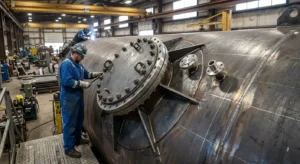
Which Nozzles Simplify Maintenance on Pressure Vessels?
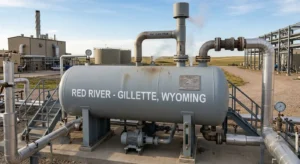
How to Vent Condensate Tanks in Steam Systems
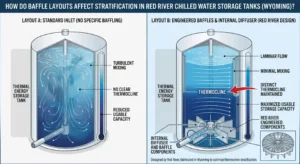
How Do Baffle Layouts Affect Stratification in TES Tanks?
No subpillar set for this blog post.
About Author
