
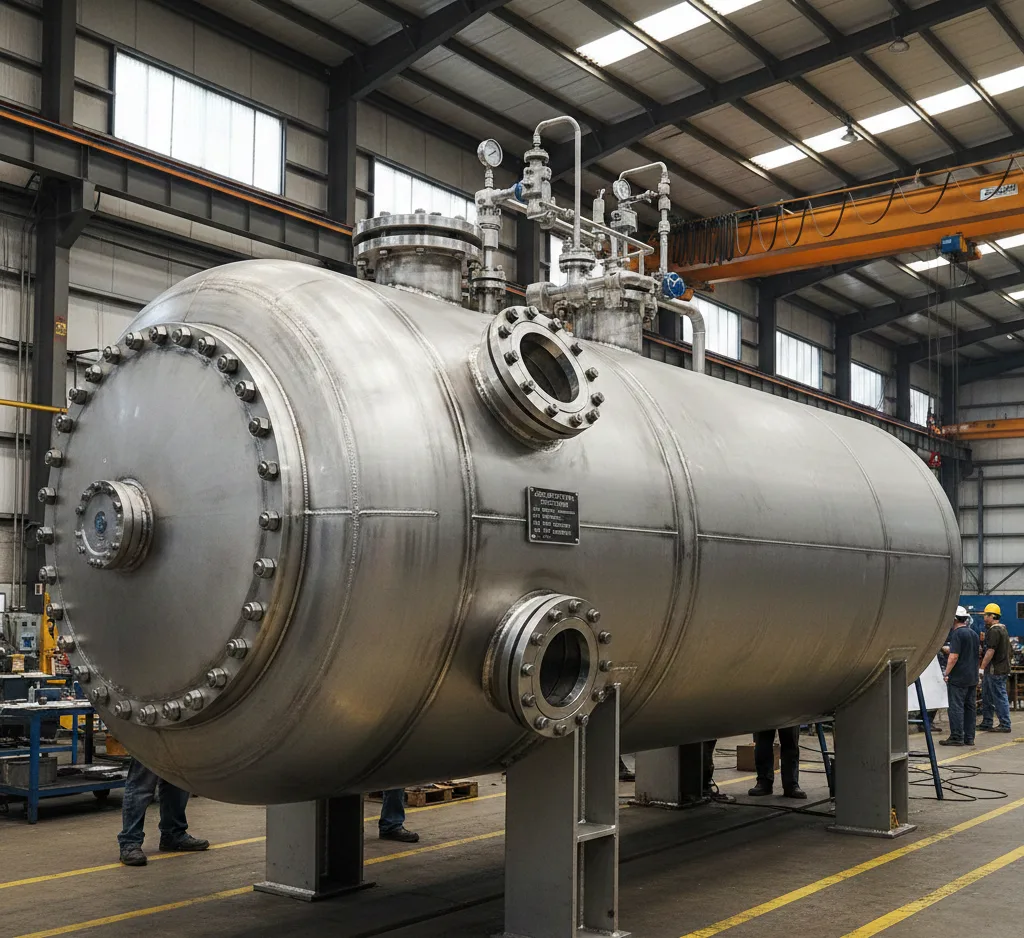
The ASME BPVC is the global safety code for pressure vessels covering design, materials, welding, testing, inspection, and certification to prevent leaks/ruptures. Most industrial vessels over -15 psi must follow it; Section VIII is the main pressure-vessel section (Div 1/2/3 by pressure level), and the 2025 update aims to clarify rules and improve layout.
What is ASME pressure vessel code
You’ve probably seen or heard about heavy-duty containers that hold gases or liquids under pressure. If you’ve ever wondered how these containers are designed to avoid catastrophic accidents, understanding the ASME Pressure Vessel Code is key. Over 100 countries rely on the ASME Boiler & Pressure Vessel Code (BPVC) for safety standards, with more than 11,500 certifications worldwide. Once you grasp the basics, you’ll see how these guidelines protect your teams and operations.
If you’re new to pressure vessels, check out what is a pressure vessel for an overview. For those researching pressure vessel manufacturers in the USA, “ASME Code” will quickly appear in discussions.
Why this code matters
Pressure vessels operate above normal atmospheric pressures. Even minor flaws in materials, welds, or construction can lead to leaks or worse, explosions. The ASME code originated in the early 1900s after several boiler explosions in Massachusetts. Public outcry led to the first legal standards for boiler and pressure vessel construction. Today, the ASME code ensures:
Consistent safety standards: Sets strict guidelines for materials, design, and testing.
Trust in manufactured products: ASME-certified vessels meet proven reliability benchmarks.
Reduced accident risk: Regular inspections catch weaknesses early.
Uniform global application: Partnering with manufacturers worldwide ensures a baseline quality level.
For operators, this reduces compliance headaches. Ordering an ASME-stamped vessel ensures it has passed checks from proper materials to rigorous inspections. Regulators often reference ASME standards, reducing legal roadblocks when operating in different states or countries.
Most industrial vessels operating above 15 psi must comply. While smaller, low-pressure vessels may be exempt, ASME is the primary reference for North America. Learn more about pressure vessels vs. pressure tanks to understand thresholds.
Key sections you should know
The ASME code is a multi-section standard for designing, testing, and maintaining pressure vessels. Section I covers boilers; Section II outlines material specs; Section III applies to nuclear components; Section VIII handles pressure vessels by pressure range; Section IX covers welding qualifications; and Section XII addresses transport tanks for hazardous materials. When choosing a U.S. manufacturer, ensure they follow the relevant sections high-pressure applications may require Section VIII Division 3, and industries like nuclear or chemical processing often need additional certifications.
Section VIII: A closer look
Because most industrial vessels exceed 15 psi, Section VIII is central for many manufacturers. It teaches mandatory requirements on fabrication, inspection, testing, and certification of pressure vessels. The code breaks it down as:
- Division 1: For vessels above 15 psi.
- Division 2: Addresses designs above 3000 psi but below 10,000 psi, often used for certain industrial applications.
- Division 3: Targets ultra-high pressure designs above 10,000 psi.
Following these rules ensures your vessel won’t buckle or rupture under normal or slightly off-normal operating conditions. It also prescribes detailed inspections, from radiography of welded joints to ultrasonic testing of vessel thickness.
Section II: Materials matter
Material selection is critical. Section II specifies mechanical properties and testing methods to prevent hidden flaws. Choosing the wrong steel, alloy, or composite can cause cracks or warping. For guidance, see choosing the right material for pressure vessel fabrication and ideal material for pressure vessel fabrication.
Recent and upcoming 2025 updates
Every two years, the BPVC is updated to reflect new technologies and lessons learned. The 2025 edition aims to simplify layout, clarify vessel-specific requirements, and emphasize performance-based expectations. If you’re involved in ordering or fabricating large vessels, you should know a few key points:
- Clearer vessel-specific requirements: With the new edition, you’ll see more explicit guidelines for in-service examinations versus construction-phase inspections. That means fewer ambiguities about when (and how) you need to inspect.
- Streamlined certification for design professionals: ASME is refining its approach to design-by-analysis, so engineers can follow a more logical path to prove a vessel’s viability.
- Materials under stress: Nuclear applications get an extra spotlight, especially for fatigue analysis. If you’re in the nuclear sector, you’ll want to pay close attention to new stress and fatigue rules.
- Improved readability: Past revisions sometimes reorganized chapters in confusing ways, leaving manufacturers scrambling to interpret them. The 2025 update focuses on a layout that’s more logical and less repetitive.
Manufacturers can prepare by reviewing ASME update briefings or attending webinars. Cross-functional teams in engineering, QA, and compliance often collaborate for smooth transitions.
Practical steps to ensure compliance
If you have an operational role in a facility that uses pressure vessels, or you’re tasked with sourcing new ones, you might wonder how best to comply with the ASME code. Here are a few strategies:
Engage certified manufacturers
Look for “R,” “U,” or “S” stamps. Example: Red River LLC ASME-certified vessels.
Request design reviews
Make sure your engineering team consults relevant code sections early. This helps avoid costly redesigns.
Schedule regular inspections
Even a well-built vessel needs periodic checks. Non-destructive examination (NDE), like ultrasonic testing, identifies early signs of corrosion or thinning. For more on effective upkeep, see pressure vessel maintenance.
Keep documentation organized
The ASME code requires thorough record-keeping: material certifications, weld procedures, inspection reports, etc. Having documents in order speeds up future recertifications and expansions.
Stay informed about changes
Every new edition can shift notation, add clarifications, or rearrange chapters. Keep an eye out for official announcements. If you’re worried about code complexity, remember you can request training from ASME or other professional groups.
Good news staying compliant isn’t as daunting if you partner with trusted experts. Many shops have decades of experience and can guide you through each step, from design to final sign-off.
What is ASME pressure vessel code
So, what is ASME pressure vessel code in practical terms? It’s a recognized framework that sets clear guidelines for designing, fabricating, and inspecting vessels under pressure. By adopting these standards, manufacturers reduce the chance of accidents and improve the reliability of systems critical to industries like energy, chemicals, and more. For you, it removes much of the guesswork. You can focus on your core business rather than worrying about unexpected shutdowns or safety citations.
Need a reliable partner?
Red River specializes in the design and manufacturing of pressure vessels. We also fabricate related items such as prefabricated spools and skid packages.
Reach out to us today and experience the Red River difference. Where American-made products and American Values come together, we care more.
Frequently Asked Questions
1. What are pressure vessel codes?
Pressure vessel codes are official safety standards that govern the design, construction, inspection, and maintenance of pressure vessels—containers that hold gases or liquids under pressure. These codes ensure that vessels can safely handle high-pressure environments without risk of rupture, leaks, or explosions.
2. What is the ASME pressure vessel code?
The ASME pressure vessel code refers to ASME Boiler and Pressure Vessel Code (BPVC) Section VIII, developed by the American Society of Mechanical Engineers. It’s the most widely used standard globally for building pressure vessels. It outlines rules for design, materials, fabrication, testing, and certification, ensuring that vessels meet strict safety and reliability requirements.
3. What are the different types of pressure vessel codes?
Several organizations issue pressure vessel codes, each tailored to specific industries or regions. Common types include:
- ASME BPVC (USA & international) – Covers most industrial applications.
- PED (Pressure Equipment Directive, EU) – Required for vessels used in the European Union.
- CSA B51 (Canada) – Canadian code governing pressure equipment.
- AD 2000 (Germany) – German-based safety code for pressure vessels.
- ISO 11120 – For gas cylinders and transportable pressure vessels globally.
Each code has unique requirements, but all share one goal: prevent pressure-related failures through strict design and testing standards.
4. Why is material selection so important?
Poor material choice can lead to cracks, deformations, or corrosion under high temperature and pressure. Section II of the ASME code provides detailed guidance on approved materials and their required tests to ensure reliability.
5. How can I prepare for the 2025 ASME code changes?
You can preview ASME materials, attend code update webinars, and coordinate internal training. Reviewing potential design or inspection adjustments early will help you avoid last-minute surprises once the new edition takes effect.
Key takeaway
- Verify that any pressure vessel you purchase meets relevant ASME section requirements.
- Proper material selection, guided by ASME Section II, prevents failures.
- Regular inspections and thorough documentation are central to compliance.
- The 2025 BPVC edition will bring layout improvements and renewed focus on performance-based rules.
Related Blog Post
Condensate Tanks: Types, Fabrication, and ASME Code
Which Tests Validate Deaeration in Pressure Systems?
Equalization Tanks: Design, Sizing, and Fabrication
What Are Thermal Storage Testing Standards for TES Vessels?
What Hydro Tests Are Required for Pressure Vessels?
About Author



