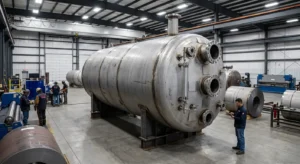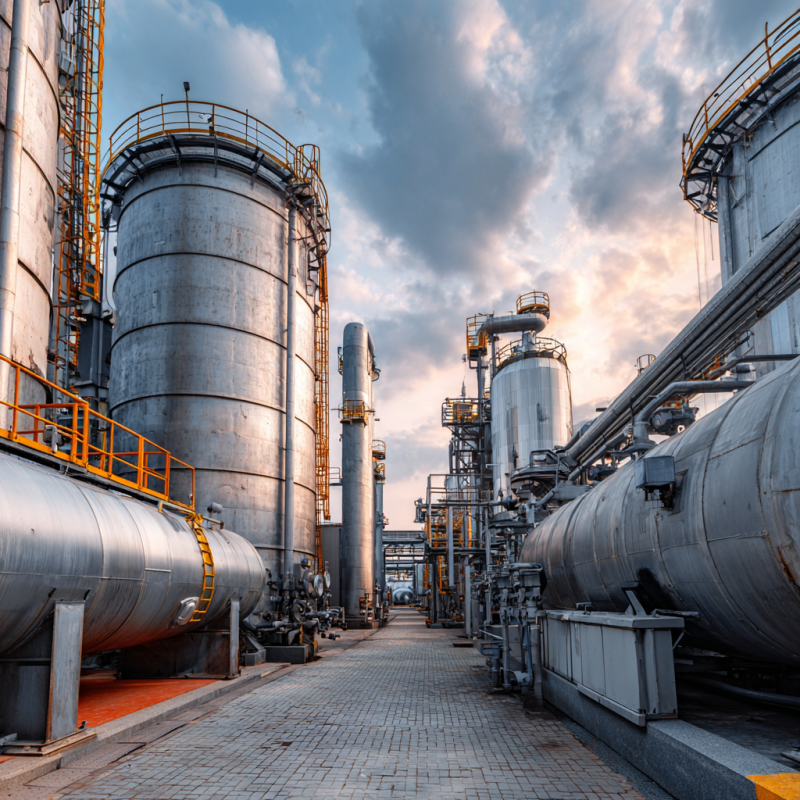
Manufacturers produce many types of pressure vessel tanks, including scrubbers, separators, dryers, storage tanks, filters, and custom-engineered vessels designed to safely handle gases or liquids under pressure across industries like oil and gas, power, water treatment, and chemical processing. Using prefabrication and ASME-compliant design improves quality, safety, and cost efficiency, making it critical to partner with an experienced, reputable manufacturer.
A Complete Guide on What Types of Pressure Vessel Tanks Manufacturers Make
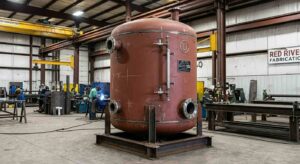
You may have encountered the question “What types of pressure vessel tanks do manufacturers make?” while researching industrial solutions. In simple terms, pressure vessel manufacturers design and fabricate reinforced containers that safely hold gases or liquids at controlled pressures. These vessels are foundational to industries such as oil and gas, power generation, water treatment, and chemical processing. Understanding the different tank types and how they’re built helps you choose equipment that aligns with your operational goals.
At companies like Red River, pressure vessels are engineered with safety, compliance, and long-term performance in mind, supported by deep experience in pressure vessel fabrication and custom manufacturing.
What types of pressure vessel tanks do manufacturers make
Pressure vessel manufacturers produce a wide range of tank designs, each tailored to a specific process requirement. Whether your application involves filtration, separation, storage, or chemical treatment, the right vessel improves efficiency and system reliability.
Liquid scrubbers
Liquid scrubbers remove entrained liquids from gas streams by forcing flow changes that cause droplets to collect and separate. These vessels are common in gas processing systems and fuel conditioning, where moisture or hydrocarbons must be removed before downstream use. Scrubber designs often overlap with separator vessel technology used in energy applications.
Dehydrators and dryers
Dehydrators, also called dryers, remove moisture vapor from gases, helping prevent corrosion, freezing, or contamination. They are widely used alongside desiccant systems, such as those discussed in industrial desiccant dryer applications. Proper vessel design ensures consistent pressure and efficient moisture removal.
Media bed purifiers
Media bed purifiers hold activated carbon, molecular sieves, or resins that selectively remove contaminants from liquids or gases. These vessels are critical in refining, water treatment, and chemical manufacturing. Learn more about the role of purification media in molecular sieve cost and value analysis.
Receivers and storage tanks
Receivers and storage tanks store compressed air, nitrogen, or process liquids under pressure. These tanks act as buffers, stabilizing system demand and supply. For compressed air systems, see air receiver tanks as pressure vessels and compressed air tank fundamentals.
Cyclonic filters
Cyclonic filters use centrifugal force to separate particulates from flowing gas or liquid streams. Often used as pre-filters, these vessels protect downstream equipment and are closely related to scrubber and separator designs found in fuel and water separation systems.
Separator vessels
Separator vessels divide multi-phase flows into gas, liquid, and solid components. They are essential in oil and gas, power generation, and turbine fuel systems. Related applications include gas turbine fuel-water separator vessels and broader discussions on industrial pressure vessel applications.
Treatment or dosing tanks
Treatment and dosing tanks allow controlled chemical injection into pressurized systems. They are commonly used in municipal water treatment and industrial processing. These vessels must meet strict safety and compliance standards outlined in pressure vessel safety and compliance design.
Filter housings
Filter housings contain cartridges or elements that remove particulates from pressurized fluids. Although conceptually simple, these vessels must be engineered to handle pressure loads safely, similar to other designs discussed in Understanding Pressure Vessels: definitions and thresholds.
Custom or OEM designs
When standard tanks don’t meet operational demands, manufacturers provide fully customized solutions. Red River specializes in custom/OEM pressure vessels designed for unique pressures, temperatures, materials, or corrosion resistance. Custom fabrication is supported by advanced metal fabrication capabilities and rigorous quality assurance processes.
Why prefabrication matters
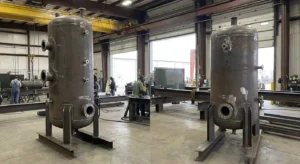
Prefabrication plays a critical role in modern pressure vessel production. By building vessels, piping spools, and modular skids off-site, manufacturers achieve higher quality control and shorter installation timelines. Red River’s approach to prefabrication reduces waste, improves weld accuracy, and limits on-site safety exposure.
Prefabrication also complements best practices in the metal fabrication process and ensures vessels meet ASME certification requirements before delivery.
Understanding what types of pressure vessel tanks do manufacturers make
Whether you need a simple storage tank or a complex multi-phase separator, learning about various pressure vessel types helps you select the right fit. What types of pressure vessel tanks do manufacturers make is a crucial question to consider when evaluating your options, as the range includes everything from basic storage vessels to sophisticated processing equipment. Building these vessels with prefabrication methods can also streamline your project, offering improved quality and cost savings. By partnering with a trusted vessel manufacturer, you’ll benefit from specialized expertise, modern fabrication techniques, and a safety-focused team. This balanced approach often results in reliable, long-lasting equipment that supports industry demands.
Need a reliable partner?
Red River specializes in the design and manufacturing of pressure vessels. We also fabricate related items such as prefabricated spools and modular skids.
Reach out to us today and experience the Red River difference. Where American-made products and American Values come together, we care more.
Frequently asked questions
1. What is a pressure vessel tank manufacturer?
A pressure vessel tank manufacturer is a company that designs, fabricates, and tests tanks built to safely hold gases or liquids under pressure. These manufacturers follow strict engineering standards (such as ASME codes) to ensure safety, durability, and compliance with industry regulations. They often serve sectors like oil and gas, chemical processing, power generation, and municipal services.
2. How to choose a pressure vessel tank manufacturer
When selecting a manufacturer, focus on:
- Certifications & Compliance: Look for ASME or ISO certification.
- Industry Experience :Proven track record in your specific sector.
- Safety Record :Transparent safety history and adherence to quality control.
- Customization Capabilities :Ability to design for unique requirements.
- Material Expertise :Knowledge in carbon steel, stainless steel, and specialty alloys.
- After-Sales Support :Maintenance, inspection, and repair services.
3. What types of pressure vessel tanks do manufacturers make?
Common types include:
- Horizontal Pressure Vessels :Ideal for large storage and transport.
- Vertical Pressure Vessels : Save space, often used in industrial facilities.
- Storage Tanks : For water, fuel, or chemicals.
- Heat Exchangers : Transfer heat between fluids under pressure.
- Reactors :For chemical processing.
- Custom-Engineered Vessels : Designed for specialized processes or extreme conditions.
4. What is the difference between a standard vessel and a custom one?
A standard vessel follows a generic design, often used for common tasks. Custom (OEM) vessels are tailored to unique applications, offering specialized materials or configurations.
5. How does prefabrication impact project costs?
Prefabrication cuts on-site labor hours and reduces material waste. Over time, these efficiencies can significantly lower your total project expenditures.
6. What are typical materials for making pressure vessels?
Manufacturers commonly use steel, such as carbon steel or stainless steel. They may choose alloys or specialized metals depending on corrosion or temperature challenges.
7. Can a pressure vessel be modified after it’s installed?
Minor modifications, such as adding nozzles or reinforcements, can sometimes be done on-site. Major changes, however, may require re-certification or even a new vessel altogether.
Key takeaway
- Pressure vessels come in many forms, from liquid scrubbers to custom builds.
- Prefabrication often reduces production errors, saving time and money.
- Compliance with ASME and similar standards promotes safety and performance.
- Custom designs allow you to handle specific pressure, temperature, or chemical conditions.
- Partnering with a reputable manufacturer helps ensure long-term reliability and value.
Related Blog Post
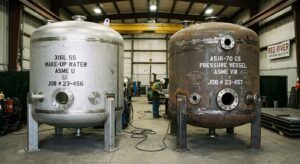
Which Materials Suit Make-Up Water Service?
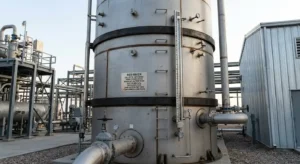
How Big Should Make-Up Water Tanks Be?
Make-Up Water Tanks: Design, Sizing, and Fabrication
When to Spec Equalization Tanks for Industrial Systems