A fuel oil pressure vessel separator protects engines by filtering out particles and removing water contamination. This extends equipment life, reduces downtime, and ensures reliable performance.
Why a Fuel Oil Pressure Vessel Separator Matters
You rely on clean, water-free fuel to keep your operations running smoothly, especially in industries where protecting critical equipment is essential. That’s where a fuel oil pressure vessel separator becomes an invaluable asset. This specialized vessel helps remove unwanted water and particulates from your fuel supply, reducing the risk of system damage. Better yet, today’s fuel oil pressure vessel separator technology is more approachable and customizable than you might expect. Below, you’ll learn how it works, why prefabrication matters for quality, and how various industries tap into this solution for more reliable performance.
Fuel Oil Pressure Vessel Separator Fundamentals
A fuel oil pressure vessel separator is designed to manage one of the biggest challenges in fuel-handling operations, moisture and contaminants. When water creeps into your fuel lines, it can corrode system components, hamper performance, and reduce the overall efficiency of your equipment. These vessels address that problem by providing a controlled environment where water can be separated from your fuel before the harmful effects take hold.
Why Separation Is Essential
Even a small amount of trapped moisture can cause ongoing headaches for your machinery. In large-scale industrial environments, water contamination often leads to:
- Rust formation on internal parts.
- Lower fuel efficiency due to incomplete combustion.
- Unexpected downtime for repairs.
- Elevated maintenance costs to correct damage over time.
By filtering out excess water, a fuel oil pressure vessel separator minimizes corrosion, protects engine parts from premature wear, and ensures you’re getting the consistency you need from fuel. According to Red River, an ASME-certified pressure vessel manufacturer, targeted separation plays a crucial role in extending equipment longevity.
Hard Facts and Gentle Guidance
In a survey of various equipment breakdowns, water contamination surfaced as one of the most frequent culprits. Imagine you run a facility dependent on steam turbines or large diesel engines, an interruption can pinch both schedules and budgets. You’ll be happy to know that, with a well-designed fuel oil pressure vessel separator system, these setbacks become far less likely. Designing or upgrading your setup so it includes a properly sized fuel oil pressure vessel separator means you’ll avoid the many aftershocks water-infused fuel can bring.
Meanwhile, you might come across different terms such as industrial fuel water separator vessel or diesel pressure vessel filter separator. Each approach focuses on effectively removing water from specific fuel types, ensuring consistent performance in a variety of settings. While their core goals are similar, keeping water out and fuel integrity in, each system may have specialized design features that align with the core function of a fuel oil pressure vessel separator. Whether your environment involves marine engines or power plants, a fuel oil pressure vessel separator helps maintain the reliability you depend on.
Distinguishing Features of Pressure Vessel Separators
If you’re wondering why a strong, pressure-rated vessel is necessary, the reason lies in how these separators work under pressurized conditions:
- Pressurization propels the fuel mixture through distinct filtration or separation chambers.
- Internal baffling or coalescing elements help water droplets merge and sink to the bottom.
- Clean fuel then flows onward, free from most contaminants.
Because pressure is integral to these steps, your fuel oil pressure vessel separator needs a sturdy, heavily tested vessel that meets or exceeds industry standards. Statistics from Red River show that an ASME certification (with “U4 and R” stamps) signals that the fuel oil pressure vessel separator is tested to handle the rigorous conditions often involved in industrial fuel processing.
Key Components and Operation
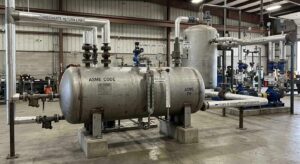
To remove water from your fuel, a fuel oil pressure vessel separator typically includes several key elements: an inlet, an internal separation mechanism, a water-collection section, a drain outlet, and sometimes instruments for pressure and level control. Although designs differ depending on capacity requirements, the basic idea remains consistent. Good design is part science, part art, balancing robust engineering with the specific needs of your process.
Inlet and Pre-separation
When contaminated fuel flows into the vessel, it encounters a carefully engineered inlet section. Some fuel oil pressure vessel separator systems use swirl or tangential entry designs to slow the flow and create controlled turbulence. This swirling motion drives denser water droplets toward the separator walls and eventually down to the vessel’s lower chambers. It’s similar to how a spinning washing machine extracts excess water from clothes, but on a carefully calibrated industrial scale. The inlet zone of a fuel oil pressure vessel separator plays a critical role in setting the stage for efficient separation.
For certain operations, you might also see additional or alternative steps, such as:
- Pre-filters to remove larger particles before the main separation chamber.
- Settling zones that encourage bigger water droplets to fall out of suspension.
Coalescing Elements
Inside many separator vessels, you’ll find a set of coalescing elements or filters. These surfaces are engineered to encourage smaller water droplets to merge into bigger ones, making them easier to collect. A fuel oil pressure vessel separator often includes high-efficiency coalescers to optimize water removal under a variety of flow conditions. If you need details on how separation technology functions in a diesel-focused environment, you can explore resources like how does a diesel pressure vessel separator work.
Each coalescer is crafted to handle a specific flow rate and pressure range within the fuel oil pressure vessel separator. Materials often need to stand up to high temperatures, chemical exposure, or rigorous cleaning cycles. The result is a component robust enough to trap contaminants and funnel them away.
Water Collection and Drainage
A crucial part of the process is the water collection area at the vessel’s base. This lower region, often shaped to ensure that separated water stays put, typically has a drain port so you can remove accumulated fluid. A fuel oil pressure vessel separator may include automatic drainage systems to detect water levels, or manual valves for scheduled discharges. Proper drainage ensures the fuel oil pressure vessel separator maintains optimal performance between maintenance intervals.
Keep in mind that some separators feature multiple compartments for staged separation. In multiphase systems, you may remove water, sediment, and even heavier contaminants in sequential compartments, each designed for a specific role in the separation process.
Ensuring Solid Regulatory Compliance
Fuel separation isn’t just about performance, it’s also about meeting safety and environmental regulations. A properly certified fuel oil pressure vessel separator helps ensure compliance with ASME and other industry standards. Sources like Red River emphasize the importance of pressure vessel construction that matches the working environment’s pressure, temperature, and flow demands. Operating a fuel oil pressure vessel separator that meets these standards lowers the risk of safety incidents and helps facilities pass audits or inspections with confidence.
The Power of Prefabrication in Pressure Vessel Manufacturing
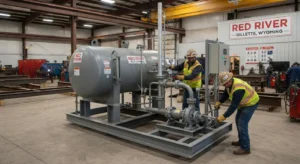
One of the most noteworthy trends in constructing a fuel oil pressure vessel separator is prefabrication. These days, manufacturers like Red River use carefully controlled shop environments to build complex modules in advance. Then they ship them to your facility for faster installation. This approach significantly streamlines the field-assembly process, which can be a major source of cost overruns.
Prefabrication Advantages
Building your separator modules in a controlled environment reduces weather delays, lowers the risk of welding mistakes, and allows for more precise material handling. According to Red River, prefabrication also:
- Cuts overall project costs by minimizing on-site changes.
- Decreases the number of exposure hours for your crew.
- Ensures consistent quality through advanced QA/QC protocols.
In fact, by cutting on-site fabrication, you can often reduce total construction costs and insurance rates. When less welding and heavy equipment are needed in the field, you introduce fewer safety hazards for your team. Good news, this also means quicker installations and less downtime for your facility.
Controlled Environment and Increased Accuracy
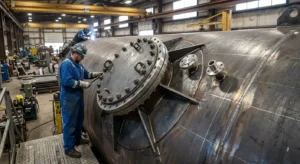
In many fabrication shops, computer modeling and advanced software drive the design, from isometrics to spool schedules. Skilled technicians handle the precise cuts and welds. By the time your fuel oil pressure vessel separator reaches your job site, it has already undergone rigorous testing, meets strict ASME codes, and has traceable documentation for each material component. Inspectors can see records of weld procedure qualifications, hydrostatic tests, and radiography results. This transparency ensures your fuel oil pressure vessel separator is fully certified and ready for service.
Prefabrication is about more than simple convenience. It means your fuel oil pressure vessel separator is built by a dedicated team of specialists who verify that each weld is accurate, each joint is watertight, and each material is logged for compliance. The result? Fewer field modifications, a faster start-up, and a stable, reliable vessel.
Fewer on-site Headaches
On a typical construction site, the interplay between different contractors can slow your schedule. If one team’s work is delayed, another might be forced to reschedule. With prefabrication, most of the engineering, cutting, and welding for your fuel oil pressure vessel separator is completed off-site. That means smoother coordination and quicker installation once the modules arrive. Your crew can focus on fitting everything together with minimal rework or adjustments.
There’s also an important health and safety angle here. The fewer hours your team spends performing hot work or lifting heavy components, the lower the risk of accidents. That’s another reason why many companies prefer a prefabricated fuel oil pressure vessel separator, especially when managing complex multi-stage separation systems. The time savings during final assembly can translate into days or even weeks of accelerated progress.
Common Industry Applications
A fuel oil pressure vessel separator can benefit many different industries—not just the oil and gas realm. Whenever you have equipment powered by fuel, you’re likely to see a need for water separation. Here’s a closer look.
Oil and Gas Sector
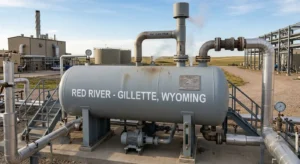
Of course, the upstream, midstream, and downstream segments of the oil and gas industry represent the largest user base of these vessels. According to Red River Team, leading operators around the world trust ASME-certified pressure vessels. They need to keep water at bay to preserve the integrity of pipelines, pumps, and turbines. Whether you’re looking at a large refinery or a small distribution terminal, high-volume fuel-handling demands a robust separation system.
You may also hear about why are fuel oil pressure vessel separators used in industry. The short answer is reliability. Moisture leads to corrosion, especially in systems designed to run continuously. If water travels too far upstream, you risk scaled-up repairs. For instance, an advanced multiphase separator helps you remove water, gas, and solids in one pass—perfect for complicated fluid streams.
Power Generation and Turbines
Gas turbines, diesel generators, or any power-generation unit that retrieves fuel from large storage tanks can benefit from having a fuel oil pressure vessel separator in front of the combustion chamber. If water is allowed into the fuel feed to your turbines, there’s a negative impact on combustion efficiency, plus an elevated chance of damage to internal blades. If you’re curious about specialized solutions in that context, it’s worth looking at a gas turbine fuel water separator vessel to see how advanced designs manage water removal.
Marine Applications
Large ships and marine vessels also rely on heavy fuel oil. Because these engines function in a moist and variable environment, a fuel oil pressure vessel separator becomes critical. Salty air, wave action, and the potential for condensation all contribute to higher water content in your tanks. By installing a fuel oil pressure vessel separator, you remove that water before your fuel reaches the engine, protecting everything from injectors to cylinder liners and maintaining long-term reliability at sea.
Industrial Manufacturing and Beyond
Even if your facility doesn’t revolve around 24/7 engine usage, you may still need a consistent fuel supply to power backup generators or specialized equipment. From mining operations in remote areas to large-scale factories with intermittent power needs, a fuel oil pressure vessel separator helps ensure your stored fuel stays contaminant-free. If you’re unsure whether your setup requires a heavy oil-focused vessel or another solution, consider comparing it with a fuel filter vessel water separator designed for your specific fuel type.
In some installations, you’ll find a row of fuel oil pressure vessel separator units running in parallel, each tuned to different flow rates or feed quality. This modular design gives you operational flexibility to bring more separators online during high-demand periods or scale down when operations slow to save energy.
A Note on Biofuels
Biofuels present additional moisture management concerns, often because of their hygroscopic nature. If you’re handling biodiesel or ethanol blends, you might use a specialized fuel oil pressure vessel separator with coalescing filters rated for those fuels. While the fuel type changes, the role of the fuel oil pressure vessel separator remains the same: remove water, keep the fuel stable, and protect your machinery.
Why Choose a Fuel Oil Pressure Vessel Separator
A fuel oil pressure vessel separator gives you the confidence that your equipment is protected from water damage and contamination. By removing harmful elements in a single stage, you extend engine life and keep operations running smoothly.
Ready to Protect Your Operations?
Contact RedRiver LLC today to learn how a fuel oil pressure vessel separator can improve your fuel reliability and support long-term performance.
Frequently Asked Questions
1. What is a fuel oil pressure vessel separator?
A fuel oil pressure vessel separator is a device designed to remove water and contaminants from fuel oil under pressure. It ensures cleaner fuel reaches engines and equipment, protecting them from damage and improving efficiency.
2. How does a fuel oil pressure vessel separator work?
It works by directing fuel through a pressurized vessel where water and debris are separated from the fuel. Using filters, coalescing elements, and gravity, the separator collects water and particles, allowing only clean fuel to pass through.
3. Why are fuel oil pressure vessel separators used in industry?
They are used to protect critical machinery from water-induced corrosion and wear. By providing clean fuel, these separators improve engine performance, reduce maintenance costs, and help prevent unexpected downtime in industrial operations.
4. How does a fuel oil separator work?
A fuel oil separator removes water and contaminants from fuel by using filters, coalescing elements, and gravity inside a vessel. The heavier water and particles separate out, leaving cleaner fuel to flow to the engine.
5. What are the two types of separators?
The two main types are gravity separators, which rely on density differences to settle water, and centrifugal separators, which use spinning motion to separate water and solids from fuel.
Key Takeaway
- Remove water for better fuel quality: A fuel oil pressure vessel separator eliminates moisture, corrosion, and performance hits to your equipment.
- Count on prefabrication for efficiency: Controlled shop environments cut on-site welding time, reduce environmental impacts, and raise quality.
- ASME certification is non-negotiable: Safety and compliance hinge on meeting established design and testing standards for pressure vessels.
- Different designs for different fuels: Whether you handle diesel, heavy oil, or biofuels, choose the right coalescing elements and operation flow.
- Saves you time and money: Fewer shutdowns means you can focus on productivity, not emergency repairs or repeated maintenance.
Related Blog Post
Can Condensate Storage Improve Reliability?
Where Do Condensate Tanks Fit in a Steam System?
Which Nozzles Simplify Maintenance on Pressure Vessels?
How to Vent Condensate Tanks in Steam Systems
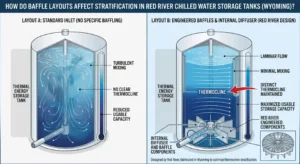
How Do Baffle Layouts Affect Stratification in TES Tanks?
- Gas Turbine Fuel Water Separator Vessel Guide
- What Is an ASME Pressure Vessel Separator and Why You Need It
- Maximize Performance with ASME Pressure Vessel Separator
- Fuel Filter Vessel Water Separator: RedRiver LLC
- What to Know Before Buying an Industrial Fuel Water Separator Vessel
- Diesel Pressure Vessel Filter Separator – Red River LLC
About Author