
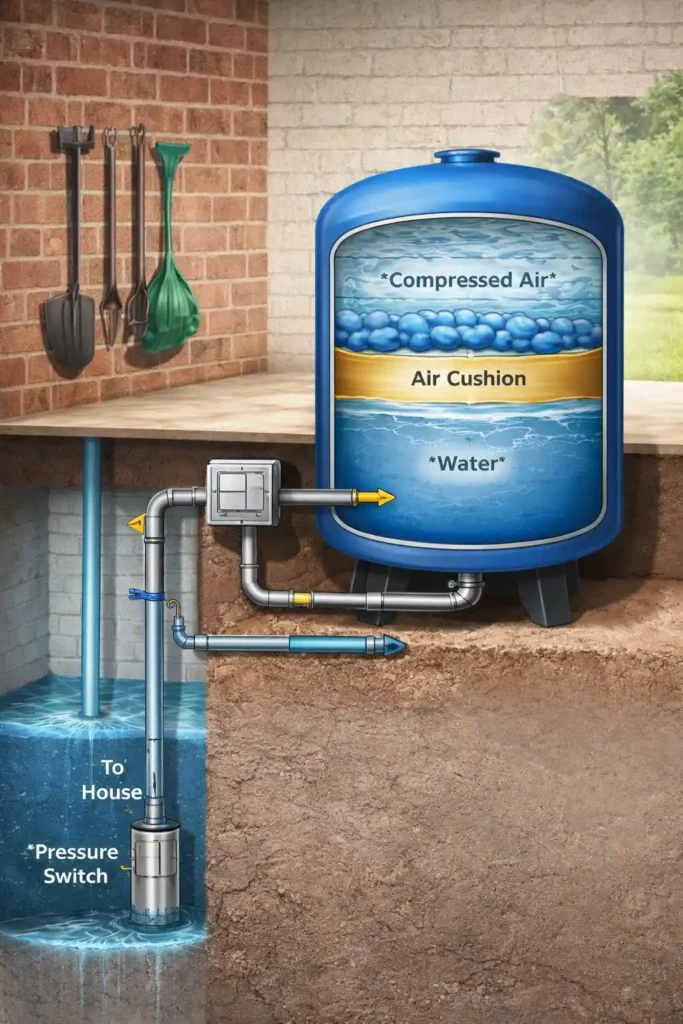
An air over water pressure tank helps maintain water pressure, but it can lose air over time, causing inconsistent performance and requiring maintenance. This guide is for homeowners, rural users, and system operators choosing or managing well water pressure tanks. It explains how the system works, compares it with other tank types, and explains when it’s the right cost-effective option.
Everything You Need to Know About an Air Over Water Pressure Tank
Pressure tanks play a vital role in regulating water systems across residential, agricultural, and industrial applications. Whether you are installing a new well system or upgrading an existing setup, choosing the right pressure tank is essential for maintaining consistent water pressure and preventing unnecessary pump wear, which starts with understanding the right pressure tank size.
One traditional option still used in many systems is the air-over-water pressure tank. Although newer technologies such as diaphragm and bladder tanks have become more popular, this design remains a practical and cost-effective solution for certain water systems.
At Red River, we specialize in high-performance pressure vessels engineered for durability and reliability. Our team focuses on designing systems that meet strict industry standards and operational requirements. Learn more about pressure vessel design and fabrication in our guide.
This guide explains how an air over water pressure tank works, how it compares to other pressure tank designs, and when it may be the right choice for your installation.
Understanding Pressure Tanks
All pressure tanks perform the same basic function: they store pressurized water and maintain stable pressure within a plumbing or well system. By holding water under pressure, pressure tanks reduce how often the pump needs to start and stop, which helps extend pump life and improve overall efficiency.
In many industrial applications, pressure tanks fall under the broader category of pressure vessels, equipment designed to contain fluids under pressure, including systems like air tanks used as pressure vessels. If you want a deeper understanding of these systems, explore what a pressure vessel is and how it works.
Another helpful reference is our guide explaining the difference between a tank and a pressure vessel, which clarifies how pressurized storage systems are categorized across engineering applications.
The main difference between pressure tank types is how they manage the separation of air and water. In a traditional air-over-water pressure tank, both air and water occupy the same chamber inside the tank. The compressed air acts as a cushion that pushes water through the system when demand occurs.
Because the air and water interact directly inside the tank, air gradually dissolves into the water over time. This means the tank may lose its air cushion and require replenishment to maintain optimal pressure performance.
In systems where air balance becomes unstable, operators may experience issues related to excessive air in pressure tanks, which can affect pressure consistency.
The Three Main Types of Pressure Tanks
Water systems typically use one of three primary pressure tank designs: diaphragm tanks, bladder tanks, and air over water pressure tanks, each with key differences outlined in this guide on choosing between bladder tanks and pressure tanks.
A broader comparison of pressure tank technologies can be found in our detailed article on the three main types of pressure tanks.
Diaphragm Pressure Tanks
Diaphragm pressure tanks use a flexible rubber membrane that separates water from compressed air. When water enters the tank, the diaphragm moves upward and compresses the air chamber above it.
This separation prevents air from dissolving into the water and greatly reduces the need for maintenance. Because of their reliability and compact design, diaphragm tanks are widely used in residential water systems where consistent pressure and minimal upkeep are important.
Bladder Pressure Tanks
Bladder pressure tanks operate in a similar way but contain a replaceable internal bladder that holds the water. The surrounding air chamber compresses as the bladder fills with water, maintaining steady pressure throughout the system.
Bladder tanks are often used in commercial or industrial applications where water demand may be higher and system performance needs to remain stable during frequent pump cycles, although issues like high pressure in bladder tanks may still occur if not properly maintained.
Air Over Water Pressure Tank
The air over water pressure tank is the most traditional pressure tank design. In an air over water pressure tank, there is no diaphragm or bladder separating air from water. Instead, both occupy the same chamber, with air naturally rising above the water due to differences in density.
As water is pumped into the air over the water pressure tank, the air inside the tank compresses and creates pressure. When water is used in the building, the compressed air pushes the water out of the tank and into the plumbing system.
Although many modern systems use diaphragm or bladder technology, the air over water pressure tank is still commonly found in older well systems and rural installations where simplicity and accessibility are important.
How an Air Over Water Pressure Tank Works
An air over water pressure tank works by storing compressed air above the water level inside the tank. When the well pump forces water into the tank, the air becomes compressed and stores energy that can later be used to push water through the system.
When a faucet, irrigation system, or appliance requires water, the compressed air forces water out of the tank and into the plumbing network. This process maintains steady water pressure while reducing how frequently the pump must run.
Like many pressure vessels, these systems rely on proper design calculations to ensure safe pressure levels. Engineers typically consider factors such as material strength and wall thickness. For example, you can learn how engineers approach these calculations in determining the minimum thickness for a pressure vessel.
Over time, air slowly dissolves into the water. As this happens, the tank gradually loses its air cushion. Without maintenance, the tank can become waterlogged, meaning it fills almost completely with water and loses its ability to regulate pressure effectively.
In such cases, operators may need to perform maintenance procedures such as recharging pressure vessels to restore the correct air-to-water ratio.
Why Choose an Air Over Water Pressure Tank?
Despite newer pressure tank technologies, an air over water pressure tank can still be a practical choice in certain situations. Many well systems continue to operate effectively with this design because of its mechanical simplicity.
A modern air over water pressure tank is especially useful in rural or agricultural installations where maintenance access is easy and system complexity needs to remain minimal.
From an engineering perspective, these tanks still fall under regulated pressure vessel categories and must meet safety standards. To better understand compliance requirements, review the fundamentals of ASME pressure vessel codes and standards.
The design is straightforward, which means technicians can inspect and maintain the tank without dealing with internal diaphragms or bladders.
For homeowners or operators who prefer a simple pressure vessel with a lower upfront cost, the air over water pressure tank remains a reliable option.
Key Buying Considerations
Selecting the right pressure tank depends on several factors related to system performance and installation requirements.
Available Installation Space
Available space can influence which type of tank is most appropriate. Diaphragm tanks often have a more compact design, while air over water pressure tanks may require more installation space.
The orientation of the vessel may also influence installation decisions. Our guide on vertical vs horizontal pressure vessels explains how vessel layout affects system efficiency and accessibility.
Maintenance Expectations
Maintenance requirements are another important factor. An air over water pressure tank requires periodic monitoring and air charging to maintain proper pressure levels.
Operators managing water systems should also understand potential pressure vessel maintenance practices to ensure safe and efficient operation.
System Demand
System demand also plays a role when selecting a pressure tank. High-demand systems that cycle frequently often perform better with bladder tanks, while moderate-demand well systems can operate reliably with air over water pressure tanks.
Engineers typically evaluate system pressure limits and operating conditions during equipment selection. Understanding design pressure in pressure vessels helps ensure the tank performs safely within system parameters.
Summary and Recommendations
Each pressure tank design offers different advantages depending on the application.
Diaphragm tanks provide consistent pressure with minimal maintenance. Bladder tanks are often preferred for systems that require high efficiency and serviceable internal components. The air over water pressure tank remains a simple and cost-effective solution for many well systems when regular maintenance is acceptable.
In industrial environments where pressure systems operate continuously, engineers must also consider potential pressure vessel failure mechanisms to prevent long-term operational risks.
For installations where mechanical simplicity and lower upfront cost are priorities, the air over water pressure tank continues to be a practical choice.
Is an Air Over Water Pressure Tank the Right Choice?
Choosing the right pressure tank is essential for maintaining reliable water pressure and protecting your pump system.
While modern diaphragm and bladder tanks offer lower maintenance and improved efficiency, the air over water pressure tank remains a dependable option for many installations.
Because of its simple design, this type of pressure vessel can still perform well in residential, agricultural, or rural well systems where regular monitoring and air recharging are manageable.
Understanding how pressure vessels function within broader engineering systems can also help operators make informed decisions. Our overview of pressure vessels and their industrial uses provides additional insight into how these systems support critical infrastructure.
Talk to Our Experts About the Right Pressure Tank
If you’re considering installing or upgrading a pressure vessel, our team at Red River is here to help. Whether you need guidance on selecting an air over water pressure tank or want to explore other pressure tank options, we can recommend the best solution for your system requirements.
Contact Red River today to speak with our experts and find the right pressure tank for your application.
Frequently Asked Questions
1. What is an air over water pressure tank?
An air over water pressure tank is a traditional type of pressure vessel used in well water systems where air and water share the same chamber. The compressed air inside the tank pushes water through the plumbing system and helps maintain consistent water pressure.
2. How does an air over water pressure tank work?
An air over water pressure tank works by storing compressed air above the water inside the tank. When water enters the tank, the air compresses and stores energy. When water is needed in the system, the compressed air pushes water out of the air over the water pressure tank, maintaining steady pressure without requiring the pump to run constantly.
3. Why does an air over water pressure tank lose air over time?
In an air over water pressure tank, the air and water are not separated by a membrane. Because of this design, air slowly dissolves into the water over time. This is why an air over water pressure tank requires periodic air recharging to maintain the correct air cushion and prevent waterlogging.
4. How often should an air over water pressure tank be serviced?
The maintenance frequency for an air over water pressure tank depends on system usage and design. In most well systems, the tank should be inspected periodically to ensure the proper air level is maintained and to prevent pressure problems.
5. Is an air over water pressure tank better than a bladder tank?
An air over water pressure tank is simpler in design and often less expensive, but bladder tanks require less maintenance because they separate air and water internally. The right choice depends on the system requirements, maintenance preferences, and installation environment.
Key Takeaways
- An air over water pressure tank is a traditional pressure vessel where air and water share the same chamber to maintain water pressure in a well system.
- The compressed air inside an air over water pressure tank pushes water through the plumbing system and helps reduce frequent pump cycling.
- Because air and water are not separated in an air over water pressure tank, air gradually dissolves into the water and must occasionally be replenished.
- Compared with diaphragm and bladder tanks, an air over water pressure tank has a simpler design but typically requires more routine monitoring and maintenance.
- Many rural and legacy well systems still rely on an air over water pressure tank because of its durability, affordability, and straightforward mechanical design.
Related Blog Post
Condensate Tanks: Types, Fabrication, and ASME Code
Which Tests Validate Deaeration in Pressure Systems?
Equalization Tanks: Design, Sizing, and Fabrication
What Are Thermal Storage Testing Standards for TES Vessels?
What Hydro Tests Are Required for Pressure Vessels?
No subpillar set for this blog post.
About Author



