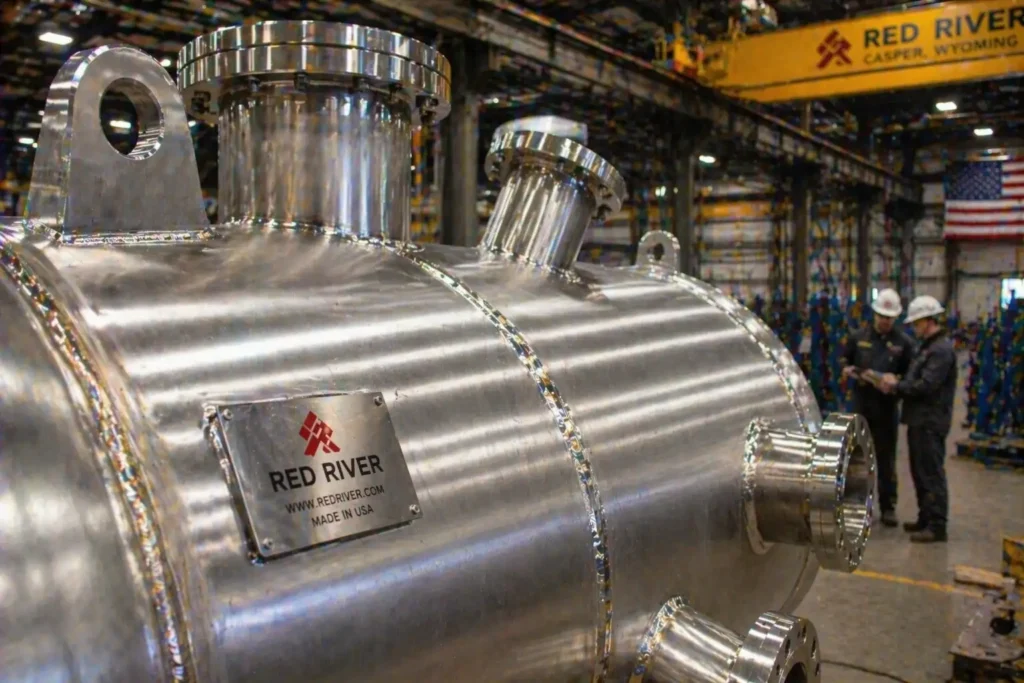
Stainless steel costs more upfront, but the right operating environment makes it the cheaper choice over time. This guide breaks down where stainless can reduce lifecycle cost on pressure vessels and where carbon steel remains the better decision.
Why Lifecycle Cost Is the Right Way to Evaluate Material Selection
Purchase price and fabrication cost dominate early project budget conversations because they are the easiest numbers to put on a spreadsheet. They are also incomplete. A vessel that costs 40 percent less to fabricate in carbon steel but requires full replacement in eight years because of corrosion-driven wall loss has not saved money. It has deferred a larger expenditure.
Lifecycle cost analysis looks at the total cost of ownership: initial fabrication, coating and lining systems, inspection frequency, maintenance and repair costs, downtime, and replacement timing. When those factors are on the table, the material selection decision often looks different than it does when only the purchase order is in view. Red River works through material selection as part of the design process for every custom pressure vessel project.
Where Stainless Steel Can Reduce Lifecycle Cost
High-corrosion process environments: Vessels handling acids, caustics, chloride-bearing fluids, or wet hydrogen sulfide are the clearest case for stainless steel. Carbon steel in these environments corrodes at rates that can make annual inspection mandatory and vessel replacement a near-term certainty without expensive internal lining systems. Stainless grades such as 316L and duplex stainless offer significantly better resistance. For biogas applications where hydrogen sulfide and moisture are constant factors, this is a direct lifecycle cost argument. Red River’s biogas pressure vessel fabrication work frequently involves stainless and duplex material specifications for exactly this reason.
High-purity process requirements: Food-grade, pharmaceutical, and certain chemical process applications require internal surfaces that cannot corrode, leach contamination, or harbor bacteria. Carbon steel with coatings cannot reliably meet these requirements over a long service life because coatings degrade, and coating failure introduces contamination risk. Stainless steel with appropriate surface finish is the baseline specification in these environments, not a premium upgrade.
Coastal and marine exposure environments: Vessels installed in coastal environments face atmospheric corrosion rates significantly higher than inland industrial sites. Carbon steel in these environments requires aggressive external coating systems, regular inspection, and more frequent recoating cycles. Stainless or duplex stainless for external surfaces reduces the coating maintenance burden substantially over a 20 to 30-year service life.
High-temperature cycling applications: Repeated thermal cycling degrades carbon steel coating systems faster than steady-state operation. Vessels that cycle through wide temperature ranges in power generation or process heat applications often see coating failure at weld seams and nozzle connections first. Stainless steel handles thermal cycling without the same coating vulnerability. Red River’s fabrication capabilities span carbon steel, stainless steel, duplex stainless, and specialty alloys, so material recommendations are based on what the operating environment actually requires.
Where Carbon Steel Remains the Better Lifecycle Choice
Dry gas service: Natural gas, nitrogen, and other dry gas applications present minimal internal corrosion risk to carbon steel. Without a corrosive medium attacking the internal surface, the lifecycle cost case for stainless steel largely disappears. The premium fabrication cost cannot be recovered through reduced maintenance in an environment that does not require it.
Low-corrosivity liquid service with adequate corrosion allowance: Many produced water, crude oil, and process liquid applications fall into a corrosivity range where a carbon steel vessel designed with an appropriate corrosion allowance meets its full intended service life without liner systems or excessive maintenance.
Projects with short intended service life: For installations with a defined short horizon, perhaps five to eight years before a field is decommissioned, the lifecycle cost benefit of stainless may not have time to accrue. The upfront cost premium is paid immediately while the maintenance savings take years to materialize.
The Real Variables in the Stainless vs. Carbon Steel Decision
Corrosion rate in the actual operating medium: Determines how quickly wall loss accumulates and when inspection or replacement becomes necessary. AMPP publishes widely referenced corrosion rate data and testing standards used in material selection for industrial vessels. This is a process engineering input, not a fabrication assumption.
Cost and durability of alternative protection systems: Internal liners, coatings, and cathodic protection all extend the service life of carbon steel in corrosive environments. A liner that requires replacement every seven years carries a real total cost that belongs in the lifecycle analysis alongside the stainless alternative.
Downtime cost when the vessel is out of service: The cost of taking a vessel offline includes both direct maintenance cost and production value lost during the outage. Reducing inspection frequency and eliminating planned maintenance outages has an economic value that can justify a significant material cost premium. Red River’s modular skid packages are designed with service access and long-term maintenance requirements in mind from the start.
How Stainless Steel Affects Fabrication Scope and Lead Times
Specifying stainless steel changes the fabrication scope in ways that matter for project planning. Stainless requires dedicated fabrication areas to prevent carbon steel contamination, and weld procedures for stainless are different from carbon steel. Not all certified welders hold qualifications for both.
Material procurement lead times for stainless plate and fittings are typically longer than carbon steel. Specialty grades such as duplex stainless can carry mill lead times of six to twelve weeks or more. Red River’s prefabrication services include dedicated stainless fabrication space, stainless-qualified welders, and active procurement relationships for specialty alloy materials.
Start With the Right Material, Not the Cheapest One
The material selection decision on a pressure vessel or storage tank is one of the few early project choices that affects every cost category over the asset’s full service life. Getting it right requires quantifying corrosion rate, protection system costs, and downtime exposure for the specific application, not applying a general rule.
Ready to Evaluate Whether Stainless Can Reduce Lifecycle Cost on Your Project?
Request a quote or call 1-307-257-5332 to discuss material selection with Red River’s fabrication team.
Frequently Asked Questions
1. What stainless steel grades are most commonly used in pressure vessel fabrication?
316L is the most widely used austenitic stainless grade for applications involving corrosive liquids, chlorides, and moderate temperature service. Duplex grades such as 2205 offer higher strength and better chloride stress corrosion cracking resistance and are increasingly specified for oil and gas and chemical process applications. The appropriate grade depends on the specific corrosive medium, temperature, and chloride concentration.
2. Can stainless steel vessels be repaired if damaged in service?
Yes. Stainless steel pressure vessels can be repaired under the NBBI R Stamp repair certification, which covers repair and alteration of ASME-coded vessels. Repair welding on stainless steel requires stainless-qualified welders using appropriate filler materials and, in many cases, post-weld passivation to restore the corrosion-resistant surface. Red River holds both the ASME U Stamp for new construction and the NBBI R Stamp for repair work on stainless and carbon steel vessels.
3. How much more does stainless steel fabrication cost compared to carbon steel?
A range of 40 to 100 percent higher than an equivalent carbon steel vessel is a reasonable expectation for common austenitic grades. Duplex and super duplex grades carry higher premiums. The relevant question is not the absolute premium but whether the lifecycle savings in the specific environment justify it.
4. Does stainless steel require inspection as frequently as carbon steel in corrosive service?
In environments where stainless is correctly specified, inspection intervals are typically longer because the corrosion rate is significantly lower. However, stainless is not immune to all corrosion. Chloride stress corrosion cracking, pitting, and crevice corrosion require attention in specific environments. The inspection program should be designed for the actual material and service conditions.
5. What is duplex stainless steel and when is it used instead of 316L?
Duplex stainless steel has a two-phase microstructure combining austenite and ferrite, giving it higher strength than standard austenitic grades and significantly better resistance to chloride stress corrosion cracking. Typically specified when 316L does not provide adequate corrosion resistance, particularly in applications involving elevated chloride concentrations, produced water, or acidic gas streams. The higher strength of duplex also allows thinner wall designs in some applications, partially offsetting the higher material cost.
Key Takeaways
- Lifecycle cost analysis, not purchase price, is the correct frame for material selection decisions on pressure vessels and storage tanks.
- Stainless steel delivers its cost advantage in high-corrosion environments, high-purity process applications, coastal and marine exposures, and high-temperature cycling service where carbon steel requires expensive protection systems and frequent maintenance.
- Carbon steel remains the better lifecycle choice in dry gas service, low-corrosivity liquid applications with adequate corrosion allowance, and projects with short intended service lives.
- The three variables that drive the stainless vs. carbon steel decision are corrosion rate in the actual operating medium, cost and durability of alternative protection systems, and downtime cost when the vessel is out of service.
- Stainless steel fabrication requires dedicated shop space, contamination prevention, and stainless-qualified welders. Confirm these before awarding a purchase order.
- Stainless and specialty alloy material lead times are significantly longer than carbon steel. Build procurement lead time into the project schedule from the start.
Related Blog Post
Can Condensate Storage Improve Reliability?
Where Do Condensate Tanks Fit in a Steam System?
Which Nozzles Simplify Maintenance on Pressure Vessels?
How to Vent Condensate Tanks in Steam Systems
How Do Baffle Layouts Affect Stratification in TES Tanks?
About Author