
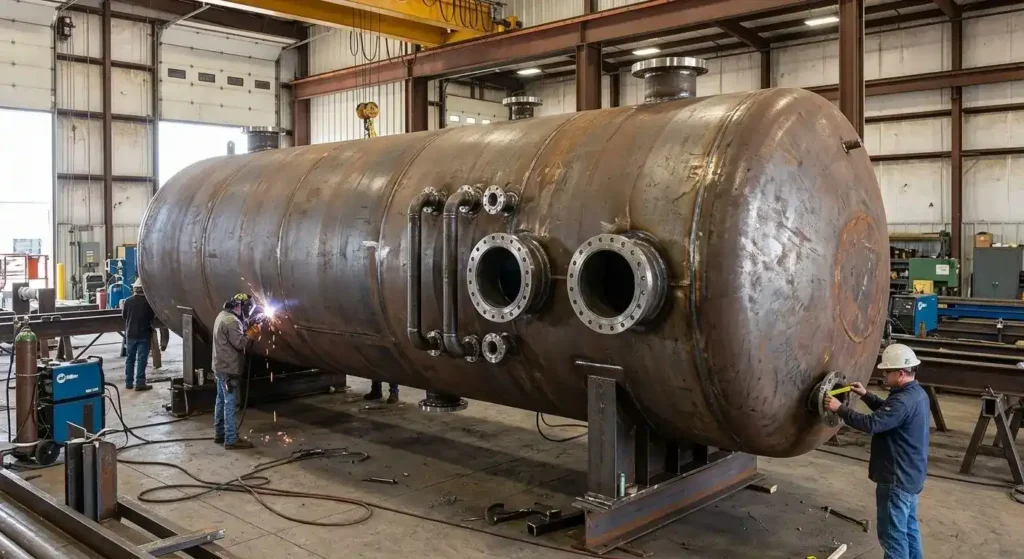
Equalization tanks buffer variations in flow rate, concentration, temperature, or pH in industrial process and wastewater systems, delivering a consistent, controllable stream to downstream equipment regardless of upstream variability. The vessel holds the incoming process stream long enough for fluctuations to average out before the fluid moves forward to treatment, reaction, or distribution equipment.
Key Takeaways
- Equalization tank sizing is driven by the peak-to-average flow ratio of the incoming stream, the required hydraulic retention time, and the variability in concentration or pH that must be damped before downstream treatment.
- Process equalization vessels are used across oil and gas, biogas, food and beverage, pharmaceutical manufacturing, and chemical processing wherever upstream variability would otherwise overload or upset downstream equipment.
- Flow equalization tanks are typically horizontal or vertical cylindrical vessels sized from hours of retention time at the design peak flow rate.
- Industrial equalization tank design must account for mixing requirements, vent sizing for volatile or odorous streams, overflow protection, and material compatibility with the process fluid.
- Every equalization tank operating above 15 psig must carry the ASME U Stamp under Section VIII, Division 1. Atmospheric vessels may fall under other applicable standards depending on fluid hazard and jurisdictional requirements.
- Red River fabricates equalization tanks in carbon steel and stainless steel for industrial process and wastewater applications from Gillette, Wyoming, since 2003.
What Is an Equalization Tank?
An equalization tank is a holding vessel placed between a variable upstream process stream and a downstream system that requires consistent inlet conditions. Industrial processes rarely produce a perfectly steady flow or a perfectly uniform concentration. Batch operations discharge large volumes intermittently. Shift changes in production create flow pulses. Seasonal or diurnal variations in raw material change the composition of the incoming stream. An equalization tank absorbs those variations and passes a smoothed, averaged flow downstream.
What Equalization Tanks Equalize
Equalization tanks can buffer four distinct types of variability depending on the application:
Flow Equalization
Flow equalization tanks hold excess flow during peak periods and release it during low-flow periods, maintaining a consistent volumetric flow rate to downstream equipment. This is the most common equalization function and is critical wherever downstream equipment, such as a biological treatment system or a membrane filtration unit, has a maximum hydraulic load it cannot safely exceed.
Concentration Equalization
Concentration equalization tanks blend variable-strength streams into a consistent concentration before downstream treatment. A high-concentration slug from a batch process mixed with a lower-concentration continuous stream in an equalization tank produces a manageable average concentration at the outlet rather than a shock load at the treatment system.
pH Equalization
pH equalization uses the averaging effect of the equalization tank volume combined with active mixing to moderate the pH swings that characterize many industrial and wastewater streams. A stream that ranges from pH 4 to pH 10 across a production day can be damped to a manageable range inside the equalization vessel, reducing the chemical consumption and control complexity required at the downstream neutralization stage.
Temperature Equalization
Temperature equalization protects temperature-sensitive downstream processes, particularly biological treatment systems, from thermal shocks caused by hot process discharges. The equalization tank volume absorbs the hot slug and blends it with the ambient-temperature base flow to produce a more consistent outlet temperature.
Where Are Equalization Tanks Used?
Equalization tanks appear wherever the upstream process produces variable flow or composition and the downstream system requires consistent inlet conditions. The vessel is a standard component in several major industrial sectors.
Oil and Gas
Oil and gas production facilities use equalization tanks to buffer produced water flow ahead of water treatment and reinjection systems. Flow rates from producing wells vary with reservoir pressure, production optimization, and operational upsets. A properly sized equalization vessel allows the water treatment system to operate at a steady design flow rate regardless of well-by-well variability.
Biogas and Wastewater Treatment
Biogas digester systems use equalization tanks to hold and blend feedstock before it enters the digester. Feedstock variability in composition and flow rate directly affects digester performance and biogas yield. An equalization tank upstream of the digester smooths that variability and protects microbial populations from concentration and temperature shocks. See Red River’s biogas and biomethane capabilities for how equalization vessels are used in this application.
Food and Beverage Processing
Food and beverage plants use equalization tanks in process wastewater systems ahead of biological treatment. Production schedules create high-strength discharge events during cleaning-in-place operations, product changeovers, and batch discharges. Without equalization, these high-strength slugs overload the biological system and cause treatment failures. The equalization tank holds and blends the high-strength discharge with the lower-strength continuous flow before it reaches the biological treatment stage.
Chemical and Pharmaceutical Manufacturing
Chemical plants and pharmaceutical manufacturers use process equalization vessels to buffer intermediate streams between batch reaction stages and continuous downstream operations. Batch reactors discharge at the end of each cycle, creating a demand pulse for downstream processing. The equalization tank holds the batch discharge and meters it to the downstream continuous process at the design flow rate.
How Is an Equalization Tank Sized?
Equalization tank sizing begins with characterizing the upstream flow variation over the critical time period, typically a 24-hour production cycle for most industrial applications.
Hydraulic Retention Time Method
The most common sizing approach for flow equalization tanks is the hydraulic retention time method. The required equalization volume is calculated from the peak flow rate, the average flow rate, and the required retention time to achieve the desired degree of flow equalization.
For a system with a peak-to-average flow ratio of 3:1 and a required retention time of four hours at the average flow rate, the equalization tank volume is:
V = Average Flow Rate × Retention Time
The peak-to-average ratio determines how much buffer volume is needed to absorb flow pulses without exceeding the downstream design flow rate. Higher ratios require larger equalization volumes.
Mass Balance Method
For concentration equalization applications, the sizing calculation is a mass balance that computes the vessel volume required to blend the variable inlet concentration to within the target outlet concentration tolerance. This calculation requires a time-series profile of the inlet concentration across the production cycle and a target outlet concentration or pH range.
Key Sizing Inputs
The five inputs a process or mechanical engineer uses for industrial equalization tank design are:
- Peak and average upstream flow rates over the design cycle period
- Target outlet flow rate to downstream equipment
- Concentration or pH variation in the upstream stream
- Required outlet concentration or pH tolerance
- Required hydraulic retention time based on downstream equipment sensitivity
Red River works through these sizing inputs with clients before the fabrication scope is set. See Red River’s process tanks page for how equalization vessels are designed and fabricated across process applications.
What Are the Design Requirements for Equalization Tanks?
Industrial equalization tank design must address several mechanical and process requirements beyond the basic vessel volume.
Mixing
Most equalization tanks include a mixing system to prevent settling of suspended solids and to accelerate the blending of variable-strength streams. Mixing options include mechanical agitators mounted on the tank roof or side, coarse-bubble aeration systems using air-diffuser grids on the tank floor, and recirculation pumps that draw from the outlet and return flow to the inlet. The mixing energy must be sufficient to keep solids in suspension without creating enough turbulence to interfere with gravity settling in systems where clarification follows equalization.
Venting
Equalization tanks handling streams that generate volatile organic compounds, hydrogen sulfide, or other odorous gases require designed vent systems rather than open atmospheric vents. The vent system must capture and control the off-gases from the tank headspace. On pressurized equalization vessels, the vent connection is replaced by a pressure relief device sized to ASME Section VIII requirements. Vent sizing must account for the maximum gas generation rate from the process stream at the highest expected temperature and concentration.
Overflow Protection
An equalization tank sized for the design peak flow can be overwhelmed by an extreme flow event. Overflow protection, typically a gravity overflow weir and drain routed to a secondary containment area or surge pond, prevents the tank from backfilling upstream process lines in the event of an overflow condition.
Material Selection
Equalization tank material is selected against the process fluid pH, temperature, suspended solids content, and any chemical species that could cause corrosion. Carbon steel with a protective lining or coating is standard for near-neutral pH wastewater service. Stainless steel is specified for acidic or corrosive streams where carbon steel would degrade. High-density polyethylene (HDPE) liners are used inside steel vessels for aggressive chemical service where external structural support is needed. Red River’s capabilities cover equalization tank fabrication in carbon steel and stainless steel across the range of industrial process service conditions.
What ASME Requirements Apply to Equalization Tanks?
The applicable code for an equalization tank depends on the operating pressure, the process fluid hazard classification, and the jurisdictional requirements at the installation site.
Pressurized Equalization Vessels
Any equalization tank operating above 15 psig must be fabricated to ASME BPVC Section VIII, Division 1, by a U Stamp certified fabricator and registered with the National Board of Boiler and Pressure Vessel Inspectors. The ASME code governs the vessel design calculation, material traceability, weld examination, hydrostatic testing at 1.3 times the MAWP, and the documentation package that accompanies the vessel.
Atmospheric Equalization Tanks
Atmospheric equalization tanks operating at or near atmospheric pressure may be fabricated to API 650, AWWA D100, or other applicable tank standards depending on the fluid, the volume, and the jurisdiction. Even below the ASME pressure threshold, atmospheric equalization tanks for hazardous fluids may be subject to secondary containment, venting, and material requirements under EPA, OSHA, or local environmental regulations.
Red River’s Certification for Coded Vessels
Red River holds active ASME U Stamp and NBBI R Stamp certifications, both verifiable directly with the issuing bodies. Every coded equalization tank leaves the Gillette, Wyoming facility with the ASME Form U-1, certified MTRs for all pressure-retaining materials, weld qualification records, NDE examination reports coordinated through qualified inspection personnel, and the hydrostatic test record. See Red River’s pressure vessel fabrication scope for how these requirements are managed across equalization vessel scopes.
What This Means When Specifying an Equalization Tank
Equalization tank design decisions made before fabrication, including the sizing method, the mixing configuration, the vent design, the material selection, and the applicable code standard, determine whether the vessel actually delivers the flow and concentration consistency the downstream system requires. An undersized equalization tank that cannot fully absorb the peak flow pulse passes surge loads downstream and fails to protect the treatment system it was intended to shield. A tank fabricated from incompatible material corrodes prematurely, contaminates the process stream, and creates a regulatory liability.
Getting the specification right at the design stage, confirmed against the actual upstream flow profile and downstream equipment sensitivity, is the difference between an equalization tank that performs for decades and one that becomes a maintenance problem in its first operating year.
Discuss Your Equalization Tank Requirements With Red River
Red River fabricates ASME-certified equalization tanks and process equalization vessels in carbon steel and stainless steel for oil and gas, biogas, food and beverage, pharmaceutical, and chemical process applications from Gillette, Wyoming, since 2003. Red River holds active ASME U Stamp and NBBI R Stamp certifications and is an American Welding Society (AWS) member. Request a quote or call 1-307-257-5332 to discuss your equalization tank sizing, material, and fabrication scope.
Frequently Asked Questions
1. What Is an Equalization Tank Used For?
An equalization tank buffers variations in flow rate, concentration, pH, or temperature in an industrial process or wastewater stream, delivering a consistent, controllable inlet to downstream equipment. Without equalization, variable upstream flows and concentrations create surge loads that overload treatment systems, upset biological processes, and increase operating cost.
2. How Is an Equalization Tank Sized?
Equalization tank sizing starts with characterizing the peak-to-average flow ratio of the upstream stream and the required hydraulic retention time to achieve the target degree of flow equalization. The vessel volume equals the average flow rate multiplied by the required retention time. Concentration equalization sizing uses a mass balance approach that calculates the volume needed to blend inlet variability to within the target outlet tolerance.
3. Does an Equalization Tank Need to Be ASME-Coded?
An equalization tank operating above 15 psig must be fabricated to ASME BPVC Section VIII by a U Stamp certified fabricator. Atmospheric tanks may fall under API 650, AWWA D100, or local standards depending on the fluid, volume, and jurisdiction. Tanks handling hazardous fluids may carry additional requirements under EPA or OSHA regulations regardless of operating pressure.
4. Does an Equalization Tank Need a Mixer?
Most equalization tanks include a mixing system to prevent solids settling and accelerate blending of variable-strength streams. Mixing options include mechanical agitators, coarse-bubble aeration grids, and recirculation pumps. The required mixing energy depends on the suspended solids concentration, the fluid viscosity, and whether clarification follows the equalization stage.
5. What Material Is Best for an Equalization Tank?
Carbon steel with protective lining suits most near-neutral pH wastewater and process equalization service. Stainless steel is specified for acidic or corrosive streams. HDPE liners inside steel vessels are used for aggressive chemical service. Material selection must be confirmed against the fluid pH, temperature, and specific chemical species that could cause localized corrosion or contamination.
6. Can Red River Fabricate Equalization Tanks as Part of a Modular Skid?
Yes. Red River fabricates equalization tanks as standalone ASME pressure vessels and as part of modular skid packages that integrate the vessel with pumps, mixing equipment, level controls, and instrumentation. Modular delivery reduces field installation scope and allows factory acceptance testing of the full assembly before it ships. Request a quote or call 1-307-257-5332 to discuss your scope.
Related Blog Post
Can Condensate Storage Improve Reliability?
Where Do Condensate Tanks Fit in a Steam System?
Which Nozzles Simplify Maintenance on Pressure Vessels?
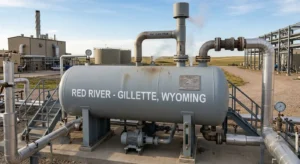
How to Vent Condensate Tanks in Steam Systems
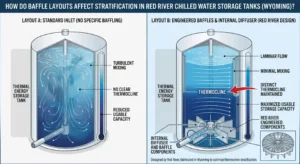
How Do Baffle Layouts Affect Stratification in TES Tanks?
- What Are Thermal Storage Testing Standards for TES Vessels?
- What Hydro Tests Are Required for Pressure Vessels?
- What Are Thermal Storage Tank Design Parameters?
- What Is Thermal Energy Storage System Manufacturing?
- Thermal Storage Tanks for Industrial Use
- Thermal Energy Storage Solutions for Industrial Applications
About Author



