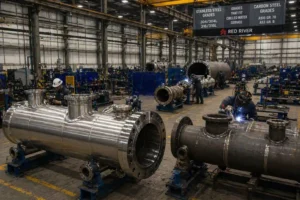
stainless steel pressure vessel lifecycle cost fabrication Red River Wyoming

Can Stainless Reduce Lifecycle Cost on Pressure Vessels

Stainless steel costs more upfront, but the right operating environment makes it the cheaper choice over time. This guide breaks down where stainless can reduce lifecycle cost on pressure vessels and where carbon steel remains the better decision. Why Lifecycle Cost Is the Right Way to Evaluate Material Selection Purchase price and fabrication cost dominate early project budget conversations because they are the easiest numbers to put on a spreadsheet. They are also incomplete. A vessel that costs 40 percent
Read More »
how weld finishing affects cleanliness pressure vessel fabrication Red River Wyoming

How Weld Finishing Affects Cleanliness

Weld finishing is not a cosmetic step. This guide covers how weld finishing affects cleanliness in pressure vessels and process equipment, which methods apply to which applications, and what happens when finishing is treated as an afterthought. Why Weld Surface Condition Matters for Cleanliness A weld bead as it comes off the torch is rarely acceptable for service in a clean process environment. On stainless steel, heat input during welding creates a discolored oxide layer called heat tint that depletes

Read More »
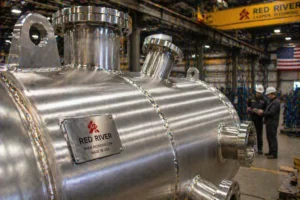
stainless steel tanks fabrication Red River Wyoming

Stainless Steel Tank Fabrication Guide

Specifying stainless steel tanks without understanding the grade, surface finish, and fabrication standard your application demands is one of the most expensive mistakes in industrial procurement. This guide covers what buyers, engineers, and project managers need to know before a purchase order is issued. Why Stainless Steel Tanks Are Specified Over Carbon Steel Carbon steel is the default material for most industrial pressure vessels and storage tanks. When a project specification calls for stainless steel instead, the reason usually comes

Read More »
grades fit chilled water service pressure vessel fabrication Red River Wyoming

Which Grades Fit Chilled Water Service

Choosing the wrong material grade for chilled water service leads to corrosion, reduced thermal efficiency, and premature vessel replacement. This guide covers which grades fit chilled water service and what drives the selection between them. Why Material Grade Matters in Chilled Water Applications Chilled water systems operate at temperatures typically ranging from 35 to 55 degrees Fahrenheit at relatively moderate pressures. The real challenges come from condensation, oxygen content, water treatment chemistry, and the long service life these systems are

Read More »
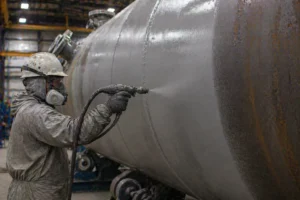
coatings pair best with carbon steel pressure vessel fabrication Red River Wyoming

Which Coatings Pair Best With Carbon Steel?

Choosing the right coating matters. This guide shows which coatings pair best with carbon steel, compares carbon steel coating systems, and highlights pressure vessel coatings for industrial applications. Proper surface preparation is just as critical as chemistry in ensuring long‑term performance.  Why Carbon Steel and Coating Selection Cannot Be Separated Carbon steel’s strength, availability, and weldability make it the default material for pressure vessels, storage tanks, structural steel, and pipe fabrication across oil and gas, power generation, biogas, and industrial

Read More »
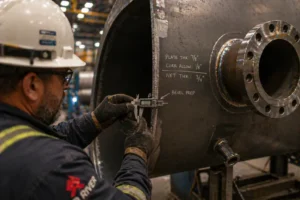
corrosion allowance typical pressure vessel fabrication Red River Wyoming

What Corrosion Allowance Is Typical for Pressure Vessels?

Corrosion allowance is the sacrificial wall thickness, and typical values range from 0.0625 to 0.250 inches, depending on the fluid, temperature, and service life. This guide covers how the number gets selected and what happens when it is set too low. What Corrosion Allowance Actually Represents Corrosion allowance is the additional wall thickness added to a pressure vessel beyond what is required for mechanical strength. It is not a structural safety margin. It is sacrificial material, planned and deliberate, intended

Read More »