
Which Connections Fit Receiver Tanks?
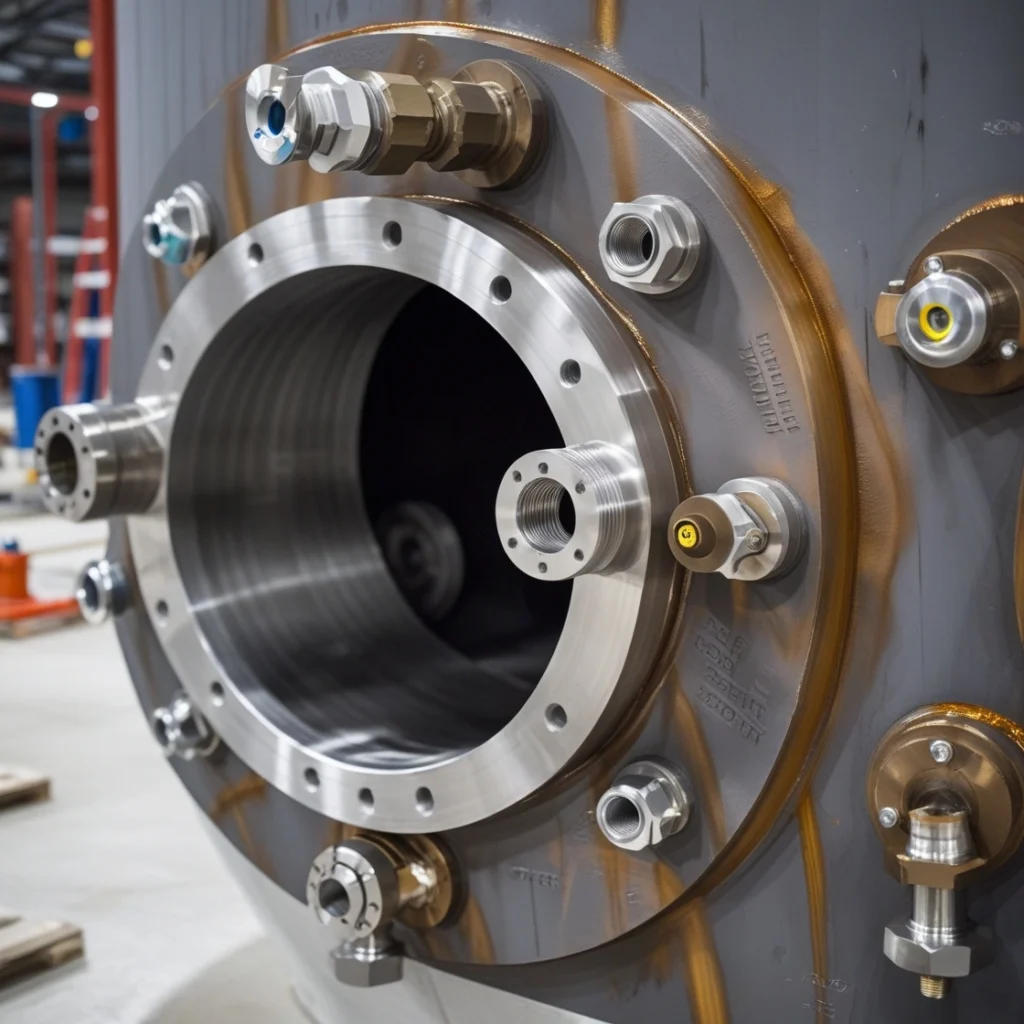
Receiver tanks typically use NPT threaded connections for smaller ports and flanged or welded connections for larger or higher-pressure applications. The correct connection depends on operating pressure, pipe size, fluid service, and ASME code requirements to ensure safe, reliable performance. Key Takeaways Standard receiver tanks use NPT (National Pipe Taper) threaded connections for ports up […]
How Do Receiver Tanks Affect Cycle Time?
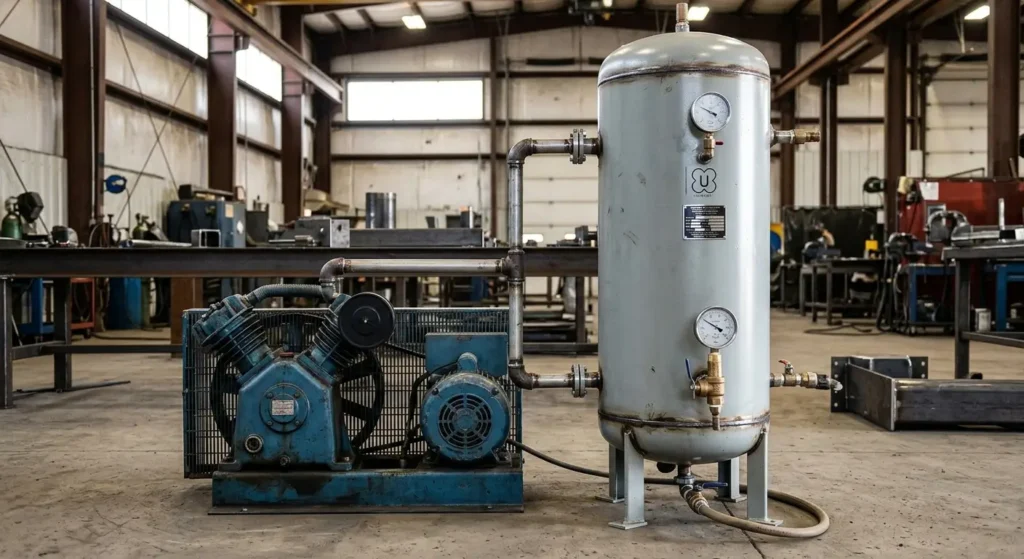
Receiver tanks affect compressor cycle time by extending the off time between starts: more compressed air storage volume means the system draws down pressure more slowly, so the compressor rests longer before restarting. The relationship between receiver volume, pressure differential, and compressor output is governed by the formula t = (V × (P1 − P2)) […]
What Size Receiver Tank Is Required for Industrial Use?
The size of the receiver tank required depends on the compressor output in CFM, the allowable time between starts, and the operating pressure band between cut-in and cut-out. The industry-standard receiver tank sizing formula is V = (C x t x Pa) / (P1 – P2), and every compressed air vessel operating above 15 psig […]
Can Air Removal Improve Pump Life
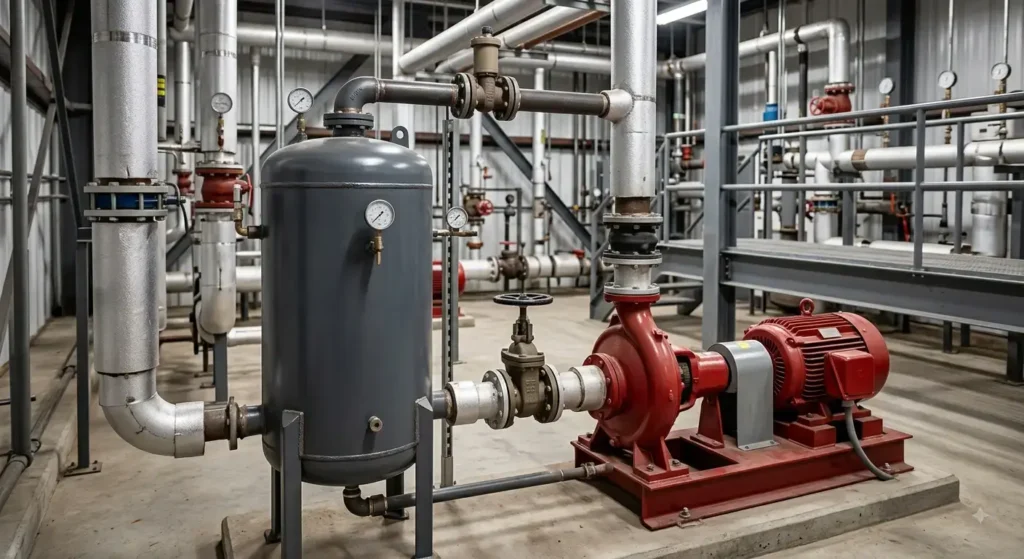
Yes. Air removal improves pump life by eliminating cavitation at the impeller, overheating of the mechanical seal, and oxygen-driven internal corrosion before any of those stressors reach the pump, through an ASME-coded air separator on the pump suction side built to Section VIII by Red River’s pressure vessel fabrication team. Key Takeaways Air removal improves […]
Where to Locate Air Separator Tanks?
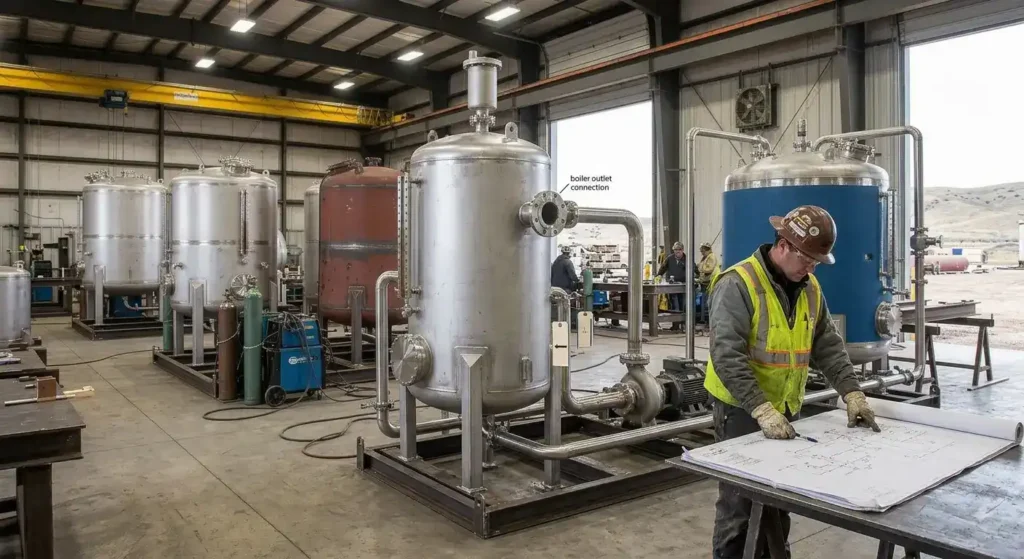
Install air separator tanks at the point of lowest air solubility, where the fluid is hottest and the pressure is lowest. In most systems that means just downstream of the boiler or chiller and on the suction side of the pump, where the separator has the most air available to capture. Key Takeaways Locate air […]
How Do Air Separator Tanks Work?
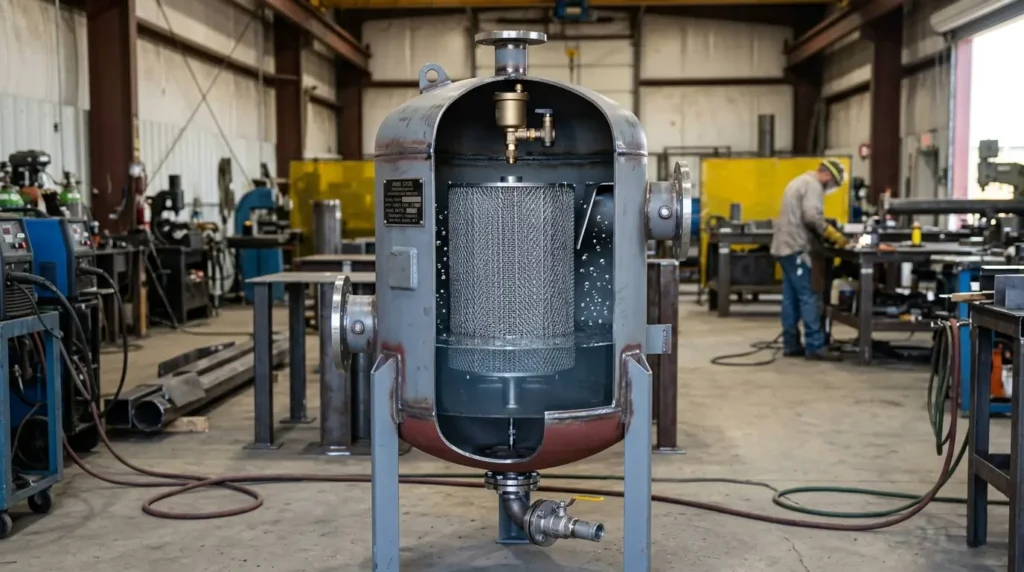
Air separator tanks work by slowing circulating fluid inside a wider vessel, which releases trapped air from the liquid so it can rise to the top and vent automatically. The result is a loop kept full of fluid rather than a mix of fluid and entrained gas, protecting pumps, heat exchangers, and piping from the […]
Hydronic Tanks?
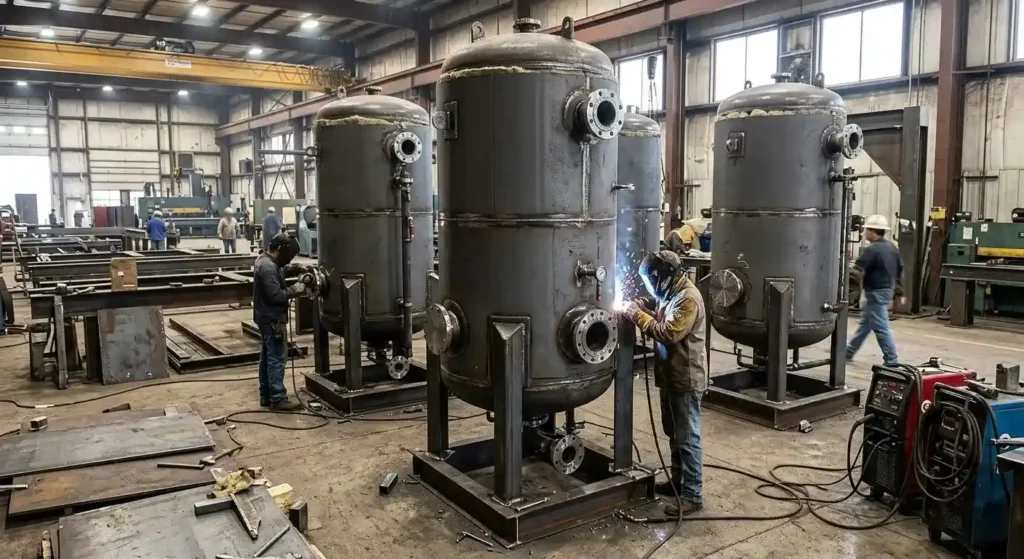
Hydronic tanks are pressure-rated vessels used in water-based heating and cooling systems to store thermal energy, stabilize loop volume, and remove air and debris from the fluid circuit. Any hydronic tank operating above 15 psig must be built to ASME Section VIII as a coded pressure vessel. Key Takeaways Hydronic tanks are defined by their […]
Can Glycol Tanks Reduce Freezing Risk?
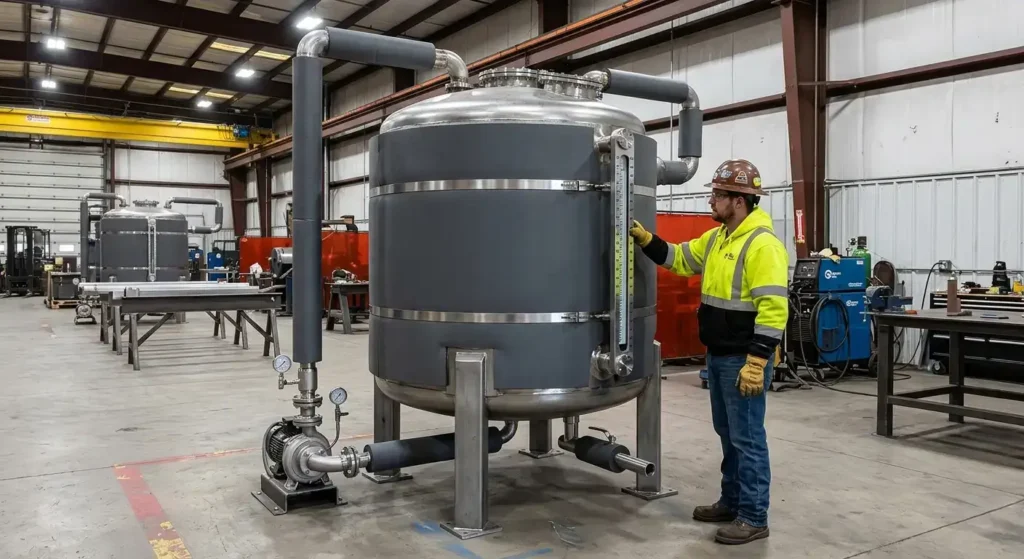
Yes. Glycol tanks reduce freezing risk by keeping the loop charged at the correct concentration and adding thermal mass that slows how fast the loop can cool toward the freeze point. The tank does not lower the freezing temperature; the glycol chemistry does that, and the tank maintains that protection reliably between service visits. Key […]
Which Materials Suit Glycol Service?
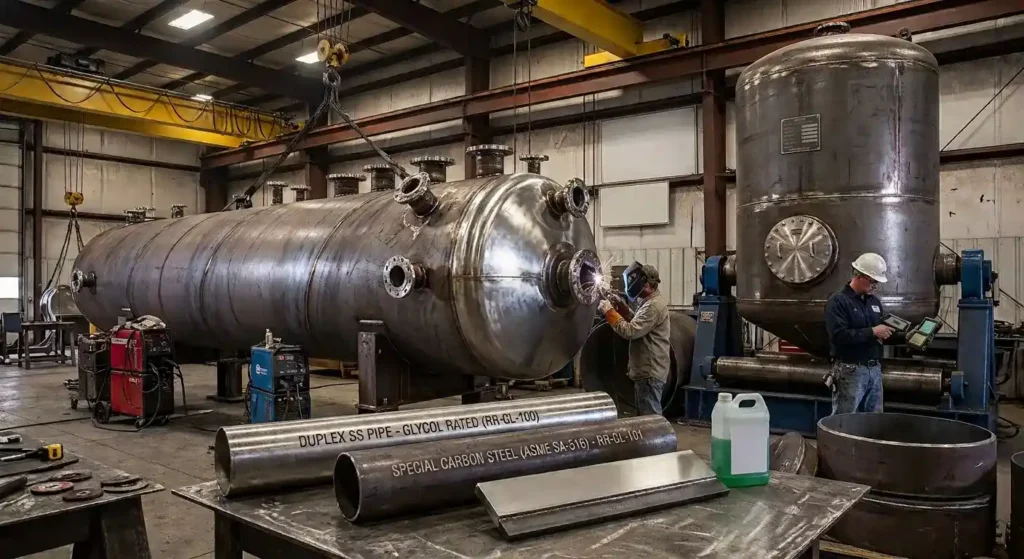
Stainless steel and inhibited carbon steel are the two materials that suit glycol service reliably, with stainless preferred where purity and corrosion resistance are priorities and inhibited carbon steel the cost-effective choice for industrial loops with consistent fluid maintenance. Galvanized steel and bare aluminum must be kept out of glycol systems entirely, because both react […]
How Do Hydronic Tanks Stabilize Flow?
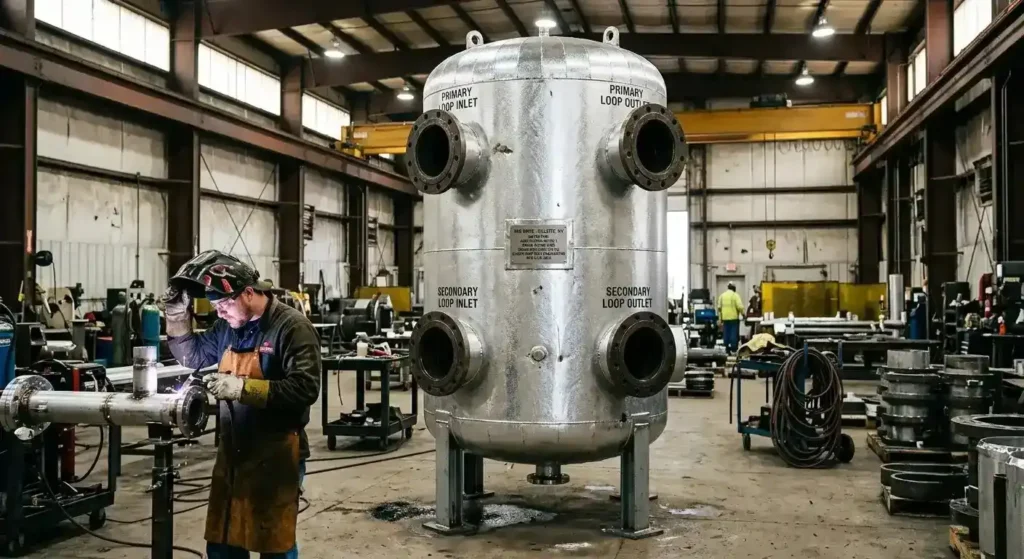
Hydronic tanks stabilize flow by hydraulically separating the heat source from the distribution system and adding thermal mass to the loop, so pumps and the boiler or chiller operate on steady, independent flow instead of competing against one another. The result is fewer pressure swings, less short cycling, and protection for every pump and valve […]