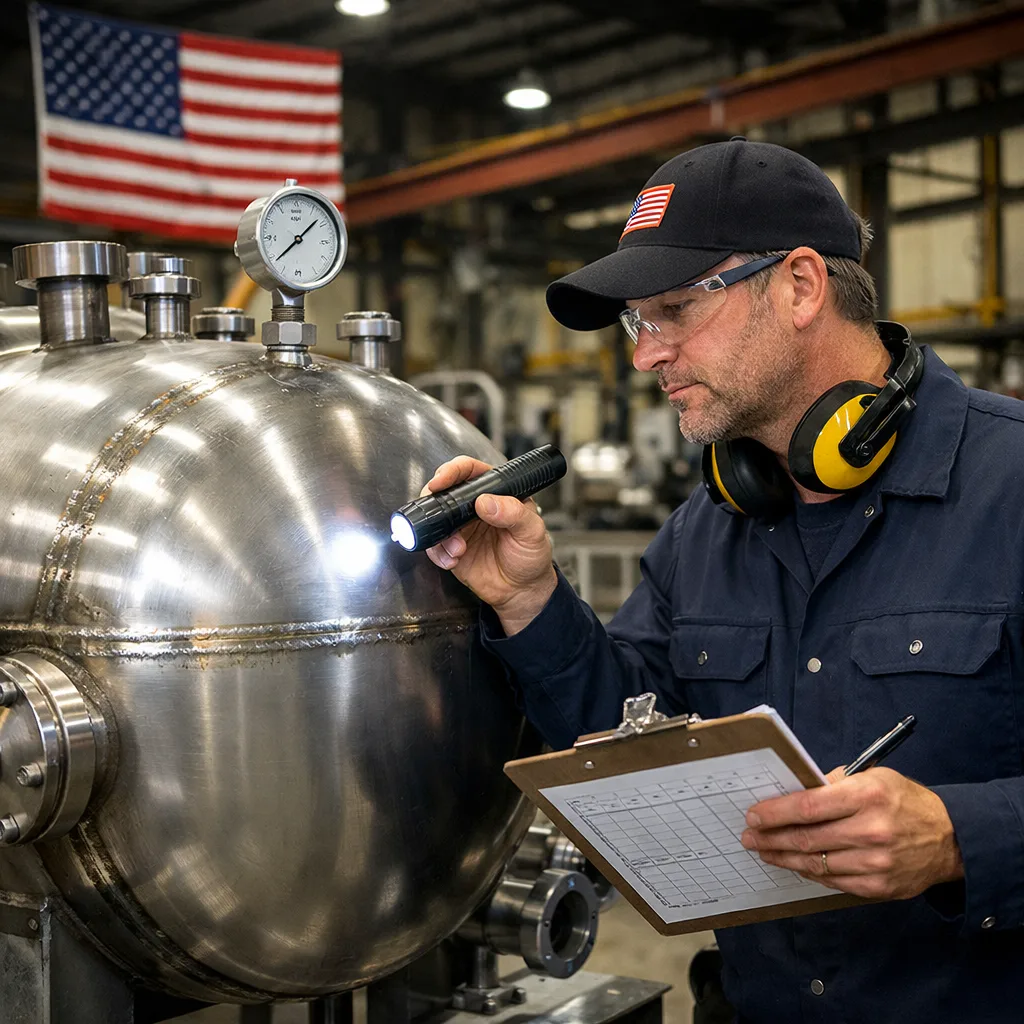
American pressure vessel fabrication is shaped by strict safety standards, skilled labor demands, and complex supply chains. Despite these pressures, U.S. manufacturers continue to adapt through innovation, workforce development, and values-driven practices.
The Current Landscape of American Pressure Vessel Fabrication
American pressure vessel fabrication plays a critical role in supporting industries that rely on the safe containment and transport of pressurized gases and liquids. From energy production to chemical processing and pharmaceutical manufacturing, these vessels operate under extreme conditions where failure is not an option. As a result, American pressure vessel fabrication is built on precision, accountability, and regulatory discipline.
Unlike many offshore alternatives, American pressure vessel fabrication emphasizes rigorous engineering standards and quality controls. The fabrication process requires careful material selection, qualified welding procedures, and documented inspections at every stage. These requirements ensure long-term performance, operational safety, and regulatory compliance.
Top Challenges in American Pressure Vessel Fabrication
Material Sourcing and Supply Chain Disruptions
One of the most persistent challenges in American pressure vessel fabrication is securing certified materials without delay. Global supply chain instability has made it more difficult to obtain carbon steel, stainless steel, and specialty alloys that meet strict specifications.
Extended lead times for plates, forgings, and fittings can disrupt production schedules and increase costs. In American pressure vessel fabrication, even minor inconsistencies in material certification or composition can halt fabrication entirely, especially during the pressure vessel manufacturing process, making material sourcing a critical risk factor.
Navigating Strict Regulatory Compliance
Regulatory compliance is central to American pressure vessel fabrication. The ASME Boiler and Pressure Vessel Code governs design, fabrication, inspection, and testing, setting a high standard for manufacturers who follow ASME pressure vessel standards. In addition to national codes, state-level regulations and customer-specific requirements often apply.
Industries such as power generation and pharmaceuticals frequently require additional documentation and quality controls. American pressure vessel fabrication demands continuous training, audits, and process oversight to maintain compliance and avoid costly setbacks.
Skilled Labor Shortages
Skilled labor shortages remain a significant challenge in American pressure vessel fabrication. Certified welders, experienced fabricators, and qualified inspectors are essential to maintaining quality, particularly in demanding procedures like pressure vessel welding and ASME welding code compliance.
While automation supports certain tasks, American pressure vessel fabrication still relies heavily on human expertise. Manufacturers are investing in apprenticeships, internal training programs, and certification pathways to develop the next generation of skilled professionals.
Rising Operational Costs
Rising operational costs affect nearly every aspect of American pressure vessel fabrication. Fluctuating steel prices, higher labor expenses, insurance costs, and energy prices all contribute to tighter margins, particularly for companies producing custom pressure vessels and complex systems such as modular skids.
Maintaining competitive pricing while meeting strict safety and quality standards is a constant balancing act. Many American fabricators continue to prioritize reliability and compliance, even as offshore competition applies downward price pressure across metal fabrication services.
How U.S. Manufacturers Adapt and Overcome
Despite these challenges, American pressure vessel fabrication continues to evolve through resilience and strategic adaptation. Vertical integration allows manufacturers to control more stages of production, from prefabrication services to final assembly, improving scheduling, consistency, and accountability across fabrication capabilities.
Workforce development remains a key focus. By investing in training, certifications, and long-term career paths, companies strengthen their ability to meet technical and regulatory demands. American pressure vessel fabrication benefits from teams who understand both the engineering process and the responsibility behind every vessel, as highlighted in quality assurance practices.
Values-driven leadership also plays a critical role. Many domestic manufacturers emphasize integrity, transparency, and accountability, reinforcing trust with customers who depend on pressure vessels for critical operations and long-term industrial solutions.
American Pressure Vessel Fabrication Moving Forward
American pressure vessel fabrication remains essential for industries that require uncompromising safety and performance. While material shortages, regulatory complexity, and labor constraints persist, these pressures have also driven innovation and resilience.
By investing in skilled workers, maintaining strict compliance, and adopting efficient fabrication practices, American pressure vessel fabrication continues to set a benchmark for quality and reliability. This commitment ensures domestically fabricated pressure vessels remain trusted assets in demanding industrial environments.
Need a reliable partner?
Red River specializes in the design and manufacturing of pressure vessels. We also fabricate related items such as prefabricated spools and skid packages.
Reach out to us today and experience the Red River difference. Where American-made products and American Values come together, we care more.
Frequently Asked Questions
1. What is a pressure vessel used for?
A pressure vessel is used to store or transport gases or liquids under pressure, commonly found in industries like oil & gas, chemical, and power.
2. Why is it challenging to manufacture pressure vessels in America?
High regulatory standards, labor shortages, and supply chain disruptions make it complex and costly to manufacture pressure vessels domestically.
3. What codes govern pressure vessel manufacturing in the U.S.?
The ASME Boiler and Pressure Vessel Code (BPVC) is the main governing standard, with additional state and industry-specific regulations.
4. Are American-made pressure vessels better than imported ones?
Many U.S.-made vessels meet stricter quality and compliance standards, offering greater reliability, especially in critical applications.
5. How long does it take to manufacture a pressure vessel?
Lead times vary by complexity but generally range from several weeks to several months, depending on material availability and project scope.
6. What materials are commonly used in American pressure vessels?
Carbon steel, stainless steel, and specialty alloys are commonly used, selected based on application, temperature, and pressure requirements.
7. Can small shops compete with larger manufacturers in this field?
Yes smaller shops often offer agility, close customer collaboration, and a commitment to high-touch service and customization.
8. What industries rely most on U.S.-made pressure vessels?
Energy, pharmaceuticals, chemical processing, and water treatment sectors are primary users of American-manufactured vessels.
Key Takeaways
- Manufacturing pressure vessels in America is a critical part of supporting industries like energy, chemical processing, and power generation.
- U.S. manufacturers face unique challenges, including supply chain instability, material shortages, and compliance with ASME and regional regulations.
- The shortage of skilled labor especially certified welders and fitters is one of the most significant hurdles in American fabrication shops.
- Strict compliance with ASME codes and safety protocols adds complexity but ensures long-term safety and performance.
- Despite rising costs, American fabricators continue to prioritize quality, safety, and integrity over shortcuts or low-cost offshore alternatives.
- Companies are adapting through vertical integration, employee training programs, and values-driven leadership.
Related Blog Post
Pressure Vessel Design & Engineering: Concept to Launch
What is Pressure Vessel Design and Engineering: Code-Ready Guide
What are the Key Factors in Pressure Vessel Engineering
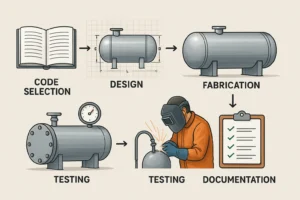
How Do You Design a Pressure Vessel: A Step-By-Step Guide
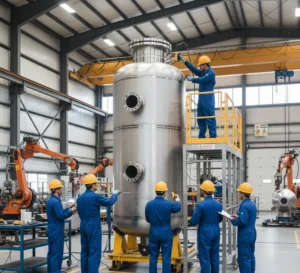
What is Pressure Vessel Fabrication and Manufacturing
- Pressure Vessels in Manufacturing: Applications and Compliance
- Pressure Vessels in America: Safe & Efficient Chemical Processing
- Pressure Vessels Automotive Industry
- Pressure Vessels Aerospace Industry: Engineering Safety
- Pressure Vessels Pharmaceutical Manufacturing: Safety & Precision
- Pressure Vessel Supply Chain Challenges in America