
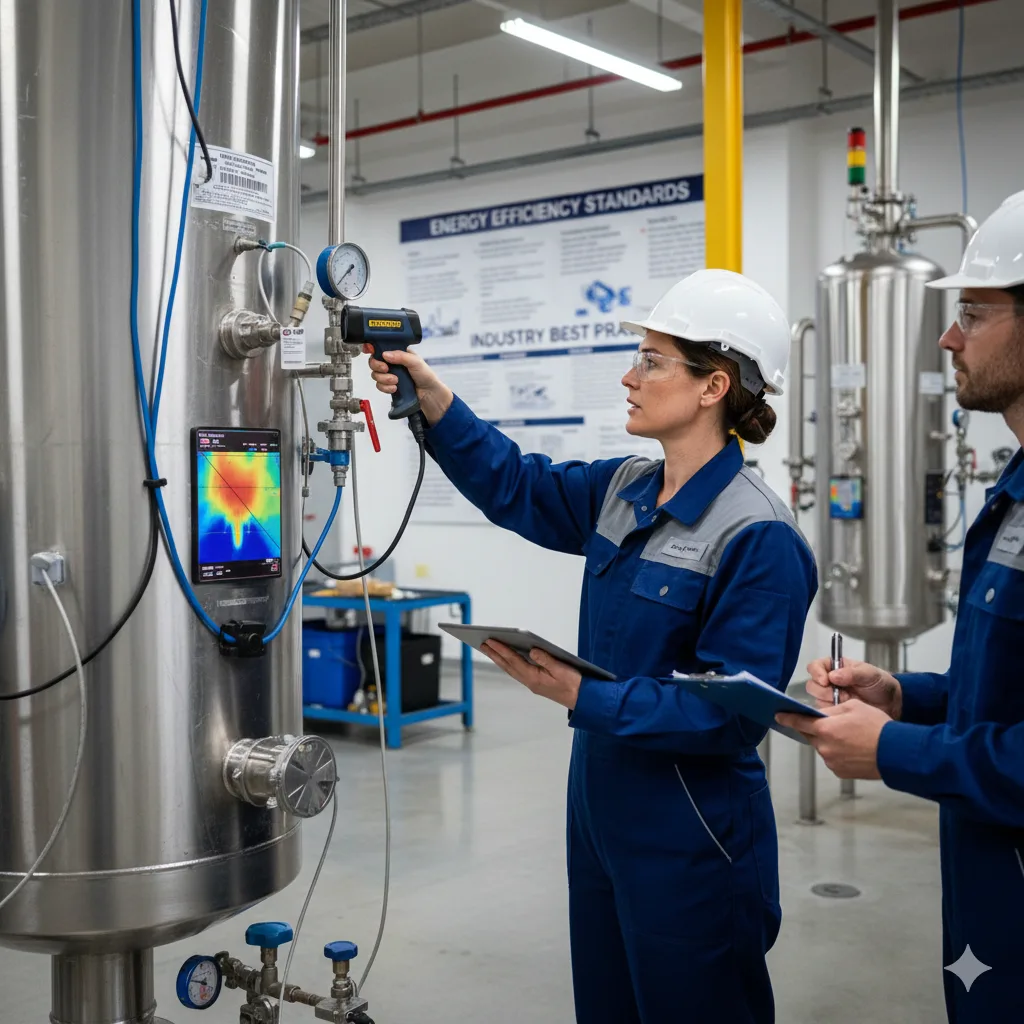
Energy efficiency compliance in pressure vessel design reduces energy waste, lowers operating costs, and supports environmental and carbon reduction goals while meeting regulatory standards. By using proper materials, insulation, smart monitoring, and adhering to ASME, ISO, and DOE guidelines, organizations gain longer equipment life, stronger ESG performance, and a competitive advantage.
Why Energy Efficiency Compliance Matters
In the realm of industrial systems and infrastructure, energy efficiency compliance has become a critical focus, especially in the design and operation of pressure vessels. These vessels, used across industries from chemical processing to power generation, play a central role in energy-intensive operations. As environmental standards tighten and energy costs rise, ensuring compliance with energy efficiency regulations is no longer just good practice, it is a necessity for manufacturers and operators working with ASME certified pressure vessels.
Organizations like Red River support this shift by integrating compliance-focused engineering into fabrication and system design.
The Role of Pressure Vessels in Energy-Intensive Industries
Pressure vessels are designed to hold gases or liquids at high pressures, and they’re a staple of many industrial processes. They’re commonly found in oil and gas refineries, food processing plants, manufacturing facilities, and HVAC systems. You can explore how these systems differ across applications in types of industrial pressure vessels.
Because they operate under demanding conditions, even small inefficiencies can lead to large energy losses over time. Understanding what is the most common type of pressure vessel used in industry helps engineers design systems that perform efficiently and reliably.
That is where energy efficiency compliance comes in, not only to ensure optimal performance but also to meet regulatory standards designed to reduce environmental impact and improve safety and compliance in pressure vessel design.
Environmental and Economic Implications of Energy Inefficiency
A poorly insulated or improperly designed pressure vessel can result in significant energy waste. This energy loss contributes to increased carbon emissions and higher utility bills. Issues such as corrosion, heat leakage, or structural weaknesses, often discussed in types of failure in pressure vessels, can further degrade efficiency.
When scaled across a large facility or multiple sites, these inefficiencies can drastically affect both environmental goals and the bottom line. Compliance with energy efficiency guidelines ensures that pressure vessels are optimized to minimize waste, meet performance standards, and reduce operating costs while supporting quality assurance in custom pressure tank manufacturing.
How Compliance Standards Improve Operational Sustainability
Adhering to energy efficiency compliance regulations means designing and operating vessels that consume less energy without sacrificing functionality. Sustainable engineering practices, from insulation to automation, create systems that last longer and require less maintenance. These principles align closely with understanding the essentials of safe pressure vessel design.
For organizations prioritizing ESG strategies, pressure vessel compliance plays a key role in sustainable operations. Efficient vessels reduce downtime, extend equipment life, and support responsible manufacturing practices promoted through pressure vessel manufacturing and inspections.
The Connection Between Energy Efficiency Compliance and Carbon Reduction Goals
Many regulatory frameworks are directly tied to national or international emissions targets. By following energy efficiency compliance protocols, organizations contribute to their industry’s efforts to curb greenhouse gas emissions. Energy-efficient vessels reduce thermal losses, limit fuel consumption, and align with climate-focused initiatives outlined in understanding pressure vessels in the power generation industry.
This alignment strengthens corporate sustainability reporting and supports long-term decarbonization strategies.
Key Design Principles for Energy Efficiency Compliance
Designing for energy efficiency compliance requires a strategic approach rooted in materials science, mechanical engineering, and systems thinking. These fundamentals are often discussed when choosing the right material for pressure vessel fabrication.
Materials Selection and Thermal Insulation Strategies
The right materials significantly enhance a vessel’s ability to retain heat or cold, depending on its function. Stainless steel, for example, resists corrosion and performs well under extreme conditions. Material selection also impacts longevity, as explained in pressure vessel construction materials.
Pairing high-quality construction materials with robust insulation reduces energy loss and supports compliance goals.
Optimizing Vessel Geometry for Energy Conservation
Designing pressure vessels with energy conservation in mind involves more than materials. Shape and size influence how heat is transferred and retained. Engineers often consider guidance from important points to be considered while designing a pressure vessel to reduce unnecessary surface exposure.
Compact, well-insulated vessels reduce the need for reheating or repressurizing.
Minimizing Heat Loss and Energy Leakage in Vessel Systems
Thermal bridging, worn gaskets, and poorly sealed joints are common causes of energy loss. These issues are frequently identified during comprehensive guide to pressure vessel inspection processes.
Proper maintenance and design oversight help mitigate risks while ensuring long-term efficiency.
Incorporating Smart Sensors and Monitoring Technology
Smart pressure vessels equipped with sensors allow operators to monitor performance in real time. These technologies align with modern manufacturing solutions outlined in pressure vessel manufacturing process.
Data logging and reporting also help organizations demonstrate compliance during audits and inspections.
Regulations and Standards Governing Compliance
Understanding and complying with current standards is crucial for maintaining energy efficiency compliance. Regulatory expectations are often tied to ASME pressure vessel standards and international energy management frameworks.
Overview of ASME Codes and Energy Efficiency Requirements
ASME Section VIII remains foundational for vessel design and safety. Its role in quality assurance is further explained in the importance of ASME certification in quality assurance.
Meeting ASME standards is often a baseline requirement for energy efficiency compliance.
How DOE and ISO Standards Apply
The Department of Energy (DOE) and ISO (International Organization for Standardization) offer additional guidance, particularly ISO 50001, which focuses on energy management systems. These standards encourage organizations to implement systemic energy-saving measures, including the design of efficient mechanical systems.
For facilities aiming to achieve certification or meet industry benchmarks, integrating ISO and DOE standards ensures a robust approach to compliance.
State, National, and Global Regulatory Considerations
Depending on location, pressure vessels may be subject to different levels of regulation. In the U.S., states may enforce energy codes such as Title 24 in California, while global markets may follow EU Energy Efficiency Directive (EED) requirements.
Organizations operating internationally must adapt their vessel designs to meet multiple energy efficiency compliance standards each with its own documentation, testing, and approval processes.
Documentation and Reporting for Regulatory Audits
A major component of compliance is transparent reporting. This includes design schematics, energy logs, maintenance records, and third-party verification. Facilities that invest in proper documentation benefit from smoother approvals and reduced liability, as seen in certification of pressure vessels.
Benefits of Energy Efficiency Compliance in Vessel Design
Pursuing energy efficiency compliance delivers advantages beyond regulation, including cost savings, durability, and environmental responsibility.
- Lower operating costs through reduced energy consumption
- Extended equipment lifespan supported by pressure vessel fabrication steps
- Improved ESG performance and reduced carbon footprint
- Competitive positioning in regulated and green markets
Organizations that integrate these principles often partner with experienced fabricators offering custom pressure vessel solutions and advanced capabilities.
Cost Savings Through Reduced Energy Consumption
Efficient vessels require less energy to operate, leading to lower utility bills and operational costs. Over the life of a pressure vessel, these savings can amount to thousands or even millions of dollars, depending on system scale.
Increased Lifespan of Equipment Through Optimized Performance
When pressure vessels are designed for energy efficiency, they undergo less thermal stress and require fewer corrections or repairs. That means longer lifespans, fewer shutdowns, and better return on investment (ROI).
Lower Carbon Footprint and Improved ESG Standing
Meeting energy efficiency compliance standards supports carbon neutrality and helps businesses meet sustainability benchmarks. This can improve ESG scores and attract eco-conscious investors, partners, and customers.
Competitive Advantage in Regulated and Green Markets
Compliance is not just about avoiding fines it’s a market differentiator. Companies that lead in energy efficiency are more likely to win contracts, earn certifications, and participate in green building or clean energy initiatives.
Building a Smarter Future
As industries shift toward more sustainable and cost-effective operations, pressure vessel design presents both a responsibility and an opportunity. It’s no longer just about meeting regulations it’s about creating smarter systems that conserve energy, minimize waste, and enhance performance.
Every design choice, from material selection and insulation to monitoring systems and regulatory alignment, contributes to a more efficient and environmentally responsible operation. Companies that prioritize these efforts today are setting the stage for long-term resilience, cost savings, and a reduced carbon footprint.
In a market driven by regulation and sustainability, Energy Efficiency Compliance is a strategic goal that reflects integrity, innovation, and forward thinking. Whether designing new systems or upgrading existing ones, aligning with modern energy standards ensures you’re building for the future responsibly and effectively.
Need a reliable partner?
Red River specializes in the design and manufacturing of pressure vessels. We also fabricate related items such as prefabricated spools and skid packages.
Reach out to us today and experience the Red River difference. Where American-made products and American Values come together, we care more.
Frequently Asked Questions
1. What is energy efficiency compliance in pressure vessel design?
Energy efficiency compliance in pressure vessel design refers to meeting engineering and regulatory standards that minimize energy waste and ensure optimal system performance.
2. Why is energy efficiency important for pressure vessels?
Energy-efficient pressure vessels reduce energy consumption, lower costs, and contribute to environmental sustainability all while meeting compliance requirements.
3. What are the main standards regulating energy efficiency compliance?
ASME, ISO 50001, and DOE guidelines are commonly used. Each provides frameworks for achieving and documenting energy-efficient design and operation.
4. How does vessel design affect energy efficiency compliance?
Factors such as insulation, vessel shape, materials, and monitoring technology directly influence energy retention and loss, impacting overall compliance.
5. What are the consequences of non-compliance?
Non-compliance can lead to legal penalties, higher energy costs, poor performance, and reputational damage.
6. Are there government incentives for energy-efficient pressure vessels?
Yes. Many regions offer rebates, tax credits, or grants for facilities that invest in compliant and energy-efficient systems.
7. How can smart technology support energy efficiency compliance?
Sensors, monitors, and data systems help detect inefficiencies, optimize performance, and provide documentation required for
Key Takeaways
- Energy efficiency compliance is essential in modern pressure vessel design and operation.
- Materials, insulation, smart technology, and design shape all impact energy use.
- Adhering to standards like ASME, ISO 50001, and DOE guidelines ensures safe, efficient, and compliant systems.
- Businesses benefit through lower costs, better performance, and improved environmental responsibility.
Related Blog Post
Pressure Vessel Design & Engineering: Concept to Launch

What is Pressure Vessel Design and Engineering: Code-Ready Guide
What are the Key Factors in Pressure Vessel Engineering

How Do You Design a Pressure Vessel: A Step-By-Step Guide
What is Pressure Vessel Fabrication and Manufacturing
- DOT Vessel Transport Rules for Pressure Vessels in the U.S.
- EPA Section 608 Compliance for Refrigerant Pressure Vessels
- Green Manufacturing Standards for Pressure Vessel Production
- Noise and Vibration Compliance for Industrial Pressure Vessels
- Waste Compliance in Fabrication for Pressure Vessels
- Title V Air Permits for Industrial Pressure Vessels



