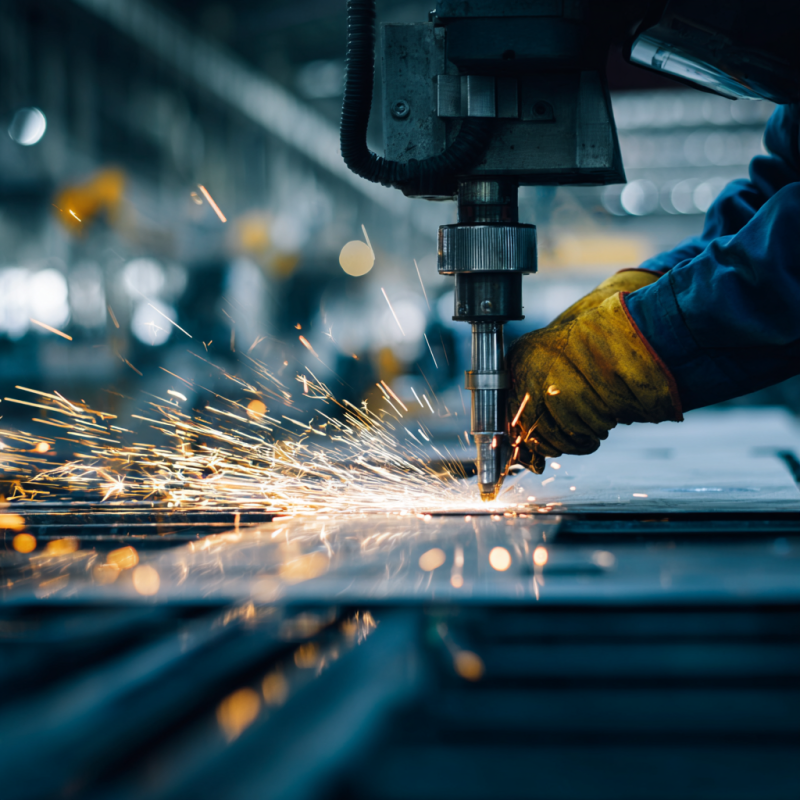
Red River LLC provides professional custom sheet metal fabrication in Texas, offering precision design, cutting, welding, and finishing services for any industrial or commercial project. Every component is tailored to your exact requirements for maximum strength and performance.
Expert Custom Sheet Metal Fabrication Services in Texas
Whether you’re building a one-off prototype or outfitting a large-scale industrial plant, metal components often form the backbone of any project. From sturdy frameworks to sleek product casings, metal parts need to be carefully designed, cut, welded, and polished so they fit perfectly into your overall vision. The good news? It’s entirely possible to turn that vision into a sturdy reality through skill, the right materials, and a process built on precision. This is the essence of custom sheet metal fabrication, where every detail is tailored to your specifications. In other words, you’re engaging in custom fabrication, and that’s where the magic of sheet metal truly shines. With custom sheet metal fabrication, even the most complex designs become practical, durable, and visually striking.
Custom sheet metal fabrication is a phrase you’ve probably come across if you’re seeking unique metal parts or specialized structures. This type of fabrication goes beyond simple off-the-shelf pieces, giving you a result that matches your exact project requirements. But maybe you’re not fully sure what sets custom fabrication apart from standard manufacturing, or why some experts swear by techniques like prefabrication to boost safety and efficiency. In the following sections, you’ll uncover the transformative power of custom sheet metal fabrication, learn about essential steps and technologies, and explore how a trusted partner like RedRiver LLC can help bring your metal concepts to life.
Explore Custom Sheet Metal Fabrication
What is it Exactly?
Custom sheet metal fabrication involves shaping flat metal sheets often steel, aluminum, or other alloys into finished parts or assemblies that match your specific project requirements. Unlike standard metal components, these custom designs don’t come pre-made for universal fits. Instead, you determine all the details: dimensions, capacity, weight, look, and functionality. From pressure vessels to decorative fixtures, custom parts are tailor-made so you can focus on what you want, rather than settling for something that merely works.
If you’re curious about the fundamentals, check out what is custom sheet metal fabrication. You’ll see that this process covers techniques like cutting, bending, welding, assembling, and applying finishing touches to achieve professional results. It merges craftsmanship with advanced engineering, ensuring your final piece meets performance standards while looking great.
Why Bother with Customization?
Customization grants you better geometry control, optimum fit, and unique aesthetic options. If an off-the-shelf part doesn’t meet your demands for durability, temperature tolerance, corrosion resistance, or custom shaping, you’ll end up forcing a square peg in a round hole. Custom sheet metal fabrication eliminates that mismatch. Through Custom fabrication, you get parts designed according to your specs, whether that’s a precisely placed flange or a specific alloy required to handle high temperatures. Instead of reengineering your entire assembly around what’s available, custom sheet metal fabrication allows you to engineer the metal to fit your assembly perfectly.
Examine Industry Benefits and Applications
Let’s be honest: custom sheet metal fabrication isn’t just for heavy industry or oil rig components. It spans multiple fields:
- Energy and power: Precision components in gas handling or energy production must handle high pressure or extreme heat. Custom parts ensure reliability and code compliance. See our solutions.
- Water treatment: Specialized tanks and piping help maintain water quality standards, often requiring tailored sizes for maximum flow efficiency. Learn more in our water tank overview.
- Government and aerospace: Projects frequently come with tight safety and reliability requirements, making custom solutions essential. Explore ASME-certified pressure vessels.
- Renewables: Equipment in emerging industries like solar or biogas needs unique fabrication to accommodate new technologies. Check out modular skid solutions.
For instance, RedRiver LLC has proven experience in designing ASME pressure vessels and entire prefabricated systems. Their approach emphasizes advanced modeling, safety, and cost-effectiveness. Prefabrication reduces typical onsite challenges like difficult weather or limited workspace. By handling the bulk of metalwork in a controlled environment, finished assemblies achieve tight tolerances and pass rigorous testing before deployment.
Key Benefits of Custom Fabrication
- Better fit: Everything from flange placement to overall shape is meant for your unique application. Explore types of industrial pressure vessels.
- Enhanced durability: Tailored materials and thicknesses ensure the finished component can handle environmental factors. See choosing the right material.
- Greater adaptability: Modify designs without discarding ill-fitting stock parts. Learn more about modular solutions.
- Possible cost savings: Fewer reworks and downtime often offset initial costs. Discover cost factors for sheet metal fabrication.
Understand the Fabrication Steps
Custom sheet metal fabrication can involve any combination of cutting, forming, joining, and finishing whatever is necessary to meet your end goal. Although your project might include unique phases, you’ll see some common core steps that define custom sheet metal fabrication. From precise measurements to material selection, custom sheet metal fabrication ensures every component fits your specifications. By relying on proven techniques and skilled craftsmanship, custom sheet metal fabrication turns complex designs into functional, durable metal parts.
Step 1: Conceptualization and Design
Before a single metal sheet gets cut, you’ll collaborate with a team specializing in custom sheet metal fabrication to outline your exact needs. This stage helps you pinpoint material requirements, dimensions, and tolerances to ensure a perfect fit. By planning carefully, custom sheet metal fabrication allows you to avoid costly mistakes and achieve the precise results you want. With custom sheet metal fabrication, every part is engineered to meet your specifications from the very start.
- Required dimensions and tolerances
- Material types and thicknesses
- Additional attachment points, openings, or ports
At this stage, advanced 3D modeling tools (often referred to as Building Information Modeling or BIM) bring your idea to life digitally. Fabricators like Red River use these tools to reduce design clashes, ensure all parts fit correctly, and identify conflicts before anything moves to the manufacturing floor. It’s far easier (and cheaper) to make changes in a model than to fix something after it’s built.
Step 2: Cutting and Shaping
After your design is locked in, your fabricator cuts the raw metal sheets to the specifications. They may use techniques like:
- Laser cutting: Ideal for complex shapes that need a tight tolerance.
- Plasma cutting: Good for thicker metals and standard shapes.
- Waterjet cutting: Uses high-pressure water often mixed with an abrasive, great for heat-sensitive materials since it produces minimal thermal distortion.
Depending on the design’s complexity, bending and forming come next, typically via pressing tools or rolling machines. This stage is a key part of custom sheet metal fabrication, ensuring every curve and angle meets your specifications. With skilled techniques and precise control, custom sheet metal fabrication transforms flat sheets into components that fit perfectly into your overall design.
Step 3: Welding and Assembly
No matter how precise the cuts and bends are, you’ll usually need to join components to build a final product. Welding is a fine art that demands skill and consistency. For more in-depth process information, check out sheet metal fabrication process. Proper welds not only seal your connections but also maintain the overall strength of the structure, especially if your finished assembly must handle internal pressure or continuous mechanical stress.
Step 4: Finishing Touches
After the major fabrication steps are complete, your piece often receives finishing procedures. Finishes can handle everything from appearance to performance. Some of the most popular treatments are an essential part of custom sheet metal fabrication, ensuring durability and visual appeal. With proper attention to detail, custom sheet metal fabrication delivers components that meet both functional and aesthetic requirements.
- Powder coating for a durable, chip-resistant surface
- Galvanizing or plating to shield against corrosion
- Polishing for a sleek, reflective look
- Protective linings that guard against chemical exposure
Your ultimate finishing method should mesh with your usage environment. If you need a vessel that handles abrasive materials like harsh chemicals you’ll probably opt for protective coatings or internal linings that prevent corrosion.
Look at Materials and Design Considerations
Metals vary widely in strength, ductility, corrosion resistance, and cost. From aluminum to stainless steel, making the best choice depends on your project’s performance expectations. Here’s a quick look:
| Metal | Pros | Cons |
| Aluminum | Lightweight, corrosion-resistant, easy to form | Not ideal for very high temperatures |
| Stainless steel | High strength, excellent corrosion resistance | Heavier and pricier than aluminum |
| Carbon steel | Durable, lower cost | Susceptible to rust without coating |
| Specialty alloys | Customized properties for specific tasks | Often more expensive |
If you’re focused on ultimate precision, you can explore precision sheet metal fabrication methods that use state-of-the-art machinery and thorough quality checks. Sometimes you’ll need unique finishes or designs that only advanced equipment can provide. For example, in pressure vessels a slight deviation in weld or thickness can mean a big difference in your system’s longevity and safety.
Embrace Prefabrication and Modular Approaches
Ever wonder how some industrial projects wrap up faster while maintaining impeccable quality? Prefabrication holds a big clue. With prefabrication, companies build sections of the final product in a factory setting. Later, they deliver these pieces to the job site for final assembly.
Faster Timelines and Fewer Onsite Risks
By shifting most welding and construction steps off-site, you dodge weather delays, site congestion, and the guesswork that comes from not having the right tool on hand. You’ll also lower your exposure hours the total time workers spend in potentially unsafe on-site conditions. According to Red River Team, fewer worker hours at the job site can also reduce insurance overhead for you, since the tasks done under controlled environments see fewer accidents. So, it’s not just about finishing early, it’s about finishing safer.
Skids, Modules, and Packaged Equipment
Modular solutions, including modular skids, can also push your project’s efficiency to the next level. These skids bundle critical elements like piping, pumps, valves, and instrumentation onto a single frame that’s easy to ship and install. Red River highlights that these pre-built packages find use in numerous industries, from energy production to agriculture. The approach is especially useful if you’re juggling tight timelines, large volumes, or complex requirements like regulatory compliance.
Choose the Right Fabrication Partner
Not all fabricators are created equal. Some may excel at quick prototypes but lack the capacity for large-scale production. Others focus heavily on one industry segment and might not have the specialized expertise you need for your product’s environment.
What to look for:
- Proven experience: Does the team have a track record in the type of metal, product, or technology you need (e.g., pressure vessels vs. decorative metal features)?
- Quality standards: Reputable shops adhere to recognized guidelines like those from the American Society of Mechanical Engineers (ASME).
- Advanced technology: laser cutters, robotic welders, or CNC bending machines can drastically improve precision and throughput.
- Strong workforce: Skilled labor is essential. Look for companies that invest in training and continuous improvement. For example, Red River Team systematically engages Lean Six Sigma practices to ensure efficiency and top-notch quality.
- Communication and collaboration: You want a partner who’s as invested in your outcome as you are. If you’re not sure how the process works, see how does custom sheet metal fabrication work for a quick overview.
Navigating Lead Times and Costs
Lead times vary by project size and complexity. If you’re on a tight schedule, discuss possible solutions with your fabrication partner. They might suggest expedited shipping, dedicated production lines, or a prefabrication approach that streamlines the timeline. When it comes to cost, factors like specialized materials or complex finishing can raise the bottom line so it’s worth being transparent about your budget from the outset.
Custom Sheet Metal Fabrication for Long-Lasting Results
Investing in custom sheet metal fabrication ensures components designed for your unique applications, minimizing errors, improving efficiency, and extending equipment life. At RedRiver LLC, our Texas-based team combines advanced technology with skilled craftsmanship to deliver precision-engineered metalwork tailored to your exact specifications. From industrial machinery parts to architectural elements, every piece balances performance with aesthetics.
Get Reliable Custom Sheet Metal Fabrication with RedRiver LLC
Looking for professional custom sheet metal fabrication in Texas? RedRiver LLC delivers precision, reliability, and long-term performance for all your industrial metal needs. Contact our team today to start your project consultation.
Frequently Asked Questions
1. What is custom sheet metal fabrication?
Custom sheet metal fabrication is the process of designing and creating metal products tailored to specific requirements. It involves cutting, bending, and assembling metal sheets into precise shapes or components for industrial, commercial, or residential applications.
2. How does custom sheet metal fabrication work?
Custom sheet metal fabrication works by transforming raw metal sheets into finished products using techniques such as laser cutting, punching, bending, welding, and finishing. Skilled technicians follow detailed designs or blueprints to ensure the final product meets exact specifications and quality standards.
3. Why use custom sheet metal fabrication?
Custom sheet metal fabrication allows businesses and individuals to get metal products that fit unique specifications, improve functionality, and enhance aesthetics. It ensures durability, precision, and efficiency, making it ideal for complex projects that standard off-the-shelf components cannot fulfill.
4. How do I choose the right fabrication team?
Look for industry experience, up-to-date technology, and a proven track record with products like yours. Check if they follow recognized quality standards, communicate openly, and invest in skilled labor. Exploring references and case studies can also be a big help.
5. Can prefabrication help if my project has strict deadlines?
Absolutely. Prefabrication often cuts down on site delays caused by weather or limited on-site resources. Modules or skids can arrive nearly ready to install, letting you wrap up your project more quickly and with fewer unexpected hurdles.
6. Does custom fabrication include finishing services?
Yes. Many shops provide finishes such as powder coating, polishing, galvanizing, or applying corrosion-resistant linings. Always confirm available finishes with your selected partner right from the planning phase.
7. Which metals are best for corrosion resistance?
Stainless steel is typically your go-to for corrosion resistance. Aluminum also offers strong resistance in many contexts. If you’re dealing with harsh chemical environments, specialized alloys or coated metals may be the best choice.
8. Can I integrate additional components into my metal design?
Certainly. Custom fabrication lets you add ports, flanges, and specialized brackets wherever you need them. Just be clear about your design specifications early on so your fabricator can ensure everything lines up correctly.
Key Takeaways
- You call the shots on size, shape, materials, and final design. Custom options fit your exact needs rather than forcing compromises.
- Different industries embrace custom sheet metal fabrication to handle specialized tasks and compliance requirements.
- The fabrication process typically includes design, cutting, bending, welding, and finishing, with potential extras like prefabrication to speed up installation.
- Material choice such as aluminum, stainless steel, or specialty alloys—affects cost, corrosion resistance, and overall durability.
- Collaborating with an experienced fabrication partner can save time, reduce errors, and ensure you end up with a top-quality product.
Related Blog Post
Pressure Vessel Design & Engineering: Concept to Launch
What is Pressure Vessel Design and Engineering: Code-Ready Guide
What are the Key Factors in Pressure Vessel Engineering
How Do You Design a Pressure Vessel: A Step-By-Step Guide
What is Pressure Vessel Fabrication and Manufacturing
About Author