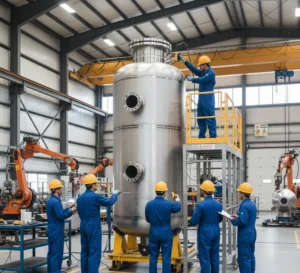
Proper selection and certification of pressure vessel materials ensure safety and long-term reliability under extreme conditions. Maintaining complete documentation and traceability throughout fabrication prevents failures and ensures regulatory compliance.
Welding Considerations for Pressure Vessel Materials
Pressure Vessel Materials form the critical foundation for vessels used across industries such as oil and gas, chemical processing, and power generation. These materials must withstand extreme conditions, as pressure vessels contain gases or liquids at pressures significantly above ambient levels. Selecting the right Pressure Vessel Materials is paramount for operational safety and long-term reliability.
For fabrication insights, see our guide on Welding: A Type of Fabrication and Fabrication Process: Cutting, Folding, Welding.
Understanding Material Certification in Pressure Vessel Materials Fabrication
Regulatory bodies like the ASME Boiler and Pressure Vessel Code (BPVC), API, and Europe’s Pressure Equipment Directive (PED) set strict certification requirements. Compliance ensures vessels operate safely under design conditions.
For a deeper dive into pressure vessel classifications, see Understanding Pressure Vessels: Definitions and Thresholds.
Essential Material Certification Documents
Material Test Reports (MTRs) and Their Components
Material Test Reports (MTRs) certify that materials conform to standards such as ASTM A516 for steel plates or ASTM A106 for seamless pipes.
A properly completed MTR includes:
- Pressure Vessel Materials specification and grade
- Heat number for traceability
- Chemical composition analysis
- Mechanical properties (yield strength, tensile strength, elongation)
- Heat treatment information when applicable
- Testing methods used for verification
- Certification signature from authorized personnel
For critical applications, supplementary requirements may include impact testing, grain size analysis, or non-destructive examination.
Mill Certificates and Manufacturing Documentation
Mill certificates provide insight into material manufacturing, including melting methods, forming processes, heat treatment, and quality control measures. These details ensure fabricators understand material behavior under extreme pressure and temperature conditions.
For pressure vessel applications, these certificates often contain additional verification of manufacturing practices that impact material performance under pressure and temperature extremes. This documentation helps fabricators understand the material’s processing history and potential behavior during vessel fabrication and service.
Certificate of Compliance (CoC) Requirements
Certificates of Compliance formally attest that materials meet specifications, referencing applicable standards and purchase orders. They confirm compliance with code sections like ASME Section II.
For pressure vessel manufacturing, CoCs often include statements confirming that materials comply with specific code sections like ASME Section II or applicable ASTM standards. These certificates provide assurance that suppliers understand and have met the stringent requirements for pressure vessel applications.
Positive Material Identification (PMI) Documentation
PMI testing verifies that materials physically match their certification documentation using X-ray fluorescence (XRF) or optical emission spectroscopy.
Material Certification Requirements by Vessel Classification
Requirements for Class 1 High-Pressure Vessels
High-pressure vessel materials face the most stringent certification requirements. Materials for these applications typically require full certification including:
- 100% traceability to heat and lot numbers
- Supplementary testing beyond standard MTR requirements
- Additional verification of mechanical properties
- Enhanced documentation of heat treatment procedures
- Special testing for resistance to specific service conditions
For further guidance, see Safety and Compliance in Pressure Vessel Design.
Requirements for Standard Pressure Vessels
Standard ASME Section VIII Division 1 pressure vessels require comprehensive material certification, though typically with fewer supplementary requirements than higher-pressure applications. Documentation must still include complete MTRs with chemical and mechanical properties, heat numbers for traceability, and verification of compliance with applicable material specifications.
Special Requirements for Cryogenic and High-Temperature Applications
Pressure Vessel Materials for extreme temperature service environments present unique challenges that require specialized material certification. The selection of appropriate Pressure Vessel Materials becomes increasingly critical at temperature extremes, where standard materials may fail catastrophically. For cryogenic applications, Pressure Vessel Materials must be documented for their impact properties at low temperatures, ensuring they maintain ductility rather than becoming brittle when subjected to extreme cold.
These applications often require additional testing beyond standard MTRs to verify material suitability for these challenging service conditions.
Documentation for Specialized Alloys and Materials
When specialized materials like duplex stainless steels, nickel alloys, or titanium are specified, certification requirements expand significantly. Documentation may include ferrite content measurements for duplex steels, specialized corrosion testing for nickel alloys, or oxygen analysis for titanium materials.
Implementing a Pressure Vessel Materials Certification Verification Process
Receiving Inspection Protocols
Effective pressure vessel materials certification begins with thorough receiving inspection protocols. This process includes:
- Visual verification of material markings against documentation
- Confirmation that all required certificates are included
- Verification that documentation meets specified requirements
- Cross-checking heat numbers between materials and certifications
- Implementing hold points until verification is complete
These protocols prevent non-compliant materials from entering the fabrication process, avoiding costly rework or potential safety issues.
Documentation Management Systems
Managing material certification documentation requires robust systems, whether paper-based or digital. Modern fabrication facilities increasingly employ digital documentation management that:
- Maintains certification records throughout vessel lifecycle
- Links documentation to specific components and vessels
- Ensures documentation completeness prior to vessel completion
These systems provide the foundation for comprehensive material traceability.
Pressure Vessel Materials Traceability Throughout Fabrication
Pressure Vessel Materials traceability must be maintained from receiving through final vessel completion. This requires:
- Material marking systems that persist through fabrication
- Documentation of material transfer between fabrication stages
- Systems to track materials after cutting or forming
- Verification processes prior to welding or assembly
Learn more from Mastering the Art of Welding and Welding Positions Explained.
Final Documentation Package Requirements
The completed pressure vessel materials must include a comprehensive documentation package that includes all material certifications. This package typically becomes part of the vessel’s permanent record and may include:
- All material test reports organized by component
- Verification of material traceability throughout fabrication
- Cross-reference documentation between materials and vessel components
- Certification of compliance with applicable code requirements
This package becomes part of the vessel’s permanent record. For a detailed example, see Comprehensive Guide to Pressure Vessel Inspection.
Criticality of Material Selection in Pressure Vessel Design
Material selection remains one of the most crucial decisions in pressure vessel design. The interplay between material properties, operational conditions, and regulatory requirements demands thorough consideration. For guidance, see Choosing the Right Material for Pressure Vessel Fabrication and Why ASME Certification Matters.
Need a reliable partner?
Red River specializes in the design and manufacturing of pressure vessels. We also fabricate related items such as prefabricated spools and skid packages.
Reach out to us today and experience the Red River difference. Where American-made products and American Values come together, we care more.
Frequently Asked Questions
1. What is a Material Test Report (MTR) and why is it important for pressure vessels?
A Material Test Report (MTR) certifies a material’s composition and mechanical properties, ensuring pressure vessel materials meet specifications, withstand design conditions, and guarantee safe fabrication.
2. How long must pressure vessel materials certification documents be retained for pressure vessels?
Pressure vessel material certifications must be retained throughout the vessel’s life, with ASME requiring five years minimum, ensuring availability for inspections, repairs, modifications, and regulatory compliance.
3. What information must be included in a properly completed MTR?
A complete MTR includes material specification, heat number, chemical composition, mechanical properties, heat treatment, testing methods, authorized signature, and any supplementary tests required for pressure vessel applications.
4. How does pressure vessel materials certification differ between carbon steel and specialty alloy vessels?
Carbon steel certification covers basic composition and mechanical properties, while specialty alloys require additional tests, such as ferrite content, corrosion resistance, and phase balance verification for safety.
5. What are the consequences of using pressure vessel materials without proper certification?
Using uncertified materials risks regulatory penalties, vessel failure, environmental damage, registration issues, voided insurance, costly replacement, liability, and complicates repairs or modifications, compromising safety and compliance.
Key Takeaways
- Material certification is critical for pressure vessel safety and compliance, forming the foundation for vessel integrity
- Documentation must be maintained throughout the vessel lifecycle, from raw material to final inspection
- Proper verification processes ensure material integrity and prevent potentially catastrophic failures
- Working with reputable suppliers reduces certification challenges and documentation issues
Related Blog Post
Pressure Vessel Design & Engineering: Concept to Launch
What is Pressure Vessel Design and Engineering: Code-Ready Guide
What are the Key Factors in Pressure Vessel Engineering
How Do You Design a Pressure Vessel: A Step-By-Step Guide