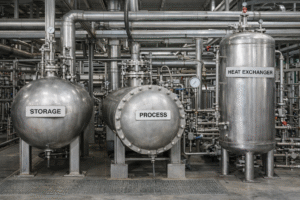
Post-weld heat treatment (PWHT) is a controlled heating and cooling process applied after welding to reduce residual stresses and improve the metal’s microstructure. It matters because it prevents cracking, enhances toughness and reliability, and is often required by industry codes to ensure long-term safety and performance of critical equipment.
What is Post-Weld Heat Treatment and Why It Matters
Post-weld heat treatment (PWHT) stands as one of the most crucial yet often overlooked processes in welding fabrication, especially in the manufacturing of critical equipment such as pressure vessels, piping systems, and structural components used across industrial applications. For industries that depend on long-term reliability, PWHT can be the difference between decades of safe operation and costly premature failure. This controlled heating and cooling process addresses metallurgical challenges introduced during welding and plays a key role in overall pressure vessel manufacturing processes.
Definition and Basic Principles of PWHT
Post-weld heat treatment refers to the controlled heating of a welded component to a specified temperature, holding it for a defined duration, and then cooling it at a controlled rate. This process is widely used in metal fabrication and heavy industrial manufacturing.
The fundamental principle behind PWHT lies in modifying the metal’s microstructure at elevated temperatures. Increased atomic mobility allows for stress relaxation, grain stabilization, and the reduction of brittle phases that may form during welding. Each material, whether carbon steel or alloy steel used in ASME certified pressure vessels, requires precise temperature control to avoid introducing new defects.
The Science Behind Residual Stress Formation During Welding
Welding introduces intense localized heat, creating steep thermal gradients. As molten metal cools and contracts, surrounding material restricts movement, generating residual stresses that can approach the yield strength of the material. These stresses are a known contributor to types of failure in pressure vessels.
Without PWHT, residual stresses combine with operational loads, increasing the risk of fatigue cracking, corrosion-related damage, or brittle fracture. This is especially dangerous in equipment designed for high-pressure service or environments governed by pressure vessel safety and compliance requirements.
Industry Standards and Requirements for PWHT
Industry codes such as the ASME Boiler and Pressure Vessel Code mandate PWHT for many applications. These requirements are closely tied to material type, wall thickness, and intended service conditions, as outlined in ASME pressure vessel standards.
Standards also define heating rates, holding times, and cooling procedures to ensure metallurgical integrity. For manufacturers offering custom solutions through pressure vessel fabrication services, compliance with these codes is essential for certification and long-term reliability.
Key Benefits of Post-Weld Heat Treatment in Industrial Applications
Stress Relief and Crack Prevention
PWHT significantly reduces residual stresses that drive cracking mechanisms such as hydrogen-induced cracking and stress corrosion cracking. This benefit is particularly critical in thick-walled vessels and components designed for severe service, including those used in industrial pressure vessel applications.
By lowering tensile stresses, PWHT improves structural stability and reduces the likelihood of service-related failures.
Improved Material Properties and Performance
PWHT tempers hard microstructures formed during welding, improving toughness and ductility while lowering excessive hardness. These improvements are essential for components exposed to cyclic loads or extreme temperatures, as explained in failure criteria for pressure vessels.
Uniform material properties across welds and heat-affected zones reduce localized weaknesses and enhance overall performance.
Extended Equipment Lifespan and Reliability
Properly heat-treated equipment shows longer service life, fewer maintenance interventions, and improved inspection outcomes. This is especially valuable for capital-intensive assets like air receiver vessels and custom-fabricated systems built through Red River’s capabilities.
By addressing metallurgical risks early, PWHT protects investments and improves operational uptime.
Safety and Compliance Considerations
PWHT plays a vital role in plant safety by lowering failure probability under normal and upset conditions. Documented PWHT procedures also support regulatory compliance, forming part of the quality assurance records required for certified fabrication. This documentation aligns with best practices described in quality assurance in pressure tank manufacturing.
From commissioning through inspection cycles, proper PWHT supports safe operation throughout the equipment lifecycle.
Common PWHT Methods and Best Practices
Temperature Ranges and Holding Times
Typical PWHT temperatures range from 1100°F to 1250°F for carbon steels, while alloy steels may require higher ranges. Holding times are usually calculated based on thickness, commonly one hour per inch. These practices are consistent with guidance used in pressure vessel fabrication processes.
Correct temperature selection ensures effective stress relief without compromising material properties.
Heating and Cooling Rate Requirements
Controlled heating and cooling rates prevent thermal shock and secondary stress formation. These controls are especially important for large components fabricated through modular skids or prefabricated assemblies produced via prefabrication services.
Maintaining uniform temperature gradients reduces distortion and ensures consistent results.
Documentation and Verification Procedures
PWHT records typically include time-temperature charts, thermocouple placement data, and equipment calibration details. Verification methods such as hardness testing confirm treatment effectiveness, supporting compliance with pressure vessel inspection requirements.
These records are critical for audits, repairs, and future modifications.
Equipment Considerations for Effective PWHT
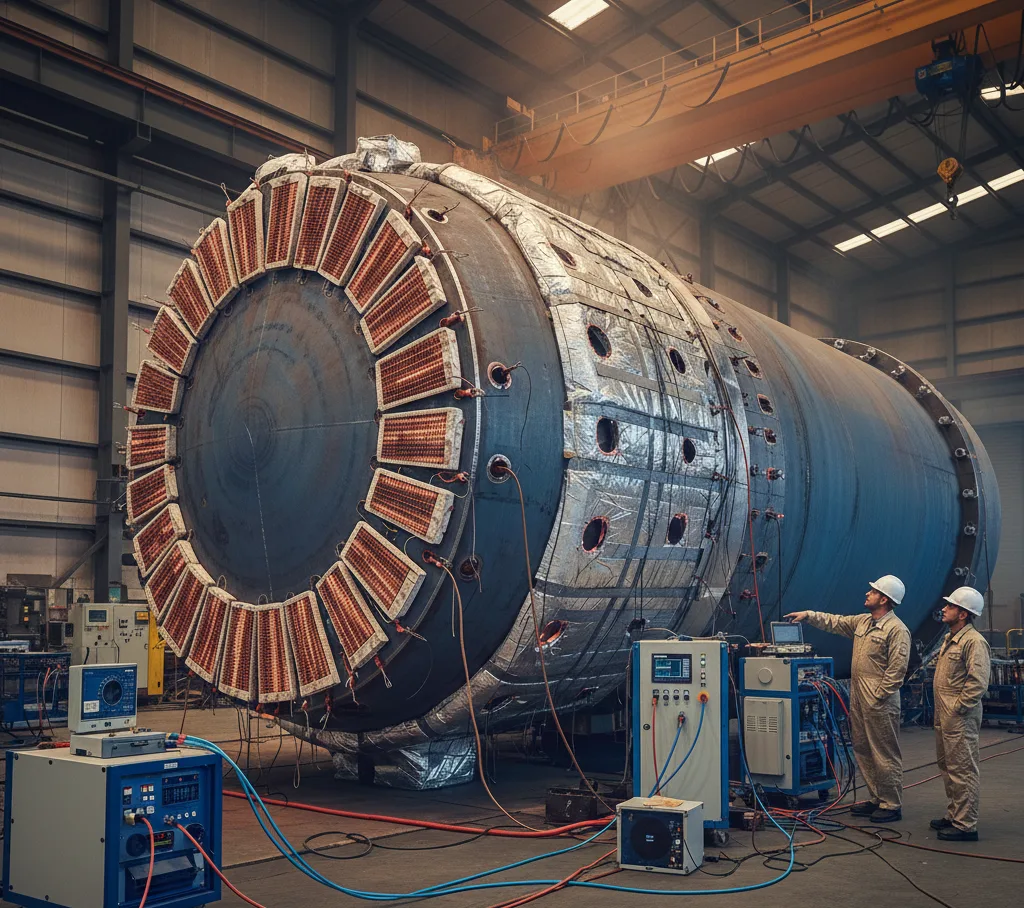
PWHT equipment selection depends on component size, geometry, and treatment requirements. Options range from portable resistance heating systems for field applications to large furnaces for shop PWHT of complete vessels.
Regardless of method, temperature monitoring using multiple thermocouples strategically placed across the component ensures uniform heating. Modern systems often incorporate computerized control with data logging capabilities, reducing human error and providing comprehensive documentation for quality assurance purposes.
Need a reliable partner?
Red River specializes in the design and manufacturing of pressure vessels. We also fabricate related items such as prefabricated spools and skid packages.
Reach out to us today and experience the Red River difference. Where American-made products and American Values come together, we care more.
Frequently Asked Questions
1. When is post-weld heat treatment absolutely necessary?
PWHT becomes mandatory in several scenarios: when specified by applicable codes for material thickness exceeding code-defined thresholds (typically 1-1.5 inches for carbon steel); when working with susceptible materials like chrome-moly steels; when components will operate in severe environments prone to stress corrosion cracking; or when brittle fracture resistance is critical due to low-temperature service.
2. Can PWHT be performed in the field, or must it be done in a controlled facility?
Both field and shop PWHT are viable options depending on circumstances. Field PWHT typically uses electrical resistance heating elements wrapped around the component with insulation blankets, while shop PWHT often utilizes furnaces for more uniform heating.
3. How does post-weld heat treatment differ for various metal types?
Different metals require specific PWHT parameters. Carbon steels typically need 1100-1250°F treatment, while chrome-moly steels require 1250-1375°F. Stainless steels often undergo solution annealing at much higher temperatures (1900-2050°F) or stress relief at lower temperatures. Some alloys like certain stainless steels may actually be damaged by conventional PWHT temperatures that would benefit carbon steel.
4. What are the risks of skipping PWHT when it’s recommended?
Omitting recommended PWHT significantly increases risks including hydrogen cracking, stress corrosion cracking, reduced fatigue life, and potential brittle fracture. Components may pass initial testing but fail prematurely in service due to the combination of residual and operational stresses.
5. How long does a typical post-weld heat treatment process take?
The complete PWHT cycle depends on material thickness and type. For a 2-inch thick carbon steel component, the process might include: 5-6 hours for heating (at approximately 200°F/hour), 2 hours at holding temperature, and 10-12 hours for controlled cooling totaling around 20 hours.
6. What monitoring systems ensure proper PWHT execution?
Modern PWHT monitoring typically employs multiple thermocouples attached at strategic locations across the component, connected to digital temperature recorders or computerized control systems.
7. Are there alternatives to traditional PWHT for stress relief?
Alternatives include vibratory stress relief (VSR), which uses mechanical vibration to redistribute residual stresses, and localized heat treatment methods that target specific areas rather than entire components. While these alternatives can be effective for certain applications, they often don’t provide the microstructural benefits of traditional PWHT and may not satisfy code requirements.
Key Takeaways
- Post-weld heat treatment significantly reduces residual stresses that could otherwise lead to premature component failure
- PWHT improves material properties by tempering hard microstructures and enhancing toughness in the heat-affected zone
- Industry codes mandate PWHT for many pressure vessel applications based on material type and thickness
- Proper temperature control, heating/cooling rates, and holding times are essential for effective PWHT
- Documentation and verification of PWHT procedures provide quality assurance and regulatory compliance
- The investment in proper PWHT delivers substantial returns through extended equipment life and enhanced reliability
Related Blog Post
How to Maintain a Pressure Vessel: Avoid Costly Mistakes
How Often Should a Pressure Vessel Be Inspected?
Your Guide to Hassle-Free Pressure Vessel Maintenance