
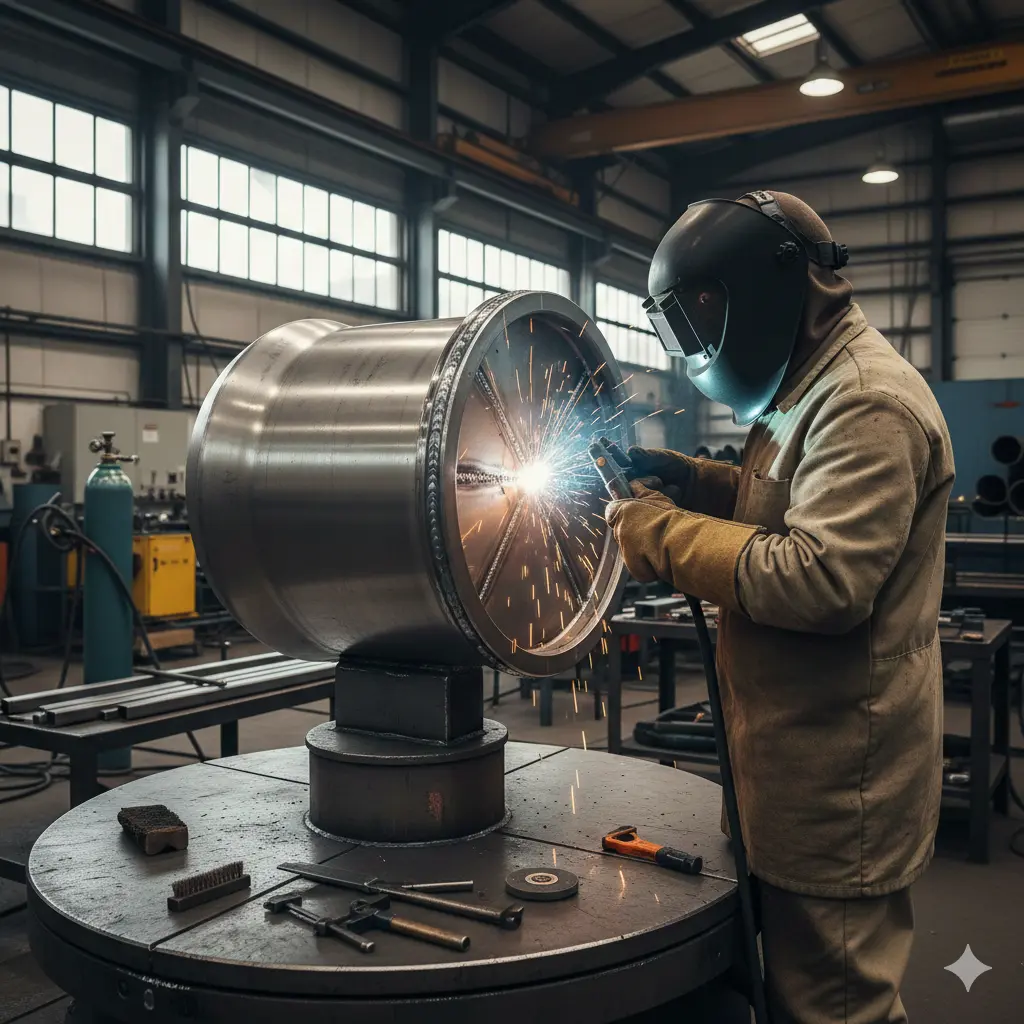
Understanding the common welding methods for pressure vessels is crucial for ensuring their strength, safety, and reliability. Key methods like TIG, MIG, SMAW, and SAW influence fabrication quality and compliance with safety standards. RedRiver LLC applies expert welding practices to deliver durable, high-quality pressure vessels.
Understanding What Are the Common Welding Methods for Pressure Vessels
What are the common welding methods for pressure vessels is a foundational question for anyone involved in pressure vessel engineering, fabrication, inspection, or maintenance. Pressure vessels depend on welded joints to unify steel components into a strong, durable, and pressure-resistant system. These welds must meet strict engineering and safety expectations because every seam plays a crucial role in holding internal pressure. Learn more about why pressure tanks are necessary and their purpose.
To understand the importance of these welding methods, it’s necessary to consider how they fit into broader concepts such as Welding in Pressure Vessel Engineering, what welding entails in vessel fabrication, and how welding integrates into prefabrication. Each welding process offers different strengths, penetration characteristics, and suitability for various materials and vessel designs.
How Welding Methods Influence Pressure Vessel Quality
Understanding what are the common welding methods for pressure vessels becomes more meaningful when you recognize how each method shapes the quality and longevity of the vessel. Welding is not just a joining process it directly affects stress distribution, corrosion resistance, safety, and code compliance.
In the first sentence of this section, the query defines how fabrication teams select welding processes to ensure proper fusion, material integrity, and code adherence. Each method must align with the vessel’s thickness, material type, service conditions, and intended pressure rating. Welding decisions influence not only the fabrication stage but also long-term operation, inspection schedules, and maintenance practices.
The Most Common Welding Methods for Pressure Vessels
Pressure vessel engineers select welding methods based on material properties, joint design, accessibility, and performance requirements. Understanding pressure vessel welding techniques is essential, as the most common welding methods and pressure vessel welding techniques used include the following.
Gas Tungsten Arc Welding (GTAW / TIG Welding)
Widely used for high-alloy materials and precision welding, TIG welding offers a clean arc and controlled heat input, making it ideal for corrosion-resistant welds and delicate components. It is preferred when working with stainless steels and specialty alloys in pressure vessel fabrication.
Shielded Metal Arc Welding (SMAW / Stick Welding)
SMAW is versatile and dependable, working well for structural welds, field repairs, and thick materials. Fabricators rely on it for many pressure vessel applications where strength and adaptability are important.
Gas Metal Arc Welding (GMAW / MIG Welding)
Known for productivity and repeatability, MIG welding supports strong welds over large sections. It is often used when the vessel requires faster deposition rates and consistent weld quality. Explore more about metal fabrication processes.
Submerged Arc Welding (SAW)
Ideal for long, straight welds on thick plates, such as longitudinal seams in vessel shells. The deep penetration and protective flux shield result in clean, strong welds. RedRiver LLC integrates these welding processes into their engineering-driven workflow to ensure precision and safety at every step.
Why Welding Methods Matter in Pressure Vessel Safety
To fully understand what are the common welding methods for pressure vessels, it is essential to explore how these methods relate to Pressure Vessel Safety Standards and Compliance. Welding methods must match approved procedures, filler materials, and inspection requirements to ensure that the vessel meets safety expectations.
Safety considerations include:
- Proper fusion between weld and base metal
- Controlled heat input to prevent cracking
- Minimizing distortion in curved or complex sections
- Maintaining consistency in weld bead placement
- Ensuring weld toughness under pressure and temperature cycling
Because welding affects how pressure vessels resist internal forces, engineering teams must evaluate each method according to What are the safety standards for pressure vessels.
Code Requirements for Welding Pressure Vessels
What are the common welding methods for pressure vessels also ties directly into What is ASME code for pressure vessel safety. ASME code establishes the rules for:
- Material specifications
- Welding procedure qualifications
- Welder performance qualifications
- Joint design requirements
- Inspection and testing methods
- Documentation and compliance records
Pressure vessels must follow these codes from design through final inspection. RedRiver LLC conducts welding using ASME-qualified procedures and certified welders to ensure full compliance.
Understanding how welding relates to these requirements helps clarify How do pressure vessels comply with safety regulations, which involves strict adherence to approved welding processes, thorough inspections, and detailed documentation.
Material Considerations for Welding Methods
Welding method selection depends heavily on the vessel material. To ensure ASME BPVC compliance, certain methods perform better with carbon steel, while others suit stainless steels, duplex alloys, or nickel-based materials, supporting proper ASME BPVC compliance.
Important material considerations include:
- Resistance to cracking
- Heat sensitivity
- Corrosion characteristics
- Weldability and joint preparation needs
- Hardness control in heat-affected zones
Since welding affects metallurgical structure, the chosen method must align with the vessel’s operational environment and service conditions. RedRiver LLC provides guidance on choosing the right material for pressure vessels.
Quality Control and Inspection of Welding Methods
Every welding method for pressure vessels must pass rigorous quality control. Weld quality directly influences safety, so non-destructive testing is essential.
Common inspection techniques include:
- Ultrasonic testing
- Radiographic testing
- Magnetic particle testing
- Dye penetrant testing
- Visual inspection
These inspections verify weld penetration, detect subsurface flaws, and ensure compliance with ASME code. RedRiver LLC incorporates these inspections at every stage of custom pressure tank manufacturing.
What Are the Common Welding Methods for Pressure Vessels
What are the common welding methods for pressure vessels connects directly to the strength, reliability, and safety of every pressure vessel. Welding is more than a fabrication process—it is a core engineering function that ensures each vessel can withstand pressure, temperature changes, and long-term operational demands. With careful selection of welding processes, adherence to safety codes, and strict inspection practices, RedRiver LLC delivers welded pressure vessels built with unmatched quality and precision.
Work With RedRiver LLC
Understanding what are the common welding methods for pressure vessels connects directly to the strength, reliability, and safety of every vessel. Welding is more than a fabrication process it is a core engineering function that ensures vessels withstand pressure, temperature changes, and long-term operation. With careful selection of welding processes, adherence to safety codes, and strict inspections, RedRiver LLC delivers precision-engineered welded pressure vessels built to last.
Contact RedRiver LLC to discuss your project or request a quote. Explore their capabilities and modular skids solutions to see how welding integrates with complete vessel fabrication.
Frequently Asked Questions
1. What is welding in pressure vessel engineering?
It is the specialized process of joining components of a pressure vessel to create a strong, leak-proof and code-compliant structure.
2. How is welding used in pressure vessel fabrication?
It joins shells, heads, nozzles, and supports while maintaining strength, durability, and pressure resistance.
3. What are the safety standards for pressure vessels?
Safety standards outline minimum design, fabrication, welding, and inspection requirements to ensure safe vessel operation.
4. What is ASME code for pressure vessel safety?
The ASME BPVC defines rules for pressure vessel design, materials, welding, testing, and safety compliance.
5. How do pressure vessels comply with safety regulations?
Compliance requires certified welders, qualified procedures, non-destructive examinations, and complete documentation.
Key Takeaways
- Welding methods influence vessel strength, durability, and safety.
- TIG, MIG, SMAW, and SAW are the most common welding methods for pressure vessels.
- ASME codes guide all welding, inspection, and fabrication requirements.
- Correct welding ensures resistance to stress, corrosion, and pressure loads.
- RedRiver LLC uses engineering-driven welding practices for superior vessel performance.
Related Blog Post
Pressure Vessel Design & Engineering: Concept to Launch
What is Pressure Vessel Design and Engineering: Code-Ready Guide
What are the Key Factors in Pressure Vessel Engineering
How Do You Design a Pressure Vessel: A Step-By-Step Guide
What is Pressure Vessel Fabrication and Manufacturing
About Author



