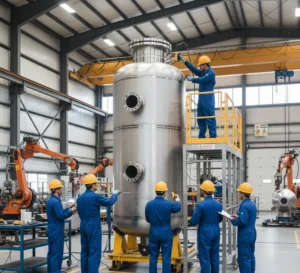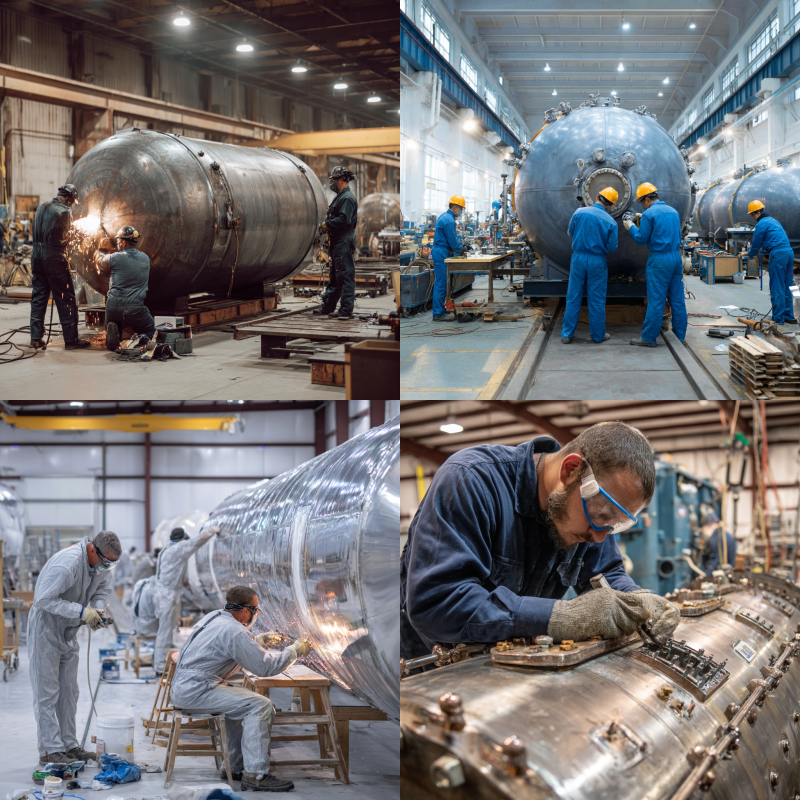
A pressure vessel tank manufacturer designs and builds ASME-code vessels to safely hold pressurized gases or liquids, handling everything from engineering and materials to welding, testing (NDT), and certification for industries like oil & gas, chemical, power, and agriculture. Choose one based on certifications, proven experience, strong QC/safety, and customization to reduce risk and downtime.
Understanding What is a Pressure Vessel Tank Manufacturer in Industry
In many industries, specialized equipment is required to safely contain pressurized gases or liquids. This brings up the question: what is a pressure vessel tank manufacturer? A pressure vessel tank manufacturer designs, fabricates, and tests containers that maintain substances at the proper pressure and temperature. These manufacturers handle everything from initial design to final inspection, using specialized materials such as steel alloys while strictly following ASME industry standards.
They serve diverse sectors including oil and gas, chemical processing, power generation, and agriculture.
The manufacturing process involves engineering design, material preparation, skilled welding, rigorous testing, and quality control inspections. Certified manufacturers employ qualified welders and engineers while maintaining ASME compliance to ensure safety and reliability.
When selecting a manufacturer, focus on certifications, industry experience, safety records, and customization capabilities. Partnering with a reputable, certified manufacturer ensures your equipment meets safety requirements and reduces operational risks.
Learn About What a Pressure Vessel Tank Manufacturer Does
A pressure vessel tank manufacturer produces vessels specifically designed to hold fluids or gases under pressure. These companies typically manage all phases of production, from design to final inspection, ensuring a safe and reliable product.
- Design phase: During design, the manufacturer creates vessel specifications that account for fluid type and operating conditions such as pressure and temperature.
- Material selection: Common materials include carbon steel and stainless steel, chosen for their strength, corrosion resistance, and suitability for welding. Specialized applications may require advanced alloys to handle high temperatures, corrosive chemicals, or hydrogen service. Learn more about material selection for pressure vessel fabrication.
- Fabrication: Skilled welders and technicians assemble the vessel in a controlled environment using advanced welding techniques. The process may include robotic or automated welding for precision and consistency. See more about welding positions and techniques like 5G welding.
- Testing: Vessels undergo rigorous testing such as hydrostatic, radiographic, and non-destructive testing (NDT) to ensure compliance with safety standards. Quality assurance is documented for full traceability.
If you would like to learn more about the general process, you might check out how are pressure vessels fabricated for further details.
Key Technologies and Equipment Used
Modern manufacturers use a range of technologies to ensure precision and quality:
- Computer-Aided Design (CAD) software for blueprinting and stress analysis.
- Automated welding systems to reduce human error.
- Plasma and laser cutting tools for accurate material preparation.
- Non-destructive testing (NDT) equipment, such as ultrasonic, X-ray, and magnetic particle inspection systems.
You can explore fabrication processes, including cutting, folding, and welding, for further detail.
Understand Key Steps in Manufacturing
Most pressure vessel manufacturers follow these steps:
- Engineering design: Calculations, drawings, and compliance documentation.
- Material preparation: Cutting, shaping, and prepping steel plates.
- Assembly and welding: Leak-free seams by certified welders (welding skills).
- Inspection and testing: Hydrostatic and radiographic tests, full documentation (quality assurance).
- Finishing touches: Surface treatment, insulation, or climate control, depending on end use.
Prefabrication in a factory setting (modular skids, prefabrication) reduces on-site labor and installation issues.
Quality Control and Safety Measures
Quality control is the backbone of pressure vessel manufacturing. Manufacturers ensure:
- Material certification verification for all steel plates (material certifications).
- Certified welding procedures and welder qualifications (5G welding).
- Detailed documentation and traceability covering materials, welding, testing, and inspections (ASME compliance).
These steps minimize operational risks and help maintain safety throughout the vessel’s lifespan.
See Major Industries Served
From energy to agriculture, diverse sectors trust pressure vessel tank manufacturers to deliver reliable equipment:
- Oil and gas: High-pressure pipelines and refining processes (solutions).
- Chemical processing: Safe containment of volatile chemicals (capabilities).
- Power generation: Boilers, heat exchangers, and steam vessels (understanding pressure vessels).
- Agriculture and biofuels: Fermentation and processing tanks (prefabrication services).
According to Red River, producing these tanks in a controlled, factory-based environment through prefabrication helps detect and fix conflicts early. That means reduced on-site labor and fewer surprises during installation.
Material Selection and Engineering Considerations
Choosing materials requires evaluating:
- Operating temperature and pressure ranges.
- Corrosive or chemically aggressive fluids.
- Cost and weldability.
For example, hydrogen service may require materials resistant to embrittlement, while high-temperature operations need alloys that maintain structural strength (choosing the right materials).
Wall thickness calculations rely on engineering formulas considering pressure, material properties, and safety factors (pressure vessel definitions and thresholds).
Cost Factors and Project Considerations
Material costs often represent 40–60% of total project costs, making material choice critical. Complex designs, special tooling, or insulation add to fabrication expenses. Simple cylindrical vessels are less costly than intricate designs (cost considerations).
Appreciate the Role of Certification
Partnering with ASME-certified manufacturers ensures compliance with recognized safety standards, covering design, fabrication, inspection, and testing. Additional certifications from the National Board of Boiler and Pressure Vessel Inspectors reinforce reliability.
Certified manufacturers continuously update methods, explore new materials, and adhere to safety benchmarks (importance of certification).
Understanding What a Pressure Vessel Tank Manufacturer Is
A pressure vessel tank manufacturer specializes in designing, fabricating, and producing containers that safely hold gases or liquids under pressure. These companies possess expertise in metallurgy, welding, and pressure engineering to meet strict industry codes like ASME.
The manufacturing process involves engineering design, skilled fabrication using specialized welding techniques, and rigorous quality control to ensure structural integrity. These manufacturers serve industries including oil and gas, chemical processing, and power generation.
Certified manufacturers employ qualified welders, inspectors, and engineers while adhering to regulatory standards. Partnering with a reputable manufacturer ensures your equipment meets safety requirements, performs reliably, and complies with standards, ultimately reducing operational risks and supporting long-term industrial success.
Need a Reliable Partner?
Red River specializes in the design and manufacturing of pressure vessels. We also fabricate related items such as prefabricated spools and modular skids.
Reach out to us today and experience the Red River difference. Where American-made products and American Values come together, we care more.
Frequently Asked Questions
1. How to choose a pressure vessel tank manufacturer
When selecting a manufacturer, focus on:
- Certifications & Compliance – Look for ASME or ISO certification.
- Industry Experience – Proven track record in your specific sector.
- Safety Record – Transparent safety history and adherence to quality control.
- Customization Capabilities – Ability to design for unique requirements.
- Material Expertise – Knowledge in carbon steel, stainless steel, and specialty alloys.
- After-Sales Support – Maintenance, inspection, and repair services.
2. What types of pressure vessel tanks do manufacturers make?
Common types include:
- Horizontal Pressure Vessels – Ideal for large storage and transport.
- Vertical Pressure Vessels – Save space, often used in industrial facilities.
- Storage Tanks – For water, fuel, or chemicals.
- Heat Exchangers – Transfer heat between fluids under pressure.
- Reactors – For chemical processing.
- Custom-Engineered Vessels – Designed for specialized processes or extreme conditions.
3. Why is ASME certification important?
It ensures design, construction, and testing meet strict rules for safe, long-lasting performance.
4. Do manufacturers handle installation?
Some offer turnkey services, while others focus on fabrication and partner with contractors for installation.
5. What role does prefabrication play?
It involves building components off-site to reduce labor, delays, and costs.
6. How do I choose the right manufacturer?
Look for certifications, proven experience, and transparent design discussions. Learn more at how to choose a pressure vessel tank manufacturer.
Key Takeaways
- A pressure vessel tank manufacturer designs and builds containers that safely hold materials under pressure.
- Materials like stainless steel often suit high-stress environments.
- Rigorous testing ensures compliance with safety standards like ASME.
- Many industries rely on these vessels, from oil and gas to agribusiness.
- Partnering with a certified, experienced manufacturer reduces risk and bolsters your process efficiency.
Related Blog Post
Pressure Vessel Design & Engineering: Concept to Launch
What is Pressure Vessel Design and Engineering: Code-Ready Guide
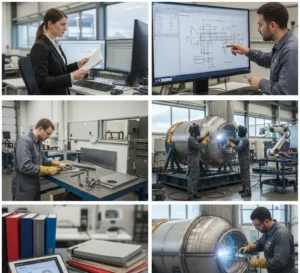
What are the Key Factors in Pressure Vessel Engineering
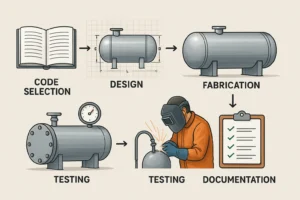
How Do You Design a Pressure Vessel: A Step-By-Step Guide