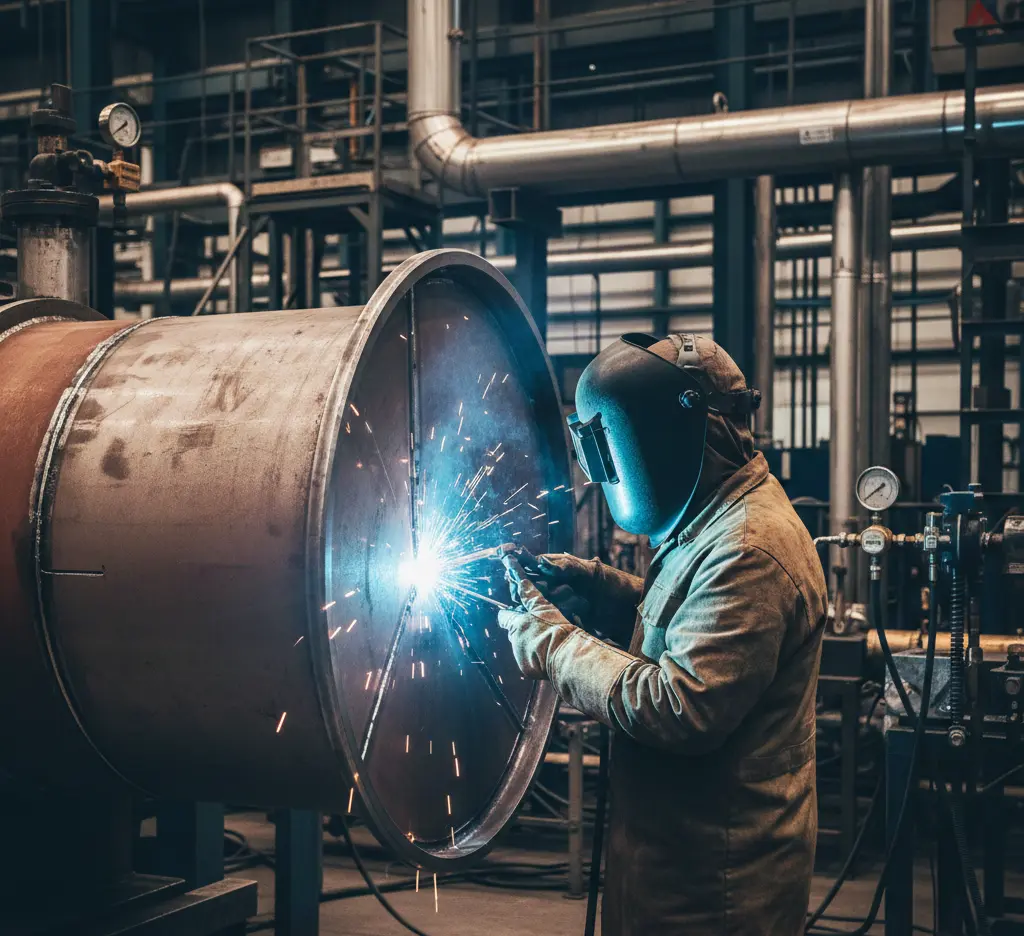
Welding in pressure vessel engineering is the precise process of joining components to create vessels that safely withstand high pressures. Proper techniques, materials, and inspections ensure structural integrity, compliance, and long-term performance. RedRiver LLC applies expert workmanship and rigorous standards to deliver reliable welded vessels.
Understanding What Is Welding in Pressure Vessel Engineering
What is welding in pressure vessel engineering lies at the heart of creating strong, leak-proof, and structurally stable vessels capable of holding pressurized gases or liquids. Welding connects shells, heads, nozzles, supports, and other vessel components, transforming individual parts into one unified structure that can withstand internal pressure and operational forces.
The discipline also connects closely to welding in pressure vessel engineering, incorporating material knowledge, safety codes, fabrication skills, testing processes, and stringent quality control. When weld integrity determines vessel strength, the engineering behind it becomes a critical element of pressure vessel fabrication.
How Welding Shapes Pressure Vessel Engineering
Pressure vessel welding becomes clearer when you examine its role in fabrication. Every weld influences stress flow, material performance, and long-term reliability. Effective pressure vessel welding ensures structural strength under pressure, supporting safe operation throughout the vessel’s lifetime by controlling stress distribution and maintaining consistent quality.
In the first sentence of this paragraph, welding in pressure vessel engineering plays a crucial role in shaping stress distribution, durability, and long-term safety, which is why engineered welding practices matter. Welding processes must adapt to different materials, joint designs, thickness changes, thermal effects, and allowable stresses.
Fabrication teams also consider how welding interacts with advanced analysis techniques such as Pressure Vessel Stress Analysis and calculations, since weld zones often become primary locations for stress concentrations. This makes weld quality and weld placement essential during the design and fabrication stages.
How Welding Is Used in Pressure Vessel Fabrication
Understanding How is welding used in pressure vessel fabrication helps you see why welding is not just a construction step but a safety-critical operation. Fabricators apply welding throughout the vessel’s structure, including:
- Joining cylindrical shells
- Attaching heads
- Connecting nozzles and manways
- Adding reinforcement pads
- Creating seams, joints, and transitions
- Securing mounting structures
Each welded area must be engineered and executed to handle internal loading, high temperatures, corrosion, chemical reactions, and repeated thermal cycling. RedRiver LLC ensures every weld zone is intentionally designed, thoroughly inspected, and fully compliant with applicable codes.
Common Welding Methods Used in Pressure Vessel Engineering
To understand what is welding in pressure vessel engineering, you also need to explore What are the common welding methods for pressure vessels, as each method provides unique advantages depending on the material type and vessel design.
- Gas Tungsten Arc Welding (GTAW / TIG): Used for high-precision welds and materials requiring clean, controlled fusion, such as stainless steel and nickel alloys.
- Shielded Metal Arc Welding (SMAW / Stick Welding):A highly versatile method suitable for many pressure vessel materials and ideal for fabrication and repairs.
- Gas Metal Arc Welding (GMAW / MIG Welding):Offers consistent quality and speed, making it effective for various fabrication tasks (metal fabrication capabilities).
- Submerged Arc Welding (SAW):Provides deep penetration and high productivity, making it excellent for long seams and thick sections.
RedRiver LLC selects welding methods based on engineering needs, metallurgical requirements, and the vessel’s intended service environment.
The Relationship Between Welding and Pressure Vessel Safety
Since pressure vessels must operate safely under internal pressure, understanding Pressure Vessel Safety Standards and Compliance is essential. Welds must meet stringent requirements because they act as possible weak points if improperly executed.
Engineering teams must consider several critical aspects of safety, including:
- Material compatibility between filler and base metals
- Controlled heat input to avoid distortion or residual stress
- Weld geometry and structural reinforcement
- Inspection requirements
- Code-approved welding procedures
This is where What are the safety standards for pressure vessels becomes important. Safety standards ensure that weld quality meets or exceeds minimum requirements for strength, ductility, and fatigue resistance.
ASME Code and Welding Requirements
One of the most important frameworks guiding what is welding in pressure vessel engineering is What is ASME code for pressure vessel safety. The ASME Boiler and Pressure Vessel Code governs:
- Material requirements (steel selection guide)
- Weld procedures (5G welding procedures)
- Qualifications of welders (welder training)
- Inspection and testing criteria
- Documentation and compliance standards
Vessels built under ASME code require certified welders, properly documented WPS (Welding Procedure Specifications), PQR (Procedure Qualification Records), and WPQ (Welder Performance Qualifications).
RedRiver LLC follows ASME guidelines and applies welding best practices in fabrication to ensure every weld meets code standards for safety and performance, using welding best practices in fabrication throughout.
How Pressure Vessels Comply With Welding Safety Regulations
To truly answer what is welding in pressure vessel engineering, you must understand How do pressure vessels comply with safety regulations. Compliance depends on a combination of engineering and quality control practices, such as:
- Following approved welding procedures
- Using certified welders
- Applying proper preheat and post-weld treatments
- Inspecting welds through NDE methods (non-destructive examination)
- Maintaining complete fabrication documentation
- Testing vessels prior to service (pressure vessel testing)
RedRiver LLC uses advanced non-destructive examination methods to inspect welds for porosity, cracks, inclusions, and other imperfections. Ensuring weld quality is non-negotiable, as safety depends on each welded joint performing as intended.
Why Welding Quality Determines Pressure Vessel Performance
Since welds hold the vessel together, performance depends on joint quality. ASME welding requirements ensure welders, engineers, inspectors, and fabricators follow strict standards. Meeting ASME welding requirements maintains structural reliability and supports safe, long-term vessel operation.
Weld quality affects:
- Pressure resistance
- Fatigue life
- Leak prevention
- Corrosion resistance
- Structural reliability
- Long-term performance
RedRiver LLC understands that welding in pressure vessel engineering is a discipline grounded in safety, expertise, and engineering excellence.
What Is Welding in Pressure Vessel Engineering
What is welding in pressure vessel engineering cannot be separated from safety, durability, and long-term vessel reliability. Welding defines how securely a vessel holds pressure, how it distributes stress, and how it performs throughout its service life. When welds are engineered, executed, and inspected correctly, they create vessels capable of meeting the strictest safety and performance demands. RedRiver LLC brings together engineering expertise, certified welders, code compliance, and advanced inspection processes to ensure every welded pressure vessel meets the highest industry standards.
Work With RedRiver LLC
RedRiver LLC delivers pressure vessel fabrication with integrity, precision, and unmatched attention to detail. Their welding expertise ensures every vessel is engineered for safety and built for long-term performance. Learn more about their capabilities and request a quote today.
Frequently Asked Questions
1. How is welding used in pressure vessel fabrication?
It joins shells, heads, nozzles, and supports while maintaining strength, durability, and pressure resistance.
2. What are the common welding methods for pressure vessels?
Common methods include TIG, MIG, SMAW, and SAW, selected based on material type and vessel design.
3. What are the safety standards for pressure vessels?
Safety standards define minimum mechanical, design, and welding requirements to ensure safe operation under pressure.
4. What is ASME code for pressure vessel safety?
The ASME BPVC outlines the rules, procedures, materials, and inspection criteria for building safe pressure vessels.
5. How do pressure vessels comply with safety regulations?
Compliance involves certified welders, code-based procedures, extensive inspection, and documented testing.
6. Why is weld quality so important?
Welds determine whether the vessel can withstand pressure, prevent leaks, and remain structurally sound.
- What factors influence weld performance in a pressure vessel?
Weld performance is influenced by material selection, heat input control, joint design, welder skill, and the accuracy of inspection and testing methods.
- How does welding affect the long-term reliability of a pressure vessel?
Welding affects long-term reliability by determining how well the vessel resists cracking, distortion, corrosion, and stress over years of continuous operation.
Key Takeaways
- Welding defines the structural strength and safety of every pressure vessel.
- ASME codes guide welding quality, inspection, and compliance requirements.
- High-quality welds support stress resistance and long-term vessel performance.
- RedRiver LLC uses advanced welding procedures and strict inspections.
- Welding is central to safe, compliant, and reliable pressure vessel engineering.
Related Blog Post
Pressure Vessel Design & Engineering: Concept to Launch
What is Pressure Vessel Design and Engineering: Code-Ready Guide
What are the Key Factors in Pressure Vessel Engineering
How Do You Design a Pressure Vessel: A Step-By-Step Guide
What is Pressure Vessel Fabrication and Manufacturing
About Author