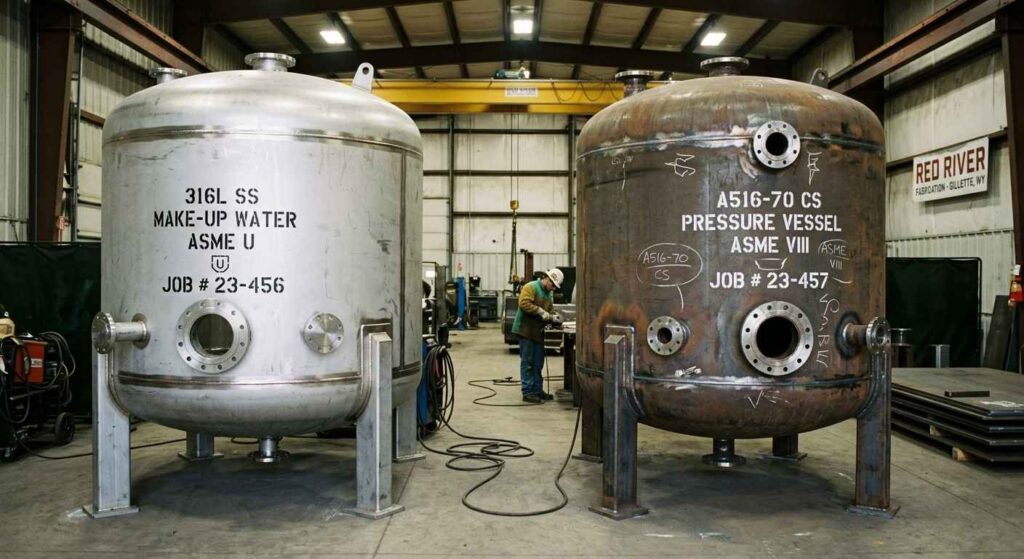
Carbon steel suits most industrial make-up water service when the stored water carries a compatible corrosion inhibitor package, while stainless steel is required where fluid purity matters or where the water chemistry is corrosive to steel. Fiberglass and HDPE serve atmospheric tanks in aggressive chemical service where steel would degrade.
Key Takeaways
- Make up water tank material for industrial closed loops is typically carbon steel where the stored water carries a corrosion inhibitor package compatible with steel and fluid purity is not a regulatory requirement.
- Stainless steel makeup water tank specification is required for pharmaceutical, food and beverage, and potable water applications where metal ion contamination of the stored fluid is unacceptable.
- Makeup water vessel material selection must confirm the fluid pH range, operating temperature, inhibitor package compatibility, and any regulated contact standards before fabrication begins.
- Glycol-bearing make-up water tanks require material confirmation against the specific glycol type and concentration, since propylene and ethylene glycol have different compatibility profiles with carbon steel inhibitor systems.
- Carbon steel make-up water service with an aggressive pH range or without a maintained inhibitor package corrodes prematurely and contaminates the loop fluid with iron oxide debris.
- Every pressurized make-up water tank above 15 psig requires ASME U Stamp certification regardless of the material selected.
When Does Carbon Steel Suit Make-Up Water Service?
Carbon steel is the correct make up water tank material for most industrial closed-loop applications where the stored fluid carries a corrosion inhibitor package that is actively maintained.
How Inhibited Water Protects Carbon Steel
A properly inhibited make-up water supply forms a thin protective film on the carbon steel interior that suppresses corrosive attack. Molybdate-based, nitrite-based, and azole inhibitor systems are the most common packages for hydronic and process cooling loops, and all three are compatible with carbon steel when maintained at the correct concentration. The protection is continuous as long as the inhibitor concentration stays above the minimum effective level.
When Carbon Steel Is Not Appropriate
A carbon steel makeup water tank becomes the wrong choice when the inhibitor package is not reliably maintained, when the pH of the stored water falls below 7.0 or rises above 10.5 consistently, when the water carries chloride concentrations above the threshold for pitting initiation, or when the make-up water is intended for potable or food-grade contact. Confirming the inhibitor maintenance program is as important as the material selection itself. In any of these conditions, the inhibitor film breaks down and carbon steel corrodes aggressively, releasing iron oxide into the loop.
SA-516 Grade 70 for Pressure Vessel Service
For pressurized make-up water tanks fabricated to ASME Section VIII, SA-516 Grade 70 is the standard carbon steel shell material. It combines pressure vessel tensile strength, excellent weldability, and compatibility with the inhibited water chemistries used in most industrial loops. All SA-516 Grade 70 plate Red River uses carries a certified mill test report documenting chemistry and mechanical properties. See Red River’s pressure vessel fabrication for how SA-516 Grade 70 is applied across make-up water vessel scopes.
When Does Stainless Steel Suit Make-Up Water Service?
A stainless steel makeup water tank is required when carbon steel cannot meet the fluid purity, corrosion resistance, or contact compliance requirements of the application.
Pharmaceutical, Food, and Potable Water Service
Stainless steel 316L is the standard choice for pharmaceutical and food and beverage service, where metal ion pickup from a carbon steel vessel would contaminate the stored water and fail product purity or regulatory compliance requirements. It also suits process cooling loops that operate with acidic condensate return, high-chloride source water, or pH programs that regularly swing outside the 7.0 to 10.5 range where carbon steel inhibitor films lose effectiveness.
Glycol Service Material Requirements
For glycol-water make-up tanks, material selection depends on the glycol type and its end use. Propylene glycol in food-grade service typically requires stainless steel to prevent iron pickup. Ethylene glycol in sealed industrial loops can use carbon steel with a confirmed compatible inhibitor package. See Red River’s glycol tank fabrication for how glycol-specific material requirements are handled for process applications.
When Does a Protective Lining Suit Make-Up Water Service?
A makeup water tank lining extends service life when the fluid chemistry is mildly aggressive but full stainless construction is cost-prohibitive.
Lining Types and Their Applications
Epoxy coatings are the most common choice for water treatment and process cooling service, with NSF 61-listed systems available for potable water contact. Coal tar epoxy suits more aggressive environments. Rubber linings handle acid or caustic pH adjustment service where neither carbon steel nor standard epoxy would hold up.
The Inspection Obligation for Lined Tanks
Linings require periodic inspection. A pinhole in an epoxy lining exposes bare carbon steel to direct contact, creating a corrosion initiation point that spreads under the coating. Lined tanks carry a higher ongoing inspection obligation than either bare inhibited carbon steel or solid stainless construction, which is a factor in total lifecycle cost that belongs in the material selection decision. Red River’s process tank and fabrication capabilities cover all three material approaches: carbon steel, stainless steel, and lined carbon steel, across industrial make-up water service conditions.
What ASME Requirements Apply Regardless of Material?
Material selection does not change the ASME code requirements for pressurized make-up water tanks. Any vessel operating above 15 psig must be fabricated to ASME BPVC Section VIII, Division 1, by a U Stamp-certified fabricator and registered with the National Board of Boiler and Pressure Vessel Inspectors.
How Certification and Documentation Work for Both Materials
Red River holds active ASME U Stamp and NBBI R Stamp certifications in both carbon steel and stainless steel fabrication. Every coded make-up water vessel ships with the ASME Form U-1, certified MTRs matched to the vessel material, weld qualification records, NDE examination reports coordinated through qualified inspection personnel, and the hydrostatic test record.
For Biogas, Glycol, and Remote Industrial Service
Red River’s modular skid packages and biogas and industrial vessel capabilities cover make-up water tanks in both carbon steel and stainless steel integrated into pre-tested system assemblies for remote and process-sensitive applications.
Make-Up Water Tank Material Confirmed Before Any Plate Is Cut
Which materials suit make-up water service is settled by the fluid chemistry, the purity requirements, and the maintenance program the facility will actually sustain. Carbon steel with a maintained inhibitor program is the cost-effective solution for most industrial loops. Stainless steel is the correct answer when purity matters, when the pH is aggressive, or when glycol service requires it. Specifying the wrong material, or the right material without confirming the inhibitor maintenance program, produces a corrosion failure that shows up as contaminated loop fluid and damaged downstream equipment. Red River has confirmed material selection against actual service conditions on every make-up water vessel fabricated from Gillette, Wyoming, since 2003.
Ready to Confirm Your Make-Up Water Tank Material?
Request a quote or call 1-307-257-5332 to discuss your make-up water tank material, fluid chemistry, and fabrication scope with Red River’s team. Material is confirmed before fabrication scope is defined.
Frequently Asked Questions
1. Is Carbon Steel or Stainless Steel Better for Make-Up Water Tanks?
Carbon steel is better for most industrial closed loops where the stored water carries a maintained corrosion inhibitor package and fluid purity is not a regulatory requirement. Stainless steel is better for pharmaceutical, food and beverage, potable water, corrosive pH, and glycol service where metal ion contamination is unacceptable or where the pH range is outside what carbon steel inhibitor systems can reliably protect.
2. What Inhibitor Packages Work With Carbon Steel Make-Up Water Tanks?
Molybdate-based, nitrite-based, and azole inhibitor systems are all compatible with carbon steel in industrial hydronic and process cooling loops when maintained at the correct concentration. The specific package depends on the loop chemistry, operating temperature, and whether the system contains yellow metals such as copper or brass that require a compatible inhibitor.
3. Does Glycol Service Require Stainless Steel?
Not always. Ethylene glycol in sealed industrial loops can use carbon steel with a compatible inhibitor package when the inhibitor is confirmed appropriate for the glycol concentration and temperature. Propylene glycol in food-grade or pharmaceutical service almost always requires stainless steel to prevent iron pickup.
4. When Is an Internal Lining Better Than Stainless Steel?
An internal epoxy or rubber lining on a carbon steel vessel is appropriate when the fluid chemistry is mildly aggressive but stainless steel is cost-prohibitive, and when the facility has an inspection program to monitor lining condition. Stainless steel is the better long-term choice for consistently corrosive service or where purity requirements prohibit any risk of lining failure contaminating the fluid.
5. Does the Material Affect the ASME Certification Requirement?
No. Any make-up water tank operating above 15 psig requires ASME BPVC Section VIII certification regardless of whether it is carbon steel, stainless steel, or any other material. The U Stamp requirement is triggered by operating pressure, not by material type.
Related Blog Post
How Big Should Make-Up Water Tanks Be?
Make-Up Water Tanks: Design, Sizing, and Fabrication
When to Spec Equalization Tanks for Industrial Systems
How Do Equalization Tanks Balance Flow?
What Is an Equalization Tank?
About Author