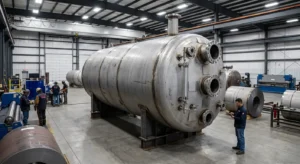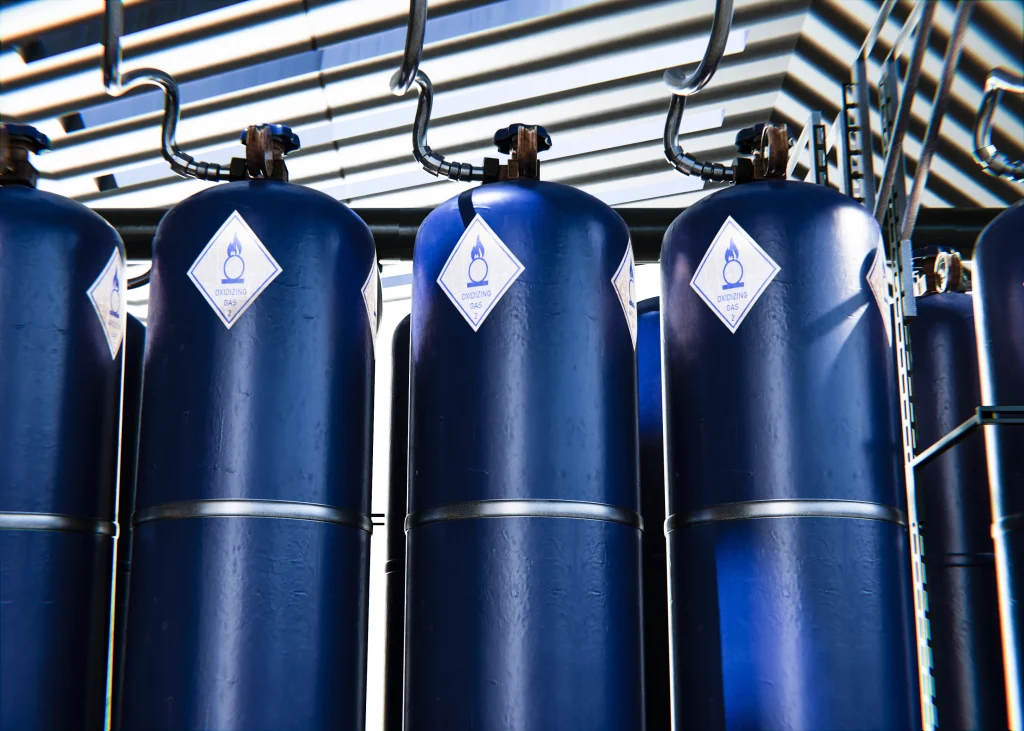
Carbon recycling vessel applications are critical to capturing, converting, and storing CO₂ across industries. Engineered for safety and performance, these pressure vessels support everything from post-combustion capture to direct air capture, enabling a scalable path to decarbonization and circular carbon use.
How Carbon Recycling Vessel Applications Power Decarbonization
Carbon recycling vessel applications are at the heart of today’s most innovative strategies for carbon capture, storage, conversion, and reuse. These specialized pressure vessels are engineered to perform critical roles across the entire carbon recycling value chain. From handling gas compression and chemical looping to facilitating supercritical fluid transport and direct air capture, carbon recycling vessels transform CO₂ from a harmful emission into a valuable asset.
As industries shift toward net-zero operations and circular economy principles, carbon recycling vessel applications become increasingly vital. These systems build upon proven metal fabrication and custom pressure tank manufacturing practices to meet demanding performance goals. Whether integrated into large-scale capture facilities, modular skids, or containerized energy systems, carbon recycling vessels serve as foundational technology for scalable decarbonization.
Core Functions of Vessels in Carbon Recycling Systems
Vessel applications in carbon recycling systems vary depending on system configuration and end-use goals, but they typically serve these vital functions:
- Gas Separation Chambers: Enable removal of CO₂ from mixed exhaust streams, building upon principles outlined in understanding pressure vessels: definitions and thresholds
- Chemical Reactors: Pressure-rated reactors support catalytic processes similar to those described in the purpose of a pressure vessel
- Buffer Storage: High-pressure storage systems comparable to compressed air tanks as pressure vessels
- Supercritical CO₂ Transport: Dense-phase transport requiring design rigor covered in mastering pressure vessel pressurization
- Looping Reactors: Cyclic thermal systems aligned with industrial pressure vessel applications
These applications highlight the critical role of vessels in maintaining process efficiency, safety, and operational continuity.
Vessel Design Requirements for Carbon Recycling
Meeting vessel applications in carbon recycling systems requires exacting engineering and material considerations:
- High-Pressure Ratings: Systems often operate well beyond thresholds described in why you might need a pressure tank
- Corrosion-Resistant Materials: Alloys selected using guidance from choosing the right material for pressure vessel fabrication
- Thermal Management: High-temperature designs consistent with forged pressure vessel construction
- Leak-Proof Construction: Advanced welding methods, such as 5G welding position ensure integrity
- Instrumentation Integration: Smart monitoring aligned with pressure vessel inspection best practices
- Safety Relief Devices: Designed under principles outlined in safety and compliance in pressure vessel design
Clearly, proper vessel engineering ensures long-term performance in aggressive CO₂ environments.
Industrial Applications for Carbon Recycling Vessels
Carbon recycling vessel applications span multiple industries already served by Red River’s fabrication capabilities:
- Power Generation: Systems similar to those in pressure vessels for power generation
- Cement and Steel: CO₂ mineralization reactors fabricated through precision sheet metal fabrication
- Biogas Plants: Capture systems leveraging principles from air receiver tanks
- Green Fuels Production: Methanol and synfuel reactors built with ASME-certified pressure vessels
- Direct Air Capture (DAC): Compact, containerized units enabled by prefabrication solutions
- Food and Beverage: Recovered CO₂ storage comparable to water tanks as pressure vessels
These examples show how vessel technology converts emissions into valuable feedstocks.
Standards and Safety in Carbon Recycling Vessel Use
To meet regulatory and performance expectations, vessel applications in carbon recycling systems must comply with stringent codes:
- ASME Section VIII: Covered extensively in the importance of ASME certification
- API 510 & 579: Supported by fitness-for-service inspection practices
- Environmental Compliance: Integrated with broader solutions strategies
- Quality Assurance: Backed by Red River’s QA processes
Certification and compliance ensure vessels operate safely in volatile chemical environments.
Emerging Technologies Supported by Pressure Vessels
Advanced vessel applications in carbon recycling systems are now enabling:
- CO₂-to-Chemicals Reactors: Electrochemical vessels built with custom metal fabrication
- Mineral Carbonation Systems: Pressurized reactors aligned with three types of metal fabrication
- AI-Integrated Vessels: Smart systems informed by modern fabrication processes
- Photocatalytic Reactors: High-spec vessels similar in complexity to Type 4 pressure vessels
- Modular Carbon Units: Skid-based solutions drawing on modular system expertise
These innovations extend carbon circularity across distributed and centralized infrastructure.
Enabling a Circular Carbon Economy with Carbon Recycling Vessel Applications
The path to a circular carbon economy is built on effective, scalable, and safe carbon recycling vessel applications. These vessels support every phase of carbon transformation from separation and reaction to compression, storage, and transport using the same engineering foundations described in exploring pressurized tank varieties.
By leveraging high-performance materials, ASME-certified fabrication, and vertically integrated manufacturing, carbon recycling vessels seamlessly integrate with emerging capture and utilization technologies. In a world increasingly focused on sustainability, these vessel applications are not just viable; they are essential.
For organizations looking to advance decarbonization initiatives, partnering with an experienced fabricator like Red River ensures the reliability, safety, and scalability required to make circular carbon systems a reality.
Need a reliable partner?
Red River specializes in the design and manufacturing of pressure vessels. We also fabricate related items such as prefabricated spools and skid packages.
Reach out to us today and experience the Red River difference. Where American-made products and American Values come together, we care more.
Frequently Asked Questions
1. What types of vessels are used in carbon recycling systems?
Reactor vessels, storage tanks, supercritical CO₂ vessels, and separator tanks are commonly used in carbon recycling setups. In particular, these vessels play critical roles in ensuring the effectiveness of each phase in the carbon recycling process.
2. Why do these vessels need to withstand high pressure?
Carbon capture and conversion processes often involve compression or supercritical states, which, as a result, require high-pressure resistance for safety and efficiency. Therefore, these vessels are designed to handle the immense pressure involved in these processes.
3. Are vessels in carbon recycling systems customized?
Yes, many vessels are custom-fabricated to match the temperature, pressure, and chemical compatibility needs of specific recycling processes. For example, vessels used in CO₂-to-fuel conversion will have different specifications compared to those used in gas separation.
4. What materials are best for CO₂ environments?
316L stainless steel, Inconel, and Hastelloy are preferred due to their resistance to corrosion from acidic carbonic compounds. Furthermore, these materials offer durability and longevity, which are crucial for maintaining the integrity of the vessels over time.
5. Can these vessels support mobile or modular recycling units?
Absolutely. Compact, modular, and skid-mounted vessels are increasingly used for flexible deployment at various industrial or remote sites. In fact, their modular nature allows for easy integration into both centralized and decentralized carbon recycling systems.
Key Takeaways
- Vessel applications in carbon recycling systems are foundational to turning CO₂ emissions into valuable resources.
- These vessels serve as separators, reactors, storage units, and transfer tanks across various industries.
- High-pressure, corrosion-resistant materials and instrumentation are essential for system integrity.
- Compliance with ASME, API, ISO, and EPA standards ensures safety and longevity.
- Innovations in modularity, AI monitoring, and electrochemical reactions are expanding the future of carbon recycling.
Related Blog Post
Which Materials Suit Make-Up Water Service?
How Big Should Make-Up Water Tanks Be?
Make-Up Water Tanks: Design, Sizing, and Fabrication
When to Spec Equalization Tanks for Industrial Systems