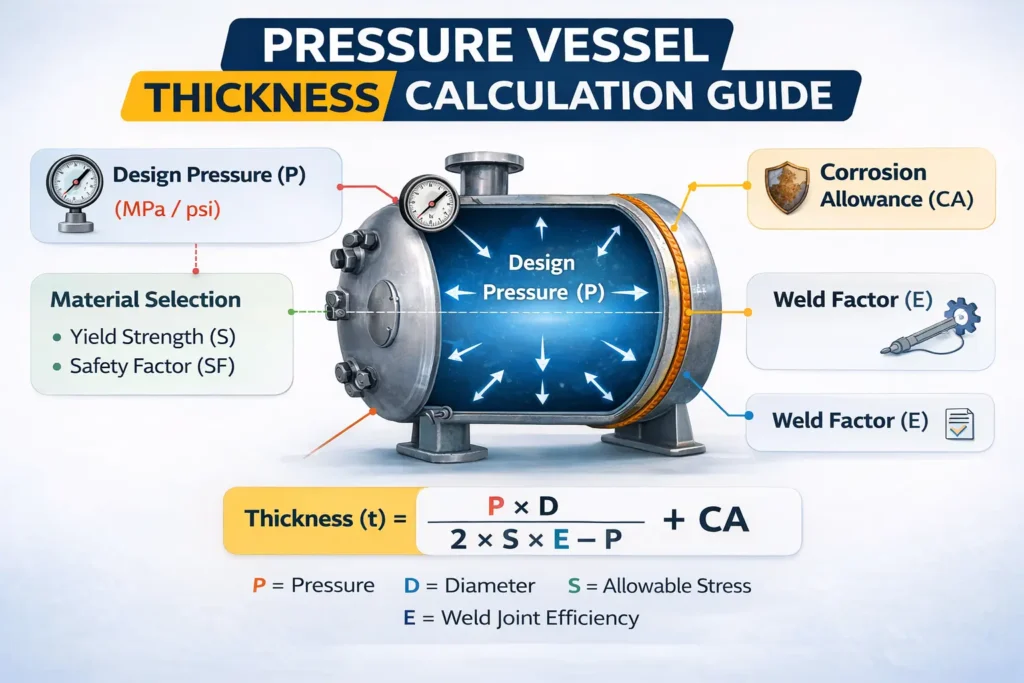
Understanding pressure vessel thickness calculation is a critical factor in ensuring the safety, performance, and durability of pressure vessels. It directly impacts structural integrity, pressure resistance, and corrosion protection. Accurate calculations, material selection, and adherence to safety standards like ASME are essential for determining the correct thickness and ensuring the vessel can safely withstand operational stresses.
Pressure Vessel Thickness: Why It Matters for Safety and Performance
Pressure vessel thickness is one of the most important design considerations in the creation of safe, reliable, and long-lasting pressure vessels. It plays a significant role in the vessel’s strength, performance, durability, and overall safety. The right thickness depends on multiple factors, including stress analysis, material selection, fabrication methods, corrosion allowances, and operating conditions. Industries that rely on pressure vessels must understand how thickness influences both safety and operational performance in order to make better decisions when working with manufacturers. For foundational concepts, see this guide to the fundamentals of pressure vessels.
Why Pressure Vessel Thickness Matters
Pressure vessel thickness is not just a measurement; it determines the vessel’s ability to withstand internal forces during operation. When engineers evaluate thickness, they consider how each component of the vessel works together to ensure a secure and stable structure. Thickness impacts structural durability, material performance, pressure resistance, life cycle reliability, safety compliance, weld integrity, and inspection intervals. Understanding the mechanism of a pressure vessel and the primary stresses in pressure vessels helps clarify why thickness is critical from the earliest design stages.
Thickness also relates to vessel geometry. Cylindrical shells distribute stress efficiently, which is why engineers often reference the science behind cylindrical shapes and the ideal shape for pressure vessels.
Key Factors Affecting Pressure Vessel Thickness
Pressure vessel thickness is influenced by several key factors that must be taken into account during the design process. These include material selection, design pressure, corrosion, and adherence to safety standards.
Understanding design thickness, nominal thickness, and effective thickness is essential. Engineers also rely on detailed sizing practices such as those outlined in this comprehensive guide to sizing a pressure vessel and methods for determining minimum thickness.
Material Selection
The type of material used greatly affects the required thickness. Materials like carbon steel, stainless steel, and advanced alloys each have different allowable stresses and corrosion resistance. Selecting the right option often involves evaluating the most common material choices for pressure vessels and the types of steel used for pressure vessels. For extreme conditions, engineers may also consider materials for high-temperature pressure vessels.
Design Pressure
Design pressure is the maximum internal pressure the vessel must safely contain. Higher pressure demands thicker walls. Proper calculation requires a clear understanding of design pressure in pressure vessels and accepted engineering formulas such as those explained in Barlow’s formula fundamentals.
Corrosion and Wear
Over time, corrosion reduces wall thickness. Engineers add corrosion allowance to maintain integrity throughout the vessel’s service life. Evaluating long-term performance involves knowledge of the design life of a pressure vessel and proper surface protection methods described in this surface treatment guide.
Safety Codes and Standards
Adherence to recognized standards is essential. The ASME Boiler and Pressure Vessel Code provides the primary framework in many regions. Engineers frequently consult resources such as ASME Section VIII pressure vessels, the ASME pressure vessel thickness standards, and explanations of ASME Code VIII requirements. Understanding whether standards are mandatory is also important, as discussed in this overview of the mandatory nature of ASME standards.
ASME vs API 650 vs Eurocode: Thickness Calculation Methods
Different standards use different approaches. ASME Section VIII focuses on internal pressure and joint efficiency, while API 650 applies primarily to storage tanks and includes environmental loads. European designs often follow EN 13445. For comparisons between frameworks, engineers may review API vs ASME standards and broader discussions of pressure vessel standards.
How to Calculate Pressure Vessel Thickness
Engineers typically calculate required wall thickness using formulas from ASME UG-27 for cylindrical vessels under internal pressure. These calculations ensure the vessel can safely withstand operational loads without yielding or rupture. More detailed procedures are available in this comprehensive thickness calculation guide and practical advice on designing a pressure vessel.
Fabrication quality also matters. Welding procedures must maintain joint efficiency, as explained in this guide to welding pressure vessels and the official requirements for ASME welding qualifications. The formula for a cylindrical vessel is:
t = (P × R) / (S × E – 0.6P)
Where:
- t = required minimum thickness (inches or mm)
- P = internal design pressure
- R = inside radius of the vessel
- S = maximum allowable stress for the material
- E = weld joint efficiency
For spherical vessels, a different formula applies:
t = (P × R) / (2 × S × E – 0.2P)
Using these formulas, engineers ensure that the vessel can safely handle the expected pressures without failure.
Nominal Thickness Example
If the calculated design thickness is 0.61 inches and the corrosion allowance is 0.12 inches, rounding to the nearest standard plate thickness (e.g., 0.75 inches) yields the nominal thickness used in fabrication. Standard plate availability and manufacturing tolerances influence this decision, which is why engineers consult references on standard pressure vessel sizes.
Common Mistakes in Pressure Vessel Thickness Design
Errors such as underestimating pressure, ignoring corrosion, or overlooking material limits can lead to failure. Understanding common failure mechanisms is essential. Helpful resources include explanations of pressure vessel failure causes, the four main failure mechanisms, and general types of failure in pressure vessels. Studying historical incidents, such as these significant failure case histories, reinforces the importance of accurate thickness design.
Ensuring Safety with the Right Pressure Vessel Thickness
Correct thickness selection ensures the vessel can withstand internal pressure, thermal loads, and operational stresses throughout its life. Proper inspection and testing also play a role. Engineers use techniques described in this guide to pressure vessel testing requirements and procedures for testing vessel thickness.
The Importance of Correct Pressure Vessel Thickness
Pressure vessel thickness directly affects safety, longevity, and operational performance. It influences stress resistance, corrosion tolerance, fabrication quality, and maintenance needs. A well-designed vessel balances structural integrity with cost efficiency and manufacturability. For applications requiring heavy-duty construction, engineers may evaluate the use of thick pressure vessels.
Get Expert Help with Pressure Vessel Design
At Red River, we specialize in designing and manufacturing pressure vessels and related systems. Our team ensures every vessel meets strict safety, performance, and code requirements through rigorous engineering and quality control. Learn more about our capabilities on the Red River homepage or explore our background on the About Us page.
Contact us today to experience the Red River difference, where American-made products meet American values.
Frequently Asked Questions
1. What is the standard thickness for a pressure vessel?
There is no single “standard” thickness. The required thickness depends on several factors, including internal pressure, material, and design codes. ASME provides guidelines for calculating the required thickness based on these variables.
2. How is the thickness of a pressure vessel wall calculated?
The thickness is calculated using formulas that account for internal pressure, vessel radius, material strength, and safety factors. Software tools like FEA can also be used for more complex designs.
3. What is the minimum thickness for ASME pressure vessels?
ASME Section VIII does not define a fixed minimum thickness. It provides formulas (UG-27) to calculate thickness based on design pressure, radius, allowable stress, and joint efficiency.
4. How does UG-27 apply to pressure vessel thickness?
UG-27 in the ASME Boiler and Pressure Vessel Code provides calculation methods for cylindrical and spherical shells, ensuring vessels meet the minimum safety requirements.
5. Why is corrosion considered when calculating thickness?
Corrosion weakens pressure vessels over time. A corrosion allowance is added to ensure the vessel retains its strength throughout its expected lifespan.
Key Takeaways
- Pressure vessel thickness is essential for ensuring the vessel’s safety, structural integrity, and performance. It determines the vessel’s ability to withstand internal pressures and external forces during operation.
- Material properties significantly impact the required thickness for pressure vessels. Different materials like steel, stainless steel, and aluminum have unique characteristics that affect their resistance to internal pressure and corrosion.
- Design pressure is one of the most important factors in determining pressure vessel thickness. The higher the internal pressure the vessel will experience, the thicker the walls need to be.
- Corrosion allowance plays a crucial role in thickness calculations. Since pressure vessels are prone to corrosion over time, adding a corrosion allowance ensures the vessel retains its strength and integrity throughout its lifecycle.
- Adhering to industry standards like ASME Boiler and Pressure Vessel Code (BPVC) is critical. These guidelines help engineers calculate the minimum thickness required for different types of pressure vessels based on internal pressure, material properties, and other factors.
Related Blog Post
Condensate Tanks: Types, Fabrication, and ASME Code
Which Tests Validate Deaeration in Pressure Systems?
Equalization Tanks: Design, Sizing, and Fabrication
What Are Thermal Storage Testing Standards for TES Vessels?
What Hydro Tests Are Required for Pressure Vessels?
No subpillar set for this blog post.
About Author