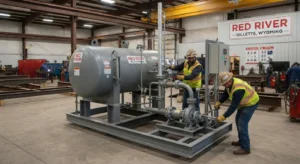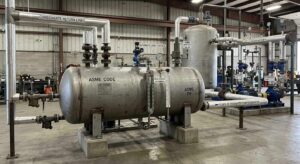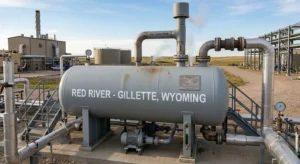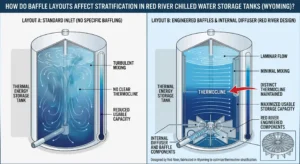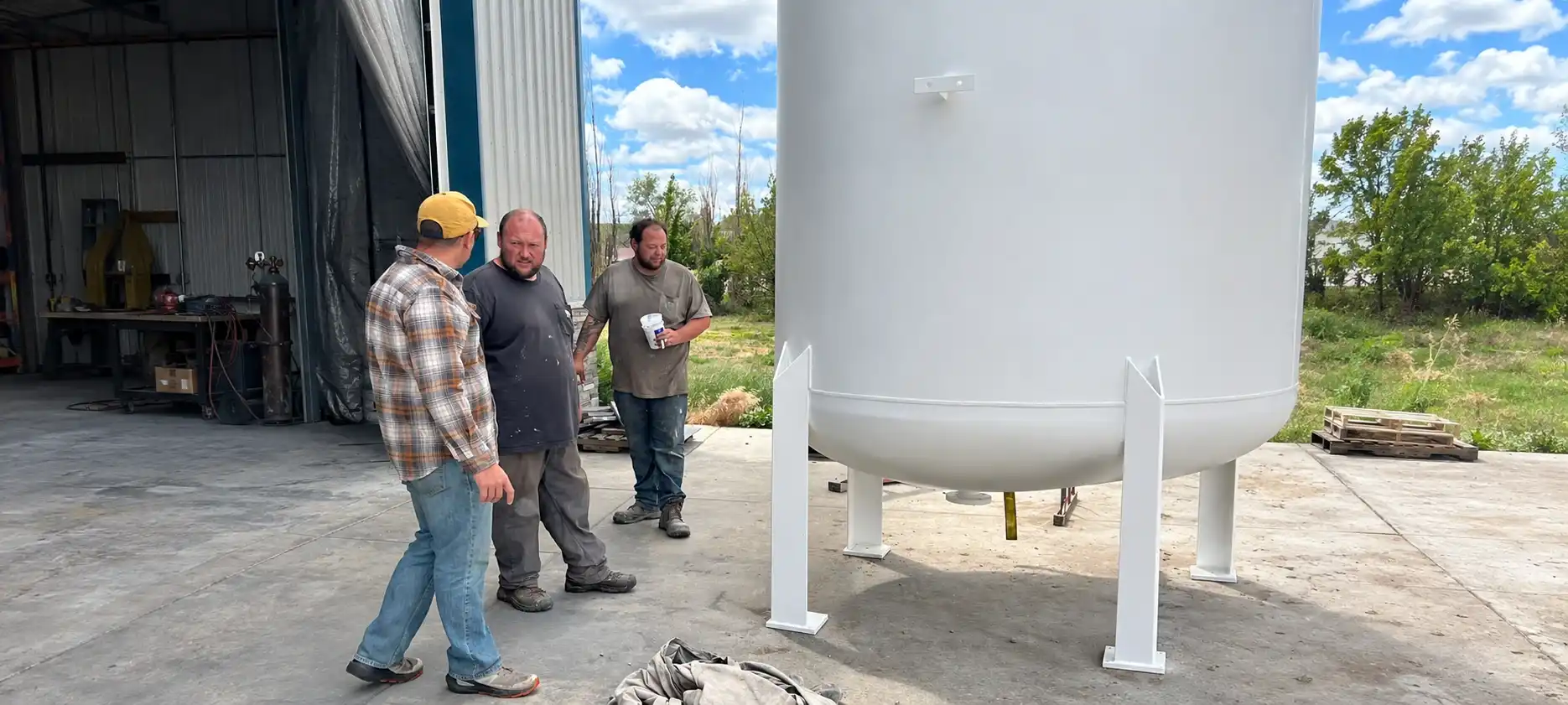
A glycol expansion tank absorbs the increased fluid volume created when glycol heats and expands inside a closed-loop HVAC system, preventing pressure spikes that would otherwise trigger relief valves, strain fittings, and damage heat exchangers. The tank uses a diaphragm or bladder to separate the glycol fluid from an internal air cushion, which compresses as fluid volume increases and pushes the fluid back into the system as it cools.
Key Takeaways
- A glycol expansion tank maintains safe system pressure by absorbing thermal expansion during heating cycles and returning fluid to the loop during cooling.
- Ethylene glycol offers better heat transfer performance but is toxic; propylene glycol is less efficient but non-toxic and preferred where human exposure is possible.
- Glycol concentration directly determines freeze protection; a 50% ethylene glycol solution protects to minus 34 degrees Fahrenheit while a 50% propylene glycol solution protects to minus 26 degrees Fahrenheit.
- Glycol expansion tanks work exclusively in closed-loop systems; using one in an open-loop system is both unnecessary and potentially harmful to water quality.
- A failed diaphragm, incorrect tank sizing, and degraded glycol are the three most common causes of expansion tank failure and system pressure instability.
Why Glycol Is Used in Closed-Loop HVAC Systems
Closed-loop HVAC systems circulate a water-glycol mixture through pipes, boilers, heat exchangers, and radiators to transfer heat efficiently in environments where freezing temperatures create risk. Because pure water freezes at 32 degrees Fahrenheit, it is unsuitable for systems with piping exposed to subfreezing conditions. Glycol solves that problem by lowering the freeze point of the fluid mixture and providing corrosion inhibition through additive packages built into most commercial glycol products.
Two types of glycol serve HVAC applications. Ethylene glycol delivers better heat transfer performance and lower viscosity at cold temperatures, but it is toxic and requires careful handling and disposal. Propylene glycol, on the other hand, is non-toxic and the preferred choice for systems where incidental human contact is possible, including food processing facilities and potable water-adjacent applications. For more on the risks associated with ethylene glycol in system applications, see ethylene glycol corrosiveness.
How the Expansion Tank Works
The Thermal Expansion Problem
As glycol heats up, it expands. In a sealed closed-loop system with no buffer, that expansion has nowhere to go. Pressure builds, relief valves activate, fluid is lost, and the cycle repeats. Over time, repeated pressure relief events cause fluid loss, air introduction, and accelerated corrosion throughout the system. The expansion tank eliminates that cycle by providing a controlled reservoir for the expanded volume.
Tank Components
A glycol expansion tank consists of four main components that work together to manage pressure. The steel or composite tank body houses all internal mechanisms. The diaphragm or bladder separates the glycol fluid from the air cushion, preventing the two from mixing. The air chamber provides compressibility to accept expanding fluid. Finally, the pressure gauge and valve allow operators to monitor and adjust internal pressure as needed.
The diaphragm or bladder is the most critical component of the four. When it fails, the tank becomes waterlogged, the air cushion disappears, and the system loses its pressure buffer entirely. A waterlogged tank is the most common cause of fluctuating system pressure and chronic relief valve discharge.
The Operating Cycle
The tank operates through a continuous four-stage cycle. First, during start-up, the system fills with the glycol-water mixture and pressurizes to the design fill pressure. Next, as the system heats, the expanding glycol pushes against the diaphragm and compresses the air cushion to accept the increased volume. Then, as the system cools, the compressed air pushes the fluid back into the loop, restoring the system to its fill pressure. Finally, the cycle repeats continuously throughout the operating life of the system, maintaining stable pressure at every stage.
Glycol Concentration vs Freeze Point
Glycol concentration determines the level of freeze protection a system carries. Higher concentrations lower the freeze point but also increase viscosity, which affects pump performance and heat transfer efficiency. As a result, selecting the right concentration requires balancing freeze protection against system operating efficiency. The table below covers both ethylene glycol and propylene glycol across the concentration range used in commercial HVAC applications.
| Glycol Concentration (% by volume) | Ethylene Glycol Freeze Point | Propylene Glycol Freeze Point |
|---|---|---|
| 10% | 26°F (-3°C) | 27°F (-3°C) |
| 20% | 18°F (-8°C) | 19°F (-7°C) |
| 30% | 4°F (-16°C) | 7°F (-14°C) |
| 40% | -12°F (-24°C) | -6°F (-21°C) |
| 50% | -34°F (-37°C) | -26°F (-32°C) |
| 60% | -55°F (-48°C) | -55°F (-48°C) |
Concentrations above 60% are not recommended. Above that threshold, freeze protection does not improve meaningfully, and the fluid becomes more viscous and less efficient as a heat transfer medium. For most commercial HVAC applications in cold climates, 30% to 50% concentration covers the majority of design conditions.
Importantly, glycol does not last indefinitely at any concentration. Over time, inhibitor packages deplete and the fluid can turn acidic, accelerating corrosion in system components even when the concentration still appears adequate for freeze protection. For more on what happens to glycol as it ages, see glycol degradation.
Closed-Loop vs Open-Loop: Why the Difference Matters
Glycol expansion tanks work exclusively in closed-loop systems, where fluid recirculates continuously without being consumed or replaced. In open-loop systems, by contrast, fluid is introduced and discharged, making glycol both unnecessary and potentially harmful to water quality if it contacts potable water supplies.
Common closed-loop applications include radiant floor heating, baseboard heating systems, and chilled water loops in commercial buildings. Open-loop systems, including domestic hot water and irrigation systems, manage expansion through atmospheric pressure tanks or air separators that are not compatible with glycol chemistry. Understanding this distinction before specifying equipment prevents costly system design errors during retrofits and new installations.
Signs of a Failing Expansion Tank
Recognizing failure early prevents secondary damage and emergency repairs. The most common indicators are fluctuating system pressure, frequent relief valve discharge, gurgling or air noise in the piping, visible corrosion or external leaking, and a waterlogged tank that has lost its air cushion.
A waterlogged tank is straightforward to identify. It feels heavier than normal when tapped and provides no resistance when the Schrader valve is pressed because fluid rather than air releases from the valve.
Several factors cause expansion tank failure. Age and diaphragm wear account for most failures in systems that have operated for ten or more years. Incorrect initial sizing, chronic overpressure conditions, and lack of annual maintenance contribute to premature failure in newer systems. Replacement is straightforward, but it should be followed immediately by a check of the glycol concentration and inhibitor levels to confirm the fluid remains in serviceable condition. For more on flammability considerations when handling and replacing glycol, see is glycol flammable.
What Red River Applies
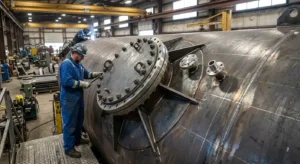
Red River fabricates custom pressure vessels and expansion tanks under ASME U-Stamp certification for closed-loop fluid system applications. Every vessel includes full material traceability, pressure rating documentation, and ASME Authorized Inspector approval before shipment.
For glycol expansion tank applications, Red River reviews vessel sizing, material compatibility with the glycol chemistry, and operating pressure requirements before fabrication begins. The right expansion tank for a given system is not a standard catalog item. It is sized to the total system volume, fluid type, operating pressure range, and design temperature of the specific installation.
What This Means
A glycol expansion tank is not a passive component. It is the pressure management device the entire closed-loop system depends on to operate within safe bounds across every heating and cooling cycle. When the tank is correctly sized, properly pressurized, and paired with glycol at the right concentration, the system runs stable for years with minimal intervention. When any one of those variables is wrong, the symptoms show up as chronic pressure problems, relief valve discharge, and accelerated component wear.
Understanding the relationship between glycol concentration, freeze protection, and tank sizing gives facility managers and HVAC engineers the foundation to specify the right equipment from the start rather than troubleshoot failures after commissioning.
Need a Custom Glycol Expansion Tank?
Red River designs and fabricates custom glycol expansion tanks and pressure vessels for closed-loop fluid system applications. Every build is sized to the system’s operating parameters, fabricated to ASME standards, and delivered with full documentation. Request a quote or contact the team to discuss your glycol expansion tank specifications.
Frequently Asked Questions
1. How does a glycol expansion tank work?
A glycol expansion tank absorbs the increased fluid volume created when glycol heats and expands in a closed-loop system. A diaphragm or bladder inside the tank separates the glycol from an air cushion. As the fluid expands, it compresses the air cushion. As the system cools and the fluid contracts, the compressed air pushes the fluid back into the loop, maintaining stable system pressure throughout the cycle.
2. What glycol concentration provides freeze protection to minus 20 degrees Fahrenheit?
A 40% ethylene glycol concentration protects to minus 12 degrees Fahrenheit and a 50% concentration protects to minus 34 degrees Fahrenheit. For propylene glycol, a 50% concentration protects to minus 26 degrees Fahrenheit. For protection to minus 20 degrees Fahrenheit specifically, a concentration between 40% and 50% ethylene glycol is appropriate depending on the product formulation.
3. Can a standard water expansion tank be used with glycol?
No. Glycol systems require tanks with materials and diaphragm chemistry compatible with glycol solutions. Standard water expansion tanks may degrade when exposed to glycol over time, leading to diaphragm failure and system contamination.
4. How do I know if my glycol expansion tank has failed?
The most reliable indicators are fluctuating system pressure, frequent relief valve discharge, and a waterlogged tank that feels heavier than normal. Pressing the Schrader valve on a waterlogged tank releases fluid rather than air, which confirms the diaphragm has failed and the air cushion is gone.
5. How often should the glycol concentration be tested?
Glycol concentration and inhibitor levels should be tested every two to three years at minimum. Inhibitor packages deplete over time, and degraded glycol can become acidic and cause corrosion in system components even when the concentration still appears adequate for freeze protection.
6. What is the correct air charge pressure for a glycol expansion tank?
The tank’s air charge should match the system fill pressure when the system is cold and the pump is off. For most commercial HVAC closed-loop systems, that is typically 12 to 15 psig. The correct value for a specific system should be confirmed from the system design documentation or the expansion tank manufacturer’s sizing calculation.