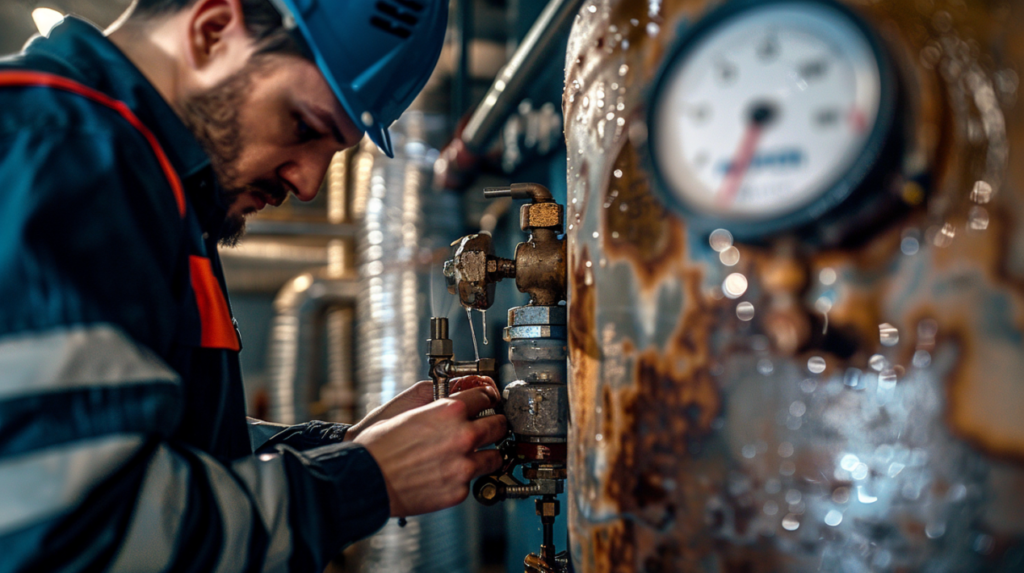
When an expansion vessel leaks or fails, system pressure becomes unstable — leading to relief valve discharge, boiler damage, and costly emergency repairs that are entirely preventable. This guide is for engineers, facility managers, and homeowners managing closed-loop heating systems. You’ll learn the most common expansion vessel leak causes, how to replace a faulty tank safely, and what maintenance practices prevent the problem from recurring.
Why Replacing Your Hot Water Expansion Tank Is Essential
A hot water expansion tank plays a critical role in protecting closed-loop heating systems from pressure fluctuations caused by thermal expansion. When water heats up, it expands, and without a properly functioning expansion vessel to absorb that pressure, system components are put at risk.
A failing or leaking expansion tank can lead to:
- Fluctuating system pressure
- Frequent discharge from pressure relief valves
- Damage to pipes, fittings, or the boiler
- Reduced heating efficiency and shortened equipment lifespan
Expansion vessels used in industrial or commercial heating systems are subject to the same design and safety principles that govern pressure-containing equipment under ASME pressure vessel standards.
These issues mirror broader risks associated with pressure control failures, which are discussed in detail in understanding pressure vessel hazards and the dangers of high pressure. Prompt replacement of a faulty expansion tank is essential to maintain safe, efficient, and reliable operation.
Understanding the Role of a Hot Water Expansion Tank
A hot water expansion tank contains an internal diaphragm or bladder that separates system water from a compressed air cushion. As water temperature rises and volume increases, the tank absorbs this excess pressure, keeping system pressure within safe limits.
Without this pressure-buffering function, over-pressurization can occur, similar to failure scenarios outlined in understanding boiler pressure: the impact of a defective expansion vessel and what happens if there’s too much pressure inside the boiler.
Expansion tanks are often confused with pressure vessels, but they serve a distinct purpose, as explained in pressure vessel vs expansion tank: distinguishing the two and difference between a pressure tank and a pressure vessel.
Common Expansion Vessel Leak Causes
Diaphragm or Bladder Damage
Over time, the internal diaphragm can degrade due to repeated heating cycles, pressure fluctuations, or chemical exposure. Once the bladder fails, water enters the air chamber, eliminating the tank’s ability to control pressure and often causing leaks.
Early warning signs are covered in understanding a faulty expansion tank and signs of combi boiler expansion vessel malfunction.
Corrosion
Poor water quality, oxygen ingress, or glycol degradation can corrode the metal shell of the expansion tank, leading to pinhole leaks or structural weakening. This risk increases in systems using glycol mixtures, as outlined in ethylene glycol corrosiveness and glycol degradation.
Over-Pressurization
Excessive system pressure accelerates wear on the diaphragm and tank shell. Chronic over-pressurization can cause rupture or safety valve activation, similar to failure mechanisms described in common types of failure in strength of materials and pressure vessel failure mechanisms.
Improper Installation or Maintenance
Incorrect pre-charge pressure, improper mounting, or lack of routine inspection can compromise seals and connections. Installation best practices align with principles outlined in comprehensive guide to installing pressure vessels and ultimate guide to pressure vessel maintenance.
How to Replace a Hot Water Expansion Tank: Step-by-Step
Step 1: Turn Off the System and Isolate the Expansion Tank
Ensure the heating system is off and isolate the expansion tank from the plumbing network to prevent additional water from entering.
Step 2: Release Pressure
Safely relieve any residual pressure, following procedures similar to those outlined in Mastering the Art of Pressure Vessel Pressurization.
Step 3: Disconnect the Old Expansion Tank
Carefully detach the old tank from its connection point. Keep a container ready to catch residual water. Most tanks hold between 2 and 8 liters, depending on system size. Inspect the connection point for corrosion or thread damage before fitting the replacement.
Step 4: Install the New Expansion Tank
Install the replacement tank according to the manufacturer’s specifications, ensuring proper orientation and secure connections. Correct sizing is critical, as discussed in understanding the replacement frequency of expansion tanks and the importance of pressure tank size in your water system.
Step 5: Recharge the System
Refill the system and set the expansion tank’s air pre-charge to match system pressure, following guidance similar to revitalizing pressure vessels: a guide to recharging.
Step 6: Test the System
Restore system pressure, turn the heating on, and monitor the gauge for at least 30 minutes. Check all connection points for weeping or drips. If the pressure relief valve activates within the first cycle, the pre-charge pressure may need adjustment. Do not leave the system unattended during initial operation.”
Preventing Future Expansion Tank Leaks
Preventive care significantly reduces the risk of repeat failures:
- Regular Maintenance: Annual inspections help detect early signs of wear, similar to practices described in understanding water pressure tank leaks.
- Maintain Proper Pressure: Keeping pressure within design limits prevents stress-related damage, as emphasized in understanding the ideal pressure for pressure vessels.
- Water Quality Management: Treat system water to reduce corrosion and scaling, especially in glycol systems, as outlined in glycol and its role in boilers.
- Proper Sizing: An undersized or oversized tank can cause recurring problems, echoing concerns discussed in the impact of oversized pressure tanks.
Keep Your Heating System Efficient
Replacing a leaking or failed hot water expansion tank restores pressure stability, protects system components, and improves overall efficiency. More importantly, it prevents the cascading failures that often result from unchecked pressure buildup issues commonly seen in broader pressure containment systems such as those discussed in consequences of boiler expansion vessel failure and understanding the causes of pressure vessel failure.
Addressing a failing expansion tank before it causes downstream damage is consistently less expensive than repairing the components it protects.
Expansion Vessel Leak Causes: Acting Early Prevents Bigger Failures
Most expansion vessel failures follow a predictable pattern: a slow diaphragm degradation or early corrosion sign that goes unnoticed until pressure instability forces an emergency repair. Recognising the causes early and replacing the tank at the right time protects every component downstream.
Annual inspection, correct pre-charge pressure, and water quality management are the three practices that consistently extend expansion tank service life. When replacement becomes necessary, following the correct procedure, isolation, depressurisation, correct sizing, and post-installation testing ensure the new tank performs from day one.
Partner With a Pressure Vessel Fabricator You Can Rely On
Red River specializes in the design and manufacturing of high-quality pressure vessels and related industrial systems. Red River designs and manufactures ASME-compliant pressure vessels, prefabricated spools, and skid packages built for demanding industrial applications. If you are planning a pressure vessel project, system upgrade, or equipment replacement, our experts are ready to help.
Contact Red River today to discuss your project requirements and discuss your project requirements and get a fabrication solution matched to your specifications
Frequently Asked Questions
1. What are the signs of a leaking expansion vessel?
Common signs include fluctuating pressure, visible leaks, unusual noises, and reduced pressure control.
2. How often should I replace the expansion tank?
Typically, every 5–10 years, depending on system use and condition. Regular inspections help determine the right timing.
3. Can I replace the expansion tank myself?
While possible, hiring a professional plumber is recommended for safety and efficiency. The replacement involves draining, disconnecting, installing, and repressurizing the system.
4. How can I prevent expansion vessel leaks in the future?
Regular maintenance, proper pressure management, water treatment, and correct sizing of the expansion vessel prevent leaks.
5. How do I know if my expansion vessel needs replacing rather than just recharging?
If the Schrader valve releases water rather than air when depressed, the diaphragm has failed, and the tank must be replaced. Recharging will not fix a ruptured bladder. If air releases correctly but system pressure is still unstable, recharging may restore function temporarily, but replacement is recommended if the issue recurs within one heating season.
Key Takeaways
- A leaking expansion vessel causes pressure instability, relief valve discharge, and accelerated wear on boiler components. Replace it promptly rather than waiting for secondary failures.
- Replacing the expansion tank involves isolation, depressurization, removal, installation, and testing.
- Prevent leaks with regular maintenance, water treatment, and proper pressure control.
- Professional assistance is recommended for safe and effective replacement.
Related Blog Post
Condensate Tanks: Types, Fabrication, and ASME Code
Which Tests Validate Deaeration in Pressure Systems?
Equalization Tanks: Design, Sizing, and Fabrication
What Are Thermal Storage Testing Standards for TES Vessels?
What Hydro Tests Are Required for Pressure Vessels?
No subpillar set for this blog post.
About Author