

Stainless steel formability plays a critical role in manufacturing durable and high-performance pressure vessels and industrial components. Known for its corrosion resistance, strength, and versatility, stainless steel is widely used in demanding environments such as oil and gas, chemical processing, and power generation.
What Is Stainless Steel Formability?
Stainless steel formability refers to the material’s ability to be shaped, bent, or stretched without cracking or losing mechanical properties. Formability is influenced by alloy composition, grain structure, heat treatment, and forming methods.
Materials with higher ductility and lower work hardening rates are generally easier to form into complex geometries required in industrial fabrication.
Key Factors Affecting Stainless Steel Formability
Several metallurgical and processing variables determine how easily stainless steel can be formed.
Alloy Composition
The balance of chromium, nickel, molybdenum, and carbon directly affects formability.
- Austenitic stainless steels offer the best formability
- Ferritic grades provide moderate ductility
- Martensitic grades are stronger but less formable
Material selection must balance corrosion resistance with forming requirements.
Grain Structure and Microstructure
Fine grain structures typically enhance ductility and reduce cracking risks during forming. Controlled rolling and heat treatment processes help optimize microstructure for fabrication. For more insights into how materials perform under stress, refer to Types of Failure in Pressure Vessels.
Work Hardening Behavior
Stainless steel tends to work harden rapidly during deformation. While this increases strength, it can reduce ductility and make additional forming more difficult. Managing work hardening is essential for successful fabrication. Learn about work hardening and stress management in our Pressure Vessel Design Guide.
The Role of Heat Treatment in Formability
Heat treatment processes such as annealing can significantly improve stainless steel formability by restoring ductility and reducing internal stresses.
Benefits of Heat Treatment
- Improved ductility
- Reduced residual stresses
- Enhanced uniformity
- Lower cracking risk during forming
Proper thermal processing ensures stainless steel remains workable throughout fabrication.
Work Hardening in Stainless Steel
Work hardening occurs when stainless steel becomes stronger and less ductile as it is deformed. This behavior is common in austenitic grades and must be managed carefully during multi-step forming operations.
How to Manage Work Hardening
- Intermediate annealing between forming stages
- Controlled forming speeds
- Optimized tooling design
- Selecting low work-hardening alloys when needed
These strategies help maintain formability without compromising strength.
Techniques for Forming Stainless Steel
Modern fabrication combines traditional methods with advanced technologies to improve precision and efficiency.
Traditional Forming Methods
Press braking, rolling, deep drawing, and spinning are still widely used for pressure vessels and structural components. For more details, explore our guide on Pressure Vessel Welding..
Advanced Forming Technologies
Emerging technologies are expanding what’s possible with stainless steel fabrication. Hydroforming for complex shapes, laser-assisted forming, incremental forming processes, and precision CNC bending improve consistency while reducing material waste. These methods are discussed in-depth in Welding Pressure Vessels.
Best Practices for Stainless Steel Formability
Successful stainless steel forming requires careful planning and process control.
Fabrication Best Practices
- Select the correct alloy grade
- Use proper lubrication during forming
- Monitor strain rates and deformation limits
- Apply intermediate heat treatments when necessary
- Use tooling designed for stainless applications
Following these practices reduces defects and improves production reliability.
Industrial Applications of Stainless Steel Formability
Stainless steel’s excellent formability makes it essential across multiple industries. Its application ranges from pressure vessels and storage tanks to pharmaceutical manufacturing, chemical processing equipment, and heat exchangers. For more information on pressure vessel applications, visit Pressure Vessel Design and Function.
Why Stainless Steel Formability Matters in Pressure Vessel Fabrication
In pressure vessel manufacturing, material formability determines weld quality, structural reliability, and long-term durability. Stainless steel’s ability to be formed into complex geometries while maintaining corrosion resistance makes it a preferred material for high-integrity vessels. For a deeper dive into the standards and practices for pressure vessel design, see our Comprehensive Guide to ASME Standards.
Partner with Red River for Superior Pressure Vessel Fabrication
At Red River, we specialize in the design and manufacturing of high-quality pressure vessels and industrial components. Our expertise in stainless steel formability ensures precision and durability for every project. Whether you need pressure vessels, prefabricated spools, or skid packages, we are committed to delivering American-made products with exceptional craftsmanship.
Contact us today to discuss your next project and discover how our expertise can make a difference in your operations. We care about quality, compliance, and customer satisfaction.
Frequently Asked Questions
1. What determines stainless steel formability?
Formability depends on alloy composition, grain structure, work hardening behavior, and heat treatment processes. Austenitic stainless steels typically offer the best formability.
2. How does heat treatment affect stainless steel formability?
Heat treatment such as annealing improves ductility and reduces internal stresses, making stainless steel easier to form without cracking.
3. Does work hardening reduce formability?
Yes. Work hardening increases strength but reduces ductility, making further forming more difficult unless managed through process controls.
4. Which stainless steel grades are easiest to form?
Austenitic grades like 304 and 316 are the most formable due to their high ductility and favorable microstructure.
5. What industries rely on stainless steel formability?
Industries such as pressure vessel fabrication, chemical processing, food manufacturing, marine engineering, and pharmaceuticals rely heavily on stainless steel formability.
Key Takeaways
- Stainless steel formability determines how easily the material can be shaped without cracking
- Alloy composition and grain structure strongly influence forming behavior
- Work hardening must be carefully managed during fabrication
- Heat treatment improves ductility and reduces forming defects
- Advanced forming technologies expand stainless steel design possibilities
- Strong formability makes stainless steel ideal for pressure vessels and industrial systems
Related Blog Post
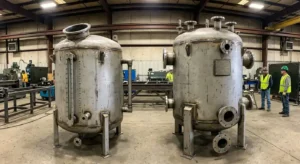
Condensate Tanks: Types, Fabrication, and ASME Code
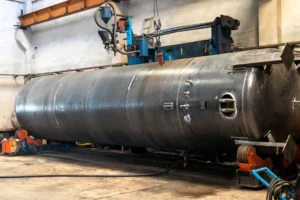
Which Tests Validate Deaeration in Pressure Systems?
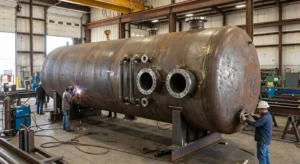
Equalization Tanks: Design, Sizing, and Fabrication
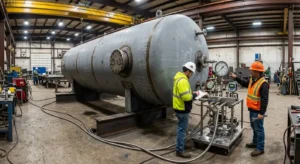
What Are Thermal Storage Testing Standards for TES Vessels?
What Hydro Tests Are Required for Pressure Vessels?
About Author



