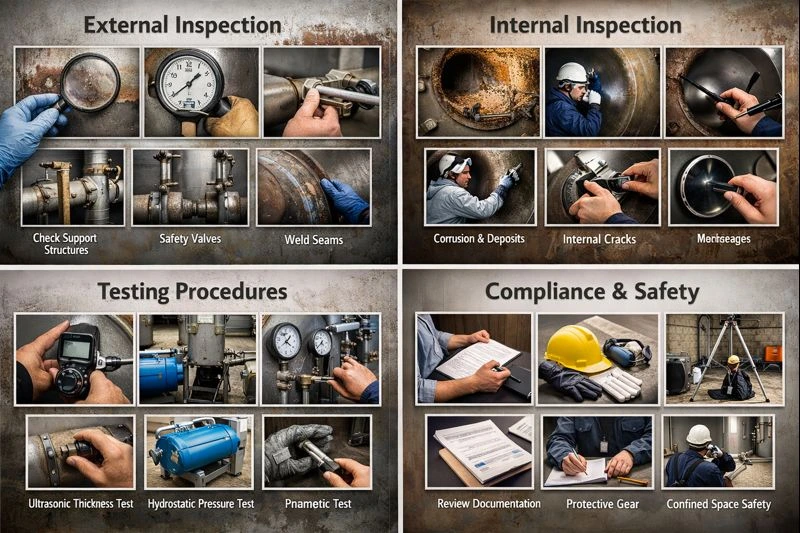
This article explains what to include in a pressure vessel inspection checklist to ensure safe, compliant operations and long-term reliability. It shows how each inspection step ties into Pressure Vessel Safety Standards and Compliance. highlighting RedRiver LLC as a trusted partner for inspection, engineering, fabrication, and maintenance
Understanding What to Include in a Pressure Vessel Inspection Checklist for Safe Operation
Understanding what to include in a pressure vessel inspection checklist is essential for anyone managing equipment safety or maintenance. Because vessels face stress, temperature shifts, corrosion, and wear, inspections must be precise and consistent. A detailed checklist supports compliance with industry standards and pressure vessel safety regulations while ensuring evaluations meet pressure vessel safety regulations.
Knowing what to include in a pressure vessel inspection checklist helps confirm that a vessel has been evaluated internally, externally, structurally, and mechanically. This supports long term safety while ensuring the vessel complies with what are the safety standards for pressure vessels and what is ASME code for pressure vessel safety. RedRiver LLC provides expert inspection services using structured checklists tailored to each vessel’s design, condition, and usage.
Why a Pressure Vessel Inspection Checklist Matters
A complete inspection checklist helps prevent failures and improve reliability. Because vessels operate under intense conditions, structured evaluations guided by ASME inspection guidelines let teams track trends and resolve issues early using ASME inspection guidelines.
A strong checklist ensures:
- Consistent evaluations across inspection cycles
- Accurate documentation for compliance
- Early detection of structural issues
- Compliance with Pressure Vessel Inspection and Maintenance requirements
- Reference records for future inspections
- Identification of problems that influence how often do pressure vessels need to be inspected, supported by best practices outlined in ASME-certified pressure vessels resources
This organized approach improves safety and ensures engineering teams meet all expected guidelines.
Key Areas to Include in a Pressure Vessel Inspection Checklist
Knowing what to include in a pressure vessel inspection checklist requires understanding inspection categories. Each category evaluates different components that influence vessel reliability. The checklist should guide inspectors through a complete internal and external examination supported by industry rules and code requirements. Additional insights are available in RedRiver LLC’s guides such as Understanding Pressure Vessels Definitions and Thresholds and Safety and Compliance in Pressure Vessel Design.
Below are the primary elements that belong in every inspection checklist.
Documentation Review
Before examining the vessel, inspectors must review important background documents. This helps verify compliance and provides context for evaluating condition changes over time.
Checklist items include:
- Design drawings and engineering specifications
- Previous inspection reports
- Repair and modification records
- Pressure Vessel Inspection and Maintenance logs
- Operating pressure and temperature data
- Manufacturer documentation
- Compliance certificates
- Safety device test records
Proper documentation builds a clear history and supports how pressure vessels comply with safety regulations. RedRiver’s Quality Assurance in Custom Pressure Tank Manufacturing can further support documentation needs.
External Inspection Items
External inspection is one of the most important categories when deciding what to include in a pressure vessel inspection checklist. The exterior often reveals early signs of corrosion, warping, leaking, or structural stress. RedRiver’s detailed knowledge of fabrication processes helps inspectors understand where defects may appear.
Checklist items may include evaluating:
- External corrosion or rust
- Paint or coating condition
- Surface blistering or peeling
- Cracks, dents, or distortions
- Weld seams and joints
- Nozzle connections
- Insulation condition and moisture retention
- Leaks around flanges or fittings
- Structural supports and anchoring systems
- Saddle or leg integrity
- Signs of vibration or misalignment
Additional insights can be compared with RedRiver’s metal fabrication solutions and its related educational pieces like Guide to Metal Fabrication.
Internal Inspection Items
Internal evaluations reveal the true condition of the vessel, especially surfaces exposed to chemicals, pressure, or heat.
Checklist items include:
- Corrosion, pitting, or wall thinning
- Scaling, sediment, or mineral buildup
- Weld quality and internal weld defects
- Erosion or abrasion from flow patterns
- Coating or lining condition
- Cracking or fatigue marks
- Internal nozzles, manways, and joints
- Heat affected zones around welds
RedRiver’s expertise in prefabrication and modular skids ensures components are built to withstand internal stresses.
Weld Inspection Items
Welds are critical structural components and major failure points if not monitored properly. Regular corrosion inspection for vessels ensures integrity, while ongoing corrosion inspection for vessels prevents hidden damage and structural risks.
Checklist items include:
- Weld conformity to original specs
- Surface cracks or porosity
- Undercutting or uneven bead shape
- Weld overlap or excessive reinforcement
- Heat affected zone conditions
- Weld discoloration indicating overheating
- Nondestructive examination reports
RedRiver’s welding-related resources, such as What Is 5G Welding Position, help teams understand weld behavior and inspection standards.
Nondestructive Testing (NDE) Items
Nondestructive testing is essential in determining vessel integrity without damaging the equipment.
Checklist items include:
- Ultrasonic thickness testing
- Radiographic testing
- Magnetic particle inspection
- Dye penetrant testing
- Hardness testing
- Acoustic emission evaluations
- Visual testing using specialized scopes
Learning more about these methods is supported by RedRiver’s articles such as Understanding Compressed Air Tanks as Pressure Vessels and Understanding Blowdown Tanks as Pressure Vessels.
Safety Device Inspection Items
Safety devices must work correctly for a vessel to operate safely. These components protect the system from overpressure and equipment malfunction.
Checklist items include:
- Pressure relief valves
- Pressure gauges and instrumentation
- Overpressure protection systems
- Emergency venting mechanisms
- Alarm systems and sensors
- Control panel indicators
- Calibration records
These inspections help determine how do pressure vessels comply with safety regulations.
Support Structure Inspection Items
The structural supports hold the vessel in place and influence overall safety during operation.
Checklist items include:
- Foundation integrity
- Anchor points and bolts
- Welding on saddles or legs
- Signs of shifting or movement
- Vibration or imbalance indicators
Additional reference: Skids in Architecture explains the role of engineered supports in industrial systems.
Coating, Insulation, and Environmental Items
Environmental conditions have a major impact on vessel longevity.
Checklist items include:
- External insulation moisture content
- Coating thickness and integrity
- Signs of environmental corrosion
- Exposure to chemicals, vapors, or fumes
- Evidence of UV or temperature damage
These considerations relate closely to RedRiver’s work in choosing the right material for pressure vessel fabrication.
Operational and Performance Items
Checklist items include:
- Operating pressure readings
- Temperature monitoring
- Startup and shutdown patterns
- Vibration levels
- Unusual noises or operation changes
- Stability under load or pressure cycles
Further operational understanding can be enriched by Understanding Pressure Vessels in the Power Generation Industry.
What to Include in a Pressure Vessel Inspection Checklist Conclusion
Understanding what to include in a pressure vessel inspection checklist helps ensure inspections remain complete, consistent, and compliant with industry rules. A detailed checklist supports internal and external inspections, weld evaluations, nondestructive testing, safety device verification, and documentation review. RedRiver LLC helps companies create, customize, and perform inspection checklists that support code-compliant operations and long term equipment reliability.
Work With Experts Who Deliver Code-Compliant Pressure Vessel Inspections
RedRiver LLC provides comprehensive pressure vessel inspection, engineering support, fabrication, and maintenance services that follow all major codes and standards. Their team uses detailed inspection checklists and advanced tools to ensure vessels remain safe and reliable.
Learn more at: RedRiver LLC or contact their experts through the request a quote page or contact page.
Frequently Asked Questions
1. What are the safety standards for pressure vessels
Safety standards define design rules, inspection expectations, and compliance requirements for safe pressure vessel operation.
2. What is ASME code for pressure vessel safety
The ASME code outlines fabrication, testing, inspection, and certification rules for pressure vessels.
3. How do pressure vessels comply with safety regulations
Vessels comply through inspections, documentation, maintenance routines, and adherence to engineering standards.
4. How often do pressure vessels need to be inspected
Inspection frequency depends on vessel design, usage, industry rules, and safety standards.
5. How to inspect a pressure vessel
Inspections involve checking structural components, welds, surfaces, corrosion, and safety devices.
6. Why is a checklist important during vessel inspections
A checklist improves accuracy, ensures consistency, and meets compliance expectations.
7. Who should create a pressure vessel inspection checklist
Qualified inspectors or engineering professionals develop checklists based on safety codes.
8. What happens if checklist items are missed
Missed items may lead to safety hazards, non-compliance issues, or unexpected failures.
Key Takeaways
- Understanding what to include in a pressure vessel inspection checklist improves inspection accuracy
- Checklists support compliance with major safety standards and codes
- Internal, external, and structural components must all be evaluated
- RedRiver LLC provides expert inspection support and custom checklists
- Detailed inspections reduce risks and extend vessel lifespan
Related Blog Post
Which Materials Suit Make-Up Water Service?
How Big Should Make-Up Water Tanks Be?
Make-Up Water Tanks: Design, Sizing, and Fabrication
When to Spec Equalization Tanks for Industrial Systems
How Do Equalization Tanks Balance Flow?
About Author