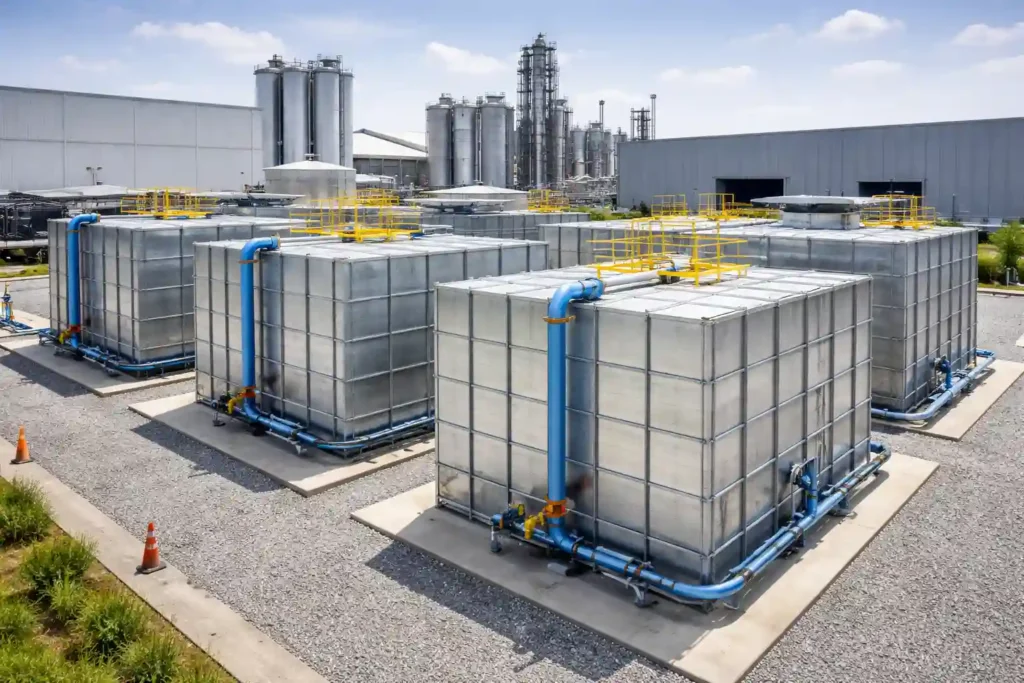
Getting large-capacity water storage to remote or constrained sites is often slowed by oversize transport limits, weather-dependent field work, and coordination issues between multiple vendors. This guide is for procurement managers and project engineers responsible for planning and delivering reliable storage systems under these constraints, and it explains how modular water storage tanks are built and specified. You’ll learn when they outperform welded shop-built and field-erected options, and what key specifications to define before requesting a quote to avoid costly project delays.
What Modular Water Storage Tanks Actually Are
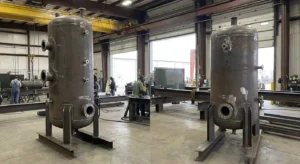
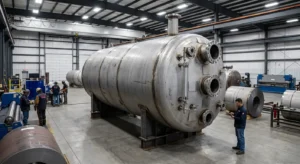
Modular water storage tanks are designed to solve one of the biggest challenges in industrial and infrastructure projects: delivering large-capacity water storage to remote, space-limited, or logistics-constrained sites without relying on oversize transport, long field welding schedules, or multi-vendor coordination. Instead of building a tank entirely in the shop or assembling it fully in the field, modular systems are prefabricated in transportable sections and then assembled on-site into a single engineered storage system.
The alternative is a field-erected welded tank built entirely on-site or a shop-built vessel trucked in one piece. Field erection is slow, weather-dependent, and requires certified welders living in a hotel near your project for weeks. Shop-built tanks above 12,000 gallons usually need oversize permits, route surveys, and sometimes utility pole lifts along the route. Modular sits in between and wins on speed and access for most industrial applications.
Red River Co has fabricated modular tanks out of Gillette since 2003, with every build backed by our ASME U Stamp and NBBI R Stamp certifications where pressure ratings apply. Atmospheric tanks follow API 650 or AWWA D103 depending on application, and every modular job gets the same engineering rigor as our pressure vessel work.
Where Modular Water Storage Wins Over Welded Shop-Built
Modular is not automatically the right answer. It earns its place on three kinds of projects, and matching the construction method to the project is the first conversation we have with every client.
Remote and Restricted-Access Sites
Oilfield pads in the Powder River Basin, bio gas facilities tucked into valleys, and mining operations off unpaved spurs all share one problem: getting a one-piece tank in is a logistics project of its own. Modular sections fit on a standard 53-foot trailer. No pilot cars, no bridge surveys, no overnight staging in a rest area while the state DOT reviews your route.
For sites accessed only by gravel roads or temporary construction routes, modular is often the only practical answer. A 150,000-gallon field-erected tank might be structurally sound, but if the road can’t handle the haul truck that delivers the plate, the project stalls before it starts.
Fast-Track Capital Projects
When a project needs water storage online in 8 to 12 weeks rather than 20 to 26, modular construction cuts fabrication and transport time significantly. Sections can be built in parallel at the shop while the foundation is being poured on-site. Assembly crews mobilize once the pad is ready, and in many cases the tank is operational within days of the last section arriving.
This parallel approach is the same reason prefabricated piping and structural components shave weeks off industrial buildouts. Every hour the tank is being built in a controlled shop environment is an hour not lost to weather, site congestion, or sequencing conflicts with other trades.
Future Relocation or Expansion
Most welded tanks die where they stand. Modular tanks can be disassembled and relocated, which matters for temporary water storage at drilling sites, pilot facilities, or phased industrial buildouts. The same engineering that lets them ship in pieces lets them move. For operators running multi-year development plans with shifting locations, modular preserves the capital investment across project phases.
Common Configurations and Capacities
Red River Co fabricates modular water storage tanks across a standard range of configurations, each engineered to project specs rather than pulled from a catalog.
Bolted Steel Modular Tanks
Bolted construction is the fastest to erect. Epoxy-coated or galvanized steel panels ship flat, bolt together with gasket seals, and typically hold 10,000 to 250,000 gallons. Best suited for potable water, fire suppression, and industrial process water where atmospheric pressure is standard. Bolted tanks also offer the shortest assembly time on-site, which matters on projects with tight commissioning windows.
Panel dimensions are engineered so every joint lands on a bolt pattern that can be torqued to spec without specialized equipment. This keeps assembly labor costs predictable and lets regional crews complete the work without flying in specialty welders.
Welded Seam Modular Tanks
For applications needing higher pressure integrity or hydrocarbon compatibility, welded seam modular tanks bring shop-quality welds to field assembly. Sections arrive with prepared joints, and certified welders complete the seams on-site. Every welder on the Red River floor meets AWS and ASME Section IX qualifications, and the welders mobilized for field assembly carry the same certifications. For buyers comparing this approach to traditional process tanks, modular offers the same fabrication integrity with site access that one-piece tanks can’t match.
Welded seam modular is the right call when the fluid, pressure, or regulatory environment demands a monolithic-equivalent structure. Produced water handling at elevated temperatures, certain fire water systems, and most ASME-stamped applications fall into this category.
Insulated and Heat-Traced Options
Wyoming winters are not a suggestion. Modular tanks serving cold-climate sites can be specified with external insulation, internal coil heating, or electric heat tracing. Freeze protection is built into the design, not bolted on as an afterthought. The insulation system is engineered alongside the tank structure so panel seams, penetrations, and access points all accommodate the thermal envelope cleanly.
For sites seeing sustained temperatures below zero Fahrenheit, we spec insulation thickness, heat trace wattage, and controls as a package. Retrofitting freeze protection after the fact is possible but rarely elegant, and it almost always costs more than specifying it from the start.
Custom Linings and Coatings
Water quality dictates interior finish. Potable water requires NSF/ANSI 61 certified linings. Produced water needs chemical-resistant coatings, often with additional cathodic protection. Fire water can run bare steel with cathodic protection alone. Every finish is applied in-house alongside our full fabrication capabilities, so there’s one accountable team from plate to primer. No finger-pointing between the fabricator and a third-party coating shop when a warranty question comes up two years in.
Specification Checklist Before You Request a Quote
A good quote starts with a tight spec. Before you reach out, have the following in hand. If anything is still open, our team will walk through it with you and help close the gaps before pricing.
- Required capacity in gallons or barrels
- Operating and design pressure (atmospheric, low-pressure, or rated)
- Fluid type: potable, produced, fire, process, or other
- Temperature range expected at the site, including worst-case winter minimums
- Site location and access constraints, including road weight limits
- Foundation type: ringwall, slab, or compacted gravel
- Applicable codes: API 650, AWWA D103, ASME, or NFPA
- Timeline from PO to on-site delivery
- Any coating or lining requirements tied to water chemistry
How Red River Co Builds Modular Tanks Differently
Most fabrication shops treat modular as a subset of standard tank work. Red River treats it as its own discipline, because the margin for error on field-assembled joints is tighter than on shop-welded seams. A bolt pattern that’s off by an eighth of an inch in the shop becomes a gasket failure in the field, and no amount of site labor fixes a fabrication tolerance problem.
ASME-Grade Process on Every Section
Every section leaves Gillette having passed the same QC protocols applied to our ASME-certified pressure vessel builds. That means documented weld procedures, certified welders, material traceability back to mill cert, and hydrostatic testing where the design calls for it. Even on atmospheric tanks that don’t carry a code stamp, we run the same paperwork discipline because it’s how our shop operates. Clients who order a modular water tank this year and a pressure vessel next year get identical documentation packages.
In-House Drafting and Modeling
Design lives under the same roof as fabrication. Our drafting team builds every tank in 3D before a single plate is cut, which catches clashes with your site piping, platforms, and access requirements before they change orders. Clients see the model during design review, not after fabrication. If your civil drawings show a 14-foot ringwall and our tank design calls for a 14-foot-2-inch anchor circle, we catch it in the model, not on the pad.
The drafting team also generates the assembly sequence documentation that ships with every tank: exploded views, torque diagrams, gasket orientation callouts, and bill of materials tied to each crate. Field crews follow the same drawings our shop uses.
Single Point of Contact Through Fabrication and Delivery
Red River assigns one project manager per job, start to finish. You’ll know who to call, and that person will know your project without pulling a file. For procurement managers used to being handed off between a sales rep, a shop foreman, and a logistics coordinator, that continuity saves hours every week. It’s the same approach that shapes how our team works with every client, whether the project is a single vessel or a full skid package.
That project manager is the one who picks up the phone when a route changes, when a shipment timing shifts, or when the field crew has a question about an anchor bolt.
Industries We Serve With Prefabricated Tanks
Modular water storage shows up across every industry we serve, but the spec changes significantly by sector, and the engineering reviews we do at the front end reflect those differences.
Oil and gas operators across the Powder River Basin use modular tanks for frac water storage, produced water handling, and fire suppression at compressor stations. Coating selection and heat tracing dominate those specs. Power generation clients spec them for makeup water and cooling reserve, where volume and turnover rates drive the design. Bio gas facilities use prefabricated storage for process water and digestate handling, which brings corrosion chemistry into play that most potable water fabricators never encounter.
For CO2 capture and sequestration projects, modular tanks often work in tandem with CO2 capture pressure vessels as part of integrated skid packages. Commercial and industrial clients use them for fire protection, cooling tower makeup, and process water reserves. Municipal and government projects lean heavily on NSF-certified portable applications. Each application brings its own code requirements, and our team carries current knowledge of all of them.
For reference on code requirements, the American Water Works Association publishes the governing standard for bolted steel tanks at awwa.org, and API 650 details apply to welded carbon steel tanks used in hydrocarbon service. These two standards cover the overwhelming majority of prefabricated water storage applications in North America, though ASME Section VIII governs any tank that carries internal pressure above 15 psig.
Delivery and On-Site Assembly
Delivery is where a lot of prefabricates projects stumble. A tank that ships on time but arrives without the right mobilization crew just sits on the pad, and every day a crew standing around waiting costs money that wasn’t in the original bid. Red River coordinates section delivery with assembly crew mobilization, so your site sees the tank and the team together. Where tanks are part of a larger skid-mounted system, modular skid integration is handled under the same project umbrella rather than split across vendors.
Assembly crews are either Red River personnel or qualified regional partners, depending on geography. Either way, the sections leave the shop labeled, palletized in assembly order, and accompanied by torque specs, gasket placement diagrams, and a full bill of materials. No guesswork on the pad, no calls back to the shop asking which panel goes where.
Typical on-site assembly for a 100,000-gallon bolted tank runs three to five working days with a four-person crew. Welded seam tanks take longer: usually seven to 12 days depending on seam count and weather. Hydrostatic testing and final commissioning add another one to three days before the tank is released to the client.
Final Thoughts on Modular Water Storage Tanks
Modular Water Storage Tanks solve logistics and installation challenges by breaking large-capacity storage into transportable sections that are assembled on-site. This reduces oversize hauling issues, field welding time, and weather-related delays while maintaining engineered fabrication quality. When properly specified, modular systems deliver faster installation, lower risk, and better adaptability for remote or constrained projects.
Get a Modular Water Storage Tank Quote
Need reliable Modular Water Storage Tanks for a remote site, fast-track project, or constrained installation?
Red River engineers and fabricates fully documented modular systems built for real-world field conditions, complete with shop fabrication, controlled assembly packages, and full delivery coordination. Call 1-307-257-5332 or request a quote today.
Frequently Asked Questions
1. When are modular tanks better than single tanks?
Modular wins on restricted sites, when transport permits get costly, or when capacity needs to scale in phases. Single tanks stay better for open sites with static capacity.
2. How do seismic limits affect modular tanks?
Seismic category drives anchor sizing, panel thickness, and foundation loads. Higher-seismic sites (ASCE 7 categories D, E, F) need heavier anchors and reinforced ringwalls, which we spec during design review.
3. What documentation speeds modular tank approval?
Mill certs, weld procedures, welder qualifications, hydrotest records, and a manufacturer’s data report cover most inspector questions. For ASME builds, add the U-1 form and National Board registration.
4. Do you handle foundation design and site prep?
We design the tank and provide foundation load requirements, but foundation construction is typically handled by a local civil contractor. We’ll coordinate directly with your civil team to make sure the pad is ready and properly specified when the tank arrives.
5. Are your modular tanks NSF-certified for potable water?
Yes, when specified. Red River fabricates modular water storage tanks with NSF/ANSI 61 certified linings for potable water service, municipal water systems, and any application requiring drinking water compliance.
Key Takeaways
- Match tank type to site constraints, not just capacity requirements
- Lock capacity, access limits, and timeline before requesting pricing
- Modular systems reduce field risk by shifting fabrication into controlled shop conditions
- Transport and assembly planning must be coordinated as a single execution plan
- Coatings and linings should be selected based on water chemistry, not default specs
Related Blog Post
Which Materials Suit Make-Up Water Service?
How Big Should Make-Up Water Tanks Be?
Make-Up Water Tanks: Design, Sizing, and Fabrication
When to Spec Equalization Tanks for Industrial Systems
How Do Equalization Tanks Balance Flow?
About Author