Chillers running at full capacity during peak demand hours increase energy costs and accelerate equipment wear, two issues that chilled water storage tanks are designed to solve. This guide is intended for mechanical engineers, energy managers, and facility operators, explaining how chilled water storage tanks function, how they integrate with buffer tanks, and what key sizing, control, and testing decisions matter most. It also explores applications in data centers and industrial cooling environments, helping improve efficiency, reduce peak loads, extend equipment lifespan, and maintain stable, reliable cooling performance across various systems.
Understanding Chilled Water Storage Tanks
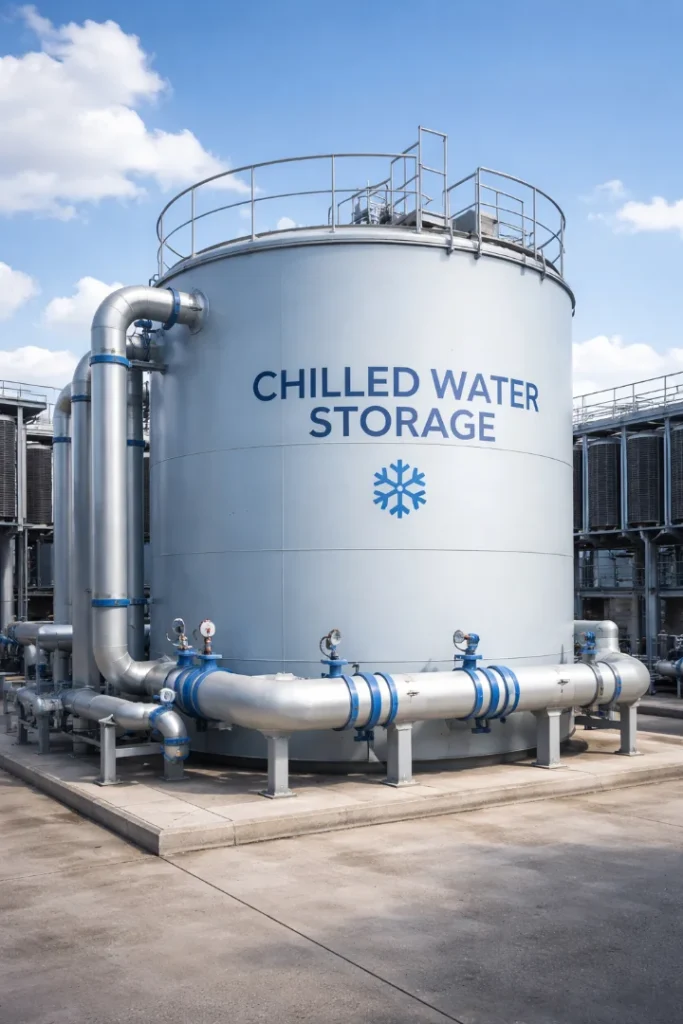
Chilled water storage tanks are a critical component of modern cooling systems, designed to store chilled water for use during periods of high demand. By shifting cooling loads, these tanks help reduce peak load stress on chillers, improving system efficiency and lowering energy costs. They also contribute to more stable system operation and can extend equipment lifespan by minimizing frequent cycling and excessive strain. Widely used in industrial facilities, commercial buildings, and large residential developments, chilled water storage tanks provide operational flexibility and reliability. Their ability to balance supply and demand makes them an important solution for energy management, sustainability goals, and overall performance optimization in complex cooling environments and integrated HVAC system designs.
Chilled water storage tanks help reduce the need for continuous cooling, improving overall energy efficiency and enabling smarter use of available resources. By producing and storing chilled water during off-peak hours, when energy demand and costs are lower, systems can rely on this stored capacity during peak periods. This reduces the load placed on chillers at critical times, minimizing operational strain and preventing unnecessary wear. As a result, equipment lifespan is extended and maintenance requirements are lowered. In addition, facilities benefit from reduced energy costs and improved demand management. This approach supports more stable system performance, enhances reliability, and contributes to sustainability goals in commercial, industrial, and large-scale residential cooling applications.
The US Department of Energy outlines how thermal energy storage systems play a key role in reducing peak electricity demand and improving overall cooling efficiency in commercial buildings. By storing thermal energy, such as chilled water, during off-peak hours when electricity demand is lower, these systems allow facilities to shift cooling loads to more optimal times. This reduces strain on the power grid and decreases the need for oversized or overworked cooling equipment. As a result, building operators can achieve lower energy costs, improved system performance, and greater operational flexibility. Thermal energy storage also supports sustainability goals by enhancing energy efficiency and enabling better integration with renewable energy sources.
How Chilled Water Storage Tanks Work
Chilled water storage tanks store water at 40–50°F (4–10°C) in large, well-insulated vessels designed to maintain consistent temperatures over time. When cooling demand increases, chilled water is circulated from the storage tank to air handlers, fan coil units, and process cooling equipment, where it absorbs heat from the environment or systems. The warmed water then returns to the chiller for re-cooling, completing the cycle. A key performance factor in this process is delta-T, or the temperature difference between supply and return water. A higher delta-T indicates more efficient heat transfer, meaning more cooling energy is delivered per gallon circulated, which directly influences the required storage volume and overall system efficiency and performance.
This process works in conjunction with buffer tanks, which further optimize cooling performance by preventing short cycling in chillers. Buffer tanks provide additional system volume, acting as a stabilizing layer between the chilled water loop and the chiller itself. By absorbing fluctuations in load demand, they help maintain consistent flow and temperature conditions. This prevents the chiller from frequently starting and stopping, a condition known as short cycling, which can reduce efficiency and accelerate mechanical wear. With smoother, longer operating cycles, chillers perform more efficiently and experience less stress over time. As a result, buffer tanks contribute to improved system reliability, reduced maintenance requirements, and extended equipment lifespan in both commercial and industrial cooling applications.
For delta-T optimization and storage sizing reference data, see the ASHRAE chilled water system design guide.
Benefits of Using Chilled Water Storage Tanks
- Energy Savings: By producing chilled water during off-peak hours when electricity rates are lower, storage tanks reduce the chiller’s contribution to peak demand readings, the primary driver of demand charges on commercial electricity bills. The U.S. Department of Energy’s Better Buildings Solution Center confirms that thermal storage systems reduce peak demand charges and improve overall cooling efficiency in commercial facilities.
- Reduced Equipment Strain: Chillers that run at steady, consistent loads produce more cooling per kWh than chillers that cycle on and off. Storage tanks absorb demand fluctuations, allowing chillers to operate at optimized setpoints and reducing compressor wear over the service life.
- Enhanced System Flexibility: Storage tanks decouple cooling production from cooling delivery meaning the chiller can produce chilled water at the most efficient time rather than being forced to respond to every demand spike in real time.
How Do Buffer Tanks Prevent Chiller Short Cycling?
Buffer tanks are an important addition to a chilled water system, particularly in applications with intermittent or highly variable cooling demands. They provide additional thermal mass and system volume, helping to stabilize temperature and flow conditions throughout the loop. By doing so, buffer tanks prevent chiller short cycling, which occurs when a chiller repeatedly starts and stops in response to small load changes. This frequent cycling can place significant stress on the compressor, accelerate mechanical wear, and reduce overall system efficiency. Incorporating a buffer tank allows the chiller to run for longer, more consistent cycles, improving performance, lowering maintenance requirements, and extending the lifespan of critical
By storing a reserve of chilled water, buffer tanks help smooth out fluctuations in cooling demand across the system. This added thermal capacity allows the system to absorb short-term changes without immediately calling on the chiller to respond. As a result, the chiller operates in longer, more stable cycles instead of frequently turning on and off. Reduced cycling improves overall energy efficiency, as start-up phases are typically less efficient than steady operation. It also minimizes mechanical stress on key components such as compressors and controls. Over time, this leads to less wear and tear, lower maintenance requirements, and a longer operational lifespan for the equipment, while maintaining consistent and reliable cooling performance.
Which Tests Verify Buffer Tank Quality?
To ensure that buffer tanks perform effectively and meet safety standards, they undergo several important tests:
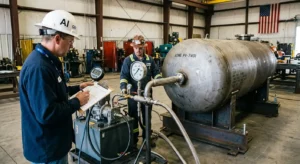
- Hydrostatic Testing: This test checks the structural integrity of the buffer tank by filling it with water under pressure to verify that it does not leak or deform. The ASME Boiler and Pressure Vessel Code sets the hydrostatic testing requirements that govern pressure vessel fabrication and inspection standards across commercial and industrial applications.
- Weld Integrity Testing: This test ensures that the welds used to fabricate the buffer tank are strong and free from defects, which is crucial for long-term durability.
- Leak Testing: Tanks are checked for any potential leaks to avoid energy losses and ensure efficient operation.
These tests ensure that buffer tanks are capable of handling the pressures and demands of the cooling system over time.
The National Board of Boiler and Pressure Vessel Inspectors maintains a registry of certified pressure vessels and inspection standards.
Chilled Water Storage Tanks in Data Centers
Data centers, which rely heavily on precise cooling for optimal server performance, can greatly benefit from chilled water storage tanks. What size buffer tank for data centers? The size of the buffer tank required depends on the cooling load and the specific cooling system in place, including flow rates, control strategy, and minimum chiller runtime requirements. Generally, larger data centers with higher cooling demands will require larger buffer tanks to manage fluctuating temperatures, stabilize return water conditions, and ensure efficient cooling performance. Properly sized buffer tanks help prevent short cycling, maintain consistent delta-T, and improve overall system reliability. By matching tank capacity to system requirements, operators can achieve better energy efficiency and long-term equipment protection.
Buffer tanks in data centers help maintain a steady supply of chilled water to air conditioners and cooling units, ensuring that temperatures remain consistent even during peak operational hours or sudden load changes. By providing thermal buffering, they stabilize system performance and reduce rapid fluctuations in cooling demand. This consistent temperature control helps protect sensitive IT equipment from overheating, which can lead to performance issues, downtime, or long-term damage. Buffer tanks also support more efficient chiller operation by reducing short cycling and allowing equipment to run under more stable conditions. As a result, data centers benefit from improved reliability, enhanced energy efficiency, and greater operational resilience in maintaining optimal environmental conditions for critical infrastructure.
Partner With Red River for ASME-Certified Chilled Water Storage Tank Fabrication
Red River fabricates ASME U-stamp certified chilled water storage tanks and buffer tanks for data centers, industrial facilities, and large commercial cooling systems. Our tanks are built to specification with full material traceability, certified weld documentation, and hydrostatic test records. Contact our team to discuss your project requirements.
The Importance of Chilled Water Storage Tanks
In industrial and manufacturing environments, process cooling requirements often change throughout the day as production lines start, stop, and vary in output levels. Chilled water storage tanks help absorb these variable loads without forcing the chiller to constantly ramp up and down, improving overall system stability and efficiency. By decoupling production demand from chiller operation, they allow more consistent equipment performance and reduced energy waste. In pharmaceutical and food processing facilities, storage tanks also play a critical role in supporting temperature-sensitive processes, ensuring a reliable supply of chilled water even during equipment maintenance or system interruptions. Across all applications, the key benefit is the same: stable, predictable chilled water availability delivered at lower operating cost than continuous chiller operation alone.
Frequently Asked Questions
1. What is a Chilled Water Storage Tank?
A Chilled Water Storage Tank is a large container that stores chilled water for later use in cooling systems. It helps reduce peak load demands on chillers and improves energy efficiency.
2. How do buffer tanks prevent chiller short cycling?
Buffer tanks store chilled water, preventing the chiller from starting and stopping frequently. This ensures efficient operation and reduces wear and tear on the chiller system.
3. What is the ideal size of a buffer tank for a data center?
The size of the buffer tank depends on the cooling load and the specific requirements of the data center. Larger facilities typically need larger buffer tanks to manage cooling demands.
4. Which tests are used to verify the quality of buffer tanks?
Buffer tanks undergo hydrostatic testing, weld integrity testing, and leak testing to ensure they meet quality standards and can handle the pressures of the cooling system.
5. What are the benefits of using Chilled Water Storage Tanks?
Chilled Water Storage Tanks provide energy savings, reduce strain on cooling equipment, and improve system flexibility by storing cooled water for later use during peak demand periods.
6. How much volume is needed for chilled water storage?
A common starting point is 10 gallons per ton of installed chiller capacity for buffer tanks. Thermal storage tanks are sized based on desired discharge duration and the delta-T between supply and return
7. Which materials suit chilled water service?
Carbon steel with internal protective lining suits most standard chilled water applications. Stainless steel grades 304L or 316L are specified where glycol concentrations, low-pH water treatment, or high-purity requirements create elevated corrosion risk.
Key Takeaways
- Chilled water storage tanks reduce peak demand charges by producing chilled water during off-peak hours and discharging it during high-cost peak periods decoupling chiller runtime from peak billing windows.
- Buffer tanks prevent chiller short cycling by absorbing demand fluctuations chillers running at steady setpoints produce more cooling per kWh and experience less compressor wear than chillers that cycle frequently.
- Delta-T between supply and return temperatures is the primary variable governing how much storage volume is needed a higher delta-T means more cooling energy per gallon and less tank volume required.
- Buffer tanks must pass hydrostatic testing at 1.3× MAWP, weld integrity testing, and leak testing before entering service these tests verify structural integrity under the pressures of continuous chilled water operation.
- Red River fabricates ASME U-stamp certified chilled water storage tanks and buffer tanks with full material traceability, hydrostatic test records, and certified weld documentation.
Related Blog Post
Condensate Tanks: Types, Fabrication, and ASME Code
Which Tests Validate Deaeration in Pressure Systems?
Equalization Tanks: Design, Sizing, and Fabrication
What Are Thermal Storage Testing Standards for TES Vessels?