
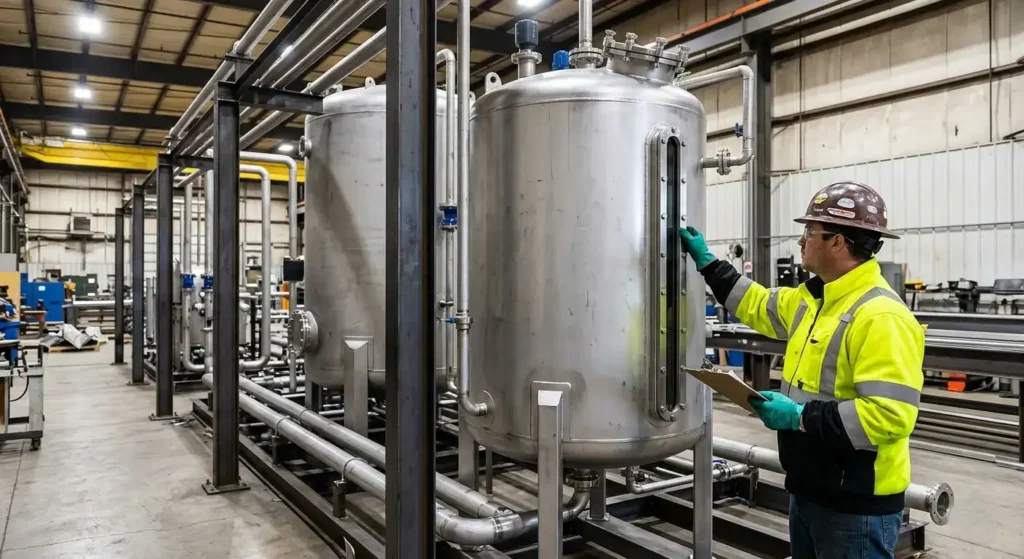
Glycol volume equals total system fluid volume multiplied by the target glycol concentration, so a 1,000-gallon loop at 30 percent needs about 300 gallons of concentrate. The concentration is set by the lowest temperature the system must survive, using the glycol manufacturer’s freeze point chart.
Key Takeaways
- Glycol volume equals total system volume multiplied by the target concentration. Both numbers must be known before ordering fluid.
- Set the glycol concentration from the lowest expected temperature, using the glycol manufacturer’s chart and ASHRAE fluid data, not a guess.
- Total fluid volume includes piping, coils, heat exchangers, and every vessel, including any buffer or storage tank on the loop.
- A glycol feed tank should hold a reserve beyond the loop charge so the system stays protected as it loses small amounts over time.
- Over-glycoling wastes money and hurts heat transfer, so the concentration is set just high enough for the required freeze point.
What Is the Formula for Calculating Glycol Volume?
The formula is straightforward: Glycol Volume = Total System Volume × Target Concentration. System volume glycol calculations start here: a system holding 1,000 gallons of fluid at a 30 percent mixture needs about 300 gallons of glycol concentrate and 700 gallons of water.
Why Both Inputs Must Be Accurate
The challenge is knowing those two inputs accurately. Underestimating the loop volume leaves it under-protected, and guessing at concentration either wastes glycol or risks a freeze. Both numbers are worth calculating from design drawings rather than estimating, because the cost of getting them wrong is a burst coil or a ruined batch of fluid.
How to Use the Formula in Practice
Add up the real system volume, set the concentration from the lowest temperature the loop will see, and add a reserve so a feed tank can keep the system topped off. The math is simple once both inputs are confirmed.
How Do You Calculate Total System Volume?
Total system volume is the sum of every place fluid sits in the loop: the piping, the coils, the heat exchangers, the pumps, and every vessel. Missing any one of these throws off the glycol calculation.
Counting Each Component
Piping volume comes from the length and diameter of each pipe size, which is straightforward to total from the drawings. Coils, heat exchangers, and air handlers carry published internal volumes from their manufacturers. The largest single contributors are usually the vessels, so any buffer tank, process tank, or thermal storage vessel is added at its full holding volume.
Measuring an Existing System
For an existing system without good records, the fluid can be measured directly during a fill or drain. For a new system, the volume is calculated from the design before the loop is ever charged, which is the better and more accurate time to plan the glycol order and size the feed tank accordingly.
How Do You Choose the Right Glycol Concentration?
Glycol concentration freeze point data from the manufacturer’s chart and ASHRAE fluid data sets the correct concentration, not habit or a round number. The colder the exposure, the higher the concentration required.
Freeze Protection vs Burst Protection
There are two levels of protection, and they call for different concentrations. Freeze protection keeps the fluid fully liquid so it pumps normally at the lowest temperature. Burst protection is a lower concentration that lets the fluid turn slushy but not solid, protecting the pipe from splitting even if flow stops. Loops that must keep running need freeze protection; equipment that only needs to survive a cold idle can use burst protection.
Propylene vs Ethylene Glycol Concentration
The two fluids reach a given freeze point at slightly different concentrations, so the fluid choice changes the number. Propylene glycol generally needs a slightly higher concentration than ethylene glycol for the same protection because it is a bit less effective per gallon. The system’s lowest temperature and the chosen fluid together determine the glycol concentration, which then drives the total glycol volume the system needs.
How Much Reserve Should the Glycol Feed Tank Hold?
A glycol feed tank should hold a reserve beyond the loop charge so it can replace the small amounts a system loses to minor leaks, venting, and maintenance. Without that reserve, the concentration drifts down over time as plain water is added, and freeze protection slowly erodes.
Sizing the Feed Tank Reserve
A common approach is to size the feed tank for a meaningful fraction of the loop volume, enough to cover normal makeup between service visits without frequent refilling. A slightly larger reserve makes sense on a remote site or on a system serviced only a few times a year. The feed tank holds pre-mixed glycol at the target concentration, so every top-off keeps the protection where it belongs.
How Red River Fabricates Glycol Feed Tanks
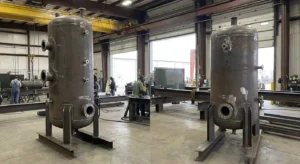
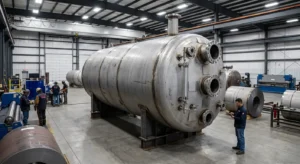
Red River’s pressure vessel fabrication includes stainless and carbon steel glycol feed, storage, and mixing tanks sized for the systems they serve. Every vessel is specified for its actual service conditions, including fluid compatibility, operating pressure, and temperature range, before fabrication scope is defined. See Red River’s process tanks and prefabrication services for related vessel types and integrated skid scopes.
Why Does Over-Glycoling Hurt System Performance?
Adding more glycol than the freeze point requires seems like cheap insurance, but it works against the system. Higher concentration means worse heat transfer, higher viscosity, and harder pumping, which raises energy use and can shrink capacity.
The Heat Transfer and Pumping Penalty
Glycol carries less heat than water and flows less easily, and those penalties grow with concentration. A loop mixed well above what its lowest temperature requires moves heat less efficiently and makes its pumps work harder for no added protection. The goal is to set the concentration just high enough for the required freeze point, then size the glycol volume to that target.
The Cost of Getting the Charge Wrong
Getting the glycol charge wrong fails in one of two directions. Too little glycol leaves the loop under-protected, so the first hard freeze can split a coil or crack a vessel, with repair costs and downtime that dwarf the price of the fluid. Too much glycol is quieter but still costly: the loop pumps harder, moves less heat, and runs less efficiently every hour it operates, which appears as higher energy bills over the life of the system. A measured charge, matched to the loop and the climate, is the only version that protects the equipment without taxing it.
Glycol Systems and ASME-Coded Vessels Built for Your Loop
Knowing how much glycol volume is needed comes down to two accurate numbers, the system volume and the target concentration, plus a sensible feed reserve. Red River has fabricated ASME-certified glycol feed, storage, and mixing tanks for the systems they serve, from Gillette, Wyoming, since 2003. Red River holds active ASME U Stamp and NBBI R Stamp certifications. The National Board maintains registration records for all ASME-stamped vessels Red River delivers. See Red River’s fabrication capabilities for the full vessel and skid scope.
Ready to Size Your Glycol System?
Request a quote or call us to discuss glycol feed tank sizing, vessel specification, and fabrication scope with Red River’s team. Getting the glycol volume right is easier when the vessel and the loop are designed together from the start.
Frequently Asked Questions
1. What Is the Formula for Glycol Volume?
Glycol volume equals the total system fluid volume multiplied by the target glycol concentration. A 1,000-gallon loop at a 30 percent mix needs about 300 gallons of glycol concentrate. The two inputs needed are the accurate system volume and the concentration set by the lowest expected temperature.
2. How Do I Find My System Volume?
Add up the fluid volume of the piping, coils, heat exchangers, pumps, and every vessel on the loop. Piping volume comes from pipe size and length, while coils and exchangers carry published internal volumes. On an existing system, the fluid can also be measured directly during a fill or drain.
3. What Glycol Concentration Do I Need?
The concentration is set by the lowest temperature the system must withstand, read from the glycol manufacturer’s chart and ASHRAE data. Freeze protection keeps the fluid pumpable at that temperature, while burst protection is a lower concentration that only prevents pipe damage. Propylene glycol usually needs a slightly higher concentration than ethylene for the same protection.
4. How Big Should a Glycol Feed Tank Be?
A glycol feed tank should hold a reserve beyond the loop charge so it can cover normal makeup between service visits. Sizing it for a meaningful fraction of the loop volume avoids frequent refilling. The feed tank holds pre-mixed glycol at the target concentration so every top-off maintains protection.
5. Can Adding Too Much Glycol Cause Problems?
Yes. Glycol carries less heat than water and is more viscous, so an over-concentrated loop transfers heat less efficiently and pumps harder. That raises energy use and can reduce capacity without adding protection. The concentration should be set just high enough for the required freeze point.
Related Blog Post
Which Materials Suit Make-Up Water Service?
How Big Should Make-Up Water Tanks Be?
Make-Up Water Tanks: Design, Sizing, and Fabrication
When to Spec Equalization Tanks for Industrial Systems
How Do Equalization Tanks Balance Flow?
About Author



