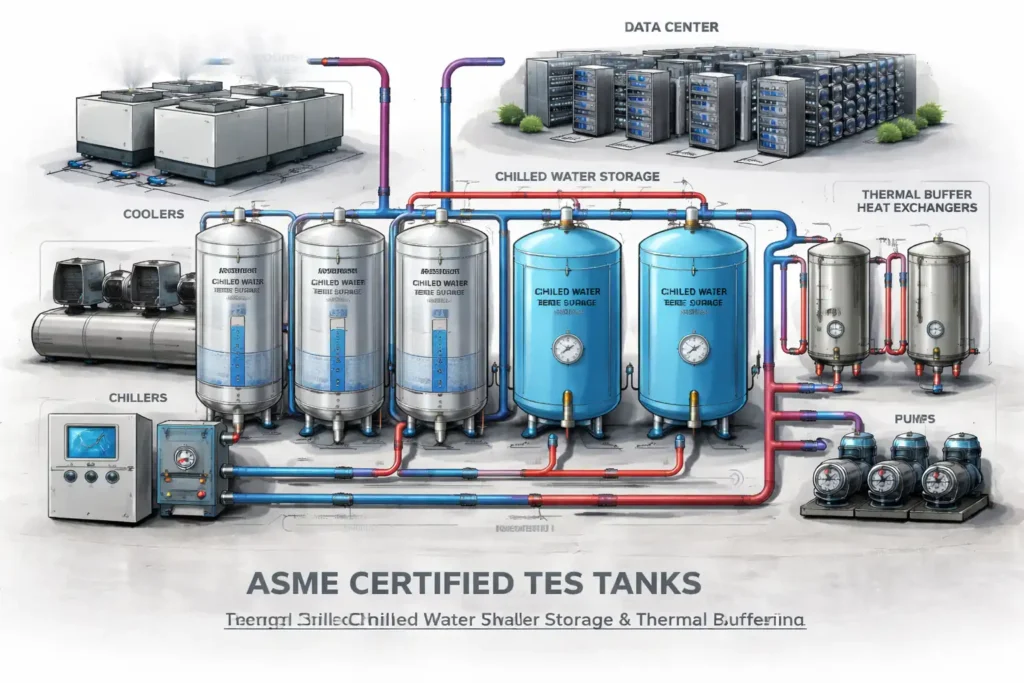
ASME Certified TES Tanks
If your cooling system relies on chillers running continuously at peak load, you’re paying more than you need to and putting unnecessary wear on expensive equipment. ASME Certified TES Tanks solve this by storing thermal energy during off-peak hours and releasing it when demand spikes, reducing chiller cycling and stabilizing the entire cooling loop. This guide covers how they work, how to size and specify them, and why ASME certification is non-negotiable for pressure vessel safety.
Understanding These Vessels and Their Importance in Modern Thermal Systems
ASME Certified TES Tanks play a pivotal role in modern hydronic and thermal energy storage systems by providing stable thermal reserves, maintaining pressure consistency, and supporting efficient cooling strategies. These tanks store chilled water or thermal mass that can be used later to balance peak loads, minimize chiller cycling, and increase overall system efficiency.
ASME Certified TES Tanks are especially valuable when paired with Chilled Water Storage Tanks, which serve as dedicated reservoirs for cooling systems. Understanding what is a chilled water storage tank helps clarify how thermal reserves extend cooling runtime, stabilize temperatures, and support building systems during transitions or disruptions. These storage tanks allow operators to store chilled water when demand is low and use it when cooling requirements increase.
A major part of designing ASME Certified TES Tanks involves determining how much volume is needed for chilled water storage. Volume requirements vary depending on cooling strategy, desired discharge duration, thermal load, and system redundancy expectations. Another essential factor is material selection, which requires evaluating which materials suit chilled water service to ensure that the tank withstands long-term exposure to water chemistry, temperature swings, and operational pressures.
RedRiver LLC engineers ASME Certified TES Tanks with precision, ensuring every vessel meets industry standards, supports consistent performance, and delivers long-term reliability.
How TES Systems Improve Cooling Efficiency and Hydronic Stability
ASME Certified TES Tanks stabilize cooling systems by creating a consistent thermal mass that buffers temperature fluctuations and reduces strain on chillers and pumps. They maintain steady water temperatures across the hydronic loop, even as building loads shift throughout the day.
By storing excess cooling energy during low-demand periods, these tanks ensure chilled water is available exactly when it’s needed without forcing chillers to ramp up on short notice. That load-shifting capability directly reduces energy consumption and extends the working life of mechanical cooling equipment.
Key efficiency benefits include:
- Reduced chiller cycling due to consistent thermal mass
- Improved cooling reliability during peak load periods
- Stable water supply temperature for critical systems
- Enhanced redundancy during cooling equipment maintenance
- Greater control over flow and thermal distribution
- Reduced energy consumption through load shifting
When paired with Chilled Water Storage Tanks, these vessels create a two-layer thermal reserve that covers both immediate and sustained cooling needs. TES tanks handle load shifting during off-peak hours; chilled water tanks deliver cooled water instantly during peak demand.
This combination prevents chiller overload during high-demand periods and reduces total energy draw across the cooling cycle. Together, they extend equipment lifespan by eliminating the hard cycling that wears out compressors and pumps prematurely.
Engineering and Design Considerations for These Pressure Vessels
TES tanks built to ASME standards are designed to handle the full range of conditions in active hydronic systems: high water pressure, repeated thermal cycling, and long-term temperature variation.
ASME certification isn’t just a label. It means the vessel has been designed, inspected, and pressure-tested to documented specifications, ensuring it won’t fail under the conditions it was rated for.
Key engineering considerations include:
- Compliance with ASME pressure vessel requirements
- Adequate shell and head thickness to withstand thermal and mechanical loads
- Proper inlet and outlet placement for uniform mixing
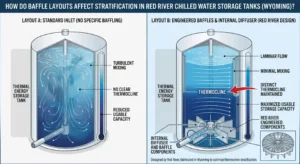
- Baffle design for improved thermal stratification if needed
- Access ports for inspection, sampling, and cleaning
- Internal linings or coatings compatible with chilled water chemistry
- Reinforcement of weld seams according to ASME specifications
Volume calculations and system design should align with ASHRAE guidelines for cool thermal energy storage, which provide frameworks for sizing, technology selection, and commissioning chilled water storage systems. Engineers must carefully determine the required volume for chilled water storage to ensure the tank effectively supports the intended cooling strategy. Proper planning is essential to guarantee that ASME Certified TES Tanks meet the specific demands of the system they serve. By accurately calculating the volume needed, engineers can optimize the tank’s capacity to store thermal energy and maintain system efficiency. This ensures that the TES Tank can store sufficient cooling capacity during low-demand periods and deliver it when cooling demand peaks, reducing reliance on mechanical chillers. Thoughtful volume consideration also helps in avoiding underutilization or overloading of the system, both of which can impact performance and energy efficiency. With careful design and volume planning, ASME Certified TES Tanks are better equipped to support cooling strategies effectively, reducing unplanned downtime in data centers and process cooling facilities.
Material Selection: Which Materials Suit Chilled Water Service
Selecting the right materials for chilled water service is crucial to ensure the longevity and reduce maintenance of the vessel. Material choices are influenced by factors such as water quality, thermal cycling, and corrosion potential. The tank must be made from materials that can withstand constant temperature fluctuations without degrading or failing. Corrosion resistance is particularly important, as the tank will be exposed to water and varying conditions over time. Additionally, the materials must be compatible with the water quality, ensuring that contaminants do not affect performance or structural integrity. By carefully selecting materials that can handle thermal stress and prevent corrosion, engineers can extend the lifespan of TES Tanks while minimizing the need for repairs or replacements. Choosing the right material upfront reduces corrosion risk, cuts maintenance frequency, and protects the tank’s structural integrity over a 20–30 year service life.
Common materials used in chilled water service include:
- Carbon steel with protective internal coatings
- Stainless steel for enhanced corrosion resistance
- Coated steel options that create long-lasting barriers against scaling or rust
- Specialty alloys for environments that require higher purity or chemical stability
Material selection plays a crucial role in a tank’s long-term performance. The right materials ensure that the tank withstands water conditions, thermal variations, and environmental stress without compromising efficiency or durability. RedRiver LLC helps organizations choose materials that align with specific water conditions, ensuring resistance to corrosion and scaling. Thermal expectations are also a key consideration, as the tank must endure constant temperature fluctuations without degradation. By selecting materials that offer long-term durability, RedRiver LLC ensures the tank can handle the demands of cooling systems while minimizing maintenance needs. The company’s expertise helps optimize performance, prevent costly repairs, and extend the tank’s lifespan. Ultimately, the right material choice contributes to a reliable, efficient system, reducing operational risks and supporting sustainable cooling strategies. RedRiver LLC’s guidance ensures that every material selection meets the precise needs of the cooling system for optimal results.
Integration of These Systems With Chilled Water Storage Tanks
These integrated systems offer:
- Stored chilled water for immediate thermal support
- Temperature stability across all zones of the cooling loop
- Extended cooling availability during high loads
- Minimized energy use through load shifting strategies
- Improved chiller performance due to reduced cycling
- A stable buffer that enhances hydraulic balance
Understanding what is a chilled water storage tank helps clarify how this synergy works. These tanks create a buffer that allows chilled water to be delivered instantly, reducing pressure on the mechanical cooling system and improving responsiveness.
Determining how much volume is needed for chilled water storage allows engineers to size tanks appropriately, ensuring that thermal reserves align with cooling load requirements.
How TES Systems Support Energy Optimization Strategies
ASME Certified TES Tanks allow organizations to adopt advanced energy strategies. By storing chilled water during low-demand periods and releasing it during high-demand periods, these tanks help reduce energy consumption and improve operational efficiency.
Energy-related advantages include:
- Off-peak cooling production using thermal storage
- Improved utilization of free cooling or economizer conditions
- Greater flexibility in chiller sequencing
When used together with Chilled Water Storage Tanks, TES tanks help create a holistic thermal management approach that balances efficiency with resilience.
Why ASME Certification Matters for TES Tanks
These vessels must comply with ASME Section VIII, Division 1 pressure vessel standards, which govern design, fabrication, inspection, and pressure testing for vessels operating above 15 psig.
ASME certification ensures that TES tanks meet strict safety, performance, and construction requirements. ASME Certified TES Tanks are subjected to detailed inspections, pressure tests, welding certifications, and material evaluations to ensure structural integrity.
Certification guarantees:
- Verified compliance with ASME pressure vessel standards
- Safe performance under expected operational pressures
- High-quality welds and structural reinforcements
- Long-term reliability and durability
- Reduced risk of system failure
- Enhanced trust for mission-critical applications
RedRiver LLC specializes in fabricating ASME-certified tanks that deliver both performance and structural assurance.
ASME Certified TES Tanks Conclusion
They are indispensable components in modern thermal energy storage systems. Their ability to stabilize cooling loops, enhance hydraulic performance, and provide thermal reserves makes them essential for efficient and reliable cooling. By understanding what is a chilled water storage tank, determining how much volume is needed for chilled water storage, and selecting which materials suit chilled water service, organizations can design TES systems that meet long-term performance goals. RedRiver LLC provides expert engineering and fabrication services to deliver ASME-certified tanks built for durability, safety, and superior cooling performance.
Work With RedRiver LLC for High-Performance TES Tank Solutions
Partner with RedRiver LLC for expertly engineered, ASME Certified TES Tanks built for precision, reliability, and lasting performance. Our team specializes in custom tank fabrication and system integration, helping your organization enhance cooling efficiency and ensure operational stability. Contact us today to learn more.
Frequently Asked Questions
1. How do TES tanks support data center cooling?
TES tanks store excess cooling energy during off-peak hours and release it during peak hours, helping maintain optimal temperatures in data centers without overloading the cooling system.
2. What ASME Section VIII applies to TES tanks?
ASME Section VIII, Division 1 applies to TES tanks, governing the design, materials, and safety standards for pressure vessels used in thermal energy storage.
3. Can TES tanks reduce energy costs?
Yes, TES tanks reduce energy costs by storing cooling energy during low-demand periods and using it during peak hours, taking advantage of lower electricity rates and reducing overall energy expenses.
4. Which materials suit chilled water service?
Common options include carbon steel, stainless steel, and coated steel depending on water chemistry.
5. Why is ASME certification important?
It ensures the tank meets strict pressure vessel standards for safety, performance, and durability.
6. How is a TES tank sized for a commercial cooling system?
Sizing is based on peak cooling load (tons), required discharge duration, system delta-T, and how much load the tank carries versus the chiller. Engineers use: Volume (gallons) = (Ton-hours × 12,000) ÷ (500 × delta-T °F). Red River LLC handles sizing calculations as part of the tank design process.
7. What inspection requirements does ASME set for TES pressure vessels?
ASME Section VIII, Division 1 requires hydrostatic pressure testing at 1.3 times the maximum allowable working pressure, certified weld inspection, and oversight by an Authorized Inspection Agency (AIA) during fabrication. Once passed, the vessel receives the ASME U Stamp confirming full code compliance.
8. How does thermal stratification affect TES tank performance?
Stratification keeps cold water at the bottom and warm return water at the top, separated by a boundary layer called the thermocline. When maintained cleanly, the tank delivers chilled water at design temperature from first draw to last. If turbulence breaks the thermocline, warm and cold water mix reducing usable capacity without reducing tank volume.
Key Takeaways
- ASME Certified TES Tanks enhance stability, efficiency, and cooling reliability
- Chilled water storage is essential for thermal buffering and load shifting
- Material selection directly impacts durability and long-term tank performance
- Proper sizing ensures effective thermal energy storage and consistent cooling
- RedRiver LLC provides expert engineering and fabrication for ASME-certified TES solutions
Related Blog Post
Can Condensate Storage Improve Reliability?
Where Do Condensate Tanks Fit in a Steam System?
Which Nozzles Simplify Maintenance on Pressure Vessels?
How to Vent Condensate Tanks in Steam Systems
How Do Baffle Layouts Affect Stratification in TES Tanks?
No related articles found.
About Author