
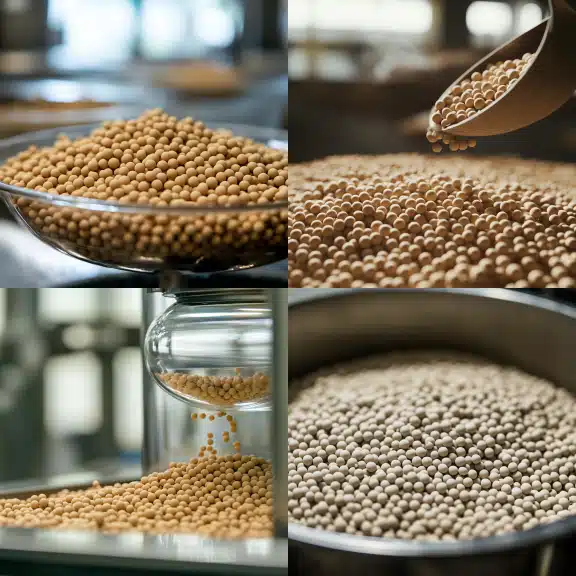
Drying with molecular sieves is a precise and highly effective method for moisture control in industrial processes. Their unique porous structure allows them to adsorb water molecules efficiently, ensuring purity in liquids and gases. By choosing the right type and maintaining proper activation and storage, molecular sieves can significantly improve drying outcomes. RedRiver LLC provides engineered systems that integrate these sieves for peak performance and regulatory alignment.
Understanding Molecular Sieves and Their Importance in Drying
Molecular sieves are highly porous materials crafted from crystalline aluminosilicates. Their unique structure enables them to selectively absorb molecules based on size, making them exceptionally effective at removing moisture and small molecules from gases and liquids. Industries rely on them to ensure product quality and safety by maintaining low moisture levels.
What are Molecular Sieves?
Molecular sieves are crystalline materials with uniformly sized pores that trap molecules smaller than a specific diameter. Common molecular sieve classifications are based on pore size and application. For example, Understanding 4A Molecular Sieves explains the performance and proper usage of different types.
For their practical applications, see Where Are Molecular Sieves Used? Understanding Their Applications and Benefits.
Why Use Molecular Sieves for Drying?
Molecular sieves outperform many conventional drying systems because they:
- Target specific molecular sizes, enabling precise moisture adsorption
- Maintain product quality, reducing degradation caused by water contamination
- Enable efficient industrial operation, especially in fluid and gas purification
For related moisture control technologies, check Most Efficient Desiccant.
Key Benefits of Drying with Molecular Sieves
The benefits of using molecular sieves for drying are significant:
- High Efficiency: Molecular sieves rapidly and effectively absorb moisture, saving time and resources.
- Cost-Effective: They reduce operational downtime and waste by maintaining consistent moisture control.
- Versatility: Suitable for various applications, they are a dependable solution across multiple industries.
For an example of industrial separation systems, see Free Water Knockout.
Step-with the aid of-Step Process of Drying with Molecular Sieves
Drying with molecular sieves is a specific process that could considerably enhance the high quality and purity of your substances. Here’s the way to do it properly:
Preparing Your Molecular Sieves
Before use, molecular sieves must be activated. Activation removes any adsorbed moisture and restores full adsorption capacity. This step mirrors general preparation in systems like Understanding Air Addition in Water-Filled Pressure Tanks.
Selecting the Right Type of Molecular Sieve
Different pore sizes serve different functions:
- 3A for drying polar compounds
- 4A for general dehydration
- 5A for larger molecules
- 13X for broad adsorption including larger contaminants
For details, see Molecular Sieve Device Guide.
How to Dry Liquids Over Molecular Sieves
- Add activated molecular sieves to the liquid
- Stir gently for uniform contact
- Allow sufficient residence time
See how this compares to other separation methods: Understanding the Basics of Water-Oil Separation.
Best Practices for Efficient Drying
- Proper Activation: Ensure the sieves are fully activated before use.
- Regular Maintenance: Store sieves in airtight containers to prevent premature moisture absorption.
- Consistent Monitoring: Regularly check and replace sieves to maintain drying efficiency.
For additional maintenance practices, read Understanding the Remaining Life Assessment of Pressure Vessels.
Troubleshooting Common Issues in Drying Over Molecular Sieves
If moisture remains high:
- Check activation procedure
- Adjust sieve-to-material ratio
Similar troubleshooting concepts are applied in Understanding Pressure Vessel Hazards.
Avoiding Contamination During Drying
If moisture levels remain high, ensure the sieves are properly activated and correct the sieve-to-material ratio. Addressing these issues promptly will restore drying effectiveness.
How to Rejuvenate Used Molecular Sieves
Saturated sieves can be regenerated by heating at 200–300°C for several hours. This extends their lifespan and restores adsorption capacity.
See more on their functionality at Understanding Molecular Sieves and Their Role.
Drying with Molecular Sieves
Drying with molecular sieves ensures exceptional moisture removal across industrial applications. From liquid purification to gas dehydration, their selectivity and reusability make them a valuable asset. By understanding their operation and supporting them with proper vessel safety protocols, operations remain efficient and compliant.
Partner with Red River for Reliable Drying Solutions
Ensure your operations stay efficient, safe, and compliant with Red River’s expertise in pressure vessels and industrial drying solutions. From custom-designed vessels to prefabricated spools and skid packages, we deliver American-made quality backed by integrity and performance.
Contact us today to optimize your drying process and experience the Red River difference.
Frequently Asked Questions
1. What are the ideal storage conditions for molecular sieves?
Store in dry, airtight containers to prevent moisture absorption. Keep humidity low to retain effectiveness.
2. Can molecular sieves be reused after absorbing moisture?
Yes. Heat them at recommended temperatures to regenerate and restore their drying ability.
3. How do I choose the right molecular sieve type and size?
Select based on the target molecule and application 3A for alcohols, 4A for air and solvents, etc.
4. What signs show that molecular sieves need replacement?
Reduced drying performance, visual discoloration, or physical breakdown are indicators.
5. Are there safety risks in drying with molecular sieves?
Yes. Activation involves high temperatures handle with protective gear and follow safety protocols.
Key Takeaways
- Drying with molecular sieves is precise and reliable
- Proper activation and storage ensure maximum effectiveness
- Sieves can be regenerated to extend service life
- Vessel safety and compliance are critical for performance
- RedRiver LLC provides full-system solutions for drying and pressure applications
Related Blog Post
Condensate Tanks: Types, Fabrication, and ASME Code
Which Tests Validate Deaeration in Pressure Systems?
Equalization Tanks: Design, Sizing, and Fabrication
What Are Thermal Storage Testing Standards for TES Vessels?
What Hydro Tests Are Required for Pressure Vessels?
No subpillar set for this blog post.
About Author



