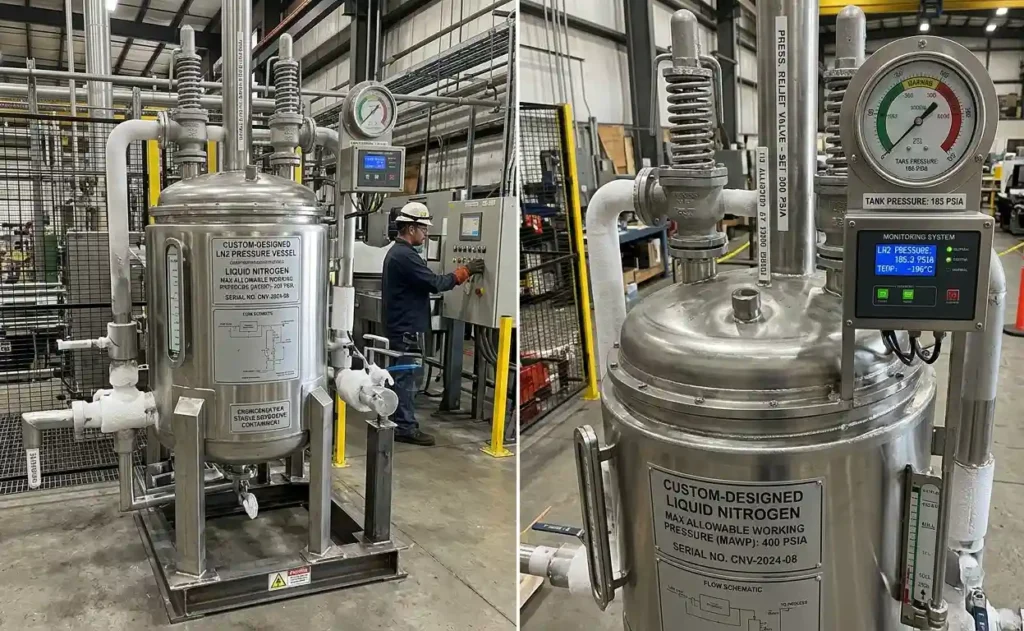
Liquid nitrogen, a cryogenic fluid cooled below -320°F (-196°C), is widely used in medicine, manufacturing, food, and science. Its critical pressure is 492 psia (3.4 MPa) above this, nitrogen becomes a supercritical fluid, which can compromise vessel safety. Maintaining pressure well below this threshold is essential. Engineers must consider temperature, material stress, and safety protocols (PPE, relief valves, monitoring) to design reliable systems. Red River provides custom cryogenic vessels optimized for safe, stable performance across industries.
Introduction to Liquid Nitrogen
Liquid nitrogen is a cryogenic liquid formed by cooling nitrogen gas below -320°F (-196°C). It’s widely used in industrial, medical, and scientific applications where ultra-low temperatures are essential. Understanding its critical pressure of 492 psia (3.4 MPa) is vital for designing safe, efficient storage systems and preventing supercritical phase risks. Red River specializes in custom pressure tank solutions and pressure vessel fabrication that account for these precise parameters.
What Is the Critical Pressure of Nitrogen?
The critical pressure is the pressure required to liquefy a gas at its critical temperature. For nitrogen, the critical temperature is 227.1 K (-46°C) and the critical pressure is 492 psia. Above this point, nitrogen exists only as a supercritical fluid. Engineers must account for this when designing pressure vessels and phase-change applications. Failing to stay below the critical pressure can compromise storage efficiency and system safety. Red River’s understanding-the-critical-role-of-failure-theories-in-pressure-vessel-design article explains these design considerations in detail.
Factors Affecting Pressure in Liquid Nitrogen Vessels
In addition to external temperature and vessel design, the relationship between operating pressure and the critical pressure of nitrogen is crucial. Systems operating near or above 492 psia must avoid phase instability and material stress due to supercritical conditions. Red River engineers design vessels to maintain optimal pressure and avoid supercritical risks using advanced pressure monitoring techniques. Our pressure equipment vessel post-weld heat treatments also ensure long-term reliability.
Common Applications of Liquid Nitrogen
Liquid nitrogen serves several industries:
- Medical: cryopreservation, dermatological treatments, supported by Red River’s medical-grade pressure vessels.
- Manufacturing: shrink fitting, CNC machining coolant, leveraging modular skids for integrated solutions.
- Food: flash-freezing and transportation, facilitated through customizable storage systems.
- Science: cooling superconductors and particle experiments, requiring precision pressure vessel engineering.
These applications make stable pressure control and awareness of critical thresholds a design priority. Red River customizes cryogenic vessels for medical preservation, aerospace fuel storage, manufacturing, and more.
Safety Considerations
Safety is paramount due to extreme cryogenic temperatures and pressure-related hazards. Risks from overpressure include vessel rupture, cryogenic fluid exposure, and oxygen displacement, which can cause asphyxiation. Red River emphasizes OSHA-compliant safety measures and proper personal protective equipment like insulated gloves, goggles, and pressure relief valves.
Monitoring and Maintaining Pressure
Regular monitoring ensures vessels remain within safe operating pressures. Techniques include pressure gauges and sensors for accurate readings. Proactive maintenance practices, such as pressure vessel inspection and post-fabrication testing, prevent pressure-related failures and maintain vessel integrity.
Liquid nitrogen handling also benefits from Red River’s prefabrication services and capabilities overview, which ensure vessels are tailored for operational demands. Learn more about modular skids and pressure vessel manufacturing processes to optimize your systems.
For detailed guidance, Red River’s solutions page offers insights into pressure vessel fabrication steps, choosing materials, and ASME-certified pressure vessels. Contact Red River for customized quotes or explore career opportunities on employment at Red River LLC to join our engineering team.
Partner with Red River for Safe, Reliable Cryogenic Solutions
Ensure your liquid nitrogen operations stay safe, efficient, and compliant. Red River specializes in designing and fabricating custom pressure vessels, modular skids, and prefabricated systems built to handle critical pressures with precision.
Contact our experts today for a tailored solution or request a quote to experience the Red River difference where American-made quality meets unmatched engineering expertise.
Frequently Asked Questions
1. What is the critical pressure of nitrogen?
It’s 492 psia, the threshold pressure above which nitrogen cannot exist in a purely liquid state, regardless of temperature.
2. Why does it matter for pressure vessels?
Design standards must ensure vessels operate well below 492 psia unless engineered for supercritical fluid containment.
3. What are safe pressure ranges in a liquid nitrogen tank?
Typically, liquid nitrogen vessels operate between 70 to 145 psi (5 to 10 bar) depending on design, insulation, and ambient temperature. Engineers must ensure tanks stay well below the critical pressure of 492 psia unless specifically rated for supercritical containment.
4. How do temperature versions affect the pressure in a liquid nitrogen vessel?
Temperature fluctuations have a considerable impact on the pressure inner a liquid nitrogen vessel. As the temperature rises, the nitrogen gas within the vessel expands, increasing the pressure. Conversely, whilst the temperature decreases, the nitrogen fuel contracts, resulting in a lower pressure. To hold safe running conditions, it’s essential to consider temperature adjustments and enforce appropriate measures to alter pressure ranges, together with pressure remedy valves and insulation.
5. What safety measures should be in place when handling liquid nitrogen?
Key practices include:
- Wearing PPE (insulated gloves, face shields)
- Ensuring ventilation to prevent oxygen depletion
- Using automated pressure relief valves
- Following OSHA and manufacturer guidelines
- Conducting routine inspections for frost, leaks, and pressure build-up
6. How do pressure comfort valves work in liquid nitrogen vessels?
Pressure relief valves are essential additives of liquid nitrogen vessels, designed to guard against overpressurization and ability vessel rupture. These valves function utilizing mechanically establishing whilst the inner pressure exceeds a predetermined threshold, allowing excess gas to break out and relieving the pressure in the vessel. By maintaining pressure within secure limits, pressure alleviation valves save you from catastrophic failures and ensure the safety of employees and equipment.
7. What are the results of flawed pressure control in liquid nitrogen vessels?
Improper pressure control in liquid nitrogen vessels can lead to numerous protection hazards and operational problems. Excessive pressure buildup can bring about vessel rupture, liberating cryogenic fluid and posing large dangers to employees and surrounding devices. Additionally, insufficient pressure control can also affect the performance and performance of tactics making use of liquid nitrogen, potentially compromising product satisfaction and consistency. It’s vital to prioritize the right pressure control to ensure the safe and dependable operation of liquid nitrogen structures.
Key Takeaways
- Critical Pressure Alert: Nitrogen’s critical pressure is 492 psia (3.4 MPa). Operating above this means it becomes a supercritical fluid not safe for standard vessels.
- Typical Operating Range: Most liquid nitrogen vessels run safely between 70–145 psi (5–10 bar).
- Design Matters: Pressure vessel designs must account for critical thresholds, insulation, and thermal expansion.
- Safety First: Use PPE, pressure relief valves, and follow OSHA standards to prevent injury or equipment failure.
- Industries Benefiting: Medical, manufacturing, food, and scientific sectors rely heavily on precise cryogenic control.
- Monitoring is Critical: Real-time pressure gauges and regular maintenance extend vessel life and improve safety.
Related Blog Post
Can Condensate Storage Improve Reliability?
Where Do Condensate Tanks Fit in a Steam System?
Which Nozzles Simplify Maintenance on Pressure Vessels?
How to Vent Condensate Tanks in Steam Systems
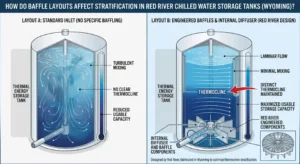
How Do Baffle Layouts Affect Stratification in TES Tanks?
No related articles found.
About Author