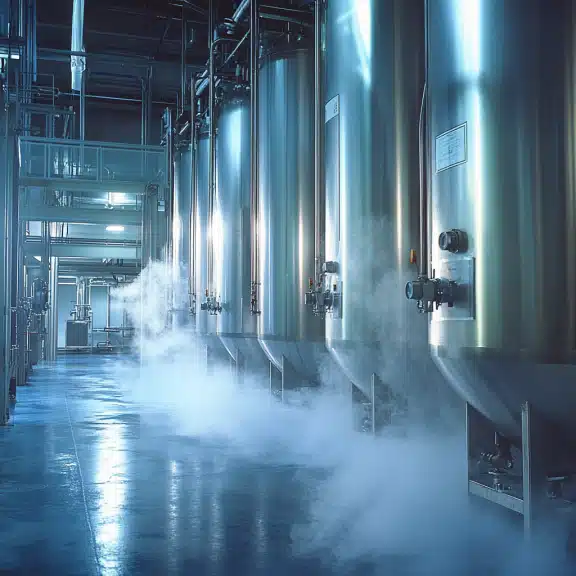
Cryogenic tanks are crucial for storing and transporting gases at ultra-low temperatures, ensuring their preservation and functionality in industries like aerospace, healthcare, and food processing. These tanks are constructed using materials such as stainless steel, aluminum alloys, and nickel alloys, with advanced insulation methods like polyurethane foam and vacuum insulation to maintain low temperatures efficiently.
Introduction to Cryogenic Tanks
At Red River, we understand the critical role that cryogenic storage plays in today’s advanced industries. For instance, these industries range from medical applications to space exploration. Therefore, cryogenic tanks are essential for storing materials at extremely low temperatures. Moreover, this is a necessity for preserving the integrity and functionality of gases like nitrogen, oxygen, and argon, among others.
To better understand the broader role of these systems, explore our guide on understanding cryogenic vessels and how they support demanding industrial operations.
Key Materials Used in Cryogenic Tank Construction
Stainless Steel in Cryogenic Tanks
To begin with, stainless steel is a cornerstone in cryogenic tank construction, prized for its durability and resistance to low temperatures. In addition, our advanced welding processes ensure that every tank we build meets the highest standards of quality and safety.
Material performance and structural integrity are essential in pressure equipment, which is why understanding what steel is used in pressure vessels can help explain why stainless alloys remain a leading choice in cryogenic environments. Our fabrication teams also rely on precise welding techniques discussed in the role of welding in pressure vessel fabrication.
Aluminum Alloys for Cryogenic Applications
Similarly, aluminum alloys are valued for their lightweight and excellent thermal properties, making them ideal for certain cryogenic applications. As a result, at Red River, we leverage these materials to construct tanks that are not only efficient but also cost-effective.
Selecting the right alloy is part of a broader engineering process that includes material selection for pressure vessel design to ensure long-term durability and optimal performance.
Nickel Alloys and Their Cryogenic Compatibility
Furthermore, nickel alloys are another key player, known for their superior strength and resistance to thermal expansion at cryogenic temperatures. Consequently, our expertise allows us to utilize these materials effectively, ensuring the longevity and reliability of our tanks.
Understanding how materials behave under extreme conditions is critical in vessel engineering. Learn more about the fundamentals in our resource on pressure vessel design principles.
Insulation Materials for Cryogenic Tanks
Polyurethane Foam Insulation
Insulation is critical in maintaining the temperature integrity of cryogenic tanks. Polyurethane foam is a standard choice, offering reliable thermal insulation to minimize heat transfer and maintain the required low temperatures efficiently.
Effective insulation systems are a major factor in cryogenic tank performance, as explained in the ultimate guide to cryogenic tank insulation.
Perlite Insulation in Cryogenic Systems
Perlite insulation provides a cost-effective solution for cryogenic tanks, ensuring that our designs are both efficient and economical. This aligns with our goal to deliver value without compromising on quality or performance.
Vacuum Insulation Technology
Vacuum insulation represents the pinnacle of insulation technology for cryogenic tanks. This method significantly reduces heat transfer, offering superior performance for our most demanding projects.
In specialized applications, insulation and venting systems work together to maintain safe pressure levels, which is discussed in cryogenic liquid tank venting and operational behavior.
Work With a Trusted Cryogenic Tank Manufacturer
Ensure your operations have safe, efficient, and reliable cryogenic storage solutions. At Red River, we design and manufacture high-quality pressure vessels and cryogenic tanks, along with prefabricated spools and skid packages built to meet demanding industry standards.
Contact our team today to discuss your project and discover how Red River’s American-made quality can support your next operation.
Frequently Asked Questions
1. What materials are commonly used in pressure vessel construction, and how do they affect performance?
Pressure vessels are often constructed using materials like carbon steel, stainless steel, and various alloys. Each material offers different advantages in terms of strength, corrosion resistance, and cost-effectiveness. Carbon steel is robust and cost-efficient but may be susceptible to corrosion in certain environments. Stainless steel provides excellent corrosion resistance but tends to be more expensive. Alloys offer a combination of properties tailored to specific applications, such as enhanced strength or resistance to high temperatures.
2. How are pressure vessels tested for safety and compliance with regulations?
Pressure vessels undergo rigorous testing to ensure their safety and compliance with industry standards and regulations. Common tests include hydrostatic testing, where the vessel is filled with water and pressurized to verify its strength and integrity. Non-destructive testing methods like ultrasonic testing and radiographic testing are also employed to detect flaws or defects in the vessel’s structure. Additionally, pressure vessels must adhere to regulations such as the ASME Boiler and Pressure Vessel Code to guarantee their safe operation.
3. What factors should be considered when determining the appropriate size and capacity of a pressure vessel?
Several factors influence the size and capacity of a pressure vessel, including the intended application, operating conditions, and required pressure and temperature ratings. Engineers consider parameters like the volume of fluid to be contained, the desired pressure levels, and any potential fluctuations in pressure during operation. It’s essential to select a vessel size that ensures adequate fluid storage or processing capacity while maintaining safety margins for pressure and temperature variations.
4. How do pressure vessel design standards vary across different industries and applications?
Pressure vessel design standards vary depending on the industry and specific application requirements. For example, the ASME Boiler and Pressure Vessel Code sets standards for pressure vessel design, fabrication, and inspection in industries like oil and gas, chemical processing, and power generation. Other industries may have their own sets of regulations or standards tailored to their unique needs and safety considerations.
5. What preventive maintenance measures should be implemented to prolong the lifespan of pressure vessels?
To prolong the lifespan of pressure vessels and ensure their continued safe operation, regular preventive maintenance is essential. This includes inspection for signs of corrosion, erosion, or mechanical damage, as well as monitoring of pressure, temperature, and fluid levels. Maintenance schedules should incorporate activities such as cleaning, repair of damaged components, and calibration of safety devices like pressure relief valves. Implementing a proactive maintenance strategy helps identify issues early and mitigate potential risks to the vessel and surrounding equipment.
Key Takeaways:
- Cryogenic tanks are essential for safely storing gases like nitrogen, oxygen, and argon at ultra-low temperatures.
- Materials such as stainless steel, aluminum alloys, and nickel alloys are used in the construction of cryogenic tanks due to their durability and low-temperature resistance.
- Insulation materials such as polyurethane foam, perlite, and vacuum insulation are critical for maintaining temperature integrity in cryogenic tanks.
- Regular maintenance and safety testing are necessary to ensure the continued performance and reliability of cryogenic tanks.
- Cryogenic tanks are used across a variety of industries, including healthcare, aerospace, and food processing, ensuring the safe handling and storage of cryogenic liquids.
Related Blog Post
Can Condensate Storage Improve Reliability?
Where Do Condensate Tanks Fit in a Steam System?
Which Nozzles Simplify Maintenance on Pressure Vessels?
How to Vent Condensate Tanks in Steam Systems
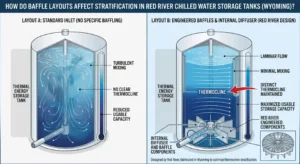
How Do Baffle Layouts Affect Stratification in TES Tanks?
No subpillar set for this blog post.
About Author