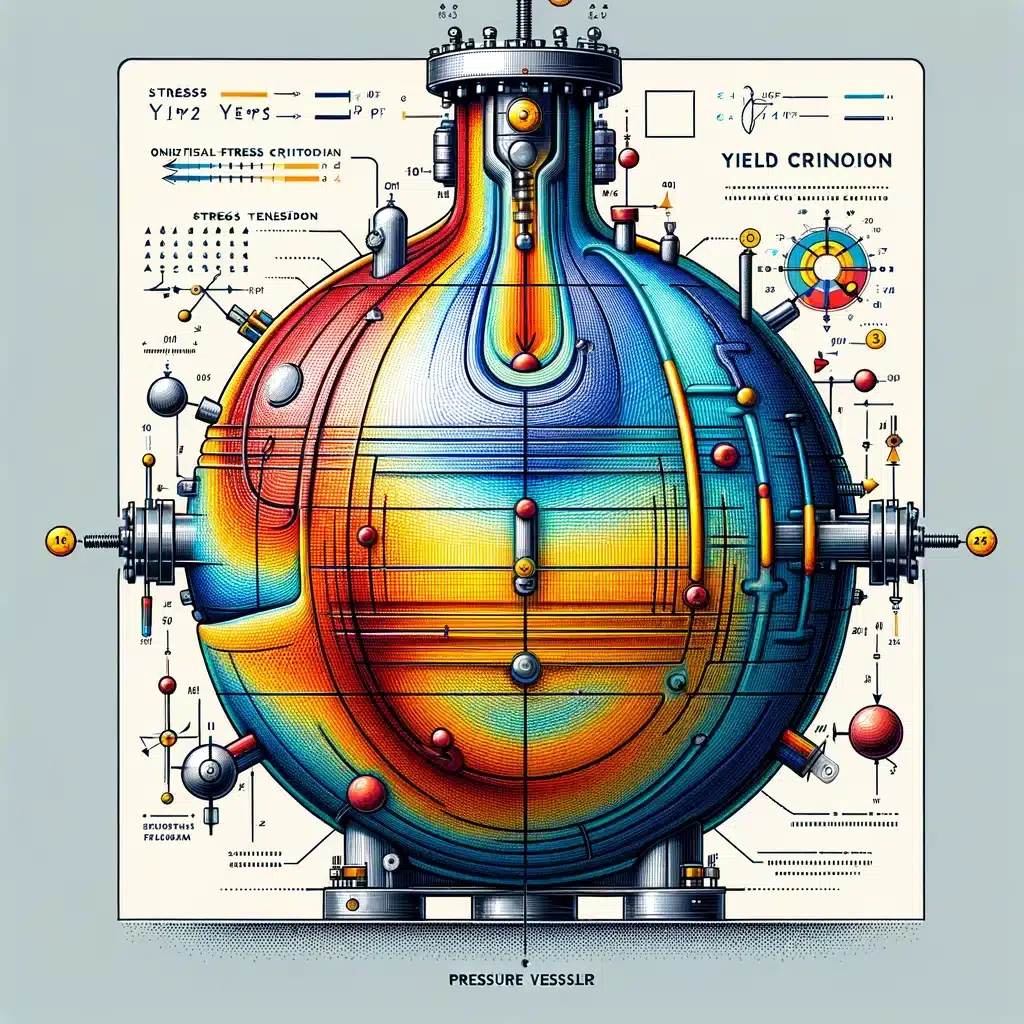
Failure Theories in Pressure Vessel Design Explained

Introduction to Pressure Vessel Design and Failure Theories
At Red River LLC, we understand that the coronary heart of many industries lies in the strong and dependable operation of pressure vessels. A pressure vessel is greater than just a field; it is a meticulously designed system important for holding gases or beverages at a pressure substantially unique from the ambient pressure. Our information in pressure vessel manufacturing stems from deep know-how in their critical function in industries like oil and gasoline, electricity era, and biogas.
The Importance of Failure Theories in Vessel Design
Designing a pressure vessel is not just about adhering to specifications; it’s about integrating safety and efficiency into every fiber of its creation. This is where failure theories come into play. At Red River, we do not simply build vessels; we engineer protection and reliability into them. Understanding and applying the proper failure theories – be it the Maximum Pressure Theory, the Maximum Pressure Theory, or the extra usually used Distortion Energy Theory – is important. These theories assist us predict and preventing capability failures, ensuring the protection and toughness of the vessels we produce.
Overview of Common Pressure Vessel Failure Modes
In our adventure to excellence in pressure vessel fabrication, we have encountered numerous failure modes, every teaching us treasured training. From troubles like corrosion and cloth fatigue to thermal pressures and overpressure eventualities, we have visible and conquered them all. Our method of pressure vessel design isn’t just about meeting the basic criteria; it is approximately exceeding them. We delve into the intricacies of failure modes, equipping our vessels to face up to the toughest situations they might face in industries like commercial/public works, minerals/factors processing, and more.
Exploring the Key Failure Theories
The Maximum Pressure Theory, a cornerstone in pressure vessel layout, posits that failure takes place when the most predominant pressure in a component exceeds the fabric’s ultimate tensile energy. At Red River LLC, we meticulously follow this idea to make certain our vessels face up to the highest pressure ranges they might encounter.
The Maximum Strain Theory
In assessment, the Maximum Pressure Theory shows that failure takes place when the pressure in a cloth exceeds its final pressure capability. This concept publications us in designing vessels that aren’t simply strong but also bendy underneath pressure.
The Maximum Shear Stress Theory
The Maximum Shear Pressure Theory, essential for expertise failure underneath complex loading situations, is used to predict failure because of shear pressures, a common venture in pressure vessel operations.
The Distortion Energy Theory
The Distortion Energy Theory, our primary guide, suggests that failure happens whilst the distortion electricity in keeping with unit volume because of carried out pressure reaches the distortion power of the fabric in yield circumstance. This principle’s comprehensive technique for pressure evaluation is vital for our designs.
Comparison of Failure Theories
Comparing those theories allows us to select the most suitable one for each assignment, ensuring safety and durability in our pressure vessel designs.
Why Distortion Energy Theory is Predominant in Pressure Vessel Design
Distortion Energy Theory, with its holistic view of fabric pressure reaction, is pivotal in our layout technique, ensuring our vessels can withstand various pressure situations without failure.
Advantages of Distortion Energy Theory in Vessel Design
This concept’s capability to appropriately predict failure below complicated loading situations makes it necessary to design secure and reliable pressure vessels.
Case Studies: Success of Distortion Energy Theory in Practice
Our case research exhibits the principle’s effectiveness in actual-world programs, highlighting its position in improving vessel protection and performance.
The Role of Material Selection in Failure Prevention
Material homes notably have an impact on the selection and alertness of failure theories, guiding us in choosing the choicest material for each vessel.
Best Materials for Pressure Vessel Construction
We pick out materials that now not only meet but exceed enterprise requirements, ensuring our vessels’ durability and protection.
Innovations in Material Science for Vessel Safety
Our dedication to innovation in fabric science performs a key function in advancing the safety and efficiency of our pressure vessels.
Design Considerations and Best Practices
We recollect elements like pressure, temperature, and corrosion ability to make sure our vessels meet the best safety requirements.
Incorporating Safety Factors in Design
Safety factors are necessary to our design technique, imparting a further layer of safety and reliability.
Importance of Regular Maintenance and Inspections
We emphasize the need for ordinary upkeep and inspections to ensure the ongoing protection and performance of our vessels.
Advanced Simulation Techniques in Pressure Vessel Design
Computational strategies like Finite Element Analysis (FEA) play a critical function in predicting capacity failure modes, enhancing the safety and reliability of our designs.
Benefits of Finite Element Analysis (FEA)
FEA permits us to simulate and examine pressure and pressure under various situations, ensuring our designs are robust and dependable.
Case Studies: Effective Use of Simulation in Design
Our case studies exhibit the effectiveness of simulation techniques in enhancing the safety and performance of our pressure vessels.
Regulatory Standards and Compliance in Pressure Vessel Design
At Red River LLC, compliance with ASME standards is paramount in our pressure vessel design. These standards are not just suggestions; they are the spine of our design philosophy, ensuring safety, reliability, and exceptional in each vessel we produce.
International Regulations and Compliance
Our know-how extends beyond local requirements to encompass global rules. This international compliance ensures our vessels meet the highest safety and fine benchmarks worldwide.
Ensuring Safety Through Adherence to Standards
Adhering strictly to these standards, we not only follow regulatory requirements but also ensure the maximum safety for all our pressure vessel applications.
Innovations and Future Trends in Pressure Vessel Technology
We’re at the vanguard of integrating emerging technologies in our designs, enhancing performance and safety in our pressure vessels.
The Future of Material Science in Vessel Construction
Innovations in cloth science are continuously integrated into our processes, placing new benchmarks in pressure vessel sturdiness and overall performance.
Predictive Maintenance and IoT in Pressure Vessels
We’re pioneering the use of IoT and predictive protection in our vessels, revolutionizing the manner they are monitored and maintained.
Real-World Applications of Pressure Vessels
Our pressure vessels are pivotal in the oil and gasoline enterprise, acknowledged for their resilience and reliability in harsh environments.
Applications in the Chemical Processing Industry
In the chemical processing enterprise, our vessels play an essential role, designed to meet the industry’s particular and annoying necessities.
Role in Renewable Energy and Storage
Our modern pressure vessel designs also are instrumental within the renewable strength sector, assisting in green energy garages and management.
Common Challenges and Solutions in Pressure Vessel Design
We tackle demanding situations like corrosion and material degradation head-on, employing advanced substances and coatings for longevity.
Overcoming Design Limitations
Our team excels in overcoming design obstacles and handing over custom answers that meet specific industry needs.
Innovative Solutions for Extreme Conditions
We specialize in crafting vessels that withstand intense situations, ensuring overall performance and safety in all environments.
Need a reliable partner?
Frequently Asked Questions About Pressure Vessel Manufacturing
What are the key factors to consider when designing a pressure vessel?
When designing a pressure vessel, numerous vital factors have to be considered to ensure certain safety and capability. These consist of the working pressure and temperature, the kind of cloth to be contained, corrosion considerations, the environment where the vessel might be used, and compliance with industry standards like ASME. Additionally, factors like the vessel’s size, shape, and the particular requirements of the utility play a vital role in the design process.
How do material choices impact the performance and safety of pressure vessels?
Material choice is critical in pressure vessel production as it without delay influences the vessel’s capability to withstand operational pressures, corrosion, and intense temperatures. Materials usually used include carbon steel, stainless steel, and alloys tailor-made for precise applications. The selected cloth needs to align with the vessel’s intended use, thinking about elements like electricity, sturdiness, corrosion resistance, and compatibility with the contents.
What are the most common causes of failure in pressure vessels, and how are they mitigated?
The maximum commonplace causes of failure in pressure vessels encompass corrosion, cloth fatigue, fallacious layout, fallacious operation, and insufficient maintenance. To mitigate these dangers, manufacturers adhere to strict design standards, select appropriate substances, conduct rigorous testing, and enforce ordinary protection and inspection protocols. Advanced manufacturing strategies, like finite detail evaluation, are also used to expect and prevent potential failure modes.
In what ways has technology advanced the design and manufacturing of pressure vessels?
Technological advancements have extensively greater pressure vessel design and production. Innovations consist of the use of computer-aided layout (CAD) for unique modeling, finite detail evaluation (FEA) for pressure analysis, and advanced welding strategies for advanced joint integrity. Additionally, the mixing of IoT and predictive upkeep technologies has revolutionized vessel monitoring and maintenance, main to increased protection and efficiency.
How do environmental and regulatory considerations affect pressure vessel design?
Environmental and regulatory issues are critical in pressure vessel layout. Manufacturers ought to make sure that vessels comply with local and global requirements, such as ASME and PED, which dictate layout, creation, and checking out necessities. Environmental elements like temperature, humidity, and exposure to corrosive elements additionally affect design alternatives, making sure that vessels can operate accurately and successfully in their intended settings.
Related Blog Post
- What is the theory of air vessel?
- Who invented pressure vessels?
- What is the pressure theory in physics?
- What is the thick pressure vessel theory?
- What is the ideal pressure vessel shape?
- How does ASME define a pressure vessel?
- What is one criterion for design of a safe pressure vessel?
- What are the material selection for pressure vessel design?
- What is the minimum design pressure of a pressure vessel?
Need Action?
We are here to make it happen. Request a qoute!
Solutions
In the realm of industrial solutions, Red River emerges as a pioneer, offering a diverse range of custom-engineered products and facilities. Among our specialties is the design and production of Custom/OEM Pressure Vessels, meticulously crafted to meet individual client requirements, ensuring performance under various pressure conditions. Our expertise extends to the domain of prefabrication, where Red River leads with distinction.
The company excels in creating prefabricated facilities, modules, and packages, reinforcing its stance as a forerunner in innovation and quality. This proficiency is further mirrored in their Modular Skids offering, where they provide an array of Modular Fabricated Skid Packages and Packaged equipment. Each piece is tailored to client specifications, underlining their commitment to delivering precision and excellence in every project they undertake.


Related Blog Post
Which Materials Suit Make-Up Water Service?
How Big Should Make-Up Water Tanks Be?
Make-Up Water Tanks: Design, Sizing, and Fabrication
When to Spec Equalization Tanks for Industrial Systems
How Do Equalization Tanks Balance Flow?
No subpillar set for this blog post.
About Author