Firefighting Pressure Vessel units store water, foam, or clean agents under controlled pressure so suppression systems can react fast when a fire risk appears. The right vessel protects people, property, and critical equipment by delivering steady flow and pressure when other supplies fail. Safety depends on good design, correct installation, and disciplined upkeep aligned with recognized codes. RedRiver LLC helps teams spec, build, and maintain vessels that support dependable fire protection in demanding environments.
Firefighting Pressure Vessel in Fire Suppression Systems
Firefighting Pressure Vessel equipment is built to hold and deliver firefighting media at pressures that make immediate suppression possible. In a fire protection setup, the vessel acts like a ready reserve, keeping a reliable supply of agent on standby and distributing it quickly through connected piping and controls. When alarms trigger or operators respond, that stored pressure becomes instant momentum.
A Firefighting Pressure Vessel is not just a tank with pressure in it. It is a safety-critical component that must match the system’s flow needs, agent type, and activation method. When done well, it reinforces every downstream part of the suppression chain. When done poorly, it can limit discharge performance or create hazards that ripple through the entire system.
Where Firefighting Pressure Vessel units are commonly used
Fire suppression needs vary by building type, process risk, and equipment sensitivity. A Firefighting Pressure Vessel can support multiple suppression approaches, including:
- Sprinkler support
- Provides a pressurized reserve to keep sprinklers flowing if primary supply drops.
- Helps stabilize pressure during sudden demand spikes.
- Standpipe support
- Maintains pressure for hose connections at elevated points in tall structures or large facilities.
- Reduces lag time between valve opening and effective discharge.
- Foam suppression
- Stores foam concentrate or pre-mixed solution under pressure.
- Enables quick blending and delivery for flammable-liquid hazards.
- Clean-agent systems
- Holds inert or chemical agents that protect sensitive equipment where water is unsuitable.
- Discharges rapidly through nozzles when detection logic activates.
- Mobile firefighting setups
- Mounted on vehicles or portable skids for rapid response at sites without dependable hydrant supply.
- Supports initial attack while extended resources mobilize.
These uses rely on one shared promise: pressure and agent are available right away, in the right volume, and at the right force.
Why pressure storage matters during an emergency
In fire scenarios, seconds matter. A Firefighting Pressure Vessel keeps suppression media on demand, without waiting for pumps to prime or external supplies to arrive. That immediacy can prevent fire growth, lower heat release, and limit smoke spread. It also supports suppression continuity if water mains are unstable or shut down.
Smart integration with detection and controls
Modern protection systems often pair thermal or smoke detection with automated release. When a Firefighting Pressure Vessel is integrated into this logic, activation can be fully automatic, reducing dependence on manual intervention. The vessel’s pressure stability helps ensure the discharge curve stays within expected performance parameters from the first instant of release.
Insurance and regulatory alignment
Compliance is not only a legal requirement but also a risk-management advantage. Pressure Vessel Safety Standards and Compliance guide how vessels are designed, certified, and maintained so they remain safe throughout their service life. Stakeholders frequently ask:
- What are the safety standards for pressure vessels
- What is ASME code for pressure vessel safety
- How do pressure vessels comply with safety regulations
These are not abstract questions. They affect how inspectors evaluate systems, how insurers assess risk, and how operators plan maintenance windows. Recognized codes exist to reduce failure risk, protect personnel, and ensure vessels behave predictably under stress. The ASME Boiler and Pressure Vessel Code is widely referenced for design and construction rules, including requirements for materials, fabrication, testing, and certification.
RedRiver LLC builds to recognized code expectations and aligns fabrication, documentation, and quality checks to those requirements. For a deeper look at code concepts, RedRiver’s guide on ASME code expectations for inspection and lifecycle safety provides a practical overview of how compliant vessels are approached.
Inspection, Maintenance, and Operating Readiness
Performance depends on more than original build quality. Pressure Vessel Inspection and Maintenance keeps a Firefighting Pressure Vessel dependable over time, especially in harsh environments where corrosion, vibration, or process exposure can degrade components.
Operators and safety teams also ask:
- How often do pressure vessels need to be inspected
- How to inspect a pressure vessel
- What to include in a pressure vessel inspection checklist
Good practice ties inspection intervals to code, duty cycle, and service conditions. Many organizations reference established inspection frameworks such as API vessel inspection guidance, plus local safety rules.
Core inspection focus areas
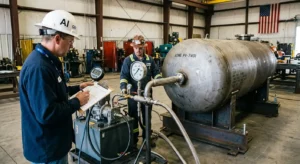
A practical inspection routine for Firefighting Pressure Vessel assets usually includes checks for:
- Shell condition
- Surface corrosion, pitting, or coating breakdown.
- Deformation, dents, or weld anomalies.
- Nozzles and connections
- Thread or flange integrity.
- Signs of leakage or gasket wear.
- Valves and relief devices
- Evidence of sticking, fouling, or set-pressure drift.
- Correct tagging and test records.
- Pressure indication and controls
- Gauge accuracy and readability.
- Proper response from switches or transmitters.
- Agent quality and volume
- Water, foam, or clean-agent condition.
- Confirmed fill level and usable reserve.
- Mounting and support
- Anchor security and skid stability.
- Vibration issues that could fatigue welds.
When inspections uncover issues, repairs must follow code-consistent methods, using qualified procedures and documented acceptance criteria.
Maintenance habits that extend vessel life
Maintenance is the bridge between inspections. For Firefighting Pressure Vessel systems, that often means:
- Cleaning and recoating exposed surfaces where needed.
- Exercising valves to prevent seizure.
- Verifying relief devices remain within certification limits.
- Reviewing operating logs for pressure anomalies.
- Ensuring isolation valves remain accessible and labeled.
If the vessel is part of a skid package, maintenance also includes the connected piping, instrumentation, and structural supports. RedRiver’s resources on skid installation and support best practices and modular skid fabrication can help teams plan stable, serviceable layouts.
Design choices that improve long-term safety
Material selection, weld processes, corrosion allowance, and nozzle layout all influence lifecycle safety. Firefighting Pressure Vessel applications may face intermittent duty that hides degradation until activation, so conservative design and clear documentation matter. RedRiver also shares broader vessel safety context in its overview of fired vessel safety and risks, useful for teams comparing duty types and hazard exposure.
Firefighting Pressure Vessel Conclusion: Reliable Safety Under Pressure
Firefighting Pressure Vessel systems are a critical layer of fire defense, delivering suppression media instantly and predictably when alarms sound. Their value comes from readiness, pressure stability, and code-aligned construction that prevents failures in high-stakes moments. With consistent inspection, disciplined maintenance, and smart integration, these vessels help keep suppression systems responsive and trustworthy.
Work With RedRiver LLC on Firefighting Pressure Vessel Needs
If you’re planning a new suppression system or upgrading existing pressure storage, RedRiver LLC offers design support, code-compliant fabrication, and practical lifecycle guidance. Explore capabilities and connect with the team. RedRiver focuses on building vessels that fit real operational demands, with documentation and craftsmanship that make long-term safety simpler.
For additional background on pressure vessel roles in safety systems, you can also review recognized safety references from ASME and workplace pressure vessel standards summaries.
FAQs
1. What is a Firefighting Pressure Vessel?
A Firefighting Pressure Vessel is a pressure-rated container that stores firefighting media such as water, foam concentrate, or clean agents at controlled pressure so the system can discharge quickly during a fire event.
2. What makes a Firefighting Pressure Vessel different from a regular storage tank?
Unlike atmospheric storage, a Firefighting Pressure Vessel is designed to operate safely at higher internal pressures and is built, tested, and certified to recognized codes with specific requirements for materials, welds, and safety devices.
3. Why is ASME compliance important for Firefighting Pressure Vessel design?
ASME rules define accepted design margins, fabrication methods, inspection expectations, and certification steps that reduce failure risk and support consistent performance under emergency loads.
4. How often should Firefighting Pressure Vessel systems be inspected?
Inspection frequency depends on service severity and local requirements, but many operators align intervals with recognized inspection codes, internal risk reviews, and manufacturer guidance.
5. What are common issues found during Firefighting Pressure Vessel inspections?
Typical findings include corrosion, coating failure, valve leakage, relief device drift, instrumentation faults, and support or vibration problems.
6. Can Firefighting Pressure Vessel units be used with foam systems?
Yes. They can store foam concentrate or pre-mixed solution and support fast blending and discharge for hazards where water alone is insufficient.
7. What happens if a Firefighting Pressure Vessel loses pressure over time?
Pressure loss can reduce discharge speed and range. Causes may include small leaks, valve seat wear, or faulty relief devices, all of which should be addressed during inspection and maintenance.
8. How does RedRiver LLC support Firefighting Pressure Vessel projects?
RedRiver LLC provides design collaboration, compliant fabrication, and documentation packages that help teams install reliable vessels and sustain readiness through the full lifecycle.
Key Takeaways
- Firefighting Pressure Vessel units provide instant, pressurized suppression media for fast response.
- Safety relies on Pressure Vessel Safety Standards and Compliance and disciplined upkeep.
- Pressure Vessel Inspection and Maintenance prevents hidden degradation from undermining performance.
- Code-aligned design and documented repairs keep vessels reliable under emergency stress.
- RedRiver LLC offers compliant fabrication and practical support at https://www.redriver.team/.
Related Blog Post
Condensate Tanks: Types, Fabrication, and ASME Code
Which Tests Validate Deaeration in Pressure Systems?
Equalization Tanks: Design, Sizing, and Fabrication
What Are Thermal Storage Testing Standards for TES Vessels?
What Hydro Tests Are Required for Pressure Vessels?
No subpillar set for this blog post.
About Author