Ethylene glycol corrosiveness is a major concern in systems that rely on glycol for heat transfer or freeze protection. While pure ethylene glycol is not aggressively corrosive, it can become corrosive when mixed with water, exposed to contaminants, or subjected to heat. This blog explains what increases ethylene glycol corrosiveness, how it affects metals, and what steps can prevent system damage. It also highlights why regular monitoring and proper inhibitor use are essential to maintaining equipment reliability.
Understanding Ethylene Glycol Corrosiveness in Industrial Applications
Ethylene glycol (EG) is a colorless, odorless liquid with a sweet taste. Chemically identified as C₂H₆O₂, it features a high boiling point and a low freezing point, making it ideal for demanding industrial environments. These properties are why ethylene glycol is widely used in thermal systems, including cooling loops found in industrial pressure vessels and heat-transfer equipment.
In industries where temperature control is critical such as oil and gas processing, chemical manufacturing, and power generation ethylene glycol plays a vital role in protecting equipment from freezing, overheating, and thermal shock. Systems such as pressure vessels and modular skids often rely on glycol-based fluids for stable operation.
Common Uses of Ethylene Glycol
Ethylene glycol is most commonly used as an antifreeze and heat-transfer fluid in closed-loop cooling and heating systems. These systems are frequently integrated into custom pressure vessel fabrication projects and skid-mounted process equipment.
Beyond thermal regulation, ethylene glycol is used in:
Plastic and resin manufacturing
Paints and coatings
Cosmetics and pharmaceuticals
Natural gas dehydration and separation systems
In gas processing facilities, ethylene glycol is often paired with separator technology to remove water vapor and prevent hydrate formation. This function overlaps closely with moisture-control solutions like desiccant dryers and adsorption air dryers used in industrial compressed-air systems.
Safety Considerations for Ethylene Glycol
While ethylene glycol is extremely useful, it must be handled responsibly. The substance is toxic if ingested and can cause serious health complications. Proper storage, labeling, and handling procedures are essential especially in facilities that fabricate or maintain ASME-certified pressure vessels.
Facilities should also follow established safety and compliance guidelines, particularly when ethylene glycol circulates through high-temperature equipment such as industrial pressure tanks or heat exchangers.
Ethylene Glycol and Corrosion
How Corrosive is Ethylene Glycol?
Ethylene glycol itself is not inherently corrosive. However, under specific operating conditions, it can contribute to corrosion mechanisms. Contaminants, oxygen exposure, elevated temperatures, and water dilution can all increase corrosion risks especially in carbon steel systems commonly used in pressure vessel manufacturing.
If corrosion is not addressed, it can lead to failure modes commonly discussed in types of failure in pressure vessels, including pitting, thinning, and stress corrosion cracking.
Corrosive Properties of Ethylene Glycol
When ethylene glycol mixes with water, oxidation and thermal degradation may form acidic byproducts. These acids accelerate corrosion on internal metal surfaces, particularly in systems lacking proper inhibitors or monitoring programs.
This corrosion behavior is especially concerning in enclosed systems like air receiver tanks, air receiver vessels, and other sealed components where moisture accumulation is already a known risk. Similar concerns are outlined in discussions about water presence in pressure vessels.
Factors Influencing Ethylene Glycol Corrosiveness
Several variables determine how aggressive ethylene glycol becomes in an industrial system:
Glycol concentration and dilution ratio
Operating temperature and pressure
Oxygen exposure
Presence of chlorides or other contaminants
Material selection during fabrication
Choosing corrosion-resistant materials is essential, especially for equipment designed using guidance from choosing the right material for pressure vessel fabrication and four common materials used in metal fabrication.
Ethylene Glycol and Metal Corrosion
Impact on Steel and Iron
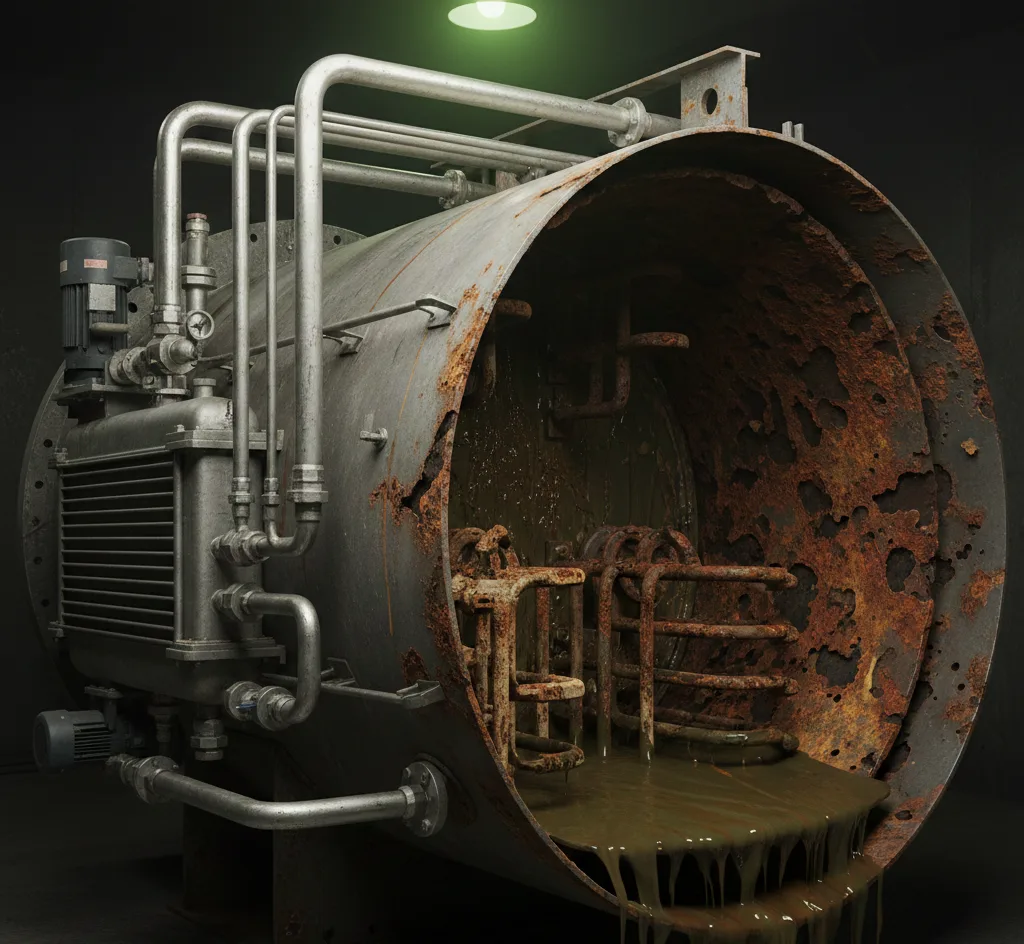
Steel and iron are particularly susceptible to corrosion in glycol systems that are poorly maintained. Over time, oxidation can cause rust formation, wall thinning, and reduced mechanical integrity.
Routine inspections like those discussed in pressure vessel inspection best practices combined with corrosion inhibitors can significantly extend equipment life and improve reliability.
Corrosion of Aluminum by means of Ethylene Glycol
Does ethylene glycol corrode aluminum? Yes. Aluminum alloys are vulnerable, especially at high temperatures or when glycol degradation lowers pH levels. This exposure often leads to pitting corrosion, which can compromise structural strength in heat exchangers and lightweight vessel components.
Understanding material compatibility is critical in projects involving metal fabrication processes and custom prefabrication.
Why Ethylene Glycol Corrosiveness Must Be Managed Carefully
Ethylene glycol corrosiveness is an important factor when maintaining coolant systems, heat exchangers, industrial equipment, and other glycol-based applications. When left unchecked, ethylene glycol corrosiveness causes pitting, rust formation, reduced efficiency, and premature equipment failure. Understanding what triggers corrosion and how to prevent it ensures safer operations, longer equipment lifespan, and more reliable performance.
Need a reliable partner?
Red River specializes in the design and manufacturing of pressure vessels. We also fabricate related items such as prefabricated spools and skid packages.
Reach Out to us today and experience the Red River difference. Where American Made and American Values come together, we care more.
Frequently Asked Questions
1. Does ethylene glycol always cause corrosion?
Ethylene glycol alone is not aggressively corrosive, but ethylene glycol corrosiveness increases when water, oxygen, heat, or contaminants enter the system.
2. What metals are most affected by ethylene glycol corrosiveness?
Steel, iron, aluminum, copper, and brass are vulnerable, especially when inhibitors are depleted or glycol is poorly maintained.
3. How can I reduce ethylene glycol corrosiveness in my system?
Maintaining the proper glycol ratio, monitoring pH, using corrosion inhibitors, and preventing contamination are the most effective strategies.
4. Can degraded glycol be restored?
Degraded glycol may sometimes be filtered or reconditioned, but severe cases require replacement to avoid corrosive damage.
5. What causes ethylene glycol to become more corrosive?
Heat, oxygen exposure, water dilution, impurities, and chemical breakdown all contribute to increased ethylene glycol corrosiveness.
6. How often should glycol be tested?
Most systems benefit from routine testing during scheduled maintenance to track glycol concentration, pH, and inhibitor levels.
7. Is aluminum more sensitive to ethylene glycol corrosiveness?
Yes, aluminum corrodes quickly under acidic glycol conditions, making inhibitor protection crucial.
8. What happens if ethylene glycol corrosiveness is ignored?
Ignoring ethylene glycol corrosiveness leads to leaks, scaling, blocked passages, decreased efficiency, and costly equipment failure.
Key Takeaways
- Ethylene glycol corrosiveness increases when glycol is diluted, contaminated, or overheated.
- Metals such as aluminum, steel, and copper are highly vulnerable to corrosive glycol conditions.
- Regular testing, proper inhibitors, and correct glycol ratios dramatically reduce corrosion risk.
- Early detection of ethylene glycol corrosiveness prevents equipment failure and improves system longevity.
- Engineered solutions from RedRiver LLC support safer, longer-lasting system performance.
Related Blog Post
Which Materials Suit Make-Up Water Service?
How Big Should Make-Up Water Tanks Be?
Make-Up Water Tanks: Design, Sizing, and Fabrication
When to Spec Equalization Tanks for Industrial Systems