API and ASME standards are both vital for ensuring safety and compliance, but they serve different industries. API focuses on oil and gas, providing streamlined standards for equipment like valves and pipelines, while ASME covers a broader spectrum, including mechanical and nuclear industries. This comparison helps engineers choose the right standard based on their project’s specific needs.
In-Depth Comparison Overview
In engineering, manufacturing, and construction, industry standards are foundational for ensuring safety, quality, and regulatory compliance. Two prominent organizations stand out: the American Petroleum Institute (API) and the American Society of Mechanical Engineers (ASME). While both play vital roles, their focus, scope, and application differ significantly.
What Is API? Focus & Applications
API standards are tailored specifically for the oil and gas industry, dating back to 1919. They oversee equipment used in drilling, pipelines, valves, and storage tanks, covering design, materials, inspection, testing, and certification, such as API 510 for pressure vessel inspection or API Q1 for quality management systems.
What Is ASME? Broad Context & Codes
ASME develops standards across mechanical, nuclear, pipeline, and elevator systems. With over 600 standards covering pressure vessels, boiler codes, piping, and valves, ASME’s reach is far broader. The most comprehensive is the ASME Boiler & Pressure Vessel Code (BPVC), used globally for boiler and pressure vessel safety.
Scope & Specialization: API vs ASME
- Industry focus: API serves oil & gas; ASME addresses mechanical, nuclear, and beyond.
- Standard breadth: API’s standards are highly specialized, whereas ASME covers general and varied applications.
Learn more in our guide on Distinguishing Between ASME and ANSI Ratings.
Technical Design: Complexity & Detail
ASME codes (like BPVC Section VIII) demand detailed geometrical analysis, material properties, stress assessments, and corrosion allowances. In contrast, API standards such as API 650 often use simplified calculations. For valves, API 600 includes stringent material and testing requirements, while ASME B16.34 covers general-use valves.
Certification & Recognition
ASME certifications (U, S, and R stamps) are widely recognized by regulatory authorities. API certifications focus on specific industry roles, such as inspectors and manufacturers. Learn more about ASME pressure testing standards.
Global Standards & Equivalences
ASME BPVC is globally adopted and often legally required. It is comparable to Europe’s PED (Pressure Equipment Directive), although PED doesn’t require prior stamping like ASME.
For ASME code details, see our overview of the ASME Boiler and Pressure Vessel Code (B31).
Ensuring Safety and Compliance with the Right Standard
Your understanding of API vs ASME standards provides essential clarity for professionals across industries. Whether you’re selecting valves, designing pressure vessels, or seeking compliance, choosing the right standard API’s industry specificity or ASME’s comprehensive codes ensures safety, reliability, and acceptance in your engineering projects.
Your understanding of API vs ASME standards provides essential clarity for professionals across industries. Whether you’re selecting valves, designing pressure vessels, or seeking compliance, choosing the right standard API’s industry specificity or ASME’s comprehensive codes ensures safety, reliability, and acceptance in your engineering projects.
Choose the Right Standard for Your Engineering Project
Choosing the right standard for your engineering project is essential to ensuring safety and compliance. Whether you need the industry-specific focus of API for oil and gas or the comprehensive, globally recognized codes of ASME, selecting the appropriate standard is key. Reach out to our team for expert guidance in navigating these standards, ensuring your project meets all regulatory requirements and achieves success.
Frequently Asked Questions
1. Why choose API standards over ASME?
API standards are favored in oil & gas for their targeted testing, material, and design requirements suited to extreme conditions.
2. What is an ASME U Stamp?
A certification for manufacturers, confirming adherence to ASME BPVC requirements for pressure vessel fabrication.
3. Does Europe accept ASME codes?
Yes, ASME BPVC is recognized worldwide. However, the PED applies regionally and doesn’t require stamping like ASME.
4. How often is the ASME BPVC updated?
Every two years, new editions are released to reflect technological and regulatory changes.
Key Takeaways
API: Oil & gas–focused, concise, and industry-specific.
ASME: Broad, detailed, globally recognized, especially BPVC.
Design Rigour: ASME often demands more technical depth; API favors efficiency in its domain.
Compliance: ASME stamping carries strong regulatory weight; API is sector-validated.
Navigation: Use internal links for deeper exploration and external references for credibility.
Related Blog Post
Can Condensate Storage Improve Reliability?
Where Do Condensate Tanks Fit in a Steam System?
Which Nozzles Simplify Maintenance on Pressure Vessels?
How to Vent Condensate Tanks in Steam Systems
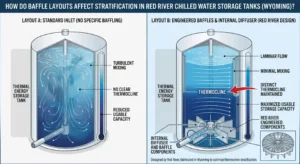
How Do Baffle Layouts Affect Stratification in TES Tanks?
No subpillar set for this blog post.
About Author