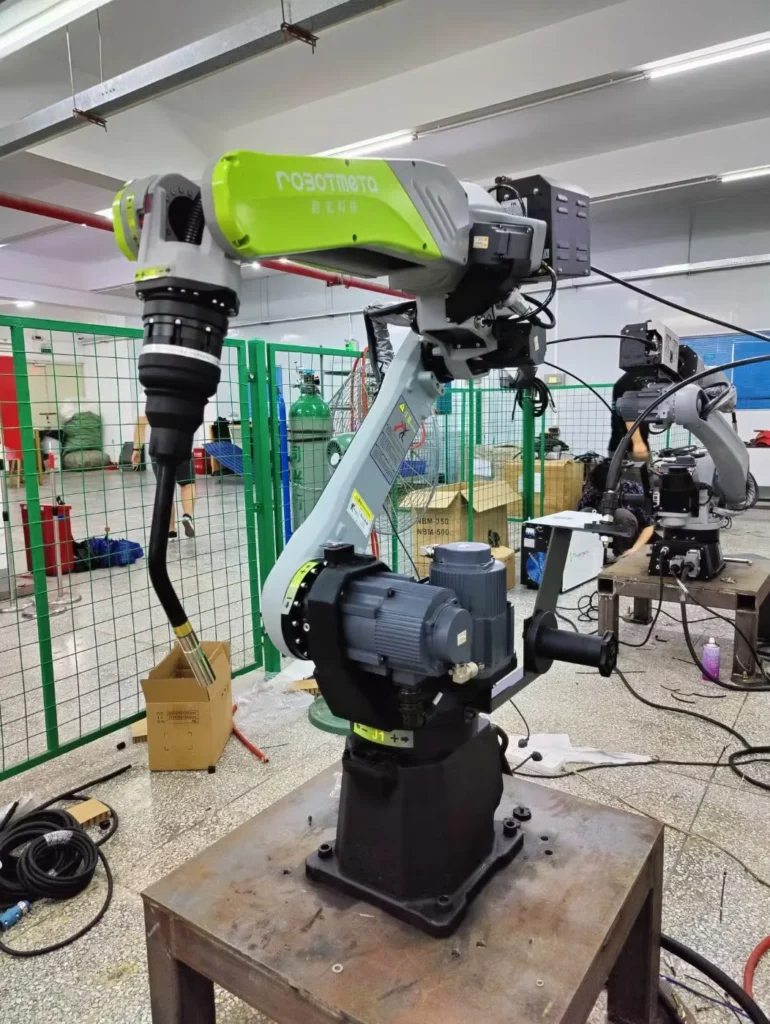
Robotic welding implementation at Red River has significantly improved productivity, quality, and workforce efficiency. By combining automation with skilled labor, the company reduced defects, increased capacity, and created new technical roles all while achieving ROI in under 18 months.
Robotic Welding Implementation: Key Steps and Best Practices
Traditional manual welding, while essential and highly skilled, presents inherent challenges in large-scale manufacturing environments. Consistency across long welds, welder fatigue from repetitive operations, and the physical demands of certain welding positions all affect production. To address these issues, robotic welding has become an increasingly valuable solution, especially in industries focused on high-integrity fabrication, such as pressure vessels.
Compounding the challenge is the skilled labor shortage. The American Welding Society projects a deficit of nearly 375,000 welders by 2026, a trend also explored in Red River’s discussion on labor shortages and lead times.
The Manufacturing Challenge: Why Red River Needed Automation
Like many U.S. manufacturers, Red River LLC faced mounting production pressures. Welding bottlenecks were extending lead times for ASME-certified pressure vessels and limiting throughput across complex assemblies such as modular skids and prefabricated systems.
As demand increased across industries, including energy and compressed air systems, outlined in Red River’s solutions overview, it became clear that automation would be required to sustain growth without sacrificing quality or safety.
Planning the Robotic Welding Implementation
Evaluating Production Requirements and Automation Opportunities
The robotic welding implementation journey began with a comprehensive evaluation of Red River’s fabrication processes, aligned with best practices described in the pressure vessel manufacturing process and broader metal fabrication workflows.
Time studies, defect tracking, and weld-position analysis similar to those discussed in welding positions explained, revealed that nearly 60% of welds were repetitive and well-suited for automation. More complex geometries, such as those found in separator vessels, continued to require skilled manual welders.
Selecting the Right Robotic Systems for Pressure Vessel Fabrication
System selection focused heavily on compliance, flexibility, and heavy-fabrication capability. This decision aligned with Red River’s commitment to the standards discussed in:
Advanced seam-tracking and parameter logging were essential for maintaining weld integrity across long circumferential and longitudinal seams.
Preparing the Manufacturing Floor for Integration
Integrating robotic welding required more than equipment installation. A 5,000-square-foot area of the production floor was redesigned to support improved material flow, echoing principles outlined in fabrication process optimization.
Key upgrades included:
Reinforced foundations for robotic cells
Shielding gas distribution optimized for pressure vessel welding
Safety barriers consistent with industrial welding PPE guidance
Networked systems supporting quality documentation
Training Personnel for the Transition to Automated Welding
People were central to the success of the robotic welding implementation. Experienced welders transitioned into automation roles, building on skills discussed in mastering the art of welding and career pathways outlined in a day in the life of a Welder.
Manufacturer-led training was paired with internal SOPs aligned with Red River’s broader capabilities and long-term workforce development goals highlighted on their careers page.
The Implementation Process: From Installation to Full Production
Initial Setup and Calibration Phase
During installation, baseline weld procedures were established for material thicknesses and joint types commonly used in industrial pressure vessels. These parameters were documented to support traceability and quality assurance, consistent with Red River’s approach to pressure vessel inspection.
Pilot Testing Period and Refinements
Pilot runs focused on standard components such as air receiver vessels and cylindrical shells. Feedback from these trials led to:
Improved fixturing consistency
Optimized travel speeds and heat input
Enhanced gas shielding for thicker joints
Improved upstream part preparation
Scaling to Full Production Capacity
With refinements validated, robotic cells were gradually scaled to support production volumes across pressure vessels, skids, and related assemblies described in metal fabrications.
Within four months, the robotic welding implementation achieved 70% of the targeted output, with continued growth supported by standardized procedures and troubleshooting guides.
Continuous Improvement Initiatives
From the beginning, we established that robotic welding implementation was not a one-time event but an ongoing process of refinement. We created a dedicated continuous improvement team that meets weekly to review performance metrics, identify enhancement opportunities, and robotic welding implementation incremental improvements to our automated processes.
Measuring Success: Production Metrics Before and After
Productivity Improvements
The impact of our robotic welding implementation has been substantial across multiple performance indicators:
- 35% overall increase in welding productivity for applicable components
- 42% reduction in production lead time for standard pressure vessels
- 28% improvement in overall equipment effectiveness (OEE)
- Capacity to handle 20% production volume increase without additional labor
Quality Control Outcomes
Quality improvements have been equally impressive:
- 65% reduction in weld defect rates on automated applications
- 89% decrease in rework requirements for standard components
- Enhanced consistency in critical weld parameters
- Improved documentation through automated parameter recording
Return on Investment Analysis
Our financial analysis confirmed the solid business case for automation:
- Initial capital investment was recovered within 18 months
- 24% reduction in cost per weld for automated applications
- Decreased overtime expenses by redistributing labor to day shifts
- Reduced consumable usage through optimized robotic welding implementation parameters
Employee Adaptation and Skill Development
Perhaps most gratifying has been witnessing our team’s adaptation to the new technology:
- Six welders successfully transitioned to robot operator/programmer roles
- Enhanced job satisfaction through reduced physical strain
- Creation of new technical career paths within our organization
- Improved ability to focus skilled welders on complex, high-value tasks
Robotic Welding Implementation: Red River’s Journey to Enhanced Productivity
Red River’s strategic adoption of robotic welding implementation technology represents a transformative milestone in their manufacturing evolution. The robotic welding implementation has not only enhanced efficiency but also ensured precision in every weld, significantly contributing to the superior quality of their fabricated products. The benefits have been multifaceted and substantial. By automating critical welding processes, Red River has dramatically reduced workplace hazards, with robotic systems now handling dangerous tasks that previously posed risks to human workers
Need a reliable partner?
Red River specializes in the design and manufacturing of pressure vessels. We also fabricate related items such as prefabricated spools and skid packages.
Reach out to us today and experience the Red River difference. Where American-made products and American Values come together, we care more.
Frequently Asked Questions
1. How long did Red River’s robotic welding implementation take from planning to full operation?
The complete robotic welding implementation process took approximately 9 months, with 3 months for planning and selection, 2 months for installation and initial programming, and 4 months of graduated production scaling and optimization.
2. What types of welds were successfully automated at the Red River facility?
Red River successfully automated circumferential seam welds on pressure vessel shells, longitudinal seams on vessel sections, and repetitive attachment welds for nozzles and supports where access permitted robotic tooling.
3. How did Red River address the challenge of programming complex weld paths?
The robotic welding implementation team utilized a combination of offline programming software for standard components and teach-pendant programming for more complex applications, with master programs that could be modified for similar part families.
4. What was the role of Red River’s manual welders after automation?
Manual welders transitioned to more specialized roles handling complex joints unsuitable for automation, performing quality verification, and developing robotic welding implementation procedures. Several welders received training to become robot operators and programmers.
5. How did Red River calculate the return on investment for the robotic welding cells?
ROI calculations incorporated productivity increases, reduced rework, decreased overtime costs, and the ability to reassign skilled welders to higher-value tasks. The system achieved full ROI within 18 months of implementation.
6. What unexpected challenges emerged during the robotic welding implementation process?
Unforeseen challenges included longer-than-anticipated programming time for complex parts, fixturing modifications required for consistent part positioning, and integration with existing material handling systems.
Key Takeaways
- Robotic welding implementation complements rather than replaces skilled manual welders
- Initial programming investment delivers long-term productivity gains
- Employee training and involvement significantly impact robotic welding implementation success
- Continuous improvement processes maximize automation benefits over time
- Quality improvements can exceed productivity gains in overall value
Related Blog Post
Which Materials Suit Make-Up Water Service?
How Big Should Make-Up Water Tanks Be?
Make-Up Water Tanks: Design, Sizing, and Fabrication
When to Spec Equalization Tanks for Industrial Systems
How Do Equalization Tanks Balance Flow?
- Friction Stir Welding in Thick-Wall Vessel Construction: A Modern Manufacturing Breakthrough
- Electron Beam Welding: Precision and Penetration for High-Strength Steels
- Mastering TIG Welding Principles for High-Pressure Vessel Seams
- Automated vs Manual Welding: Balancing Speed, Quality, and Cost
- Hybrid Laser-MIG Welding: Revolutionizing Industrial Manufacturing Productivity