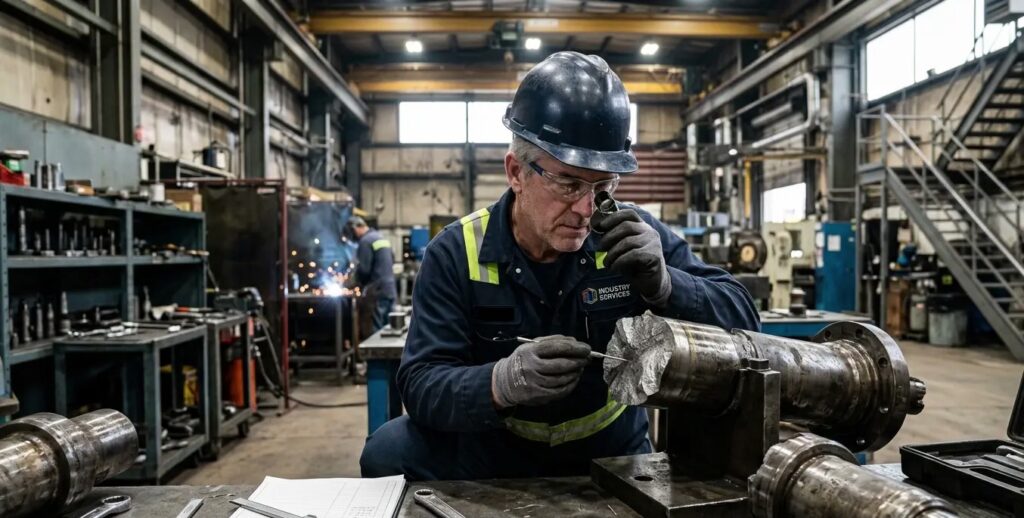
Unexpected cracking, stretching, or complete material separation can shut down equipment and create serious safety risks. This guide is built for engineers, facility managers, operators, and welders who need to understand why tensile failure happens and how to reduce the risk in real-world systems.
You’ll learn how stress strain behavior affects materials, what tensile strength failure looks like in practice, how fracture mechanics is used during investigations, and which design or operational issues commonly lead to failure during tensile testing or field use.
What Tensile Failure Means in Engineering
Tensile failure happens when a material is pulled beyond its ability to resist stress. Once the internal structure can no longer withstand the applied load, the material permanently deforms or fractures.
In industrial environments, this can affect pipelines, pressure vessels, support beams, fasteners, lifting equipment, and rotating machinery. The failure may happen gradually through elongation or suddenly through brittle cracking, depending on the material and operating conditions.
Engineers study stress-strain relationships to predict how materials behave before failure occurs. The shape of the stress-strain curve often reveals whether a component will fail in a ductile or brittle manner.
For a broader overview of industrial breakdown patterns, Red River Team also explains the different common types of material failure frequently seen in engineering systems.
How Stress-Strain Behavior Leads to Material Failure
Every material reacts differently when tension is applied. Some stretch significantly before breaking, while others fracture with little warning.
The stress-strain curve helps engineers understand these behaviors by measuring how a material responds under increasing load. Key stages include elastic deformation, yield strength, strain hardening, and ultimate tensile strength.
Elastic and Plastic Deformation
Elastic deformation occurs when a material temporarily stretches or compresses under an applied load but returns to its original shape once the load is removed. This type of deformation happens when the stress on the material is within the material’s elastic limit, meaning the internal molecular structure is not permanently altered. In this region, the material behaves like a spring, where the amount of deformation is directly proportional to the applied stress, as described by Hooke’s Law.
Once the applied stress exceeds the material’s yield point, the material undergoes plastic deformation. This is a point where the material no longer behaves elastically, and the deformation becomes irreversible. Plastic deformation involves the movement of dislocations within the material’s crystal structure, causing permanent changes in shape.
Plastic deformation weakens the structural integrity of the material over time because it leads to the gradual development of microscopic cracks and internal defects. As the material is subjected to more loads, these defects accumulate, causing the material to lose its ability to carry stress effectively.
In repeated loading cycles, such as those experienced by components like shafts, beams, and pressure vessels, fatigue damage can accumulate. Over time, the material becomes more susceptible to fracture, particularly near stress concentration points, areas where the material experiences higher-than-average stress. These stress concentration points can occur near sharp corners, welds, threaded transitions, or areas with surface imperfections.
Ultimate Tensile Strength and Fracture Point
Ultimate tensile strength represents the maximum stress a material can handle before necking begins. After this stage, the cross-sectional area decreases rapidly until fracture occurs.
In ductile metals, necking is usually visible before failure. Brittle materials often fracture suddenly without significant deformation.
Common Causes of Tensile Failure
Most tensile failures are not caused by a single issue. Failures typically result from multiple mechanical, environmental, and operational factors interacting over time. Many of these issues fall under broader material failure mechanisms that engineers evaluate during root cause investigations.
Excessive Applied Load
Overloading remains one of the most common causes of tensile failure. Equipment designed for a specific load range may fail when operators exceed rated capacity or when unexpected forces develop during operation.
This is common in lifting systems, pressurized components, and support structures exposed to changing operational demands.
Material Defects and Manufacturing Errors
Internal voids, inclusions, poor weld penetration, and inconsistent heat treatment can weaken a component before it enters service.
A tensile test may reveal a premature fracture caused by hidden manufacturing flaws. Even small defects can grow into major cracks under repeated tensile loading.
Corrosion and Environmental Exposure
Corrosion gradually reduces the cross-sectional thickness of materials and creates localized weak points, making them more susceptible to failure. This is particularly problematic in industrial systems exposed to harsh environments such as moisture, chemicals, or salt, which can significantly accelerate the process. In these environments, the material’s ability to resist external forces becomes compromised over time.
When tensile stress is applied to a material that is already corroded, the damage is amplified, causing the material to crack more easily. The combination of tensile loading and corrosion damage creates an environment where cracks can grow more rapidly, even under normal operating conditions. This interaction between stress and corrosion is a major cause of premature failure in many industrial components.
One of the most dangerous forms of this phenomenon is stress corrosion cracking (SCC). SCC occurs when a material is exposed to both tensile stress and a corrosive environment, leading to the initiation of cracks. What makes SCC particularly hazardous is that the cracks can propagate beneath the surface of the material before any visible signs of damage appear on the surface. This makes it extremely difficult to detect until failure occurs, which could potentially lead to catastrophic structural breakdowns.
In pressure vessels, pipelines, and other critical infrastructure, SCC can lead to sudden and unexpected failure, making it essential for engineers to factor in corrosion resistance and implement regular maintenance to mitigate its impact. This can include the use of corrosion-resistant materials, protective coatings, and regular inspection routines to identify and address cracks before they propagate further.
Poor Design Geometry
Sharp corners, threaded transitions, and abrupt changes in the cross-sectional area of a component create stress concentration zones, where the material experiences significantly higher localized stress than in the surrounding areas. These zones occur because the load distribution is disrupted at these points, causing the material to experience stress that is much greater than the average stress applied to the rest of the component. As a result, these areas become vulnerable to crack initiation, fatigue, and ultimately failure.
When a component undergoes loading, the material naturally distributes stress across its surface. However, sharp corners, abrupt transitions, and sharp changes in thickness or geometry act as stress risers, amplifying the stress at those locations. For instance, a sharp corner or a threaded transition causes a concentration of forces at that point, which can lead to the formation of micro-cracks, especially under repeated loading conditions. These cracks can then propagate over time, weakening the overall structure.
To mitigate the risk of failure caused by stress concentration, engineers often redesign these areas by replacing sharp corners with smooth radii or adding reinforcement. By introducing smooth radii at transition points, the tensile load is distributed more evenly across the material, which reduces localized stress concentrations. Additionally, reinforcements such as gussets or fillets are added to these areas to strengthen them and further help in redistributing the applied forces. These design changes improve the material’s ability to withstand stress and reduce the likelihood of premature failure, particularly in critical components such as structural supports, pressure vessels, and machinery that are subjected to high mechanical loads.
In some cases, engineers also employ advanced techniques like finite element analysis (FEA) to simulate and analyze the stress distribution throughout a component. FEA allows them to precisely identify stress concentration points and optimize the design to eliminate or reduce these critical areas, ensuring better performance and reliability of the system in service.
Ductile vs Brittle Tensile Failure
The appearance of a fracture surface provides valuable information during failure analysis. Understanding whether the material failed in a ductile or brittle mode helps determine the root cause.
Red River Team also discusses various forms of ductile and brittle mechanical failure that affect industrial components under different loading conditions.
Ductile Fracture Characteristics
Ductile failure typically includes visible deformation before the material separates, providing a valuable warning sign for operators. Unlike brittle failure, where cracks can propagate rapidly with little to no deformation, ductile failure occurs gradually. As the material is subjected to stress, it begins to stretch and elongate, with the area of deformation becoming more pronounced as the load increases. The material eventually reaches the necking point, where the cross-sectional area decreases significantly, and the material continues to absorb substantial amounts of energy. This process of necking indicates that the material has surpassed its elastic limit, and the failure is imminent.
In many cases, the fracture surface of a ductile failure exhibits a characteristic cup-and-cone appearance. This feature is a clear indication of the material’s plastic deformation before the final fracture. The central region of the fracture surface often shows a conical shape, while the edges of the fracture have a cup-like shape. This type of failure offers more advanced notice of impending rupture, allowing operators to detect the deformation early enough to take corrective actions or schedule maintenance. Ductile failure, therefore, provides more time to assess the integrity of the component and prevent sudden, catastrophic breakdowns, making it more predictable and manageable compared to brittle failure.
Additionally, because ductile failure involves significant plastic deformation, operators may notice gradual changes in the component’s appearance, such as elongation, surface cracking, or distortion, giving further indication that the material is under stress and nearing failure.
Brittle Fracture Characteristics
Brittle fracture occurs with little or no plastic deformation. Cracks travel rapidly through the material once initiated.
Cold temperatures, high strain rates, and material impurities increase the likelihood of brittle failure. In pressure-containing systems, brittle fractures can become catastrophic within seconds.
How Engineers Analyze Tensile Test Failure
A failed tensile test provides important data about material quality and mechanical behavior. Engineers use laboratory testing and fracture mechanics principles to identify why the specimen failed.
These material failure analysis techniques help investigators identify whether the root cause originated from overload, corrosion, fatigue, or manufacturing defects.
Reviewing the Stress-Strain Curve
The stress-strain graph reveals whether the material behaved as expected during loading. Sudden drops in stress may indicate brittle fracture or internal defects.
Low elongation values can suggest improper heat treatment or reduced ductility. Engineers compare these results against industry specifications and material standards.
Examining the Fracture Surface
Microscopic analysis helps determine how the crack initiated and propagated. Features such as dimples, cleavage patterns, and beach marks point toward specific failure mechanisms.
Scanning electron microscopy is often used in high-risk industries where precise root cause identification is critical.
Checking for Environmental Damage
Investigators inspect the failed component for corrosion, thermal exposure, fatigue damage, or contamination.
A tensile test failure may not originate from pure overload alone. Chemical attack, hydrogen embrittlement, or prolonged vibration exposure can weaken the material before testing even begins.
The Hidden Role of Residual Stress in Tensile Failure
Many high-ranking articles focus only on external loading, but residual stress is often a major contributor to unexpected fracture.
Residual stress remains locked inside a material after welding, machining, bending, or heat treatment. Even when no external force is applied, these internal stresses may already push parts of the material close to failure limits.
In welded pressure vessels, tensile residual stress near the heat-affected zone can combine with operational loading to accelerate crack growth. Engineers sometimes discover failures in components operating below their design load because hidden residual stress reduced the available safety margin.
Stress-relief heat treatment, controlled cooling rates, and proper weld sequencing help minimize this issue. Fracture mechanics evaluations often include residual stress calculations when investigating premature cracking.
This factor is frequently overlooked during routine inspections because the component may appear structurally sound from the outside.
Industries Where Tensile Failure Creates Serious Risk
Some industries face significantly higher exposure to tensile loading and fracture hazards because of operating pressure, temperature, or cyclic loading conditions.
Many facilities investigate recurring pressure vessel failure causes when evaluating long-term reliability and inspection planning.
Oil and Gas Facilities
Pipelines, pressure vessels, and drilling components experience constant tensile and cyclic stress. Corrosion, thermal expansion, and vibration increase failure risk over time.
Red River Team frequently works with industrial systems where material reliability directly affects operational continuity and safety planning.
Manufacturing Plants
Rotating equipment, conveyors, structural supports, and lifting assemblies can develop fatigue cracks under repeated loading cycles.
Failure analysis helps maintenance teams identify weak points before production downtime occurs.
Construction and Infrastructure
Bridges, support frames, anchors, and tension cables rely on predictable tensile behavior to maintain structural integrity.
Improper material selection or environmental exposure can reduce load capacity long before visible damage appears.
Preventing Tensile Strength Failure in Industrial Systems
Prevention starts long before a component enters service. Effective prevention strategies often overlap with broader pressure vessel failure prevention programs used throughout industrial facilities.
Material selection, design review, inspection planning, and operational control all influence long-term reliability.
Use Materials Rated for Actual Conditions
Selecting materials based on real operating conditions, such as load, environment, and service life, is crucial for ensuring reliable performance. Materials must withstand high temperatures, corrosive chemicals, and dynamic loads.
Common Materials for Specific Conditions
High Temperatures
Stainless Steel (304, 316): Resists oxidation and corrosion.
Nickel Alloys (Inconel, Hastelloy): Ideal for extreme heat environments.
Titanium Alloys: Used in aerospace and chemical processing for high-temperature strength.
Corrosive Chemicals
Stainless Steel (316L): Highly resistant to corrosion in chemicals.
Nickel Alloys: Offer excellent chemical resistance.
Plastics (PTFE, PFA): Used for their resistance to chemicals in harsh environments.
Dynamic Loading
Carbon Steel (A36, A992): Common for structural supports and machinery.
Alloy Steel (4140, 4340): High strength for components under dynamic loads.
Aluminum Alloys (6061, 7075): Light and strong for aerospace and dynamic loading.
Wear Resistance
Hardox Steel: Used in heavy machinery for wear resistance.
Chromium Carbide Clad Plates: For high abrasion resistance.
Ceramics (Alumina, Silicon Carbide): Used in highly abrasive environments.
Protective Coatings
Galvanization: Zinc coating for corrosion protection.
Epoxy Coatings: Used in piping and tanks for corrosion protection.
Ceramic Coatings: Protect against oxidation and wear at high temperatures.
Selecting the right material ensures durability and safety, reducing the risk of failure and extending service life.
Reduce Stress Concentration Areas
Design improvements such as rounded transitions and smoother weld profiles reduce localized stress buildup.
Finite element analysis is commonly used to predict where tensile loads may become concentrated during operation.
Implement Regular Inspection Programs
Ultrasonic testing, dye penetrant inspection, and magnetic particle testing help detect cracks before catastrophic failure occurs.
Inspection schedules should focus on high-stress zones and components with known fatigue exposure.
Monitor Operational Changes
Equipment originally designed for one operating condition may fail prematurely after process modifications or increased production demand.
Engineers should reassess stress calculations whenever systems experience load increases, vibration changes, or thermal cycling adjustments.
Why Fracture Mechanics Matters During Failure Investigations
Fracture mechanics helps engineers predict how cracks grow under stress. These structural failure analysis methods are commonly used in industries where small cracks can lead to catastrophic equipment damage. Instead of analyzing only whether a crack exists, fracture mechanics evaluates whether the crack is likely to propagate during service.
This approach is especially important in aerospace, energy, and pressure vessel applications where small defects can become critical over time.
Crack growth rate calculations help maintenance teams decide whether a component can remain in service safely or requires immediate replacement.
The American Society of Mechanical Engineers and ASTM International both provide standards used during tensile testing and fracture evaluation procedures.
How Tensile Failure Differs From Fatigue Failure
Tensile failure and fatigue failure are closely related but not identical. Tensile failure often results from a single overload event, while fatigue failure develops through repeated stress cycles over time.
Fatigue cracks may begin at stress levels far below the material’s ultimate tensile strength. Over thousands or millions of cycles, these cracks slowly propagate until a sudden fracture occurs.
Understanding this distinction helps engineers choose the correct inspection method and prevention strategy.
Red River Team frequently evaluates fatigue-related material failures alongside tensile overload conditions when assessing industrial equipment reliability.
Tensile Failure Final Insights
Tensile failure rarely happens without warning signs somewhere in the stress history, material condition, or design process. Understanding stress-strain behavior, fracture mechanics, and failure modes gives engineers and operators a clearer path toward safer equipment performance and longer service life.
Small design changes, accurate material testing, and proactive inspections can significantly reduce the likelihood of tensile strength failure in industrial environments where reliability matters most.
Work with RedRiver on Safer Vessels
If you need assistance evaluating material performance or investigating structural failure risks, Red River Team provides expert engineering support for industrial systems and pressure-related applications. Contact us here to get started.
Frequently Asked Questions
1. What causes tensile test failure?
Tensile test failure usually happens when a material exceeds its maximum load-bearing capacity during testing. The cause may involve overload, poor material quality, improper heat treatment, corrosion damage, or manufacturing defects. Engineers also review environmental exposure and specimen preparation because testing errors can affect the results.
2. How do engineers analyze tensile test failure?
Engineers analyze tensile test failure by reviewing the stress-strain curve, examining the fracture surface, and comparing the results against material standards. Microscopic analysis often reveals whether the fracture was ductile, brittle, or fatigue-related. Investigators also inspect for corrosion, inclusions, and weld defects.
3. Why does a tensile test fail before reaching the expected strength?
Premature failure may happen because of hidden material defects, incorrect alloy composition, improper specimen dimensions, or residual stress from manufacturing. Environmental exposure can also weaken the material before testing begins. In some cases, calibration problems with the testing equipment contribute to inaccurate results.
4. What is the difference between tensile failure and fatigue failure?
Tensile failure usually results from a single overload event, while fatigue failure develops gradually through repeated stress cycles. Fatigue cracks may grow for months or years before a sudden fracture occurs. The inspection methods and prevention strategies often differ between these two failure types.
5. Can corrosion lead to tensile strength failure?
Yes. Corrosion reduces material thickness and creates localized weak points where cracks can form under tension. Stress corrosion cracking is particularly dangerous because cracks may spread internally before visible damage appears on the surface.
6. Why is fracture mechanics important in failure analysis?
Fracture mechanics helps engineers predict how cracks behave under operational stress. Instead of only identifying a defect, engineers can estimate whether the crack is likely to grow and threaten structural integrity. This improves maintenance planning and risk assessment.
7. How can industrial facilities reduce tensile failure risk?
Facilities reduce tensile failure risk through proper material selection, inspection scheduling, stress analysis, and operational monitoring. Preventive maintenance programs also help identify cracks and deformation before equipment reaches a critical condition.
KEY TAKEAWAYS
- Review stress concentration areas near welds, threads, and sharp geometry transitions during inspections
- Compare tensile test results against operational conditions instead of relying only on material datasheets
- Monitor corrosion-prone environments where tensile loading and chemical exposure occur together
- Include residual stress evaluations after welding or heat treatment procedures
- Use fracture surface analysis to identify whether failure developed through overload, fatigue, or brittle cracking
- Reassess load calculations whenever production demands or operating conditions change
Related Blog Post
Which Materials Suit Make-Up Water Service?
How Big Should Make-Up Water Tanks Be?
Make-Up Water Tanks: Design, Sizing, and Fabrication
When to Spec Equalization Tanks for Industrial Systems
How Do Equalization Tanks Balance Flow?
About Author