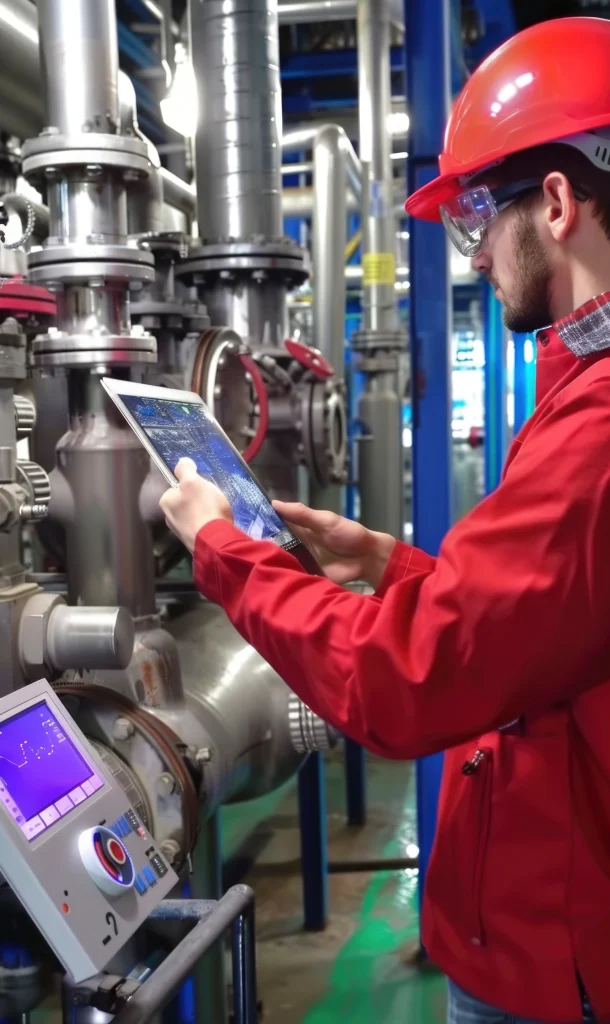
V Air Permits are critical for industrial facilities operating pressure vessels that emit significant pollutants. These permits consolidate air quality regulations, enforce emission limits, and ensure environmental compliance.
Why Title V Air Permits Matter for Pressure Vessels
Pressure vessels in manufacturing, refining, and chemical processing often handle volatile organic compounds (VOCs), hazardous air pollutants (HAPs), and greenhouse gases (GHGs). Title V Air Permits: established under the Clean Air Act, ensure facilities meet federal and state air quality standards, protect the environment, and maintain operational accountability.
Facilities exceeding emission thresholds must obtain Title V permits to track emissions, implement pollution controls, and remain compliant with EPA regulations. These permits consolidate all applicable air requirements into a single legally enforceable document.
Overview of the Clean Air Act Title V Program
The Clean Air Act mandates that major sources of air pollution obtain operating permits. Objectives of Title V Air Permits:
- Enhance public transparency and accountability
- Consolidate all air quality requirements for simplified compliance
- Maintain a comprehensive record of emissions and operational limits
For facilities with pressure vessels, Title V permits help enforce emission limits, monitor pollutant releases, and provide a framework for regulatory compliance.
Who Needs Title V Air Permits and Why
Facilities classified as “major sources” under the Clean Air Act must obtain Title V Air Permits. Thresholds include:
- 100 tons/year for criteria pollutants
- 10 tons/year for a single HAP
- 25 tons/year for combined HAPs
Facilities using multiple pressure vessels for chemical processing, petroleum refining, or food production often exceed these thresholds. A valid Title V permit ensures compliance and environmental accountability.
How Pressure Vessels Trigger Permit Requirements
Emissions Thresholds
Pressure vessels can emit VOCs, HAPs, and GHGs through leaks, venting, or pressure relief events. Facilities must calculate the potential-to-emit (PTE) to determine permit requirements.
Pollutants Linked to Pressure Vessel Operations
- VOCs: Released during loading, unloading, and leaks
- HAPs: Benzene, formaldehyde, toluene, and others
- GHGs: CO₂, methane, nitrous oxide
Because pressure vessels can significantly impact emissions, Title V Air Permits are a critical compliance requirement.
Role of Pressure Vessels in Industrial Operations
Pressure vessels are used to:
- Conduct chemical reactions under controlled pressure and temperature
- Store pressurized gases or liquids
- Separate phases during refining processes
Their critical role underscores the importance of environmental oversight through Title V permitting.
Applying for a Title V Air Permit
Key Steps in the Permit Process
- Identify Emission Units: Each pressure vessel and emission source must be cataloged.
- Calculate PTE: Determine maximum potential emissions under normal and abnormal conditions.
- Prepare Application: Include emission limits, control technologies, monitoring, and recordkeeping procedures.
- Submit and Review: Applications undergo review by state or local authorities and a public comment period.
Facility Responsibilities After Approval
- Implement continuous monitoring systems
- Submit emission reports annually or semi-annually
- Renew permits every five years
- Maintain records for inspections
Failure to comply can result in fines, permit revocation, or operational shutdowns.
Managing Emissions from Pressure Vessels
Monitoring and Recordkeeping Requirements
- Leak Detection and Repair (LDAR): Identify and fix leaks from valves, flanges, and connectors
- Continuous Emissions Monitoring Systems (CEMS): Track emissions in real-time
- Documentation Best Practices: Use digital systems, centralized databases, and automated alerts
Pollution Control Strategies
- Emission Reduction Technologies: Scrubbers, thermal oxidizers, carbon adsorption units
- Preventive Maintenance: Inspect relief valves, seals, and piping systems regularly
- Cleaner Materials: Use less volatile chemicals or alternative feedstocks
- Energy-Efficient Equipment: Modern pressure vessels with improved sealing and thermal efficiency
These measures help facilities maintain compliance and reduce their environmental footprint.
Common Compliance Pitfalls and How to Avoid Them
Inaccurate Emission Estimates
Underestimating emissions can result from outdated factors, incomplete data, or lack of understanding of vessel operations. Accurate PTE calculations are essential to determine if a facility qualifies as a major source.
Missed Deadlines and Recordkeeping Failures
Late reports, certifications, or renewals can lead to fines or audits. Compliance calendars, electronic systems, and staff training help avoid violations.
Title V Air Permits Ensure Compliance and Accountability
Title V Air Permits for pressure vessels are more than paperwork they safeguard the environment and demonstrate operational responsibility. Proactively tracking emissions, using pollution controls, and maintaining thorough records ensures facilities meet regulatory standards and sustain operational credibility.
Need a Reliable Partner?
Red River specializes in the design and manufacturing of pressure vessels. We also fabricate related items such as prefabricated spools and skid packages.
Reach Out to us today and experience the Red River difference. Where American Made and American Values come together, we care more.
Contact us: https://www.redriver.team/contact
Request a quote: https://www.redriver.team/request-a-quote
Frequently Asked Questions
1. What is a Title V Air Permit?
A Title V Air Permit is required under the Clean Air Act for facilities emitting significant air pollutants, consolidating multiple regulations into one enforceable document.
2. Do all pressure vessels require a Title V Air Permit?
No, only if emissions exceed major source thresholds set by the EPA or local air agency.
3. Which pollutants from pressure vessels are regulated?
VOCs, hazardous air pollutants (HAPs), greenhouse gases (GHGs), and other process-related emissions.
4. How long does it take to obtain a Title V Air Permit?
Typically 6 to 18 months, depending on facility complexity and state-level processing times.
5. Can Title V permits be modified or transferred?
Yes, but changes must be reported, and modifications often require pre-approval from the permitting authority.
6. What happens if a facility violates Title V permit conditions?
Violations can result in fines, enforcement actions, or permit revocation.
7. How often must Title V permits be renewed?
Every five years, with annual compliance certifications and reporting required.
8. What are major source thresholds for Title V Air Permits?
Generally, 100 tons/year for criteria pollutants, 10 tons/year for a single HAP, or 25 tons/year for combined HAPs.
Key Takeaways
- Title V Air Permits are essential for regulatory compliance and environmental protection
- Pressure vessels contribute significantly to facility emissions of VOCs, HAPs, and GHGs
- Obtaining a permit requires accurate emission estimates, proper monitoring, and thorough documentation
- Pollution control strategies and preventive maintenance support long-term compliance
- Avoiding underreporting and missed deadlines ensures regulatory trust and operational continuity
Related Blog Post
Which Materials Suit Make-Up Water Service?
How Big Should Make-Up Water Tanks Be?
Make-Up Water Tanks: Design, Sizing, and Fabrication
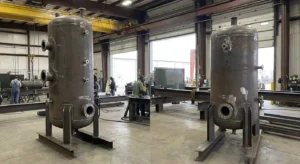
When to Spec Equalization Tanks for Industrial Systems
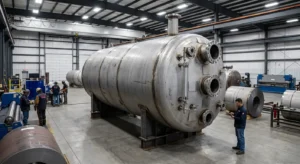
How Do Equalization Tanks Balance Flow?
- DOT Vessel Transport Rules for Pressure Vessels in the U.S.
- Energy Efficiency Compliance in Pressure Vessel Design
- EPA Section 608 Compliance for Refrigerant Pressure Vessels
- Green Manufacturing Standards for Pressure Vessel Production
- Noise and Vibration Compliance for Industrial Pressure Vessels
- Waste Compliance in Fabrication for Pressure Vessels