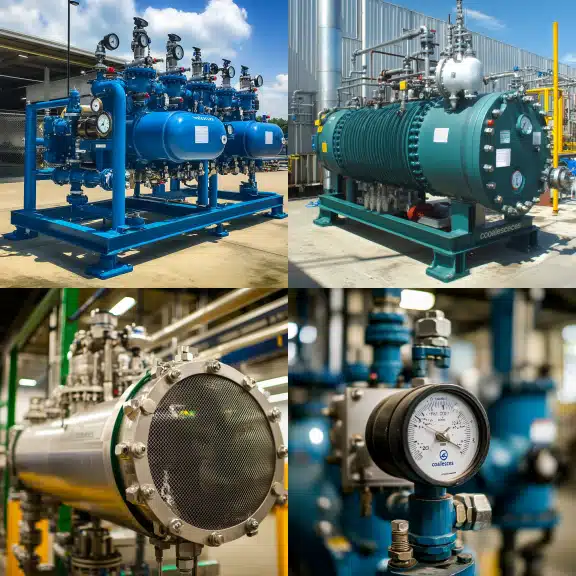
Coalescer in Industrial Applications plays a vital role in separating immiscible liquids or removing fine droplets from gases, ensuring efficient industrial operations. By merging small particles into larger ones, coalescers enhance filtration performance, reduce maintenance, and protect equipment longevity. Proper selection, routine maintenance, and understanding operational requirements are key to maximizing performance. Industries like oil and gas, chemical processing, and energy generation rely heavily on coalescers for operational efficiency and product quality.
Coalescer in Industrial Applications
When maintaining the efficiency and reliability of industrial systems, a coalescer plays a crucial role. But what exactly is a coalescer, and why is it so important in various industries? At Red River, we believe understanding the fundamentals of a coalescer is key to optimizing your operations and enhancing your equipment’s durability.
Basic Definition of a Coalescer
A coalescer is a tool designed to separate immiscible liquids, like oil and water, or to remove fine debris from gases. It works by merging small droplets (or “coalescing” them) into larger ones, making it easier to eliminate contaminants. This process is vital in industries such as oil and gas, where precision and reliability are essential for operational success. For a deeper understanding, check out our guide on pressure vessel construction.
How Coalescers Work in Filtration Systems
In filtration systems, coalescers operate by passing mixtures through a filter medium that encourages small droplets or particles to combine. As these droplets merge into larger clusters, they become easier to remove. This process not only improves filtration but also enhances operational efficiency. Moreover, by eliminating contaminants effectively, coalescers minimize system maintenance needs, reduce charges, and ensure smoother operations. To learn more about filtration and separation, refer to our overview of separator technologies.
Types of Coalescers and Their Applications
Coalescers come in various forms to meet the demands of specific industries. The two most common types include:
- Liquid-Liquid Coalescers: These separate immiscible liquids, such as oil and water. Widely used in oil and gas applications, they effectively remove water from crude oil during refining.
- Gas-Liquid Coalescers: These remove liquid droplets from gas streams, ensuring cleaner and safer processing. Frequently employed in natural gas processing and chemical manufacturing, they play a vital role in enhancing process safety.
Importance of Coalescers in Various Industries
Role of Coalescers in Oil and Gas Processing
Coalescers play an indispensable role in oil and gas operations. By efficiently separating water from crude oil, they protect equipment and improve product quality. Furthermore, their ability to enhance separation processes extends the lifespan of equipment, reduces maintenance demands, and lowers operational costs. Explore more about oil-water separation here.
Use of Coalescers in Liquid-Liquid Separation
In liquid-liquid separation, coalescers achieve the target purity levels required for various industrial processes. Whether removing water from gasoline or managing chemical separations, they ensure high product quality while addressing operational challenges effectively. Visit our guide on liquid separation for further insights.
Benefits of Using Coalescers in Industrial Processes
The benefits of coalescers extend beyond their separation capabilities. They enhance filtration performance, lower maintenance frequency, and increase operational efficiency. By maintaining clean and consistent outputs, coalescers provide reliable performance across diverse industrial applications. Learn how to optimize your equipment in our pressure vessel maintenance guide.
Choosing the Right Coalescer for Your Needs
Factors to Consider When Selecting a Coalescer
When selecting a coalescer, it is crucial to identify the type of separation required whether liquid-liquid or gas-liquid. Factors such as droplet size, operating conditions (including temperature and pressure), and fluid composition significantly influence the choice. Additionally, evaluating material compatibility and maintenance requirements ensures long-term efficiency and cost-effectiveness. For more on the selection process, refer to material considerations for pressure vessels.
Common Challenges and Solutions in Coalescer Implementation
Implementing a coalescer often involves challenges such as clogging, inefficiencies in separation, or increased maintenance needs. These issues frequently arise due to improper sizing, unsuitable filter media, or fluctuating operating conditions. However, these challenges can be mitigated by careful system design, routine inspections, and selecting a coalescer tailored to specific industrial needs. Addressing these factors early ensures seamless operations and extends the lifespan of the system.
Coalescer in Industrial Applications
Coalescer in Industrial Applications is a vital component in modern industrial systems. Proper selection, installation, and maintenance not only improve filtration performance but also protect equipment, enhance operational efficiency, and support safety and environmental compliance. Red River ensures all coalescing systems integrate seamlessly with pressure vessel safety standards and compliance, maximizing long-term value for industrial operations.
Ready to Optimize Your Industrial Filtration Systems?
At Red River, we specialize in designing and manufacturing coalescers that enhance operational efficiency and extend equipment life. Whether you’re in oil and gas, chemical processing, or any other industry, our solutions are tailored to meet your unique needs.
Contact us today to discuss how we can help improve your systems with high-quality coalescing technology, ensuring cleaner outputs and smoother operations. Experience the Red River difference where American Made meets American Values.
Frequently Asked Questions
1. What materials are coalescers usually made from?
Coalescers are crafted from materials that withstand the demands of specific industrial applications. Common materials include stainless steel for corrosion resistance and durability, polypropylene for lightweight operations, and fiberglass for effective filtration. Elastomers are also used when flexibility and chemical resistance are required. Selecting the right material depends on factors such as fluid properties, temperature, pressure, and chemical composition.
2. How often do coalescers need to be replaced or maintained?
The replacement and maintenance frequency of a coalescer depends on workload and operating environment. Systems under heavy use or harsh conditions may require more frequent replacements, while controlled environments allow coalescers to last longer. Regular inspections for clogging, pressure drops, or reduced filtration performance are critical. Early detection of issues enables timely cleaning or replacement, ensuring uninterrupted system efficiency.
3. Can coalescers be used for both liquid-liquid and gas-liquid separation?
Yes, coalescers are designed for both types of separation:
- Liquid-Liquid Coalescers: Separate fluids like oil and water, commonly used in refining and chemical processing.
- Gas-Liquid Coalescers: Remove liquid droplets from gas streams, ensuring cleaner operations in natural gas processing and other industries.
The choice depends on the type of separation required and the specific fluid composition being processed.
4. What are the signs that a coalescer is not working efficiently?
A coalescer that is not functioning properly may exhibit:
- Increased pressure drops across the system
- Clogging or buildup in the filter media
- Visible contaminants in the output fluid or gas
- Reduced separation efficiency leading to inconsistent flow rates
These symptoms compromise system reliability and indicate that maintenance or replacement is needed.
5. How do coalescers contribute to environmental safety?
Coalescers help reduce environmental impact by removing harmful substances, like water or contaminants, from fluids before disposal. For example, in crude oil processing, they separate water from oil to ensure cleaner outputs. By minimizing waste and emissions, coalescers support regulatory compliance and promote sustainable industrial practices.
6. What factors should be considered when selecting a coalescer?
When choosing a coalescer, key considerations include:
- The type of separation required (liquid-liquid or gas-liquid)
- Droplet size and concentration of contaminants
- Fluid composition and chemical compatibility
- Operating conditions such as temperature and pressure
- Maintenance requirements and expected lifespan
Evaluating these factors ensures optimal performance, durability, and cost-effectiveness.
7. How does proper maintenance extend coalescer lifespan?
Routine maintenance helps prevent clogs, inefficiencies, and system failures. This includes inspecting and cleaning the coalescer, replacing filtration media when needed, and monitoring pressure drops. Proactive upkeep ensures reliable operation, reduces downtime, and maximizes the equipment’s service life.
Key Takeaways
- Coalescers merge small droplets or particles into larger ones for easier removal from liquids and gases.
- Two main types: Liquid-Liquid Coalescers and Gas-Liquid Coalescers.
- They enhance filtration, reduce maintenance, and improve operational efficiency.
- Proper selection depends on droplet size, fluid type, operating conditions, and material compatibility.
- Routine maintenance and adherence to pressure vessel inspection and maintenance protocols ensure longevity and reliability.
- Coalescers also support environmental safety and regulatory compliance.
Related Blog Post
Which Materials Suit Make-Up Water Service?
How Big Should Make-Up Water Tanks Be?
Make-Up Water Tanks: Design, Sizing, and Fabrication
When to Spec Equalization Tanks for Industrial Systems
How Do Equalization Tanks Balance Flow?
No related articles found.
About Author