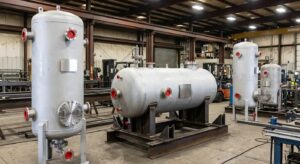
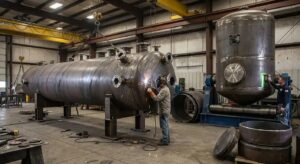
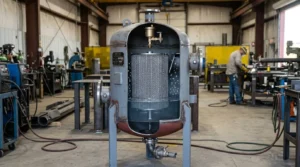
Quality inspector performing hydrostatic pressure test on an ASME certified buffer tank at a fabrication facility

Which Tests Verify Buffer Tank Quality?

A buffer tank that fails in service does not just require replacement it takes the chilled water system offline, potentially shutting down the cooling infrastructure that protects servers, process equipment, or pharmaceutical storage. The tests performed during fabrication and before commissioning are the only objective verification that the tank will perform reliably under the pressures, temperatures, and thermal cycles it will experience throughout its service life. This guide is for mechanical engineers, facility managers, and procurement teams who need to

Read More »
Engineer sizing a buffer tank for a data center chilled water system based on IT load variability and chiller minimum output

What Size Buffer Tank for Data Centers?

Data center cooling systems face a sizing challenge that standard commercial HVAC systems rarely encounter IT load variability that swings from 20% to 100% of peak capacity within seconds, combined with chillers that cannot run below a minimum output threshold without short cycling. Getting buffer tank sizing wrong in a data center means either a chiller that cycles every few minutes and wears out prematurely, or a tank that is oversized, overpriced, and introduces unnecessary thermal losses. This guide is

Read More »
Diagram showing buffer tank installed in chilled water loop preventing chiller short cycling by increasing system water volume

How Do Buffer Tanks Prevent Chiller Short Cycling?

Every time a chiller starts, it draws a large inrush current, creates a pressure shock in the refrigeration circuit, and subjects the compressor to mechanical stress before oil pressure stabilizes. A chiller that cycles on and off every 3–5 minutes experiences more compressor wear in a week than a properly sized system experiences in months. This guide is for mechanical engineers and facility managers who need to understand exactly how buffer tanks prevent chiller short cycling, what causes it, and

Read More »
Industrial buffer tank connected to chiller and hydronic loop in a data center cooling system preventing short cycling and stabilizing flow

Buffer Tanks for Chilled Water Systems

Chillers that cycle on and off repeatedly wear out faster, consume more energy per ton of cooling produced, and create temperature instability that affects sensitive equipment. Buffer tanks solve this by adding hydraulic volume to the chilled water loop giving the system the thermal mass it needs to absorb demand fluctuations and keep chillers running at stable, efficient operating points. This guide covers how buffer tanks work, how they are sized and tested, how they differ from chilled water storage

Read More »
Cross-section of a chilled water storage tank showing carbon steel shell with internal lining and stainless steel fittings for corrosion resistance

Which Materials Suit Chilled Water Service?

Selecting the wrong material for a chilled water storage tank or buffer tank leads to internal corrosion, water contamination, and premature structural failure eliminating the energy savings and operational benefits the system was designed to deliver. This guide is for mechanical engineers, procurement managers, and facility operators specifying tanks for chilled water applications. You’ll learn which materials suit chilled water service, how glycol concentration and water treatment chemistry affect that selection, and what ASME material requirements govern fabrication. Why Material

Read More »
Engineer calculating chilled water storage tank volume based on cooling load and delta-T for an industrial facility

How Much Volume Is Needed for Chilled Water Storage?

Undersizing a chilled water storage tank limits the discharge window and reduces demand charge savings. Oversizing increases capital cost and thermal loss without proportional benefit. This guide is for mechanical engineers and facility designers calculating storage volume for chilled water systems in data centers, industrial facilities, and large commercial buildings. You’ll learn the sizing formulas, the variables that drive volume requirements, and how design decisions around delta-T and discharge duration affect the final tank specification. The Core Variables That Determine

Read More »