
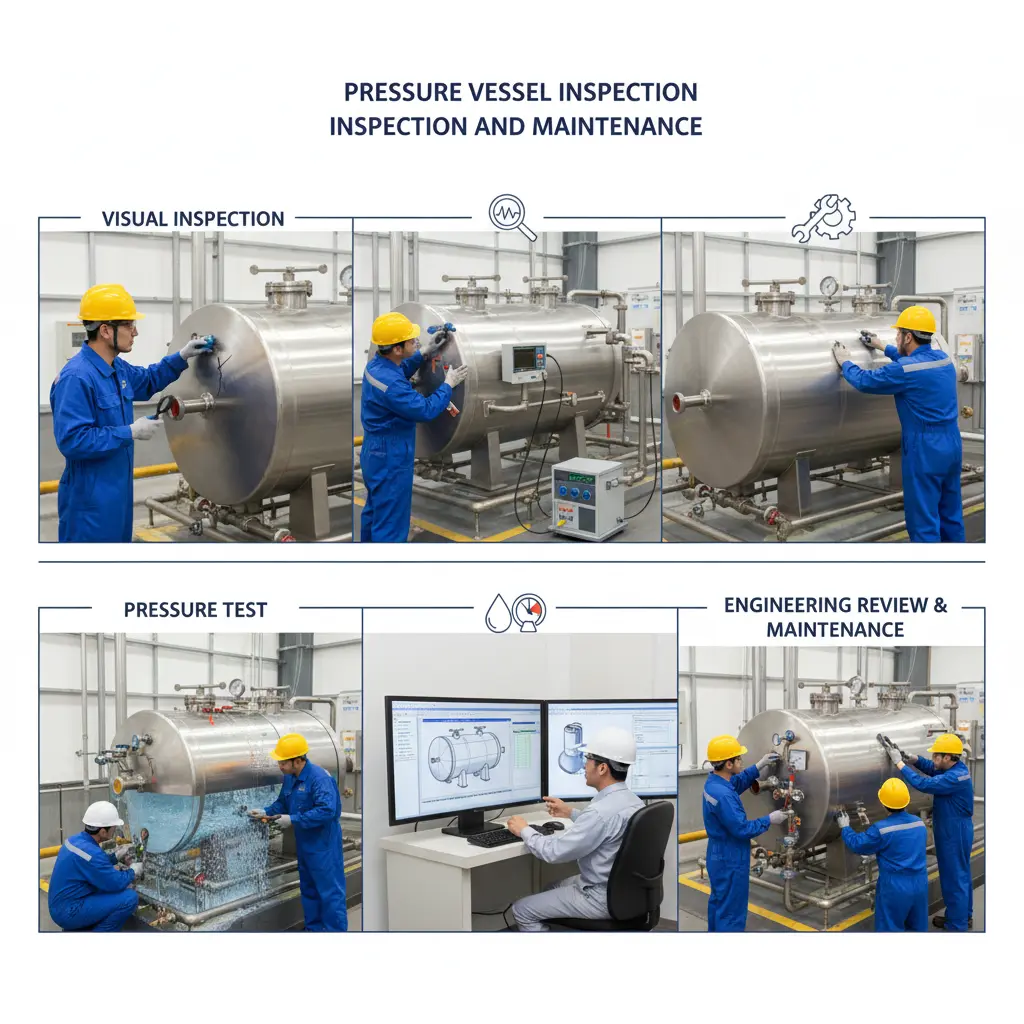
Pressure vessel inspection and maintenance keep equipment safe, code-compliant, and performing reliably over the long term. This guide outlines inspection schedules, key checklist items, and proper procedures while highlighting how safety standards shape ongoing care. It also introduces how RedRiver LLC supports teams with expert fabrication, inspection, and full compliance solutions.
Understanding Pressure Vessel Inspection and Maintenance for Long Term Safety
Pressure Vessel Inspection and Maintenance supports safe operation by making sure vessels remain structurally sound, code compliant, and prepared for long term service. Because pressure vessels operate under internal stress, they require continuous monitoring and strict maintenance practices. When Pressure Vessel Inspection and Maintenance is performed correctly, risks decrease, efficiency improves, and equipment life significantly increases.
This topic also connects deeply with Pressure Vessel Safety Standards and Compliance. These rules outline how vessels must be designed, fabricated, operated, and inspected. They also help answer questions such as what are the safety standards for pressure vessels and how do pressure vessels comply with safety regulations. Since these standards influence inspection procedures, every facility must understand how to inspect a pressure vessel and what to include in a pressure vessel inspection checklist.
RedRiver LLC provides high-level engineering support, inspections, repairs, fabrication expertise, and guidance to help businesses maintain dependable pressure vessels throughout their lifecycle. Learn more about their capabilities through resources such as About Us, Capabilities, and Solutions.
Why Pressure Vessel Inspection and Maintenance Matters
Pressure vessels operate under conditions that subject them to wear, stress, corrosion, and the risk of potential failure. These factors make regular pressure vessel inspection and maintenance essential for safe and efficient operation. Through systematic inspections, technicians can detect early signs of damage, including cracks, leaks, corrosion, deformation, and other structural issues. Preventive maintenance ensures that any identified problems are addressed promptly, reducing the likelihood of accidents, unplanned downtime, or costly repairs. Proper documentation, adherence to safety standards, and consistent assessment techniques further support operational reliability. By maintaining a proactive inspection and maintenance routine, organizations can extend the vessel’s service life while safeguarding personnel and assets.
These processes help ensure:
- Safe operation under pressure
- Reduced downtime and costly emergency repairs
- Longer equipment lifespan
- Compliance with inspection requirements
- Prevention of leaks, cracks, or catastrophic failures
Because vessels are so critical to operations, the inspection process must follow Pressure Vessel Safety Standards and Compliance guidelines. Proper inspections also support ASME expectations, helping answer what is ASME code for pressure vessel safety and how do pressure vessels comply with safety regulations in real world situations.
For more technical insights, see RedRiver’s related guides, including Safety and Compliance in Pressure Vessel Design and ASME-Certified Pressure Vessels.
Key Elements of Pressure Vessel Inspection and Maintenance
Pressure vessel inspection and maintenance involves a variety of inspection types, detailed documentation procedures, and systematic assessment techniques to ensure operational safety and efficiency. Because these vessels often function under demanding conditions, including high pressures, extreme temperatures, and corrosive environments, inspections must be thorough, consistent, and conducted at regular intervals. Common inspection practices include visual examinations, non-destructive testing, thickness measurements, and pressure testing, all aimed at identifying potential issues such as corrosion, cracks, leaks, or deformation. Accurate record-keeping and adherence to industry standards and safety regulations are critical. Consistent maintenance not only prevents failures and hazards but also extends vessel lifespan and supports reliable, uninterrupted operation.
Key elements include:
- Internal inspections
- External inspections
- Surface condition assessments
- Corrosion analysis
- Weld integrity evaluation
- Nondestructive examination
- Pressure testing
- Review of safety devices
- Documentation and service logs
These processes help determine how often pressure vessels need to be inspected. Inspection intervals depend on age, usage, industry standards, and environment.
Explore more about inspection foundations through RedRiver’s resources such as the Comprehensive Guide to Pressure Vessel Inspection and Understanding Pressure Vessels: Definitions and Thresholds.
RedRiver LLC uses proven inspection procedures, industry best practices, and code-compliant documentation to ensure every vessel remains reliable and safe.
How Pressure Vessel Safety Standards Influence Inspection Practices
Pressure Vessel Safety Standards and Compliance define every requirement for inspection frequency, documentation, and testing. These standards help clarify what are the safety standards for pressure vessels and what is ASME code for pressure vessel safety.
These standards outline:
- Allowable stress limits
- Approved materials
- Safety device requirements
- Weld procedure qualifications
- Inspection intervals
- Testing methods
- Documentation practices
- Required repairs and maintenance expectations
For additional compliance insights, visit Understanding the Purpose of a Pressure Vessel and The Importance of ASME Certification.
How Often Do Pressure Vessels Need to Be Inspected
Many professionals wonder how often pressure vessels require inspection, and understanding Pressure Vessel Inspection and Maintenance is key to answering this question. The frequency depends on the vessel’s design, application, material thickness, operating conditions, and applicable codes. Routine inspections are essential to prevent structural weakening, corrosion, or unexpected damage. Implementing a thorough Pressure Vessel Inspection and Maintenance program ensures safety, reliability, and compliance with regulatory standards. Regular assessments, including internal and external checks, weld evaluations, and pressure testing, are part of effective Pressure Vessel Inspection and Maintenance. Proper documentation and corrective actions further strengthen long-term vessel performance, making Pressure Vessel Inspection and Maintenance a critical operational priority.
Inspection schedules often include:
- Frequent external inspections between service cycles
- Internal inspections when the vessel is offline
- Special inspections after repairs or abnormal conditions
- Periodic nondestructive testing
- Inspections tied to regulatory expectations
The more extreme the operating environment, the more frequent the inspections should be.
See related articles like Understanding Water Tanks as Pressure Vessels and Understanding Air Receiver Tanks as Pressure Vessels.
RedRiver LLC helps facilities determine inspection intervals based on vessel type, material, and service conditions.
How to Inspect a Pressure Vessel: Key Steps
Many operators want to learn how to inspect a pressure vessel effectively, making Pressure Vessel Inspection and Maintenance a critical process for safety and compliance. A proper inspection process includes preparation, detailed assessment, thorough documentation, and careful follow-through. Implementing a structured Pressure Vessel Inspection and Maintenance routine ensures that all internal and external components, welds, safety devices, and pressure-relief systems are thoroughly checked. Regular evaluations as part of Pressure Vessel Inspection and Maintenance help detect corrosion, cracks, or other potential failures early. Consistent record-keeping and timely corrective actions complete the cycle, emphasizing that Pressure Vessel Inspection and Maintenance is essential for long-term reliability and operational efficiency.
A strong inspection includes reviewing:
- External surfaces for signs of corrosion or damage
- Structural components for cracks or deformation
- Welded areas for voids, porosity, or distortion
- Insulation for moisture or deterioration
- Coatings for blistering or peeling
- Safety valves and pressure relief systems
- Internal surfaces for pitting, scale, or erosion
- Nozzles, flanges, and manways for leaks
- Gaskets and connections for wear
For fabrication-related inspection references, see Fabrication Process: Cutting, Folding, Welding and Metal Fabrications.
RedRiver LLC uses advanced tools, certified inspectors, and detailed procedures for complete assessments.
What to Include in a Pressure Vessel Inspection Checklist
Pressure Vessel Inspection and Maintenance becomes significantly more efficient when supported by a clear and detailed inspection checklist. Many operators ask what to include in a pressure vessel inspection checklist, and following one ensures that no critical steps are overlooked. A well-structured checklist supports Pressure Vessel Inspection and Maintenance by guiding assessments of internal and external conditions, weld integrity, corrosion levels, safety devices, instrumentation, and structural supports. Consistently using a checklist strengthens Pressure Vessel Inspection and Maintenance, helping teams detect potential issues early. Documenting every step completes Pressure Vessel Inspection and Maintenance, providing records for compliance, safety, and long-term reliability. Overall, a checklist makes Pressure Vessel Inspection and Maintenance systematic and effective.
A comprehensive checklist may include:
- Vessel identification and documentation review
- Verification of previous inspection records
- Evaluation of internal and external condition
- Assessment of weld quality and weld repairs
- Measurement of thickness and corrosion levels
- Examination of pressure relief devices
- Inspection of instrumentation and controls
- Assessment of foundation and supports
- Review of safety signage and operational instructions
See additional related materials like Guide to Metal Fabrication and Choosing the Right Material for Pressure Vessel Fabrication.
RedRiver LLC creates tailored inspection checklists based on design, conditions, and code requirements.
Common Condition Issues Found During Pressure Vessel Inspections
During pressure vessel inspection and maintenance, various common conditions can be detected that, if left unaddressed, may lead to serious hazards or operational failures. Inspectors typically look for signs of corrosion, cracks, leaks, deformation, and wear in critical components. Early identification of these issues allows for timely repairs, ensuring the vessel continues to operate safely and efficiently. Proper maintenance also helps extend the service life of the vessel, reduces unplanned downtime, and maintains compliance with safety regulations and industry standards. Regular inspections, combined with preventive maintenance, play a crucial role in safeguarding personnel, protecting equipment, and avoiding costly emergency interventions.
Common inspection findings include:
- General corrosion
- Localized pitting
- Weld cracks
- Brittle fractures
- External coating damage
- Pressure relief valve issues
- Scale buildup inside the vessel
- Signs of overheating
- Misalignment or shifting supports
- Fatigue stress indicators
Supporting articles include Water Presence in Pressure Vessels and Understanding Compressed Air Tanks.
RedRiver LLC diagnoses issues, recommends repairs, and performs corrective actions.
Maintenance Practices for Long Term Vessel Reliability
Pressure Vessel Inspection and Maintenance must include routine maintenance practices that extend the lifespan of equipment and support reliable operation. Proper maintenance helps prevent unplanned downtime and reduces the risk of costly repairs. Key practices in Pressure Vessel Inspection and Maintenance include cleaning internal surfaces, protecting against corrosion, lubricating moving components, performing timely repairs, calibrating gauges and controls, and testing safety valves and relief devices. Preventive scheduling and thorough record-keeping are also vital to ensure long-term vessel reliability. By integrating these actions into a consistent program, Pressure Vessel Inspection and Maintenance safeguards equipment performance, enhances operational efficiency, and ensures that vessels remain compliant with safety standards.
Strong maintenance practices include:
- Consistent cleaning of internal surfaces
- Regular coating and corrosion protection
- Lubrication of moving components
- Timely repairs of damaged or worn areas
- Calibration of gauges and controls
- Testing safety valves and relief devices
- Preventive maintenance scheduling
- Record keeping and documentation
See additional maintenance-related insights like Understanding Blowdown Tanks.
RedRiver LLC provides long-term maintenance programs that improve uptime and reliability.
How Pressure Vessel Inspection and Maintenance Supports Compliance
Pressure Vessel Inspection and Maintenance is directly connected to compliance, ensuring that all safety expectations, regulatory guidelines, and code requirements are consistently met. Each action performed during Pressure Vessel Inspection and Maintenance contributes to operational safety and minimizes the risk of failures. Proper documentation and reporting are essential components of Pressure Vessel Inspection and Maintenance, providing evidence that inspections and repairs are completed according to standards. Regular reviews and preventive actions strengthen Pressure Vessel Inspection and Maintenance, keeping vessels reliable and safe. By integrating systematic checks, record-keeping, and corrective measures, Pressure Vessel Inspection and Maintenance becomes a critical practice for maintaining long-term compliance, operational efficiency, and vessel integrity.
Compliance depends on:
- Using approved materials
- Following documented welding procedures
- Maintaining clear service records
- Ensuring regular testing
- Conducting required inspections
- Reporting repairs and modifications
Supporting links include Understanding Water Heaters as Pressure Vessels and Understanding Pressure Vessels for Domestic Water Systems.
RedRiver LLC helps organizations maintain complete documentation and compliance readiness.
Pressure Vessel Inspection and Maintenance and Why is it Important?
Understanding Pressure Vessel Inspection and Maintenance helps facilities operate safely, prevent failures, and follow code expectations. Inspection and maintenance work together to protect both the vessel and the people who rely on it. RedRiver LLC supports clients with expert inspections, maintenance services, engineering guidance, and compliance documentation that ensures long term peace of mind.
Get Expert Support for Your Pressure Vessel Needs
RedRiver LLC provides engineering, fabrication, inspection, and maintenance services built on reliability and craftsmanship. Their team supports Pressure Vessel Inspection and Maintenance with code-compliant techniques, advanced testing, and strong industry expertise.
Learn more at RedRiver LLC.
Frequently Asked Questions
1. How often do pressure vessels need to be inspected
Inspection frequency depends on vessel design, usage, industry rules, and safety standards.
2. What are the safety standards for pressure vessels
These standards define design expectations, materials, welding rules, and inspection requirements.
3. What is ASME code for pressure vessel safety
This code provides the rules for safe fabrication, testing, and inspection of pressure vessels.
4. How do pressure vessels comply with safety regulations
They follow engineering rules, ASME guidelines, inspection routines, and maintenance plans.
5. How to inspect a pressure vessel
Inspections involve checking structural components, welds, surfaces, corrosion, and safety devices.
6. What to include in a pressure vessel inspection checklist
A checklist includes documentation, corrosion checks, weld assessments, relief device inspections, and condition evaluations.
7. Why is maintenance important for pressure vessels
It prevents failures, extends lifespan, and supports compliance.
Key Takeaways
- Pressure Vessel Inspection and Maintenance ensures long term safety and reliability
• Standards and compliance rules guide all inspection and maintenance practices
• Checklists improve inspection consistency and accuracy
• RedRiver LLC provides expert, code compliant inspection and maintenance services
• Regular inspections help prevent failures and extend equipment life
Related Blog Post
Which Materials Suit Make-Up Water Service?
How Big Should Make-Up Water Tanks Be?
Make-Up Water Tanks: Design, Sizing, and Fabrication
When to Spec Equalization Tanks for Industrial Systems
How Do Equalization Tanks Balance Flow?
About Author



