Cryogenic liquid cylinders store and transport ultra-cold fluids like nitrogen and oxygen, essential across industries from healthcare to aerospace. They come in low-pressure (25–150 psi) and high-pressure (300+ psi) variants, each suited to specific operational needs. Low-pressure models are ideal for controlled, cost-effective dispensing; high-pressure versions support high-flow, long-duration uses. Choosing the right type depends on your pressure, flow rate, and storage duration requirements. Safety, material integrity, and proper handling are critical for both. Red River offers expert-built, American-made solutions for every cryogenic need.
Introduction to Cryogenic Liquid Cylinders
Cryogenic liquid cylinders are specialized containers designed to store and transport extremely cold liquids such as liquid nitrogen, oxygen, and argon. These containers must withstand extremely low temperatures while maintaining structural integrity and safety. Manufacturers carefully engineer these cylinders with advanced insulation systems and durable materials so they can handle the unique conditions associated with cryogenic storage.
Cryogenic cylinders typically function as vacuum insulated pressure vessels that minimize heat transfer from the surrounding environment. This insulation helps keep the stored liquid in its cryogenic state for extended periods. To better understand the engineering principles behind these systems, explore Understanding Cryogenic Vessels: A Comprehensive Guide and Understanding the Mechanics of Cryogenic Storage Tanks.
Importance of Cryogenic Storage in Various Industries
Cryogenic storage plays a vital role across multiple industries where extremely low temperatures are required. In healthcare, liquid oxygen and nitrogen support medical treatments, laboratory testing, and cryopreservation. In manufacturing and electronics, cryogenic fluids help cool sensitive equipment and maintain precise production environments.
For example, semiconductor manufacturing facilities use cryogenic cooling to stabilize delicate fabrication processes. Similarly, research laboratories depend on cryogenic storage to preserve biological samples and maintain experimental conditions. Safe storage and transport of these materials are critical, which is why specialized cylinders and transport systems are used. Learn more about the logistics and engineering behind this process in Exploring the Methods and Techniques of Cryogenic Liquid Transportation.
Overview of Low-Pressure Cryogenic Liquid Cylinders
Low pressure cryogenic cylinders are designed to store cryogenic liquids at relatively modest pressures, usually between 25 and 150 psi. These cylinders are commonly used in environments where steady dispensing and moderate flow rates are sufficient.
Because they operate at lower pressures, these cylinders often provide a more economical and energy efficient solution for many facilities. Hospitals, laboratories, and small scale industrial operations frequently rely on these systems for their daily operations. Proper pressure management is essential for safe storage, which connects closely with broader pressure vessel design principles discussed in Understanding the Basics of Pressure Vessels.
Overview of High-Pressure Cryogenic Liquid Cylinders
High pressure cryogenic cylinders are built to tolerate significantly higher internal pressures, often exceeding 300 psi. These systems support applications that demand higher gas flow rates, longer storage periods, or compact storage capacity.
Industries such as aerospace, advanced manufacturing, and energy production frequently rely on high pressure cryogenic cylinders. These systems allow operators to store large volumes of gas in a smaller footprint while maintaining controlled delivery. In many cases, pressure management and gas behavior must be carefully monitored. For example, nitrogen pressure dynamics play a major role in system design and safety, which is explored further in Understanding Pressure of Nitrogen Gas.
Understanding Pressure Variations
The primary difference between low pressure and high pressure cryogenic cylinders lies in their operating pressure ranges. This difference affects storage capacity, system size, operational cost, and safety requirements.
High pressure cylinders allow more gas to be stored in a smaller container, which can be beneficial for industries with space limitations or high demand for compressed gas. Low pressure cylinders, on the other hand, are often simpler to maintain and more cost effective for applications that require gradual dispensing. Pressure vessel design standards and safety considerations are crucial for both systems, which is why many manufacturers follow industry guidelines outlined in Understanding ASME Standards for Pressure Vessels.
Defining Low-Pressure Cryogenic Liquid Cylinders
Low pressure cryogenic liquid cylinders store cryogenic fluids at relatively stable and controlled pressures. These systems prioritize consistent delivery and safe handling over extremely high storage density.
Facilities that require moderate flow rates or frequent dispensing cycles often choose low pressure cylinders because they reduce operational complexity and maintenance costs. The materials used in these vessels are also carefully selected to withstand extreme temperatures without compromising structural strength. If you are interested in the engineering materials used in such vessels, see What Material Is Used to Make Pressure Vessels.
Defining High-Pressure Cryogenic Liquid Cylinders
High pressure cryogenic cylinders are engineered to store cryogenic fluids under much greater compression. These systems provide higher storage density and are ideal for operations that require larger volumes of gas within a smaller footprint.
However, higher pressure also introduces additional safety considerations. Engineers must carefully design these vessels to manage pressure fluctuations, thermal expansion, and potential failure risks. Understanding the potential hazards and structural stresses involved is critical for safe operation. A deeper look at these risks can be found in Understanding Pressure Vessel Hazards.
Differences in Operating Pressures
The operating pressure range of a cryogenic cylinder significantly influences its performance, efficiency, and ideal application. Low pressure cylinders work well in controlled environments where gradual gas delivery is preferred. High pressure cylinders support high demand applications where rapid gas flow and compact storage are necessary.
Selecting the right cylinder type requires careful evaluation of system requirements, safety regulations, and long term operational goals. In some cases, venting systems must also be incorporated to maintain safe pressure levels. These systems help prevent overpressurization and are discussed further in Exploring Cryogenic Liquid Tank Venting: Understanding Normality.
Need a Reliable Cryogenic Solution?
Red River specializes in designing and manufacturing high-quality, American-made pressure vessels and cryogenic storage solutions built for safety, durability, and performance. Whether you need low-pressure or high-pressure cylinders, our team can help you find the right fit for your application.
Contact Red River today to discuss your cryogenic storage needs and get expert support for your next project.
Frequently Asked Questions
1. What are the primary differences among low-strain and excessive-pressure cryogenic liquid cylinders?
Low-pressure cryogenic liquid cylinders are designed to keep cryogenic fluids at especially lower pressures, usually ranging from 25 to 150 kilos in step with square inch (psi), while excessive-strain cylinders are engineered to withstand notably higher storage pressures, regularly exceeding three hundred psi. The choice between the 2 depends on the particular software’s requirements for pressure, drift charge, and storage period.
2.How do low-strain and excessive-pressure cryogenic liquid cylinders affect operational efficiency?
Low-pressure cylinders are suitable for applications requiring controlled doling out and mild drift prices, providing fee-effective storage solutions. On the other hand, excessive-pressure cylinders are perfect for programs demanding high flow fees, extended storage periods, and unique pressure control. Understanding the operational differences between the 2 kinds is essential for optimizing storage performance.
3. What protection concerns need to be taken into account whilst managing low-pressure and high-strain cryogenic liquid cylinders?
Both low and high-pressure cryogenic cylinders require strict adherence to safety protocols to mitigate risks associated with handling risky materials. Safety measures include the right training for employees, regular inspection and preservation of cylinders, use of appropriate personal shielding systems, and adherence to regulatory requirements for transportation and storage.
4. How do fabric composition and construction vary among low-pressure and high-strain cryogenic liquid cylinders?
Low-pressure cylinders are usually constructed by the usage of substances optimized for slight-pressure storage, whereas high-strain cylinders require substances able to withstand more compression. The desire for substances and production techniques is vital for ensuring the structural integrity and lengthy-term reliability of cryogenic cylinders.
5. What are some unusual business programs for low-strain and excessive-strain cryogenic liquid cylinders?
Low-pressure cylinders are commonly utilized in industries requiring mild-strain storage, including medical, laboratory, and food processing programs. High-pressure cylinders find widespread use in industries annoying particular strain manipulation, inclusive of aerospace, strong point gasoline distribution, and semiconductor manufacturing.
Key Takeaways
- Cryogenic liquid cylinders are essential for storing ultra-cold fluids like nitrogen and oxygen across multiple industries.
- There are two main types:
- Low-pressure cylinders (25–150 psi) – best for controlled dispensing and cost-effective applications.
- High-pressure cylinders (300+ psi) – ideal for high-demand operations needing compact, long-duration storage.
- Choosing the right cylinder type depends on your pressure, flow rate, and usage duration needs.
- Material construction, safety protocols, and maintenance vary based on pressure class and must align with industry regulations.
- Red River offers American-made cryogenic pressure vessels designed for durability, compliance, and performance.
- For design specs and application guides, explore Understanding Cryogenic Vessels and Pressure Vessels.
Related Blog Post
Can Condensate Storage Improve Reliability?
Where Do Condensate Tanks Fit in a Steam System?
Which Nozzles Simplify Maintenance on Pressure Vessels?
How to Vent Condensate Tanks in Steam Systems
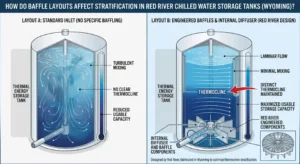
How Do Baffle Layouts Affect Stratification in TES Tanks?
No related articles found.
About Author