
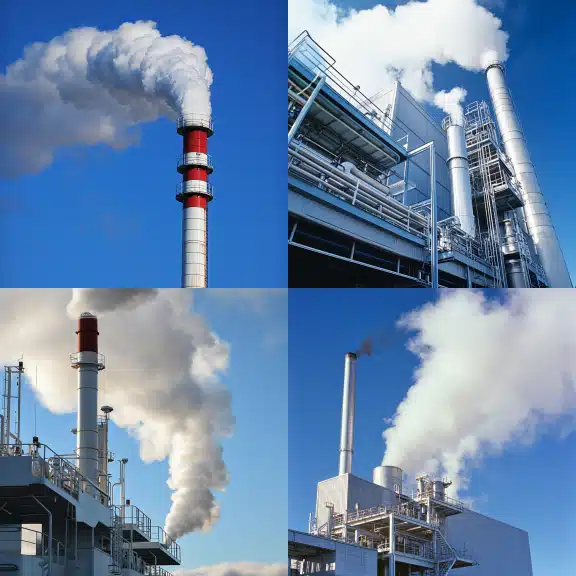
Scrubbers are effective in reducing particulate matter, acidic gases, VOCs, and HAPs in commercial air pollution control but are not designed to capture CO2 emissions, a key greenhouse gas. This article examines their role in CO2 reduction, their limitations, and the broader implications for environmental sustainability.
Scrubbers and CO2 Emissions: What You Need to Know
Focus on Other Pollutants:
Primary Function: Scrubbers are engineered to seize and eliminate particulate-counted numbers and threatening gases like SO₂, NOx, VOCs, and HAPs from industrial exhaust streams. This pollution contributes to air quality degradation and results in significant health and environmental impacts. Learn more about scrubber vessel technology and how they work to reduce harmful pollutants.
Limitations in CO2 Removal:
Chemical Composition: CO2, unlike other pollutants targeted by scrubbers, is a non-reactive gas that doesn’t undergo chemical transformation in standard scrubbing techniques. As a result, traditional scrubbers are not designed to capture or reduce CO2 emissions. Discover the difference between a scrubber and a separator.
Economic Feasibility: The large quantities of CO2 in industrial emissions require large-scale capture and storage solutions, which are more technically and economically challenging than traditional pollutant removal methods. Learn about the importance of pressure vessel design in capturing CO₂.
Alternative CO2 Capture Technologies:
Carbon Capture and Storage (CCS): CCS technologies are specifically designed to capture CO₂ emissions from industrial operations using chemical solvents or solid adsorbents. Captured CO₂ can then be transported and stored underground or applied in commercial processes. Learn more about pressure vessel design used in these systems.
Carbon Capture and Utilization (CCU): CCU technology converts captured CO₂ into valuable products, such as fuels, chemicals, and construction materials, providing economic incentives for CO₂ reduction. Understand the importance of CO₂ capture in industries.
Environmental Impact and Sustainability:
Indirect Benefits: While scrubbers do not directly reduce CO2 emissions, their role in reducing other pollutants contributes to environmental sustainability by improving air quality and public health. For more information, check out our guide on scrubber and separator efficiency.
Scrubbers’ Contribution: Scrubbers help eliminate particulate matter, acidic gases, VOCs, and HAPs from industrial emissions. However, to address CO₂ emissions, specialized technologies like CCS and CCU are essential. Learn about how pressure vessels are used in CO₂ storage.
Scrubbers play a critical feature in industrial air pollution manipulation by efficiently casting off particulate, acidic gases, VOCs, and HAPs from exhaust gases. However, they do not contribute to decreasing CO2 emissions straight away. To cope with CO2 emissions, industries should find specialized carbon capture generation like CCS and CCU, which can be tailor-made for shooting and utilizing or storing CO2. These generations are pivotal in mitigating climate trade influences and reaching worldwide climate dreams.
The Role of Scrubbers in Emission Control and the Need for Specialized CO2 Capture Technologies
In conclusion, while scrubbers play a vital role in improving air quality by removing particulate matter, acidic gases, VOCs, and HAPs from industrial emissions, they are not designed to address CO2 emissions directly. CO2, being a non-reactive gas, requires specialized technologies such as Carbon Capture and Storage (CCS) and Carbon Capture and Utilization (CCU) to effectively capture and reduce emissions. Although scrubbers do not mitigate CO2 directly, their contribution to reducing other pollutants is significant for environmental sustainability and public health. To tackle CO2 emissions, industries must adopt advanced carbon capture solutions, which are essential for achieving climate goals and ensuring long-term sustainability.
Looking for Innovative Solutions to Tackle CO2 Emissions?
At Red River, we specialize in the design and manufacturing of pressure vessels, providing integrated solutions for industries aiming to meet environmental goals. While scrubbers improve air quality by removing harmful pollutants, tackling CO2 emissions requires advanced technologies like CCS and CCU. Learn more about pressure vessel design and how it helps achieve sustainability.
Reach out to us today and learn how we can help you implement cutting-edge solutions for effective CO2 capture and sustainability. Trust in Red River where American-made quality meets environmental responsibility.
Frequently Asked Questions
1. Can scrubbers lessen CO2 emissions from business sources?
No, scrubbers are designed to seize particulate matter quantity and gases like SO2, NOx, VOCs, and HAPs however do not efficaciously seize or reduce CO2 emissions, which require specialized carbon capture generation.
2. Why are scrubbers no longer powerful in CO2 removal?
CO2 is a non-reactive gasoline that does not go through a chemical transformation in everyday scrubbing strategies. Scrubbers are optimized for pollutants that undergo chemical reactions or absorption with scrubbing media.
3. What technologies are powerful for capturing CO2 emissions?
Carbon seize and storage (CCS) and carbon seize and utilization (CCU) technologies are mainly designed to capture CO2 emissions from commercial sources, presenting pathways for storage or usage in distinct tactics.
4. How do industries gain from lowering CO2 emissions alongside one-of-a-kind pollutants?
Reducing CO2 emissions contributes to climate trade mitigation efforts, complements company sustainability dreams, and might create economic possibilities through carbon credit scores or usage of captured CO2.
5. Are there regulatory incentives for imposing a CO2 capture era?
Some areas provide regulatory incentives, subsidies, or carbon pricing mechanisms to inspire industries to adopt CO2 capture technology and reduce greenhouse gasoline emissions.
Key takeaways
- Scrubbers target non-CO2 pollutants: Scrubbers are effective in removing particulate matter, acidic gases, VOCs, and HAPs from industrial emissions but are not designed to reduce CO2 emissions.
- CO2 requires specialized technologies: Unlike other pollutants, CO2 is a non-reactive gas, meaning conventional scrubbers cannot capture or remove it. Technologies like Carbon Capture and Storage (CCS) and Carbon Capture and Utilization (CCU) are needed to manage CO2.
- Economic and technical challenges: Implementing CO2 capture technologies at a large scale is economically and technically challenging, requiring specialized equipment and infrastructure.
- Indirect environmental benefits: While scrubbers do not directly address CO2, they contribute to environmental sustainability by improving air quality and human health through the removal of other harmful pollutants.
Related Blog Post
How Do You Size Thermal Storage for Data Centers?
Thermal Storage Tank Design Engineering
About Author



