Food processing pressure vessels are essential to safe, hygienic food manufacturing. They support thermal treatment, process control, and compliance while enabling smarter, scalable production systems.
Food Processing Pressure Vessels: Ensuring Safety, Hygiene, and Efficiency
Food-grade pressure vessels for food and beverage production form the foundation of modern processing facilities, providing sanitary containment, precise process control, and reliable safety under strictly regulated conditions. As consumer demand and regulatory oversight grow, manufacturers rely on precision-engineered food processing pressure vessels to meet stringent hygiene standards, enhance productivity, and maintain product integrity. Companies specializing in engineered systems such as Red River provide purpose-built solutions tailored to complex processing environments.
These specialized vessels handle pasteurization, sterilization, fermentation, and blending functions critical to food safety and shelf-life extension. Their design aligns with 3-A Sanitary Standards and ASME Section VIII, ensuring each food processing pressure vessel supports FDA– and USDA–compliant workflows. Learn more about certified builds at ASME Certified Pressure Vessels and the broader category of Pressure Vessels.
From dairy to sauces, soups, baby food, brewing, and beyond, food processing pressure vessels enable scalable, efficient production while safeguarding public health. Many facilities deploy integrated systems such as Modular Skids and pre-assembled units through Prefabrication to accelerate installation.
Core Roles of Food Processing Pressure Vessels in Production
Hygienic Storage and Ingredient Containment
Built with 304 or 316L stainless steel and food-grade welds, food processing pressure vessels ensure sterile storage and mixing. These vessels safely handle raw ingredients, finished products, and in-process materials such as milk, juices, beer, and condiments. Material selection guidance can be found in Choosing the Right Material for Pressure Vessel Fabrication and Ideal Material for Pressure Vessel Fabrication.
Their smooth, polished interiors and dead-zone-free design enable complete drainage and Clean-In-Place (CIP) sanitation cycles. This allows food processing pressure vessels to maintain hygiene across batch and continuous operations while meeting strict Safety and Compliance in Pressure Vessel Design requirements.
Thermal Treatments: Pasteurization and Sterilization
Thermal processing is central to food safety, and food processing pressure vessels excel in high-heat applications. They support HTST (High-Temperature Short-Time), aseptic processing, and in-container sterilization. Many of these systems are engineered using proven Manufacturing Processes of Pressure Vessels to ensure durability under repeated thermal cycling.
Precise control of pressure and temperature enables safe destruction of pathogens while preserving taste, texture, and nutrients. Batch cookers and retort vessels are common types of equipment discussed in Types of Industrial Pressure Vessels and What Is the Most Common Type of Pressure Vessel Used in Industry.
Process Control and Real-Time Monitoring
Modern facilities integrate smart food processing pressure vessels with SCADA and PLC systems. IoT sensors measure pressure, temperature, and fluid dynamics, sending live data to centralized control hubs. Understanding stress behavior is critical, as explained in What Is the Primary Stress of a Pressure Vessel.
This real-time monitoring enhances process repeatability, reduces energy waste, and ensures compliance with HACCP protocols. Automation makes food processing pressure vessels both scalable and labor-efficient, especially when paired with engineered Solutions and advanced Capabilities.
Compliance and Quality Control in Food Pressure Systems
ASME, 3-A, and Sanitary Design Standards
All food processing pressure vessels must meet ASME Section VIII and 3-A Sanitary Standards to be legally used in food environments. These codes govern weld quality, material selection, and surface finish. For deeper insight, see Demystifying ASME Pressure Vessel Certification and ASME Pressure Vessel Standards: Ensuring Safety & Quality.
FDA and USDA guidelines further mandate documentation, traceability, and cleaning validation, all supported by robust engineering and inspection practices described in the Comprehensive Guide to Pressure Vessel Inspection.
CIP Cleaning and Maintenance
CIP systems are integral to many food processing pressure vessels, enabling thorough sanitation without disassembly. Automated rinse and chemical cycles clean every interior surface efficiently. Proper maintenance also prevents issues detailed in Types of Failure in Pressure Vessels and Failure Criteria for Pressure Vessels.
Routine inspection for corrosion, pitting, and residue buildup helps avoid cross-contamination and regulatory violations. Food-grade vessels must pass regular validation to stay in operation.
Customization and Advanced Food Processing Pressure Vessel Design
Tailored for Product Type and Viscosity
No two food production lines are the same. That’s why food processing pressure vessels are often customized with jackets for heating or cooling, agitators for mixing viscous products, and ports for ingredient injection. Fabrication expertise outlined in Guide to Metal Fabrication and Three Types of Metal Fabrication plays a key role here.
Applications range from carbonated beverage blending to cheese fermentation and hot-fill sauce production. Each food processing pressure vessel must be engineered to its specific pressure, material compatibility, and cleaning needs, similar to best practices described in Important Points to Consider While Designing a Pressure Vessel.
Digital and Predictive Technologies
Smart sensors in food processing pressure vessels track structural strain, flow rates, and performance trends. These insights support predictive maintenance and reduce downtime. Advanced analytics are part of the broader evolution discussed in AI’s Role in Transforming Industry.
Connected systems alert operators to anomalies in real time, enabling proactive intervention and higher batch quality.
Future Trends: Food Processing Pressure Vessels in Smart Factories
As Industry 4.0 gains ground, food processing pressure vessels are becoming more intelligent, adaptable, and energy-efficient. Smart batching, automated logging, and AI-powered control loops allow for leaner, more responsive operations. Many manufacturers consult industry insights available through the company Blog and technical resources such as Understanding Pressure Vessels: A Comprehensive Guide.
Manufacturers increasingly choose vessels that not only comply with today’s food safety laws but also align with future operational agility and sustainability goals.
Why Food Processing Pressure Vessels Matter
Food processing pressure vessels are more than containers, they are critical control points that preserve public health and drive profitability. They eliminate microbial threats, streamline workflows, and ensure traceability across production lines. Understanding their purpose is explored further in Understanding the Purpose of a Pressure Vessel and comparisons like Pressure Tanks vs. Pressure Vessels.
From craft brewers to global food processors, investing in high-performance equipment is essential for safety, consistency, and scale.
Need a Trusted Food-Grade Vessel Partner?
Red River designs and fabricates food processing pressure vessels that meet or exceed ASME, 3-A, and FDA guidelines. Whether you need fermenters, pasteurizers, vacuum-jacketed tanks, or custom CIP-enabled systems, we deliver solutions tailored to your plant’s requirements.
Connect with Red River today and see how American-made craftsmanship supports your food system goals.
Frequently Asked Questions
1. What types of products use food processing pressure vessels?
Products include dairy, sauces, soups, baby food, carbonated drinks, and fermented foods all requiring temperature and pressure control.
2. Are food processing pressure vessels FDA-compliant?
Yes. When fabricated to 3-A Sanitary Standards and ASME codes, food processing pressure vessels are safe and approved for food contact.
3. What materials are used in food processing pressure vessels?
Most are made from 304 or 316L stainless steel due to corrosion resistance and hygienic performance.
4. Can food processing pressure vessels be cleaned automatically?
Yes, many include CIP systems for cleaning without disassembly, supporting faster turnarounds and reduced labor.
5. What standards must these vessels meet?
Food processing pressure vessels must comply with ASME Section VIII, 3-A, FDA, and USDA standards.
6. Do smart systems integrate with food processing pressure vessels?
Absolutely. Modern vessels include IoT sensors, SCADA integration, and support predictive maintenance strategies.
7. How are custom pressure vessels more efficient?
Custom-engineered food processing pressure vessels minimize waste, boost yield, and improve quality control.
8. What makes a vessel suitable for pasteurization?
Precise thermal and pressure regulation, FDA-compliant materials, and hygienic welds make food processing pressure vessels ideal for pasteurization.
Key Takeaways
- Food processing pressure vessels ensure safety, hygiene, and production efficiency.
- They support pasteurization, fermentation, storage, and smart factory integration.
- Compliance with 3-A, FDA, and ASME standards is essential.
- Custom features and IoT-enabled monitoring improve performance and uptime.
- Red River delivers durable, compliant food processing pressure vessels built for modern food production.
Related Blog Post
Can Condensate Storage Improve Reliability?
Where Do Condensate Tanks Fit in a Steam System?
Which Nozzles Simplify Maintenance on Pressure Vessels?
How to Vent Condensate Tanks in Steam Systems
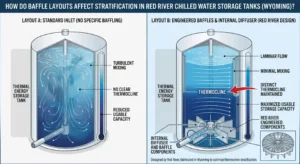
How Do Baffle Layouts Affect Stratification in TES Tanks?
- How U.S. Nuclear Pressure Vessels Power American Nuclear Plants
- Role of American Chemical Pressure Vessels in Plant Operations
- Pressure Vessels in Biotech and Biofuel: A Growing Trend
- How American Marine Pressure Vessels: U.S. Maritime Operations
- Aerospace Applications of American Aerospace Pressure Vessels
- Pressure Vessels for Pharmaceuticals in U.S. Drug Manufacturing