
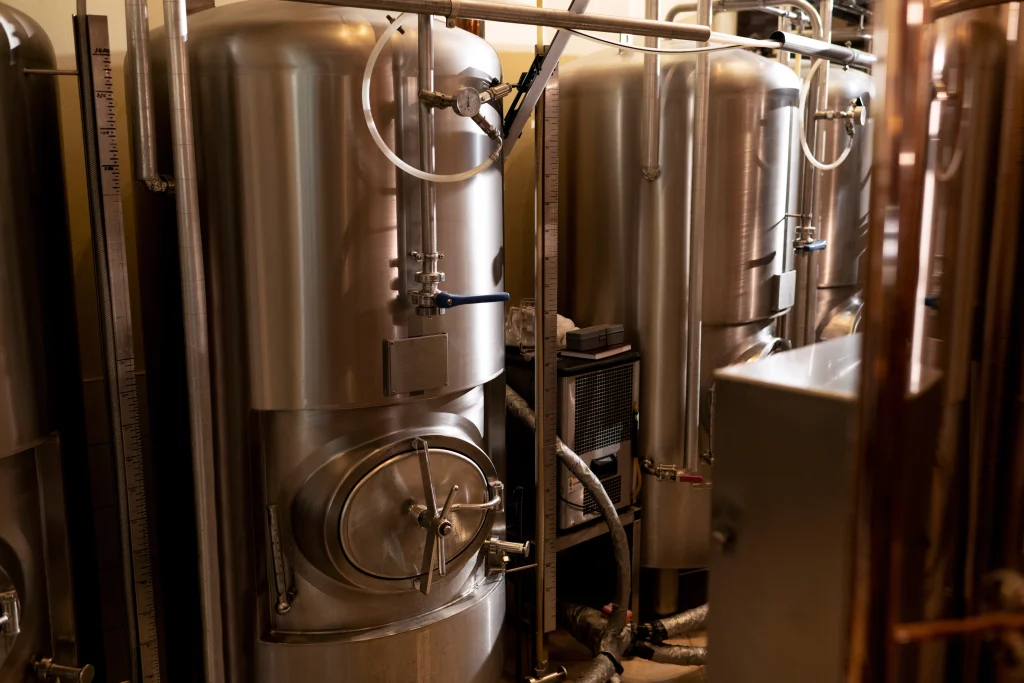
The pressure vessels automotive industry relies on specialized vessels to store gases, control fluids, and support automated manufacturing systems. These vessels improve safety, efficiency, and reliability while meeting strict compliance standards.
Understanding the Pressure Vessels Automotive Industry
The pressure vessels automotive industry plays a foundational role in modern vehicle manufacturing. Automotive plants depend on pressurized systems to operate assembly lines, robotic tools, and material treatment processes. Without properly designed pressure vessels, many of these operations would be inefficient, unsafe, or impossible to maintain at scale.
Pressure vessels are engineered containers designed to hold gases or liquids at pressures significantly different from ambient conditions. In automotive manufacturing, they support compressed air systems, hydraulic operations, heat treatment equipment, and specialty material handling. Their performance directly affects production speed, worker safety, and equipment lifespan.
What Defines a Pressure Vessel in Automotive Manufacturing
A pressure vessel is not simply a storage tank. In the pressure vessels automotive industry, these systems are built to withstand repeated pressure cycles, temperature variations, and demanding operational loads. Engineers design them using specific materials, wall thickness calculations, and safety features to ensure long-term reliability.
Automotive environments require vessels that integrate seamlessly with automated systems. This includes compatibility with pneumatic tools, robotic actuators, and hydraulic presses that operate continuously. A failure in any pressure vessel component can interrupt production and introduce safety risks.
Materials Commonly Used in Automotive Pressure Vessels
Material selection is critical in the pressure vessel automotive industry. Each application requires materials that balance strength, corrosion resistance, and thermal stability.
Carbon steel is widely used for general-purpose applications due to its durability and cost efficiency. Stainless steel is preferred in environments where moisture, chemicals, or elevated temperatures are present. In some specialized systems, alloy steels or composite materials are used to meet higher performance demands.
These materials allow pressure vessels to maintain structural integrity even under continuous cycling, which is common in automotive plants operating multiple shifts.
How Pressure Vessels Support Automotive Production Systems
Compressed Air and Gas Storage
Compressed air is the backbone of many automotive manufacturing processes. Pressure vessels store and regulate air used in assembly tools, paint systems, and robotic equipment. A stable air supply ensures consistent torque, precise movements, and reduced equipment wear.
Hydraulic and Pneumatic Operations
The pressure vessels automotive industry relies heavily on hydraulic presses and pneumatic actuators. These systems shape metal components, lift heavy assemblies, and support stamping operations. Pressure vessels act as energy storage units that deliver controlled force when needed.
Heat Treatment and Material Processing
Automotive components often undergo heat treatment to improve strength and durability. Pressure vessels are used in autoclaves and controlled atmosphere furnaces where pressure and temperature must remain stable. These processes help ensure uniform material properties across high-volume production runs.
Energy Efficiency and Operational Reliability
Energy efficiency is a growing priority in automotive manufacturing. Properly sized and maintained pressure vessels reduce energy losses by minimizing pressure fluctuations and air leaks. This improves overall system efficiency and lowers operating costs.
In the pressure vessels automotive industry, reliability is equally important. Well-designed vessels reduce downtime caused by system failures. Consistent pressure delivery allows production lines to run smoothly without unexpected interruptions.
Compliance and Safety Standards
ASME Code Requirements
Pressure vessels used in automotive facilities must comply with ASME Boiler and Pressure Vessel Code requirements. These standards govern design, fabrication, inspection, and testing. Compliance ensures vessels can safely withstand operating pressures and environmental conditions.
Installation and Monitoring Practices
Safe operation depends on proper installation and monitoring. Pressure vessels must be securely mounted, equipped with relief valves, and integrated with monitoring systems. Operators regularly check pressure levels, temperature readings, and valve performance to prevent failures.
Inspection and Maintenance Programs
Routine inspections are essential in the pressure vessel automotive industry. Hydrostatic testing, visual inspections, and non-destructive testing help identify early signs of wear, corrosion, or fatigue. Preventive maintenance extends vessel life and protects workers.
Why Pressure Vessels Automotive Industry Systems Matter
The pressure vessels automotive industry is essential to producing safe, reliable vehicles at scale. These systems enable automation, support precision manufacturing, and protect workers from high-pressure hazards. By meeting ASME standards and following strict maintenance practices, automotive manufacturers maintain consistent output and operational stability.
As vehicle technology evolves, pressure vessels will continue to support new manufacturing methods, advanced materials, and higher efficiency production lines.
Need a reliable partner?
Red River specializes in the design and manufacturing of pressure vessels. We also fabricate related items such as prefabricated spools and skid packages.
Learn more through our contact page, request details on our request a quote page, or explore related solutions, including pressure vessel fabrication, skid packages, and custom fabrication.
Frequently Asked Questions
1. What role do pressure vessels play in the automotive industry?
Pressure vessels in the automotive industry store and regulate compressed air, gases, and fluids used in assembly lines, robotics, and hydraulic equipment.
2. Which standards apply to automotive pressure vessels?
Most pressure vessels must comply with ASME codes and align with safety guidance from organizations such as OSHA to ensure safe operation.
3. What materials are best for automotive pressure vessels?
Carbon steel and stainless steel are the most common due to their strength, durability, and resistance to corrosion in manufacturing environments.
4. How often should pressure vessels be inspected in automotive plants?
Inspection frequency depends on operating conditions, but regular scheduled inspections are critical for safety and reliability.
5. Can pressure vessels improve energy efficiency in automotive manufacturing?
Yes. Properly designed pressure vessels reduce pressure loss, stabilize systems, and lower overall energy consumption.
Key Takeaways
- Pressure vessels in the automotive industry support automation, safety, and efficiency.
- These vessels store and regulate gases and fluids used across manufacturing operations.
- ASME compliance and regular inspections are essential for safe performance.
- Proper material selection improves durability under continuous pressure cycles.
- Reliable pressure vessels help reduce downtime and improve production consistency.
Related Blog Post
Which Materials Suit Make-Up Water Service?
How Big Should Make-Up Water Tanks Be?
Make-Up Water Tanks: Design, Sizing, and Fabrication
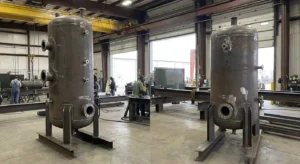
When to Spec Equalization Tanks for Industrial Systems
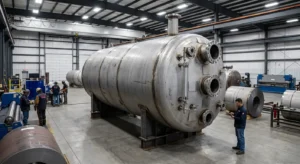
How Do Equalization Tanks Balance Flow?
- Pressure Vessels in Manufacturing: Applications and Compliance
- Pressure Vessels in America: Safe & Efficient Chemical Processing
- Pressure Vessels Aerospace Industry: Engineering Safety
- Pressure Vessels Pharmaceutical Manufacturing: Safety & Precision
- Pressure Vessel Supply Chain Challenges in America
- Pressure Vessel Cost Analysis in America’s Industrial Sector



