
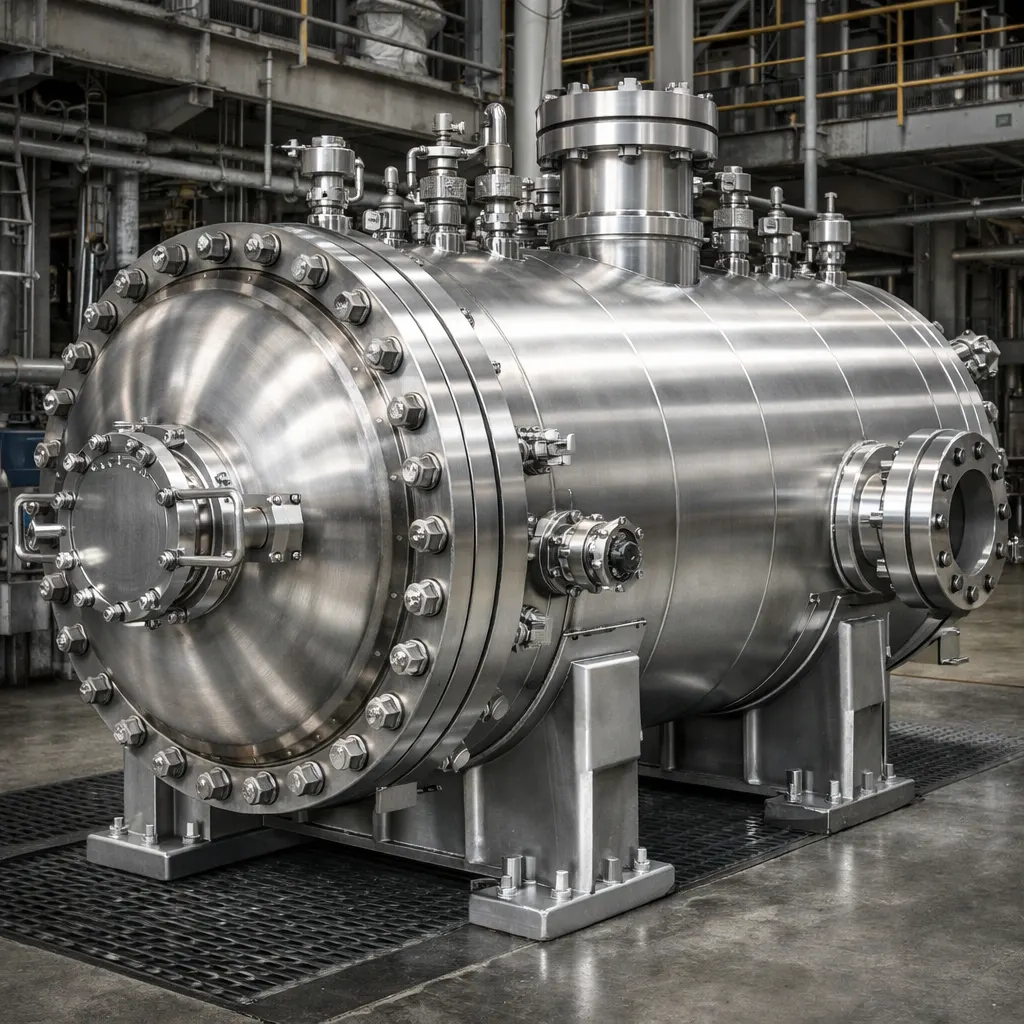
Pressure vessels need materials that won’t crack, corrode, or deform under high pressure and temperature swings. Common choices are titanium, nickel alloys (incl. Hastelloy), stainless steel, carbon steel, and aluminum each a tradeoff between corrosion resistance, strength at temperature, fabrication complexity, and cost.
Understanding What Materials Are Used in Pressure Vessels
When you need to handle gas or liquid under high pressure, it’s natural to ask what materials are used in pressure vessels, especially if you’re evaluating a trusted pressure vessel manufacturer in the United States. The good news is that manufacturers are not limited to just one or two materials. Several metals and alloys are engineered to perform reliably in harsh environments while maintaining structural integrity and long service life.
According to industry leaders like BEPeterson, Titanium, Nickel Alloys, Stainless Steel, Carbon Steel, Aluminum, and Hastelloy are among the most widely used materials. Each offers specific advantages depending on corrosion exposure, operating pressure, fabrication requirements, and cost considerations. By the end of this guide, you’ll understand why these materials matter and what to consider before making your final selection. For a broader overview of fabrication capabilities, visit Red River’s page on pressure vessels and manufacturing processes.
What materials are used in pressure vessels
Pressure vessels are designed to contain fluids at pressures significantly different from ambient conditions. Because failure can be catastrophic, materials must meet strict mechanical and chemical performance standards. If you’re new to the fundamentals, Red River offers a helpful breakdown in Understanding Pressure Vessels: Definitions and Thresholds.
Below are six of the most common materials used in modern pressure vessel fabrication.
Titanium: Lightweight yet strong
Titanium weighs roughly 40% less than steel while delivering comparable or even superior strength in certain configurations. Its exceptional corrosion resistance, especially against seawater and chlorine-based compounds, makes it ideal for marine, chemical, and offshore applications.
Industry data shows Titanium tensile strength ranging from 30,000 psi to over 200,000 psi, depending on grade and heat treatment. Its corrosion resistance often reduces long-term maintenance costs, particularly in aggressive environments.
Advantages
Excellent corrosion resistance
High strength-to-weight ratio
Long service life
Drawbacks
Higher material and fabrication cost
Specialized welding and handling requirements
Nickel alloys: Enhanced durability
Nickel alloys such as Monel, Inconel, Alloy 20, and Hastelloy-family materials are widely used where high temperatures, pressure cycling, and chemical exposure intersect. These alloys retain mechanical strength across extreme thermal ranges, from cryogenic service to superheated steam.
They are frequently specified in petrochemical processing and power generation, where reliability is non-negotiable. Red River explores similar applications in Types of Industrial Pressure Vessels.
Advantages
Excellent oxidation and corrosion resistance
Performs well at high and low temperatures
Drawbacks
Expensive raw material
Requires specialized fabrication expertise
Stainless steel: A balanced favorite
Stainless steel is one of the most commonly used pressure vessel materials due to its balanced combination of strength, corrosion resistance, availability, and cost control. It performs well in both high- and low-temperature environments and resists rust even in humid or outdoor installations.
Its versatility makes it a go-to option for food processing, compressed air systems, and water applications. Learn more about these use cases in Pressure Tanks vs. Pressure Vessels.
Advantages
Durable and corrosion-resistant
Long service life
Widely available
Drawbacks
Heavier than Aluminum or Titanium
Cost varies significantly by grade
Carbon steel: Cost-friendly choice
Carbon steel remains one of the most widely used materials in pressure vessel manufacturing due to its strength, affordability, and ease of fabrication. It handles typical industrial pressures effectively and is easy to weld and repair.
To improve corrosion resistance, manufacturers often apply coatings or linings. Red River discusses long-term performance considerations in Types of Failure in Pressure Vessels.
Advantages
Low material cost
High strength and impact resistance
Easy to weld and recycle
Drawbacks
Lower corrosion resistance if unprotected
Heavier than Aluminum or Titanium
Aluminum: Suitability and trade-offs
Aluminum is best suited for moderate-pressure applications where weight reduction and portability matter. It offers decent corrosion resistance and is easy to machine, making it useful in mobile or temporary installations.
However, Aluminum’s lower melting point limits its use in high-temperature or extreme-pressure environments. For additional context, see Understanding Compressed Air Tanks as Pressure Vessels.
Advantages
Lightweight
Easy to form and transport
Reasonable corrosion resistance
Drawbacks
Lower structural strength under extreme conditions
Susceptible to high-temperature deformation
Hastelloy: Specialized performance
Hastelloy deserves special mention due to its exceptional resistance to acids, chlorides, and oxidizing agents. Frequently used in chemical processing and oil & gas applications, it maintains strength across wide temperature ranges and resists localized corrosion better than many alternatives.
Red River highlights material selection challenges in Choosing the Right Material for Pressure Vessel Fabrication.
Advantages
Outstanding corrosion resistance
High-temperature stability
Excellent longevity
Drawbacks
High cost
Specialized manufacturing requirements
Consider key selection factors
Selecting the right material for your vessel isn’t just about picking the strongest alloy. It’s about matching the material’s properties to your operating environment, regulatory obligations, and cost constraints. When deciding, you’ll want to think through these key factors.
Temperature and pressure demands
Certain materials perform better at elevated temperatures. Carbon steel is typically suitable below 427°C, while higher temperatures often require alloy steels or nickel-based materials. This topic is explored further in Failure Criteria for Pressure Vessels.
Corrosion resistance
Corrosive environments dramatically reduce vessel lifespan if materials are improperly selected. Red River examines these risks in Water Presence in Pressure Vessels.
Regulatory compliance
In the United States, OSHA sets standards that intersect with how pressure vessels are built or operated, especially around handling flammable or compressed gases. Additional codes, such as those administered by the American Society of Mechanical Engineers (ASME), can guide thickness and material requirements. You can read more on pressure vessel codes and what are pressure vessel codes, which detail how materials are tested, certified, and documented.
Budget and availability
Initial cost, fabrication time, and long-term maintenance should all be factored in. A deeper discussion can be found in Ideal Material for Pressure Vessel Fabrication.
Choose the right material
Beyond pure technical specs, you also want to think practically about your day-to-day operations. With so many materials on the table, it helps to follow a structured approach. You can consult more detailed steps at how to choose materials for pressure vessels. Here’s a quick rundown:
Define pressure and temperature envelope
Start by listing your vessel’s maximum operating pressure and temperature. Include normal operating conditions as well as potential spikes.
Identify chemicals or gases used
The type of fluid matters. For instance, if you’re working with corrosive acids, Titanium or Nickel Alloys might be essential. If it’s standard air storage, Carbon Steel may be enough.
Evaluate corrosion allowances
Even if your fluid isn’t highly acidic, water or humid conditions can lead to gradual corrosion. Decide if you need a protective coating, or if the base metal itself can handle your environment.
Confirm code requirements
Different industries follow different codes, like ASME Section VIII, Divisions 1 and 2. Identify which code your vessel must meet, and ensure the chosen material is allowed under that code.
Predict total lifecycle cost
Material and fabrication costs, protective coatings, potential downtime for repairs add them up to compare your real costs over the vessel’s lifetime.
Seek expert guidance
Partner with seasoned fabricators or consult specialists. They can point you toward a proven solution, using lessons learned from previous builds.
Choosing Wisely: What materials are used in pressure vessels
By now, you’ve seen how varied and specialized each material can be. From Titanium’s lightweight strength to Carbon Steel’s budget-friendly appeal, you have more than one path to building a robust vessel. The question isn’t just “what materials are used in pressure vessels,” but which option best checks your boxes for cost, corrosion resistance, code compliance, and temperature tolerance. If you choose carefully, you’ll find a solution that stands up to years of pressure without letting you down.
Need a reliable partner?
Red River specializes in the design and manufacturing of pressure vessels. We also fabricate related items such as prefabricated spools and skid packages.
Reach out to us today and experience the Red River difference. Where American-made products and American Values come together, we care more.
Frequently Asked Questions
1. What materials are used in pressure vessels?
Pressure vessels are typically made from high-strength materials that can withstand internal pressure without deformation or rupture. Common options include:
- Carbon steel – cost-effective and widely used for moderate pressure and temperature.
- Stainless steel – excellent corrosion resistance, suitable for food, pharmaceutical, and chemical applications.
- Aluminum – lightweight, corrosion-resistant, but lower strength compared to steel.
- Nickel alloys (e.g., Inconel, Monel) – ideal for high-temperature or highly corrosive environments.
- Composite materials – used in aerospace and specialized applications for weight savings and strength.
2. What is the best material for pressure vessels?
There is no single “best” material it depends on the operating conditions:
- For general industrial use, carbon steel is a cost-effective choice.
- For corrosive environments or hygienic applications, stainless steel is preferred.
- For extreme temperatures or aggressive chemicals, nickel alloys or specialized metals perform best.
The “best” material balances strength, corrosion resistance, temperature tolerance, and cost for your specific application.
3. How to choose materials for pressure vessels?
Selecting the right material involves evaluating:
- Operating pressure and temperature -higher conditions require stronger, heat-resistant alloys.
- Corrosion resistance -match material to the chemical properties of the stored substance.
- Weight considerations -lightweight composites or aluminum may be needed in aerospace or transport.
- Regulatory compliance -follow ASME, PED, or other applicable codes.
- Budget -balance performance with cost-effectiveness.
A materials engineer or pressure vessel designer should perform a design code-based calculation to ensure safety and compliance.
4. Which materials are best for very high temperatures?
Nickel Alloys, especially Inconel or Hastelloy, often excel in high-temperature conditions. Specialty stainless steels and certain alloy steels can also handle elevated temperatures (above 427°C) without losing strength.
5. How do I maintain a pressure vessel?
Regular inspections are key. Look for signs of cracking, corrosion, or leaks, and clean the vessel to remove scale or buildup. In-depth procedures vary pressure vessel maintenance offers more details on inspections and upkeep.
Key takeaways
- Multiple material choices: Titanium, Nickel Alloys, Stainless Steel, Carbon Steel, Aluminum, and Hastelloy are top contenders.
- Match properties to conditions: Think about temperature ranges, pressure ratings, fluid type, and corrosion risks.
- Follow regulations: ASME and OSHA standards guide how materials must perform in high-pressure environments.
- Mind the budget: More expensive materials may offer better longevity, but weigh lifecycle costs when deciding.
Related Blog Post
Which Materials Suit Make-Up Water Service?
How Big Should Make-Up Water Tanks Be?
Make-Up Water Tanks: Design, Sizing, and Fabrication
When to Spec Equalization Tanks for Industrial Systems
How Do Equalization Tanks Balance Flow?
About Author



